Memories of Guns N’ Roses
So, I went to see the excellent Oasis documentary Don’t Look Back in Anger the other day and really enjoyed it. It was surprisingly profound, with Liam demonstrating a deep understanding of not only what Oasis means to people but also what life is all about. It was interesting to see just how much of an impact the band has had on different generations and just how much their music has meant to people over the years. There’s a whole bunch of stories of people being “saved” and finding a sense of belonging. It is fair to say that Oasis provided the soundtrack for a generation and their reunion and tour was overwhelming for band and fans alike. However, Oasis are not exactly the only band in the world that have had this kind of impact on people, I mean, there are bands from the same era that have had equally momentous reunions. Anyway, all this got me thinking…which bands have had that kind of impact on me? Which bands have I been deeply obsessed by? Which bands kept me in my bedroom, repeatedly playing their music and poring over the lyrics, the art and everything else? Which bands kept me awake at night on the eve of a new release or concert tickets going on sale?

Fuckin Guns N’ Fuckin’ Roses.

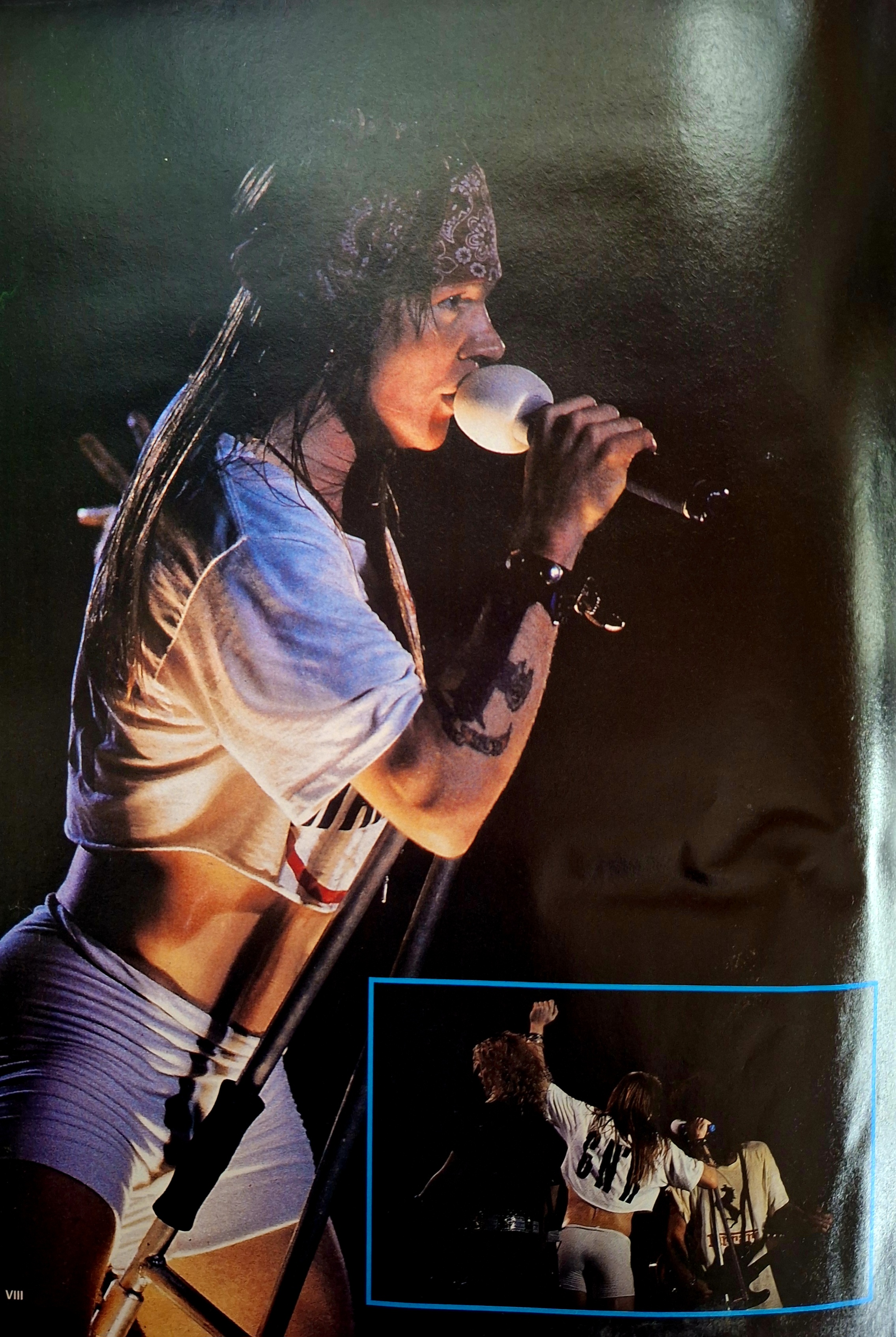
Picture the scene. It’s 1988. No internet, no digital on demand TV, no Spotify, and no 24/7 bombardment of information or sensory overload at our fingertips. When it came to entertainment channels, we simply did not have access to or control over what we heard and when we heard it, which made certain things essential to the lives of music loving teenagers, especially if your interests were outside the pop mainstream. So, when the Saturday morning Chart Show on ITV was showing the Rock Chart, it was unmissable. One such Saturday would change my life forever. Fifteen year old me was hungry for all things rock and metal, so when a video clip with five dudes swaggering around a studio playing what would become one of the most iconic songs in rock history hit my screen that day, by the time Slash had finished the most incredible guitar solo I’d ever heard, I was hooked. Guns N’ Roses were my new favourite band.

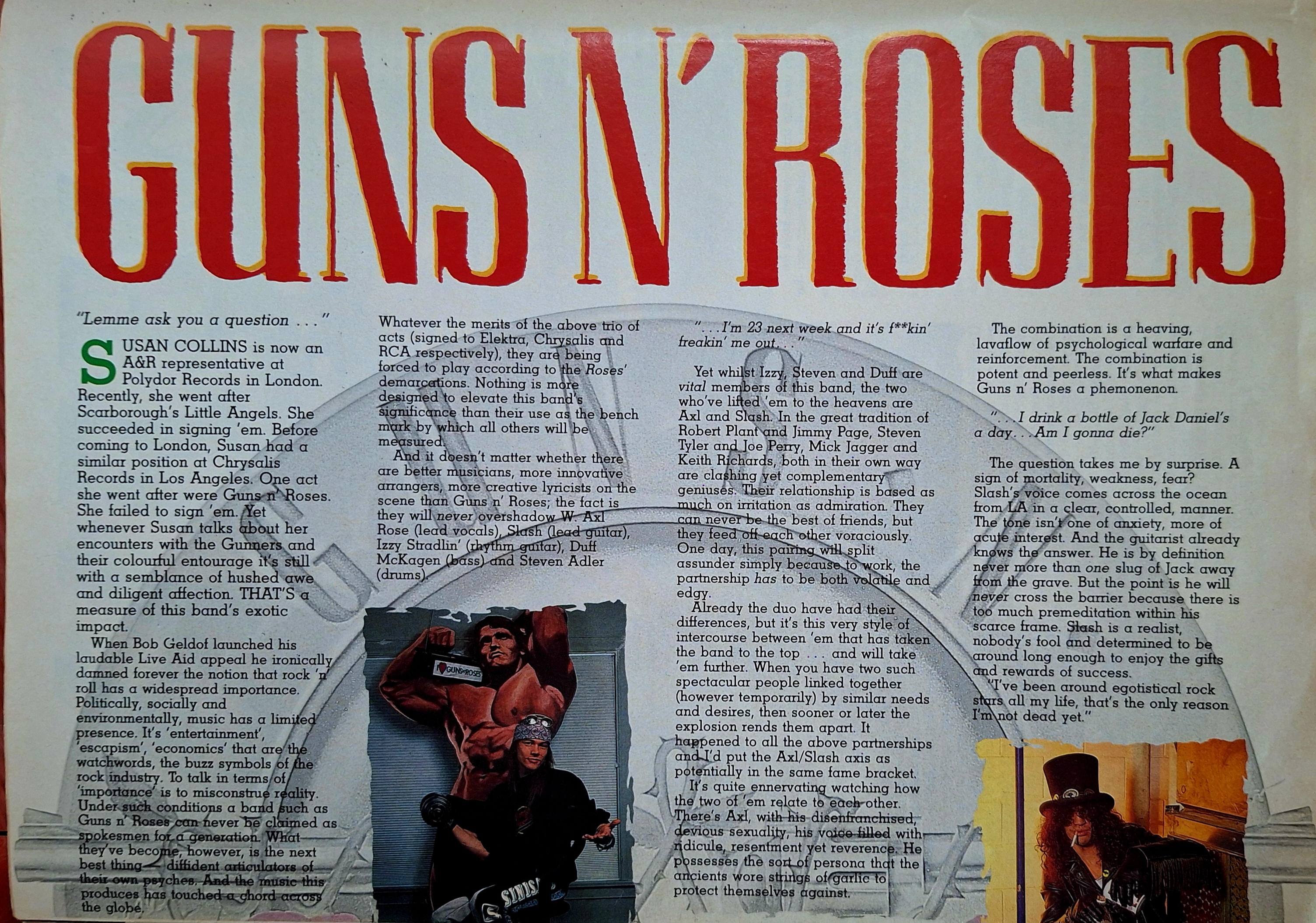
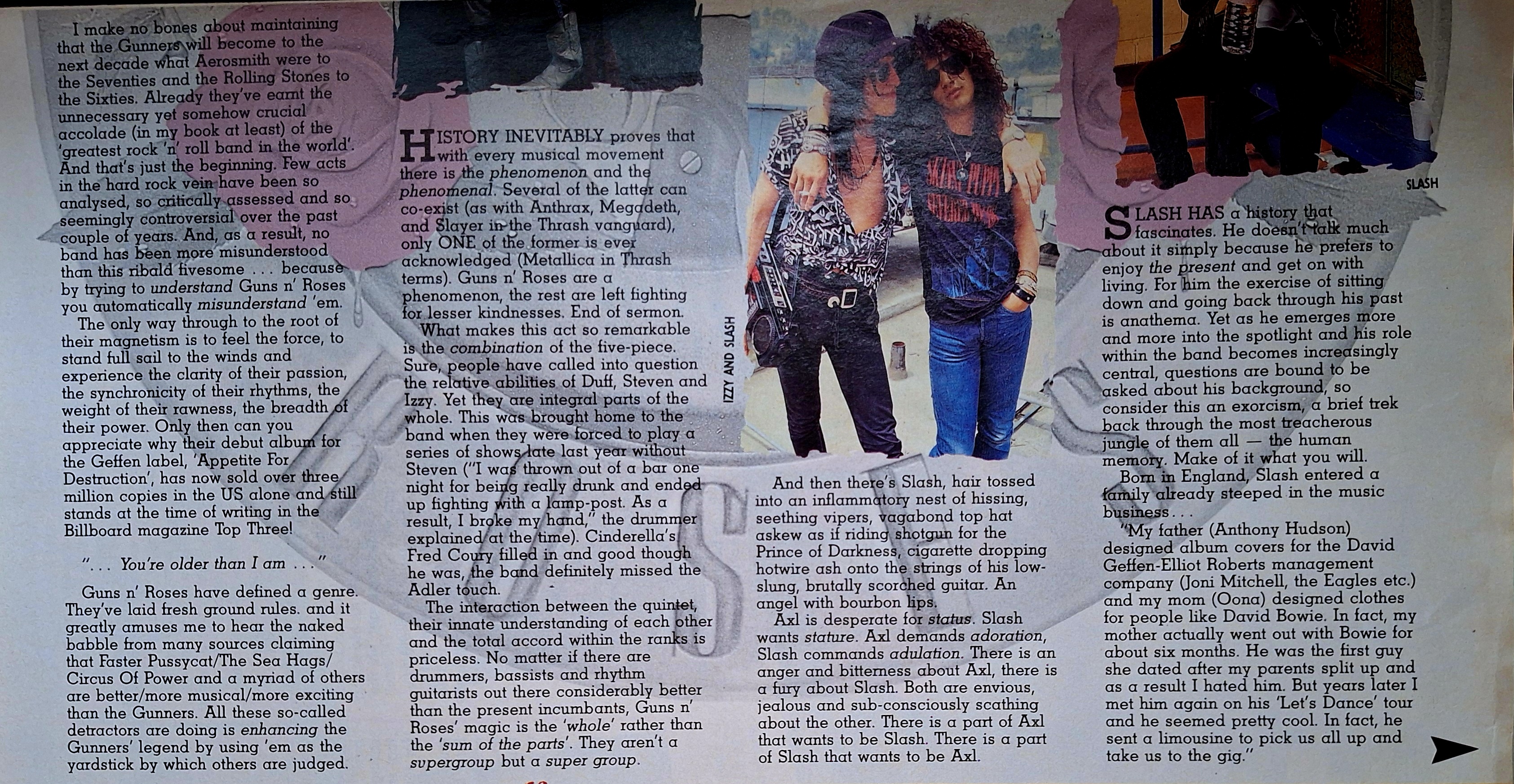
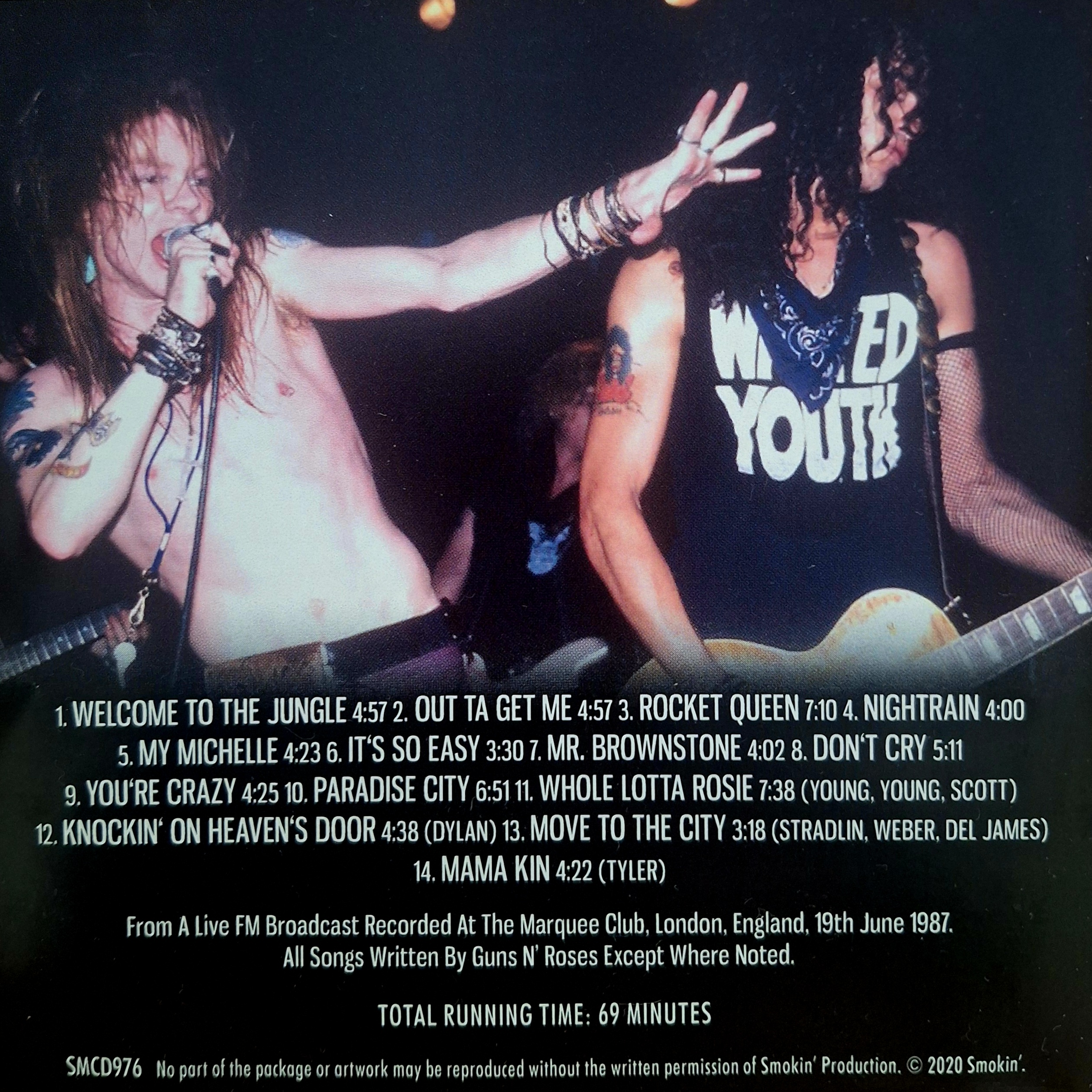
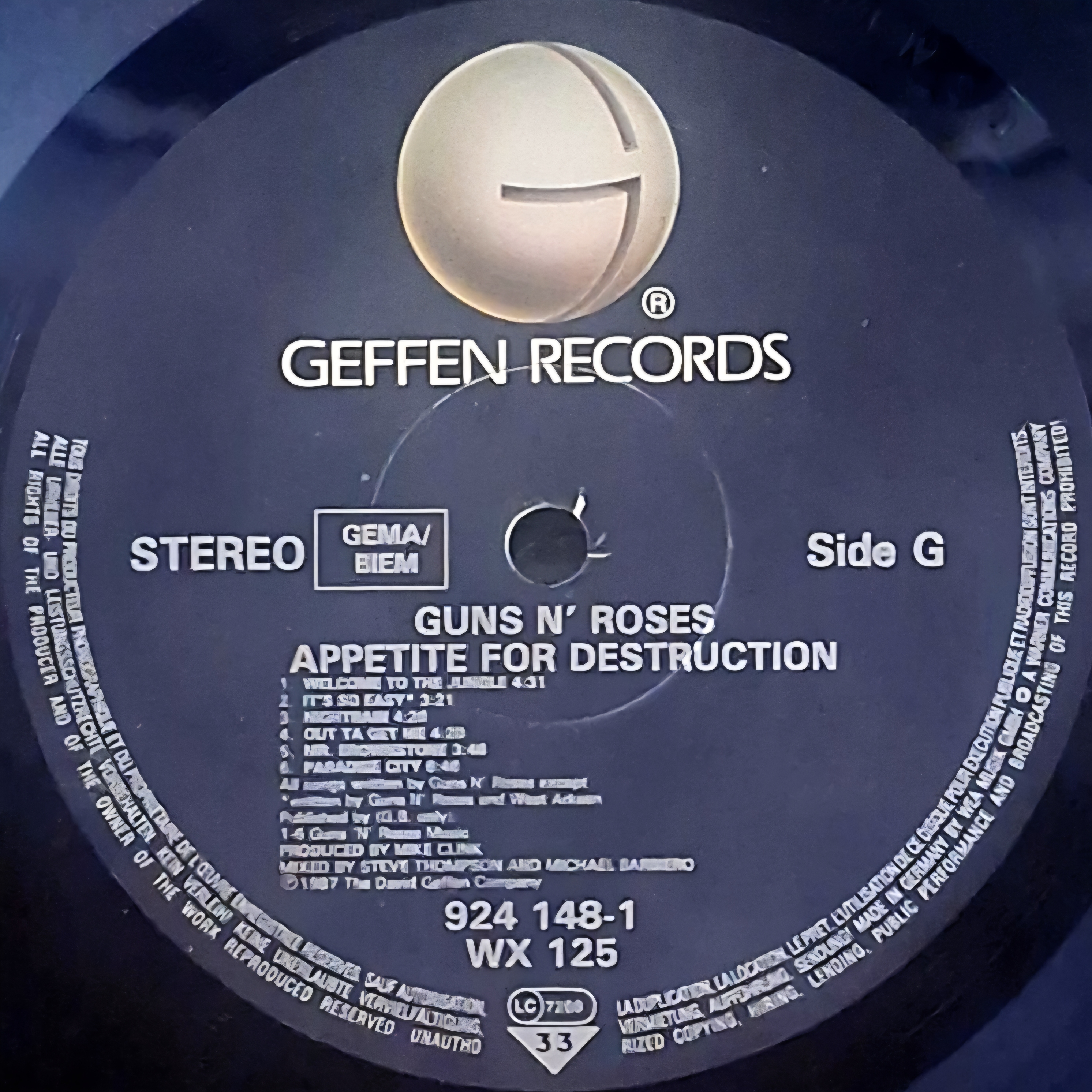
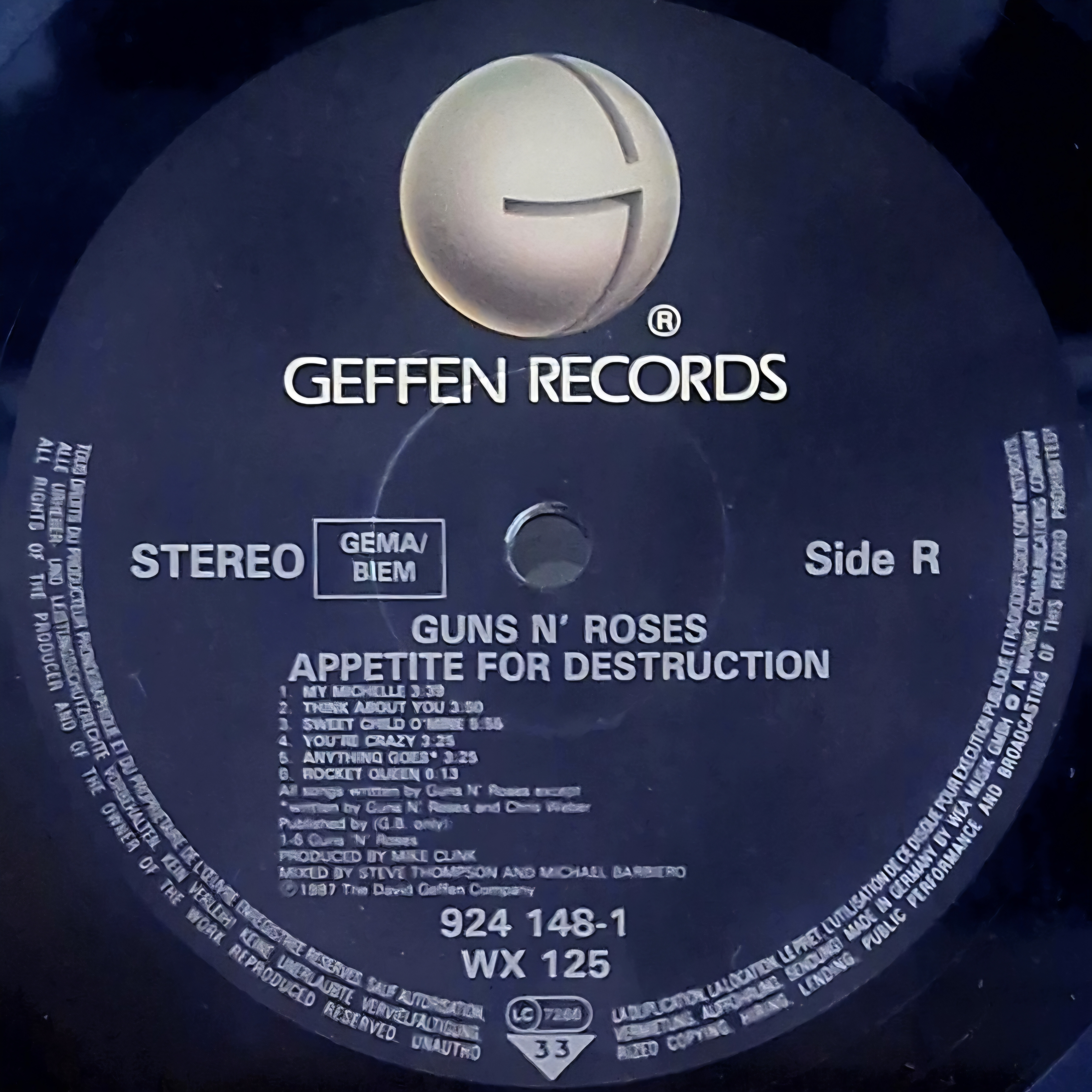
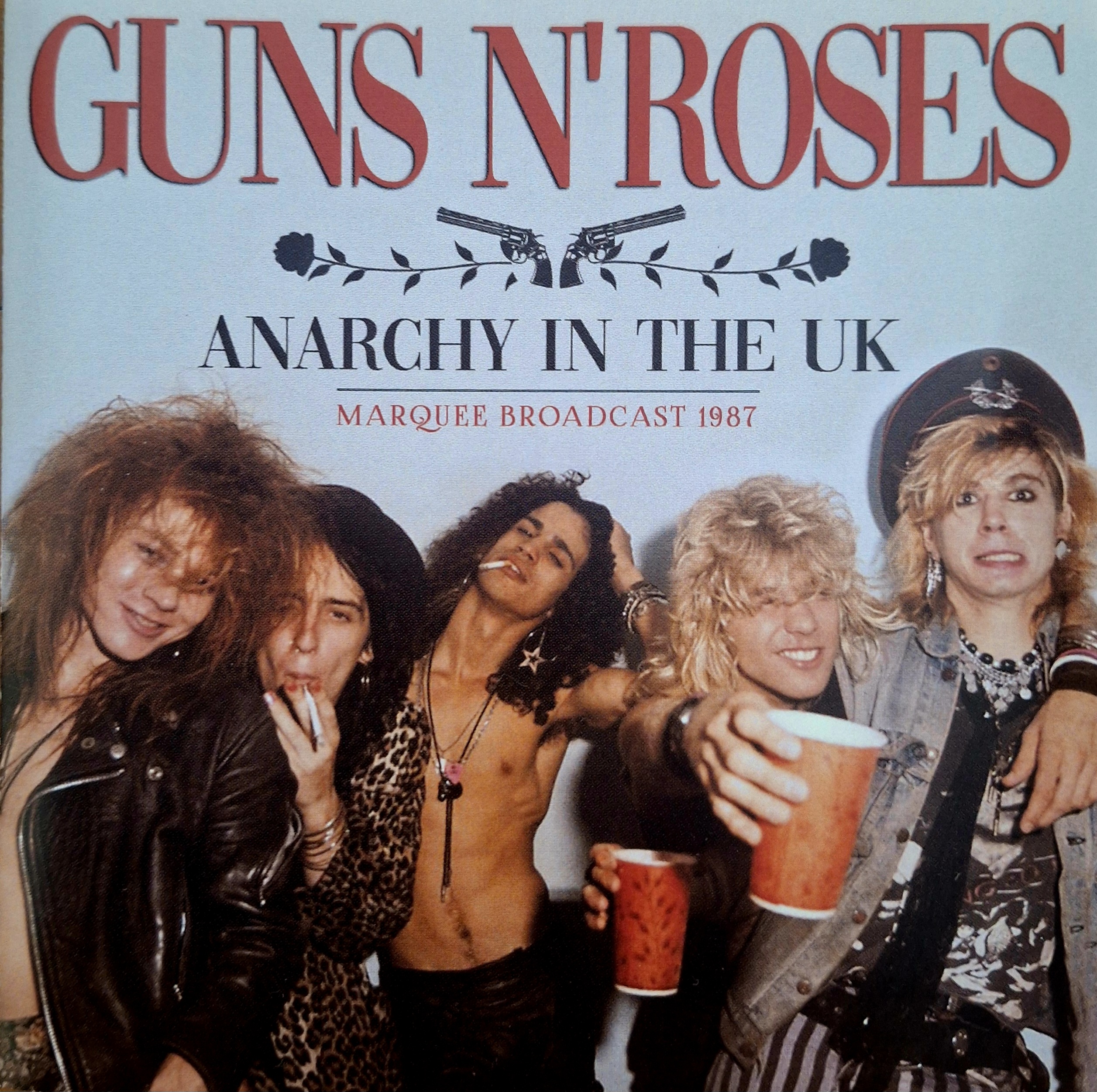
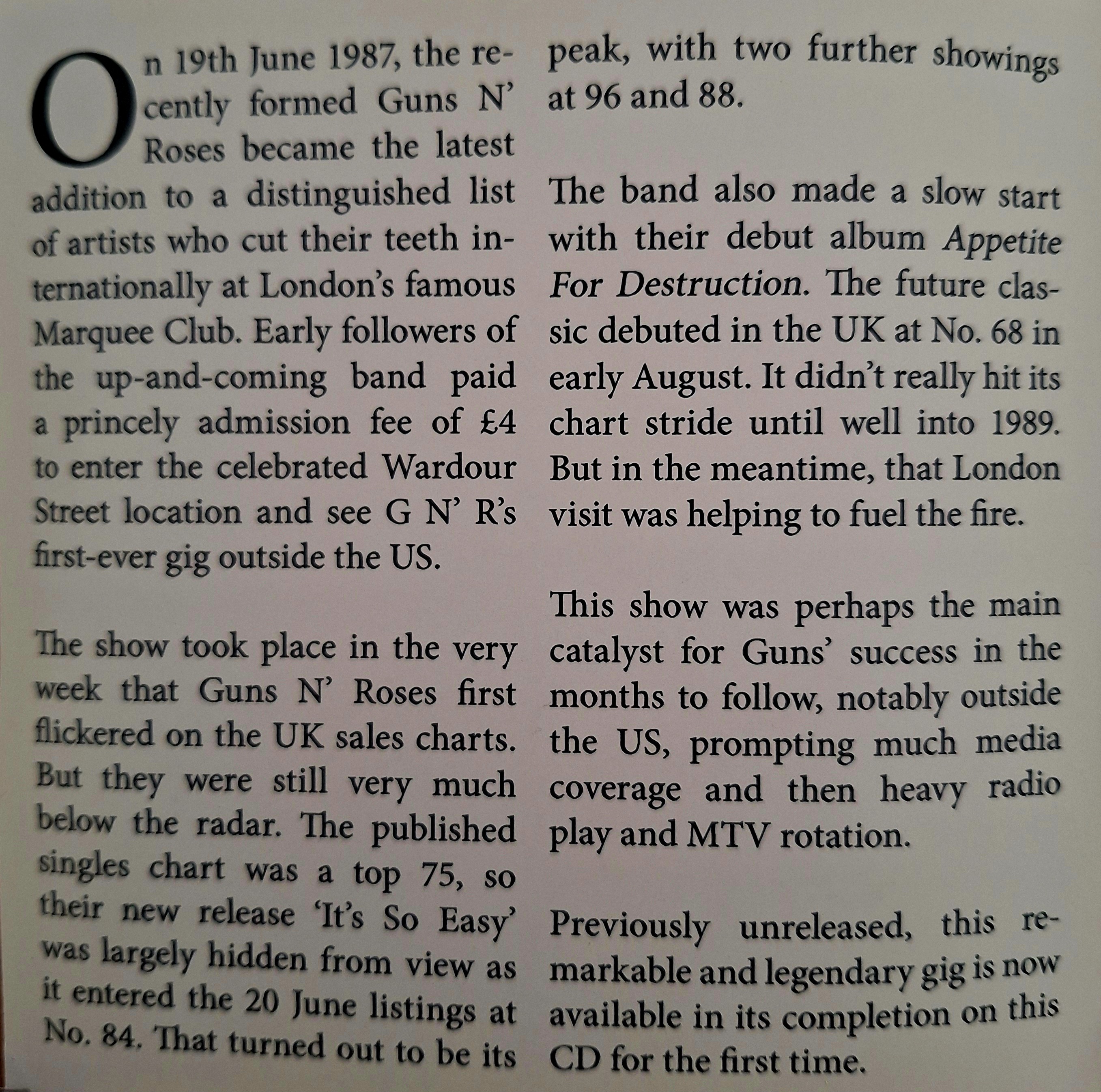
Then came the buzz. Having played three sold out nights at the Marquee in 87, and already labelled as the greatest rock n roll band in the world, excitement had actually been brewing in the UK for some time, but was at fever pitch prior to their slot at Donington 88, which would end so tragically and lead to a revolution in festival safety. The rhetoric was such that they were set to “become to the next decade what Aerosmith were to the seventies and the Rolling Stones to the sixties“. They were already massive in the US by this time with over 3 million in album sales and their magnetism and raw power was starting to sweep through the UK. Sweet Child O Mine would hit the top thirty the first time around (later making the top ten in 89), as would Welcome to the Jungle. By the end of the year, Appetite for Destruction with its infamous rape scene cover had already spent 17 weeks on the UK album chart and was no longer enough to satisfy the growing legion of die-hard fans.
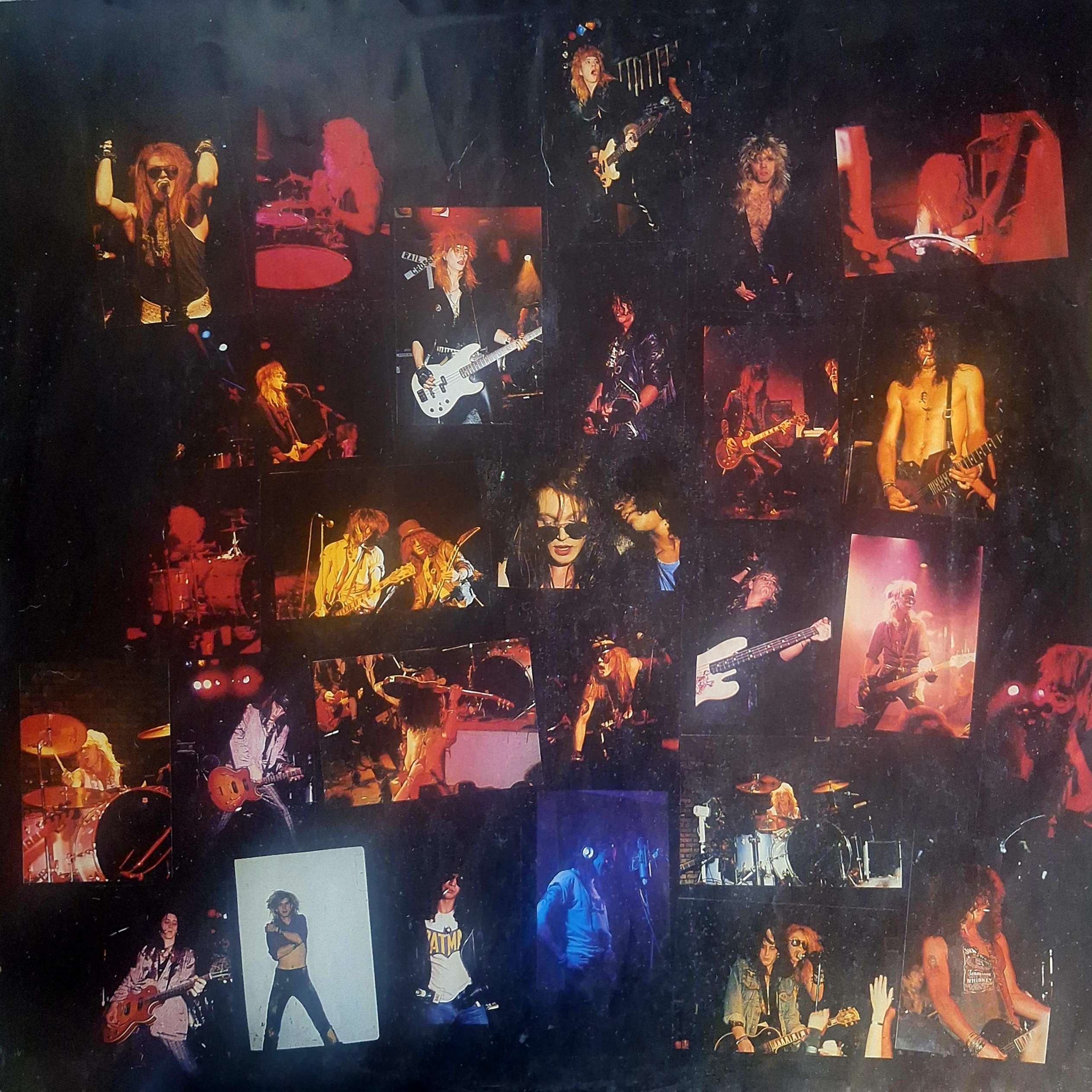
The thing was that although a ton of bands were trying to sound like them, GnR didn’t sound like anyone else. They were fresh; they were exciting; there was a punk edge to their rough and ready sound and despite being spawned by the LA scene, they had little in common with the hair metal bands of the time and we wanted more of it. The hunger for more Guns N’ Roses product meant the Live! Like a Suicide EP was trading for stupid money and a Japanese import featuring five other live tracks from their Marquee shows, and including AC/DC‘s Whole Lotta Rosie, was also costing an arm and a leg.
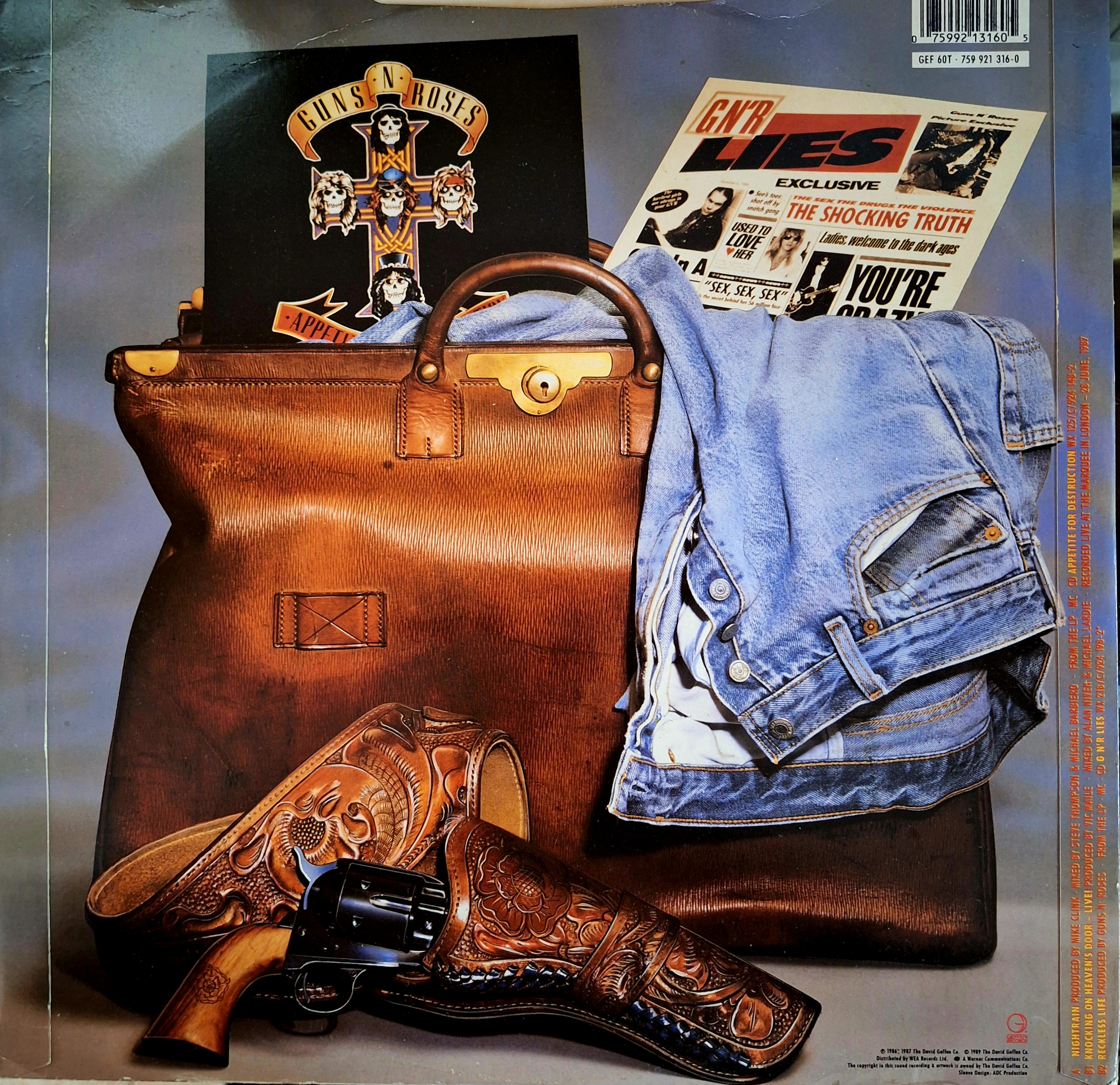
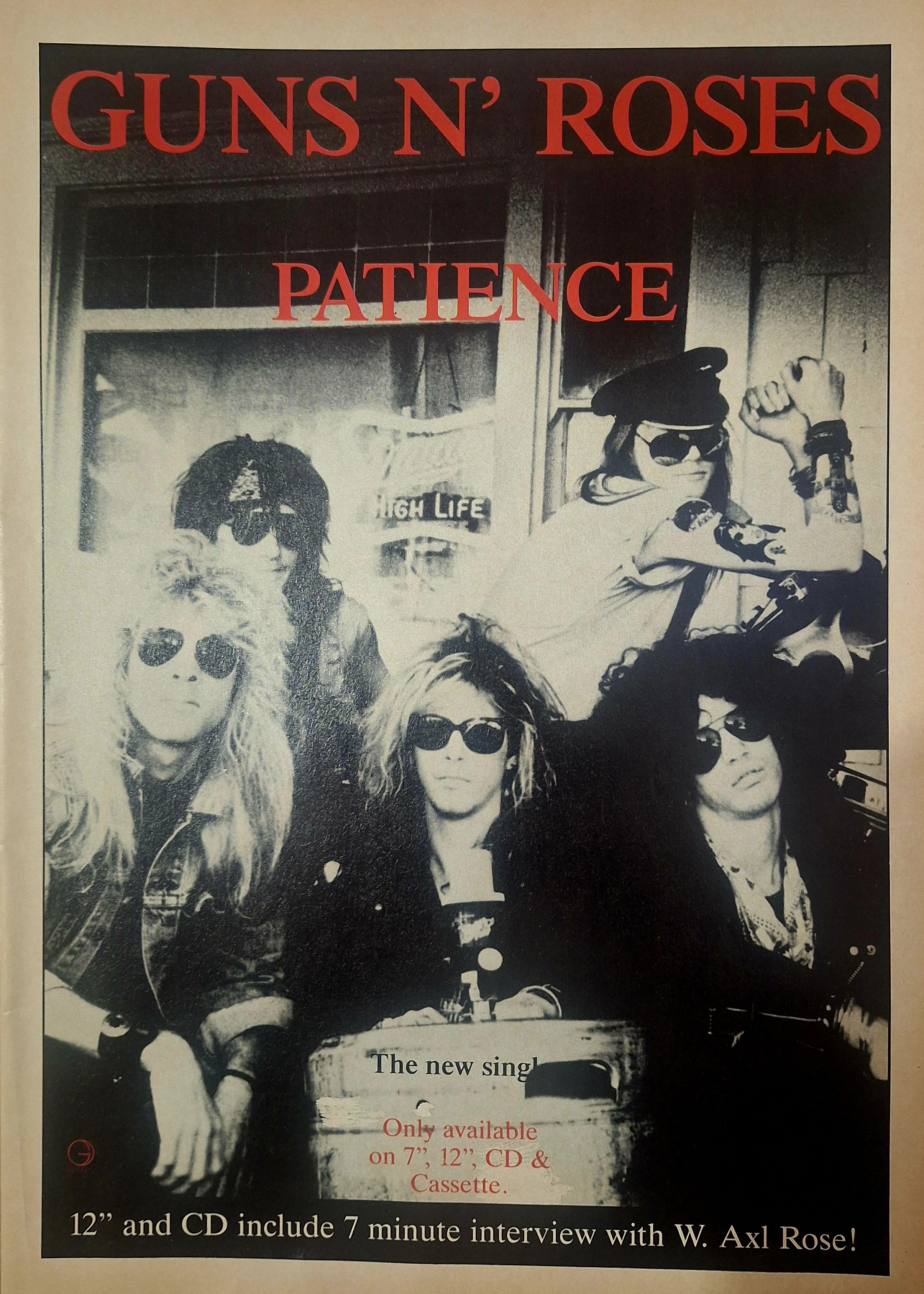
So Geffen Records cashed in and released GnR Lies as a stop-gap. It featured the four tracks from Live! Like a Suicide on the A-side and four acoustic numbers on the B-side – the now classic Patience, the tounge-in-cheek Used to Love Her, a sublime version of You’re Crazy from Appetite and the ill-judged, controversial One in a Million. It would hit the shelves in time for Christmas 1988. My mum was not a happy bunny in the early evening of that December 25th when she heard the first words of the album blaring from my bedroom record player – Hey fuckers! Fucking Guns n’ Fucking Roses!

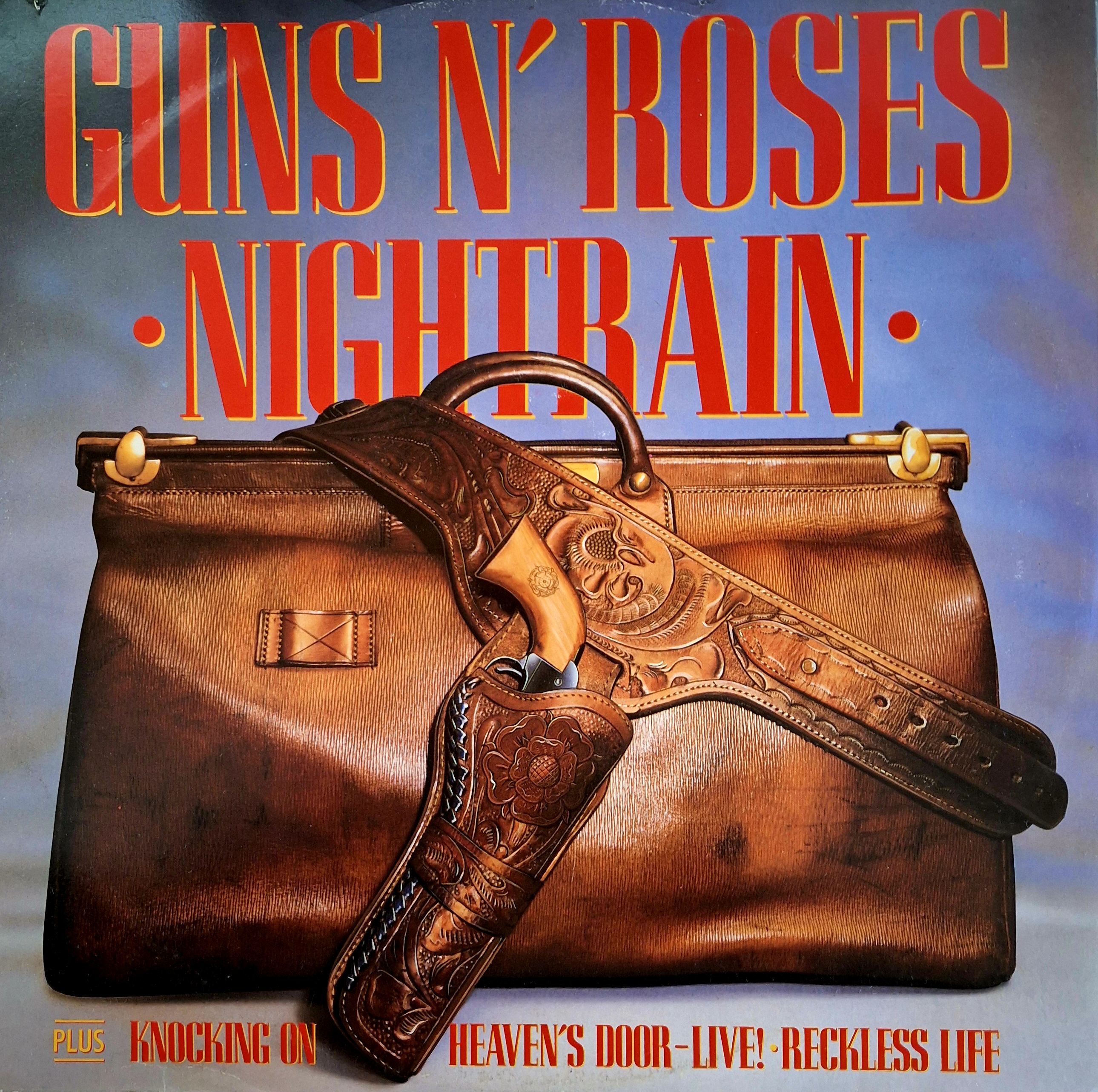
Things would really go mental in 89 though; with their charismatic swagger and ever-present hint of danger, two albums out and plenty of singles to be released, Gn’R went stratospheric in the UK. The naggingly familiar Paradise City with its massive hook, would go top ten, peaking at number 6. The re-release of Sweet Child O Mine would hit the same position. Patience would come a month later and also go top ten, with Nightrain later going top twenty. Appetite spent 48 weeks of 1989 on the album chart with half of those weeks inside the top twenty, while Lies spent a more modest 36 weeks on the album chart. And I was mad for it all – buying the 12″ versions of the singles, waiting anxiously for the videos on Top of The Pops and the Chart Show, listening to Slash being interviewed on the Friday Rock Show, and seriously wondering if I could pull off a bandana. I couldn’t. I was sixteen years old and Guns N’ Roses were my religion.
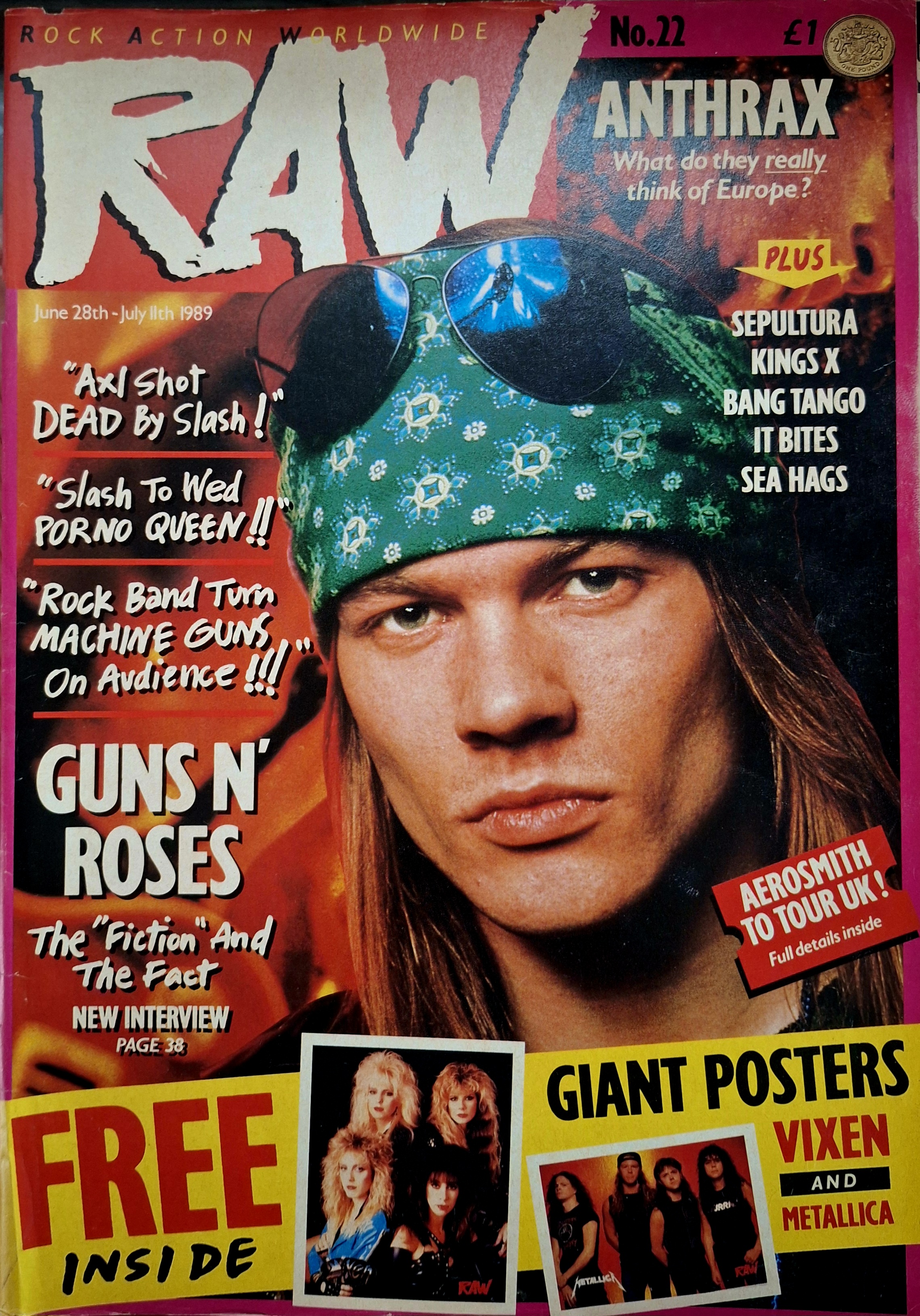
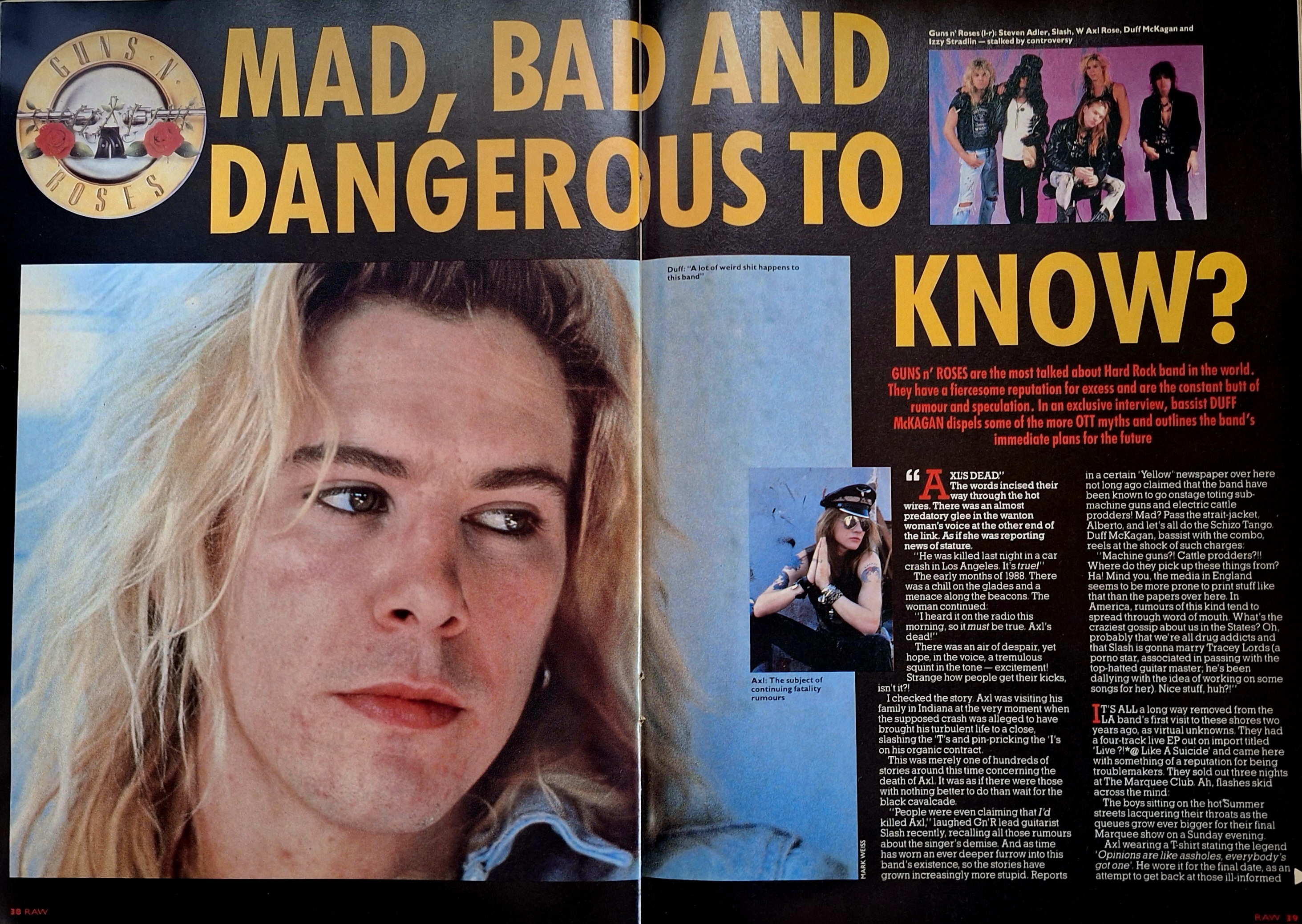
Little did we know that there was already trouble in paradise city. There had been a divisive trip to Chicago, at Axl’s behest, to try and galvanize the band and write and rehearse songs for the next record. But Axl turned up weeks late and things got ugly. Although Izzy was desperately trying to get sober, drug use in the rest of the band was gradually getting out of control, as was Axl’s volatility and the frustration at his behaviour. According to Duff: “The harsh reality was that the old us-against-the-world mentality had waned this year for sure. Steven was fully strung out and babbling incoherently much of the time. Slash had one foot out of the band as a result of feeling betrayed. Izzy had all but checked out. The techs, I soon found out, were secretly looking for other gigs. And to top it all off, we had an expensive bill to pay for the rehearsal space and apartments, the plane trips back and forth, and all the destruction Axl had inflicted on the apartments.”

The heady mix of Axl’s megalomania and a potentially lethal cocktail of powders, pills, crack rocks and booze were tearing the band apart. In these pre-internet days, the news that was filtering across the Atlantic wasn’t exactly good, but as Guns was the most dangerous band in the world, we took it for the usual tales of rock n roll debauchery. For instance, when GnR supported the Rolling Stones and Axl dropped the following bombshell – “unless certain people in this band get their shit together, these will be the last Guns N’ Roses shows you’ll fucking ever see. ‘Cause I’m tired of too many people in this organization dancing with Mr. Goddamn Brownstone” – it was just another headline, a consequence of the band’s success and an affirmation of their reputation. However, for Duff, even though it was still only 1989 and Guns were basically the hottest ticket in the world, the incident rang serious alarm bells: “Once Axl took his concerns public, the times of being a gang—us against the world—were over. We played the rest of the show, but it was a halfhearted effort at best. Afterward, and really for the remainder of our career, we just went our separate ways. That night officially rang the bell for the end of an era in GN’R.”

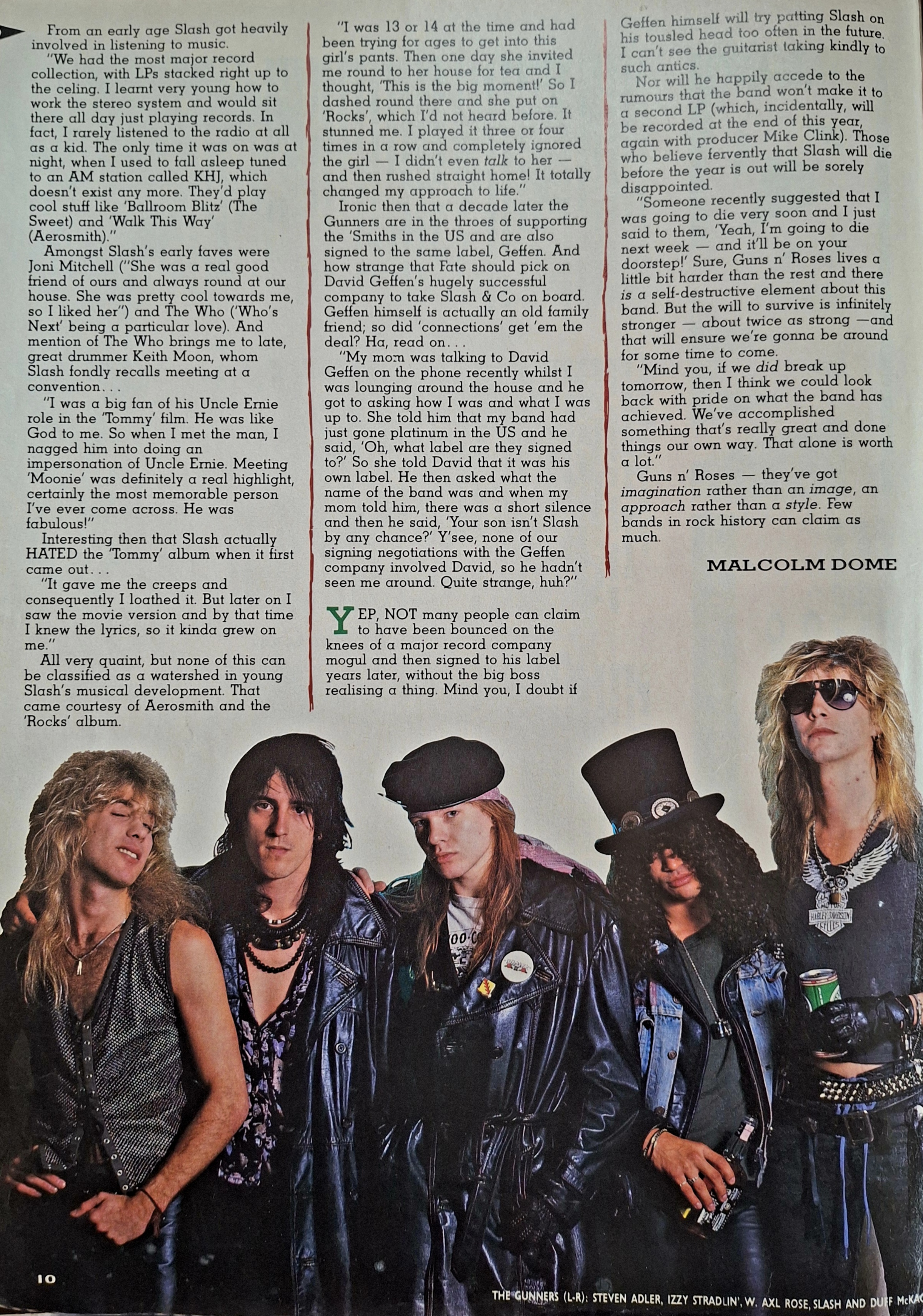
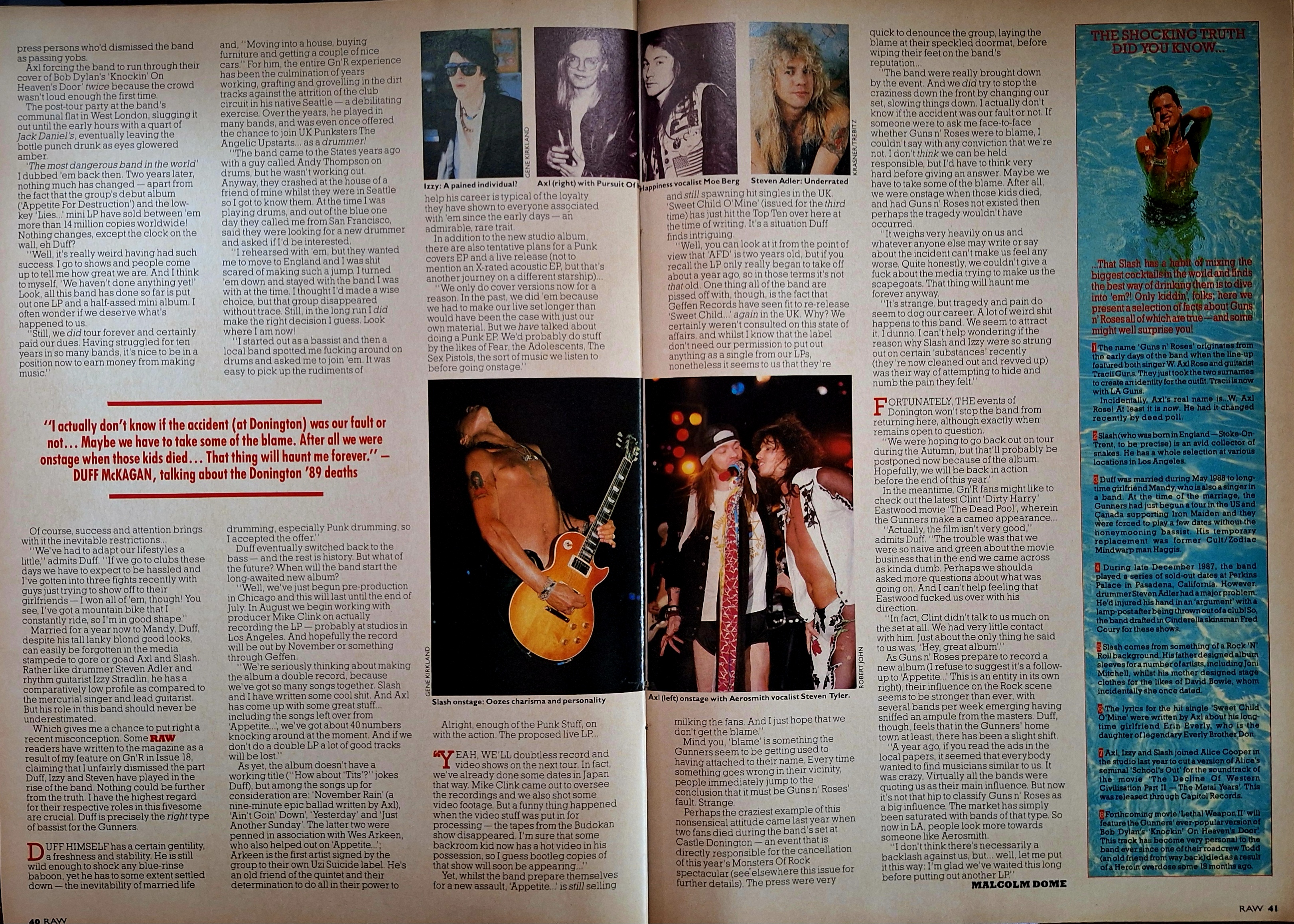
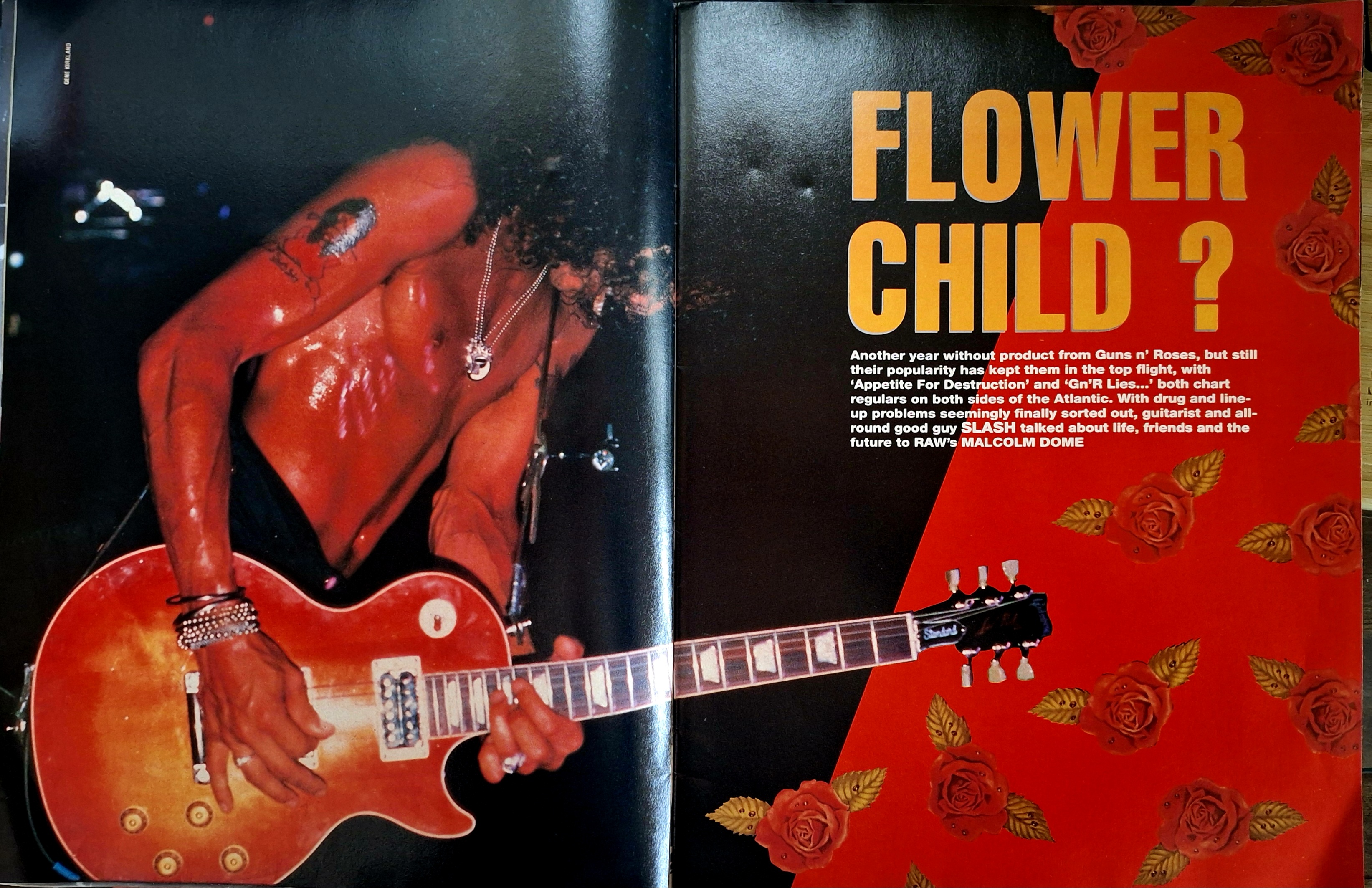
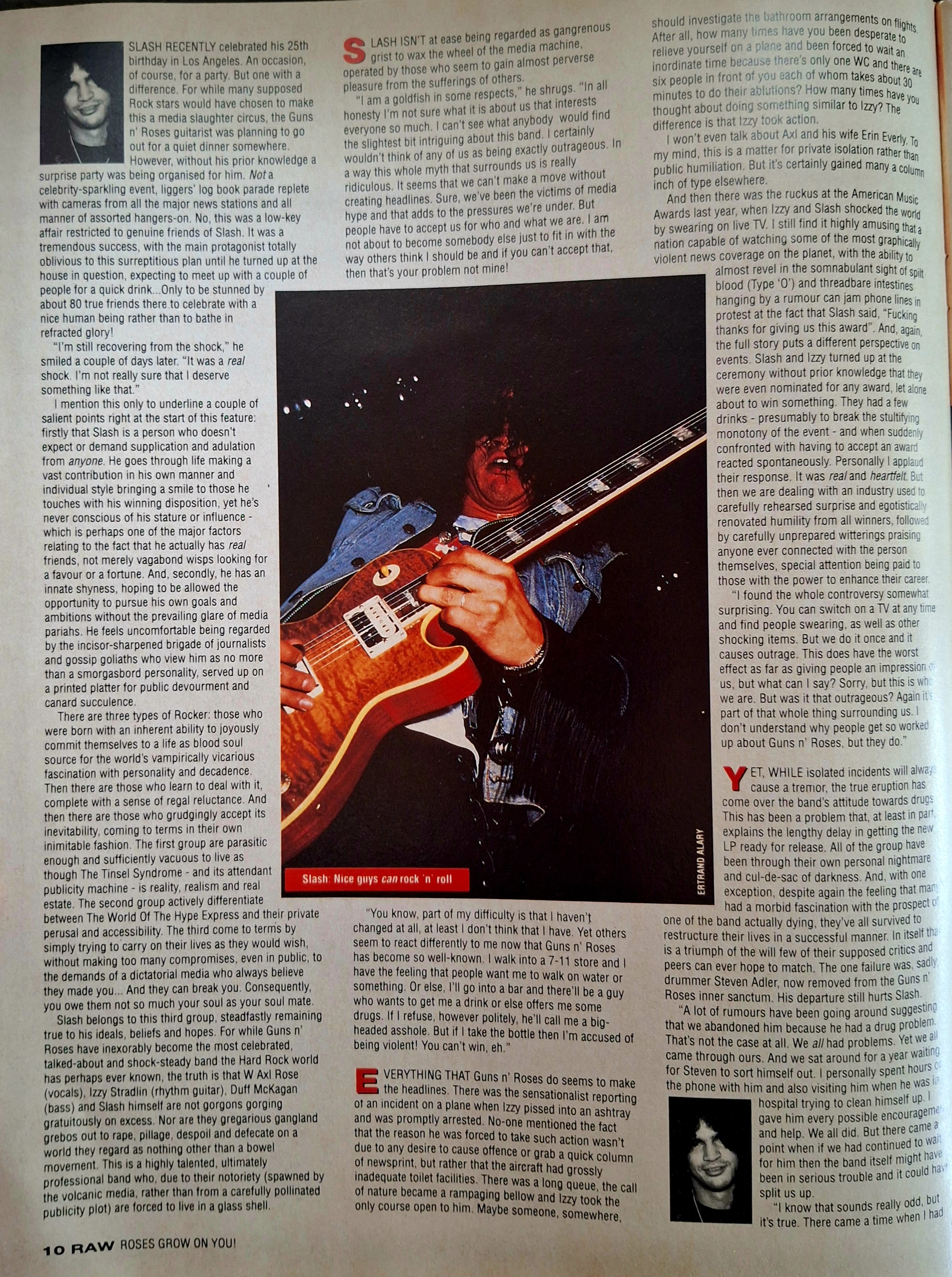
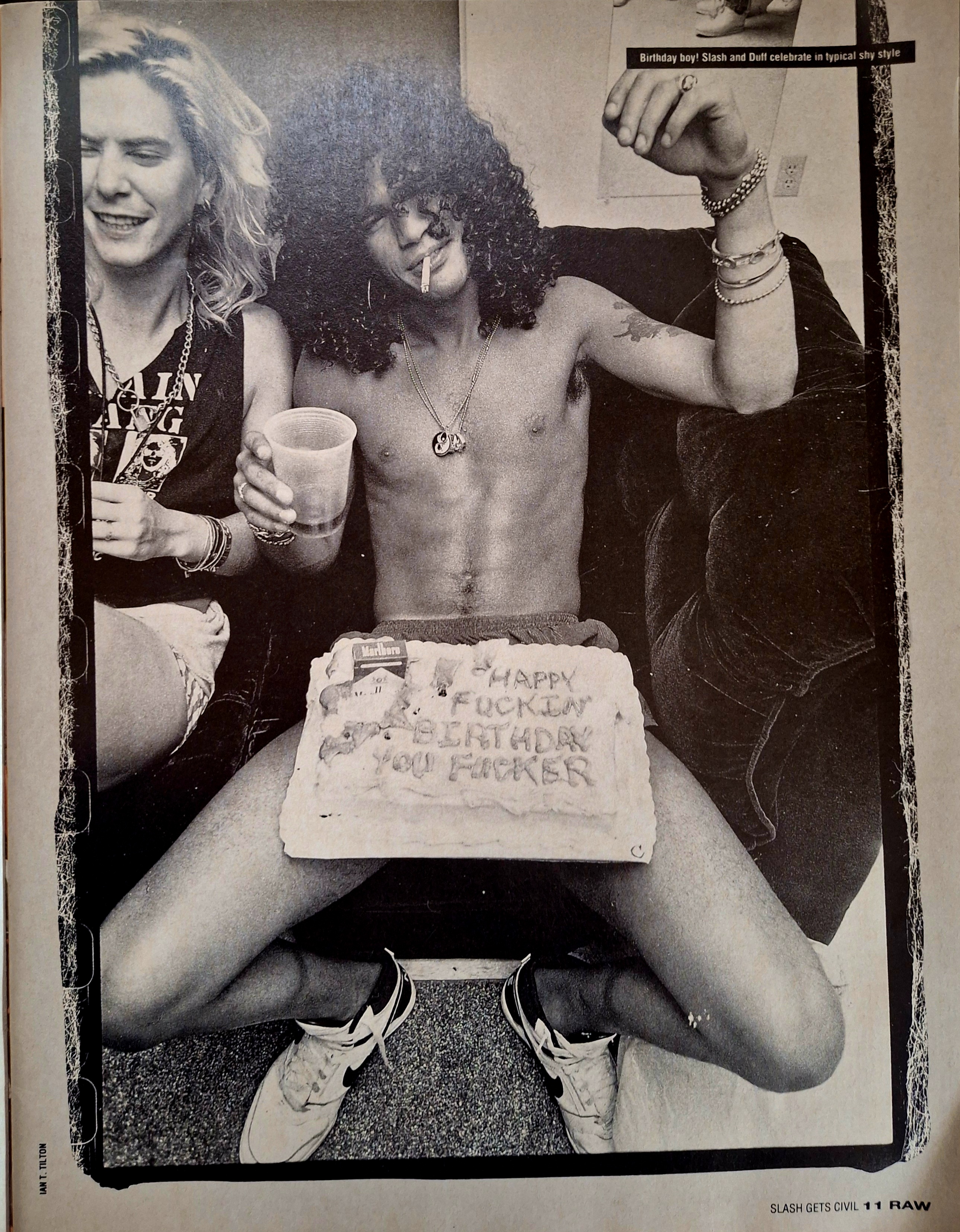
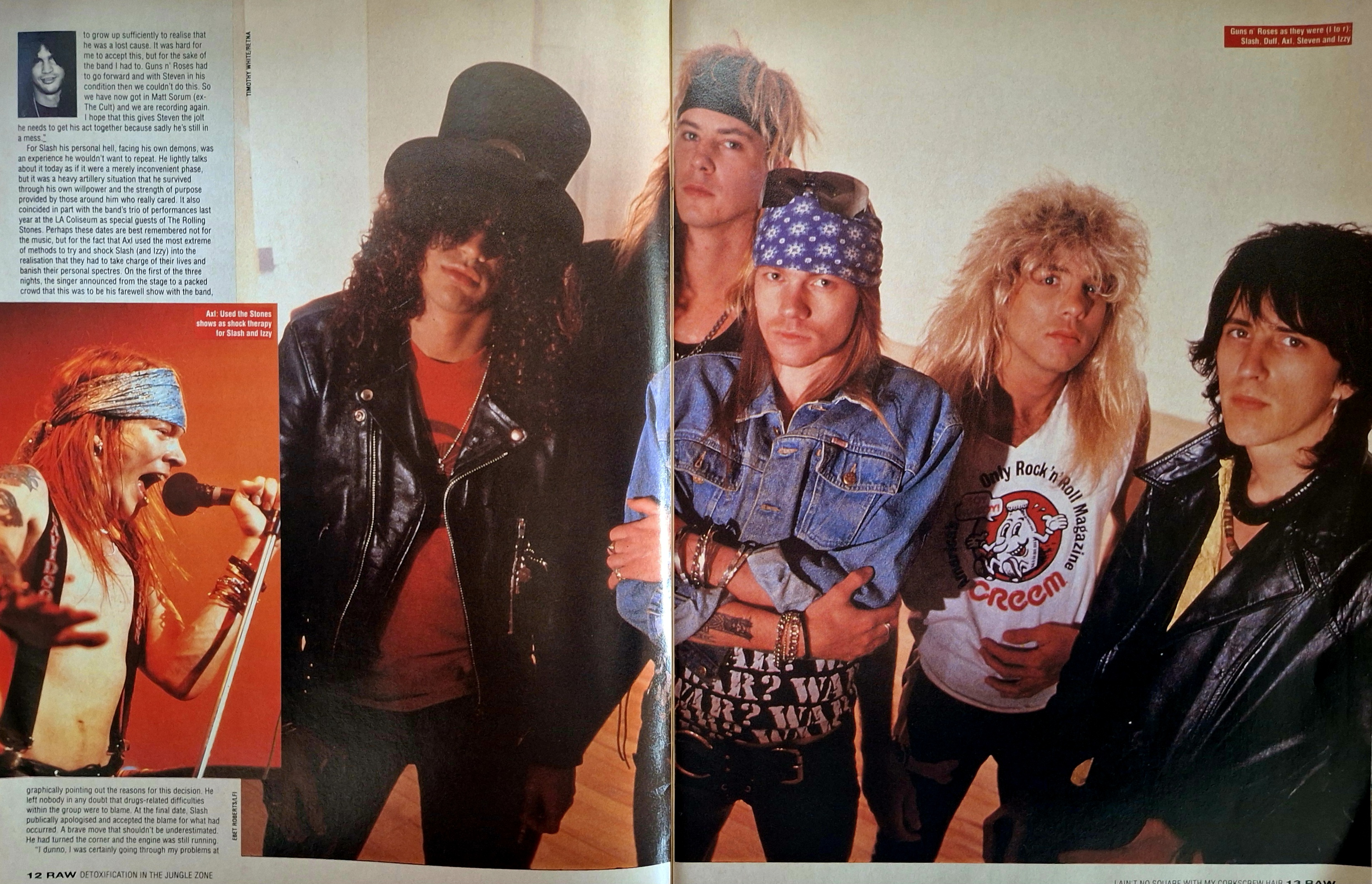
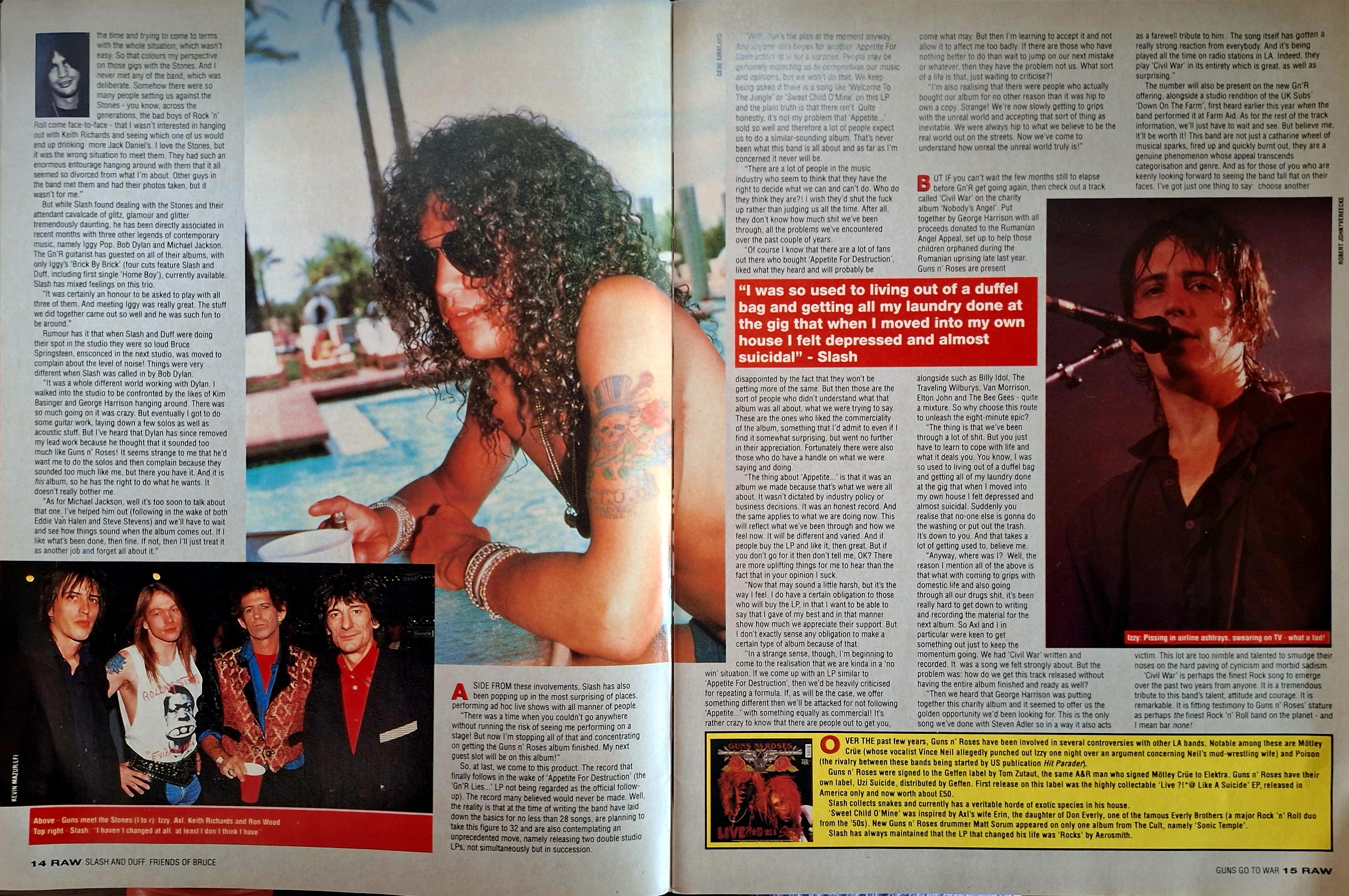
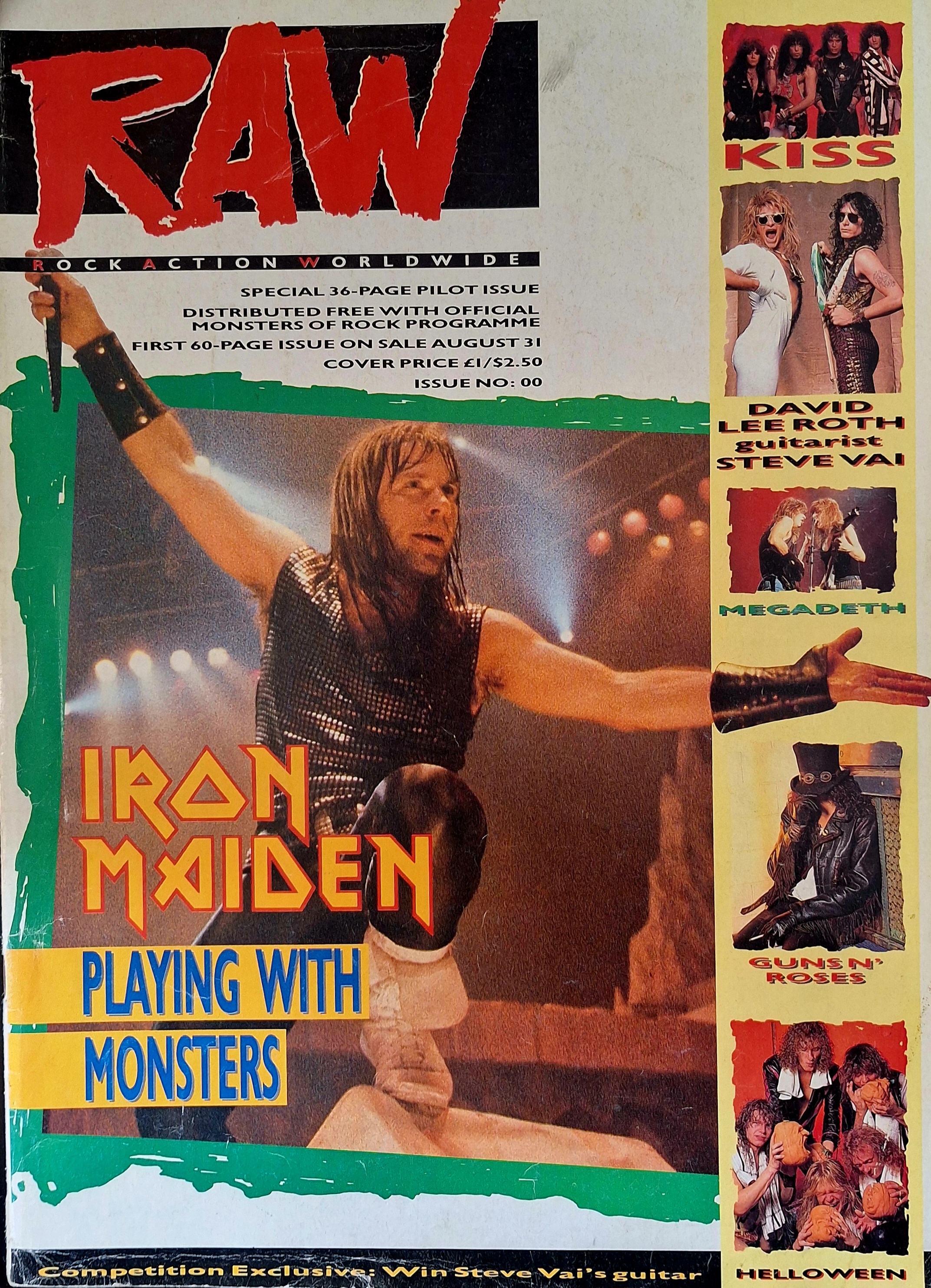
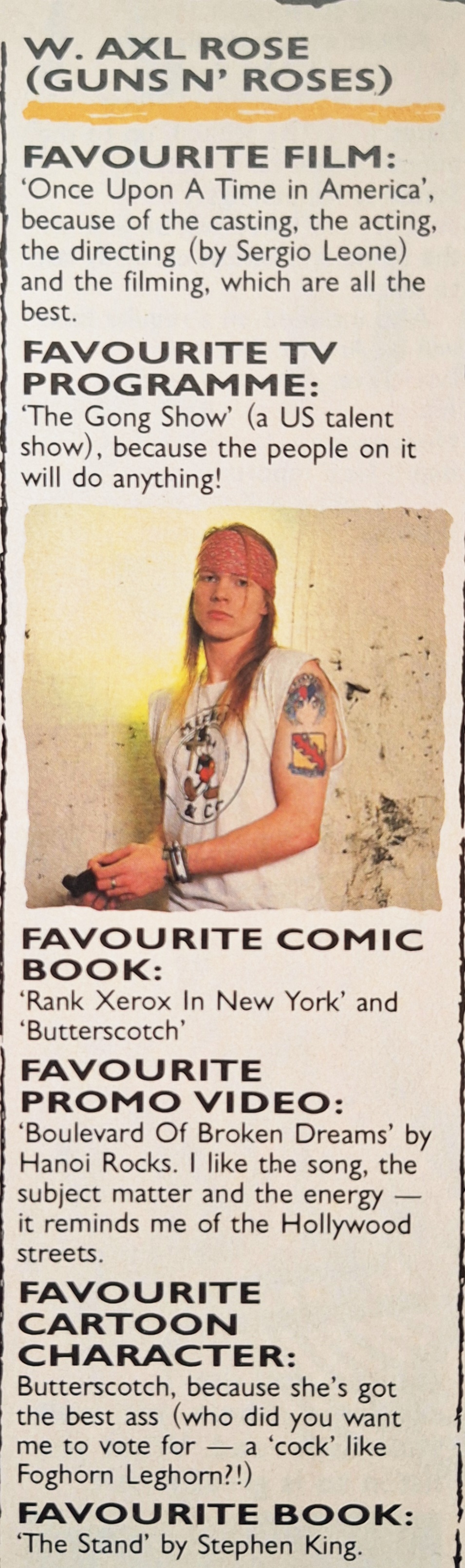
In the meantime, they were shifting units like proverbial hotcakes, with Appetite for Destruction going on to sell over 24 million copies, becoming the fifth best selling album and the most successful debut album release of the 1980s, but there was no new product in 1990. Even so, their popularity was such that the promise of activity in 1991 meant that they still graced the cover of Raw Magazine‘s 1990 yearbook, which included a candid interview with Slash.
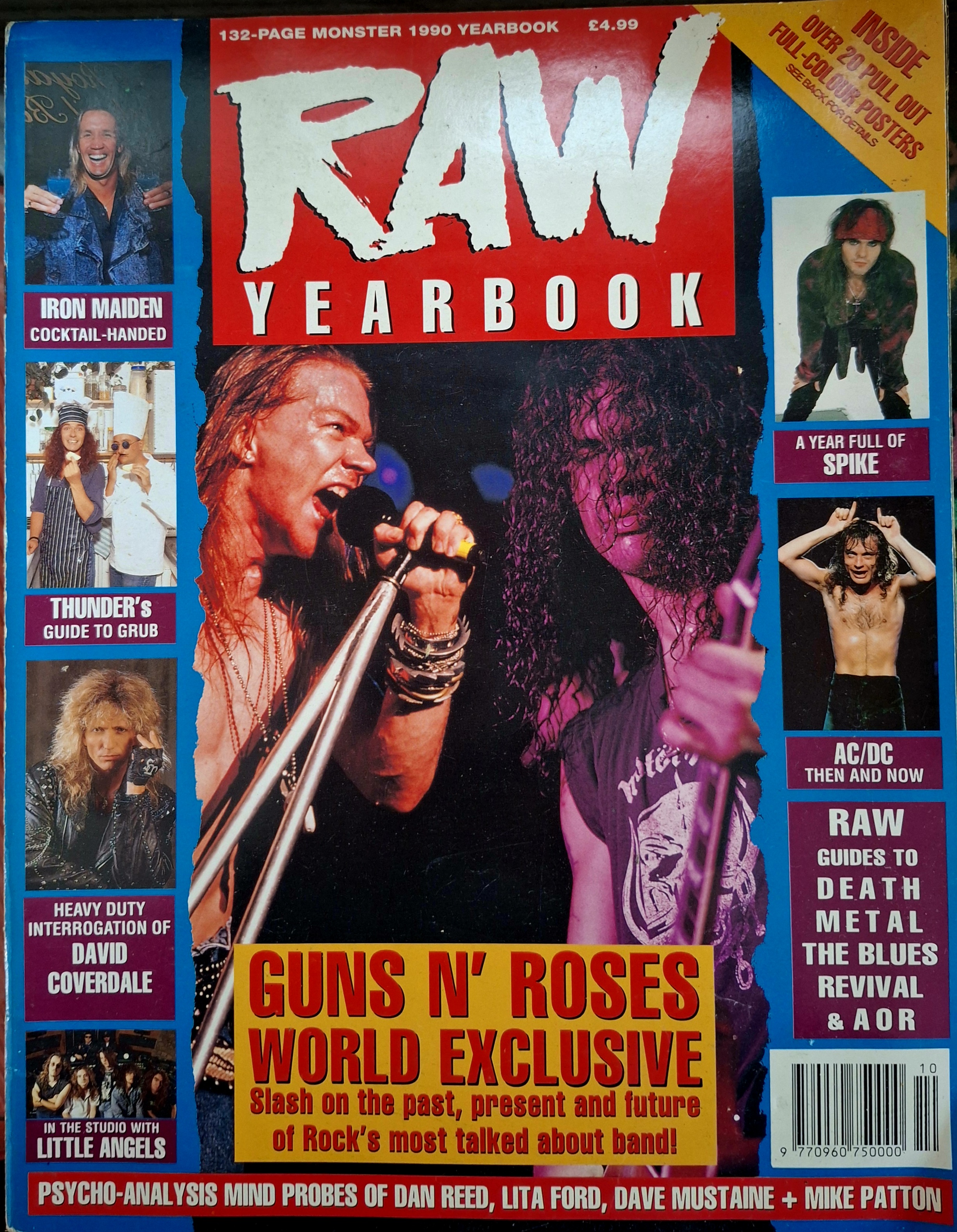
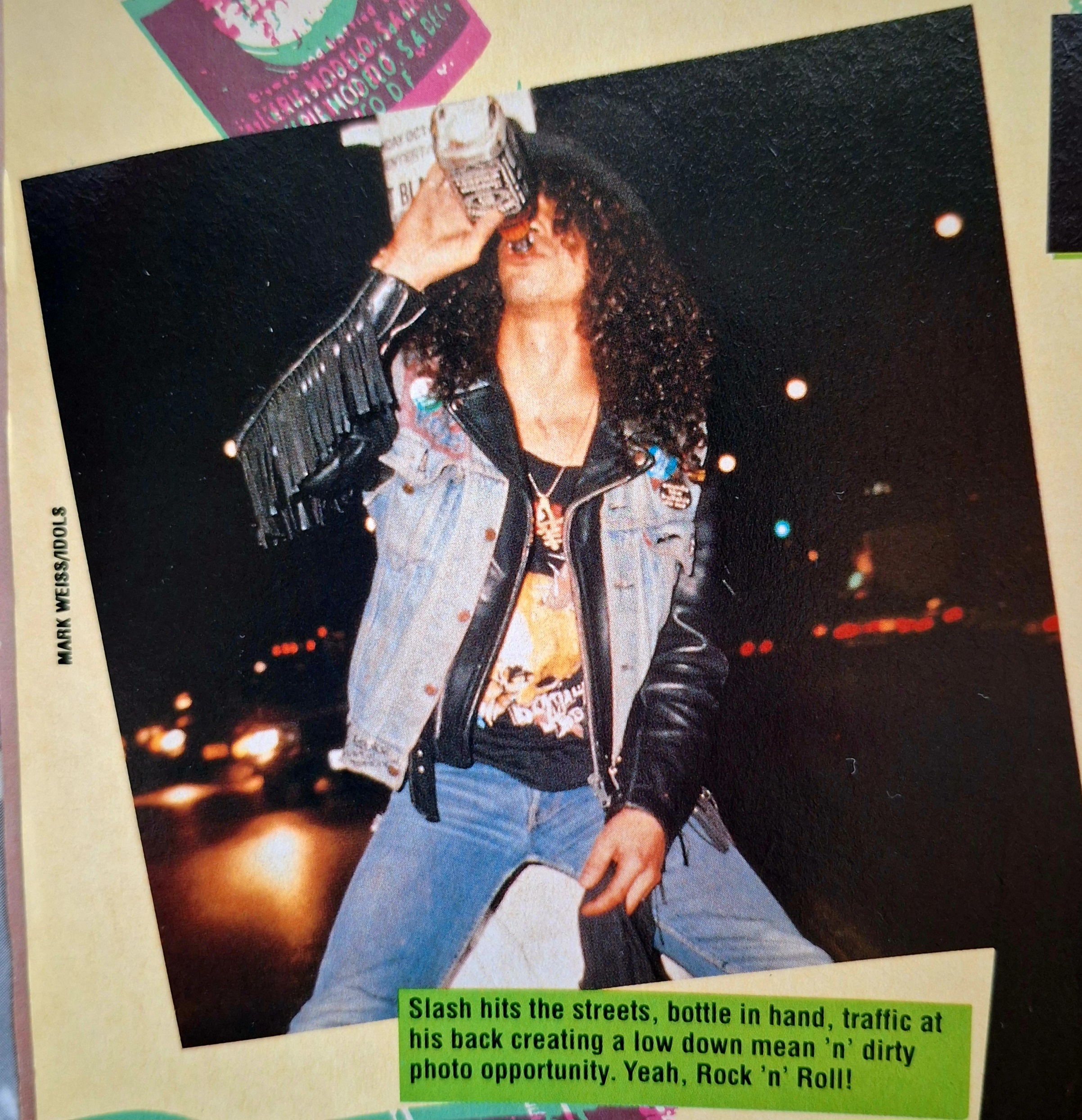
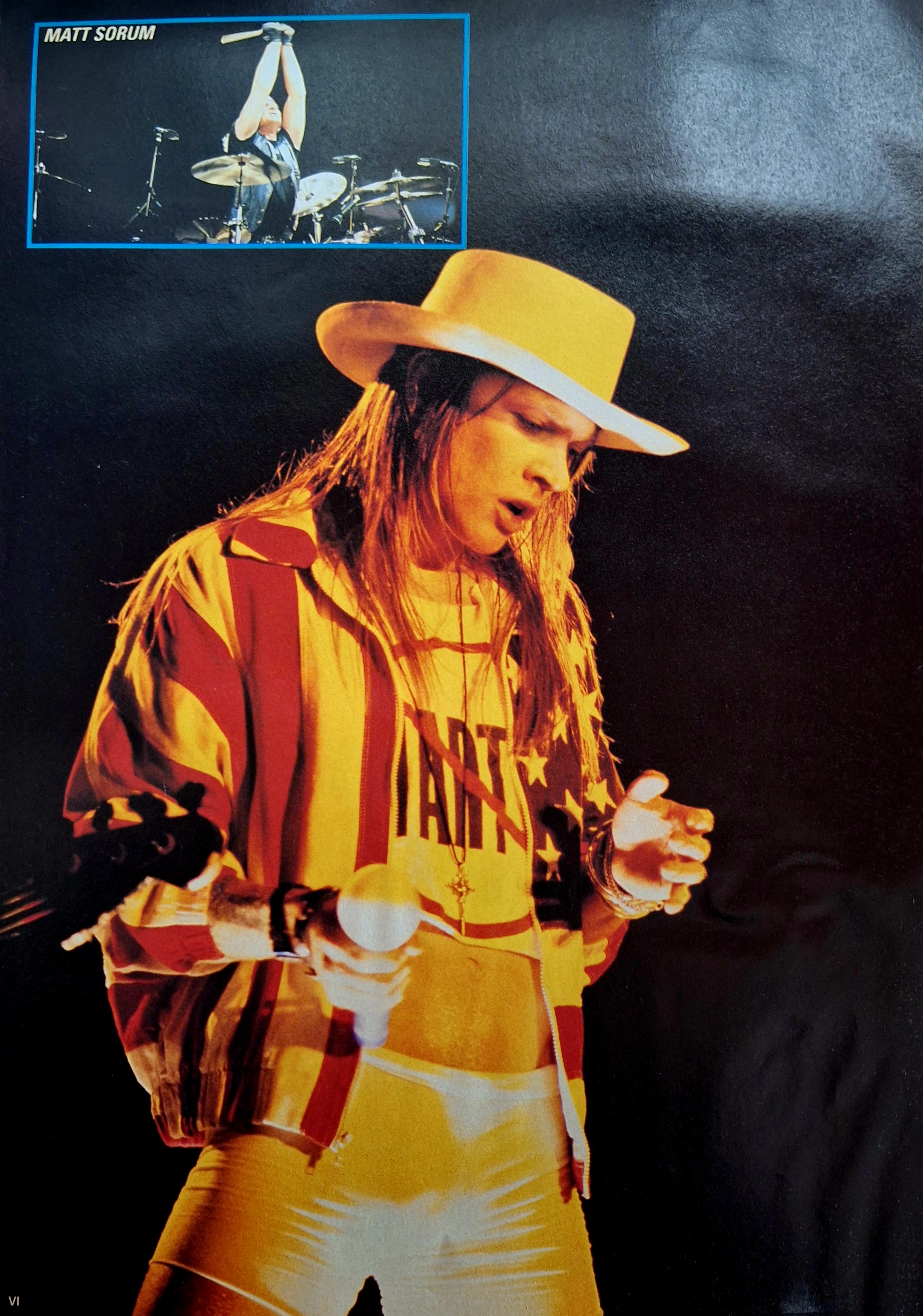
The guitarist addresses their treatment by the media, the fascination people have for the band, the (drug) problems they’d been through, and the uncerimonious firing of Steven Adler. For a group of very heavy drug users and drinkers to fire someone for excessive use meant that Adler must have been really screwing up, and according to Slash: “there came a time when I had to grow up sufficiently to realise that he was a lost cause. It was hard to accept this, but for the sake of the band I had to. Guns n’ Roses had to go forward and with Steven in his condition then we couldn’t do this. So we have now got in Matt Sorum and we are recording again.” Despite the clear implications of chaos within the band over the last couple of years, it seemed that things were settling down and the promise of not one, but two double albums had me chomping at the bit. As such, 1991 would edge into dreams come true territory.
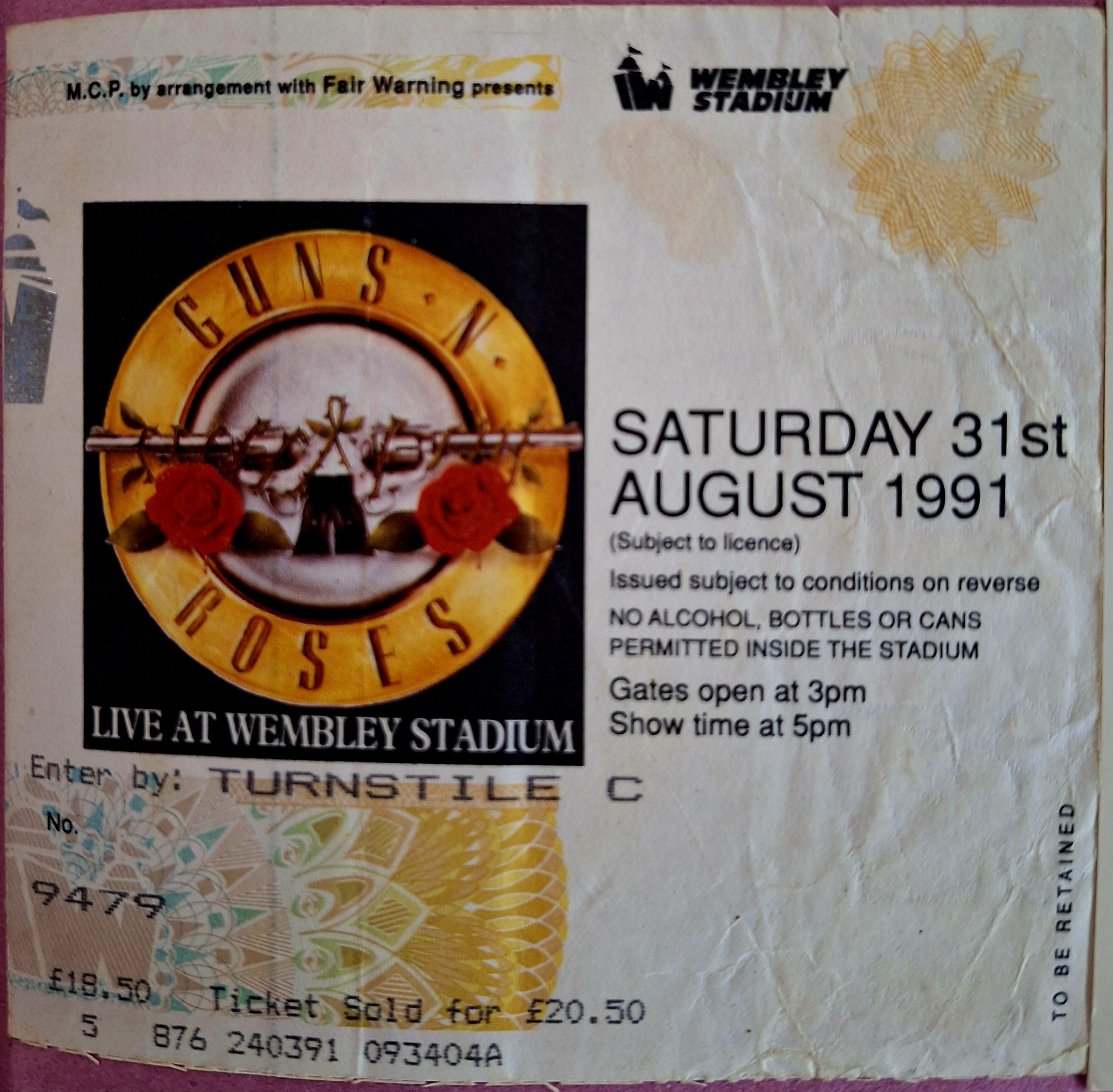
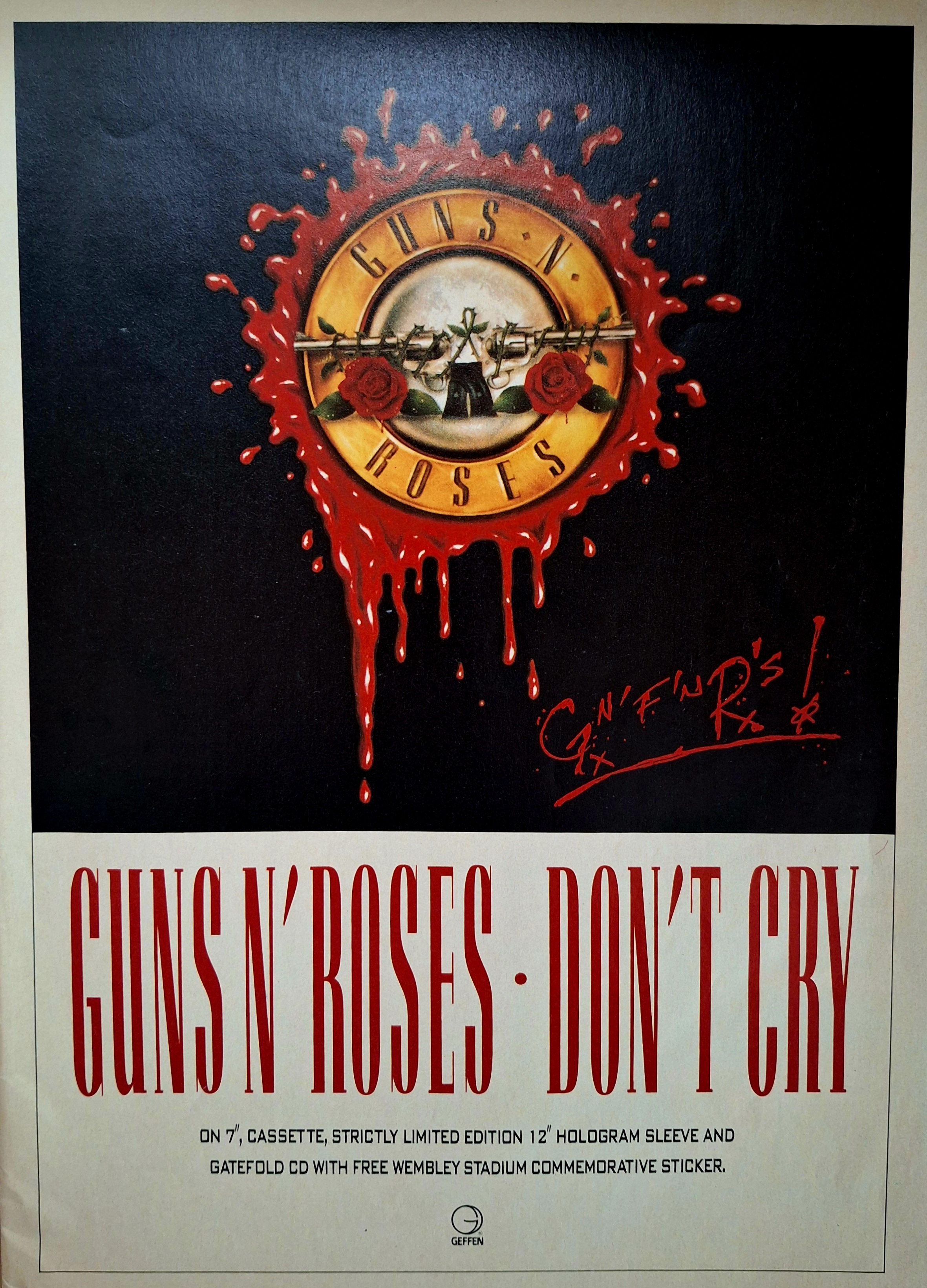
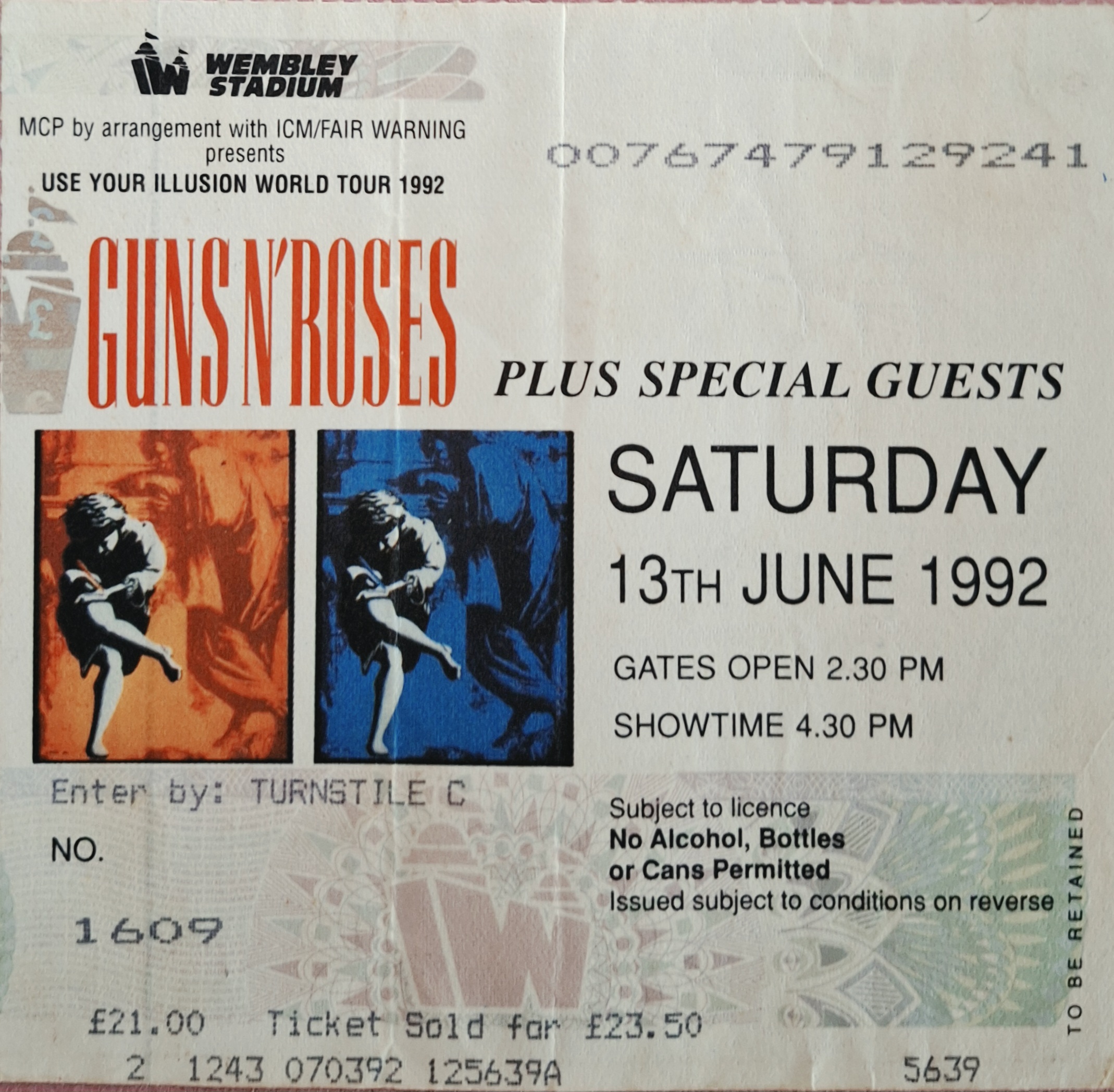
After two hours of frantic redialling – yes actually dialling, not pressing redial – we had tickets for the headline show at Wembley Stadium at the end of August. With Skid Row at their peak and a then unknown Nine Inch Nails in tow (Axl showing great insight into the coming changes in the world of rock – he later tried to get Nirvana to tour with GnR) the Wembley show was the culmination of my teenage Guns N’ Roses obsession.

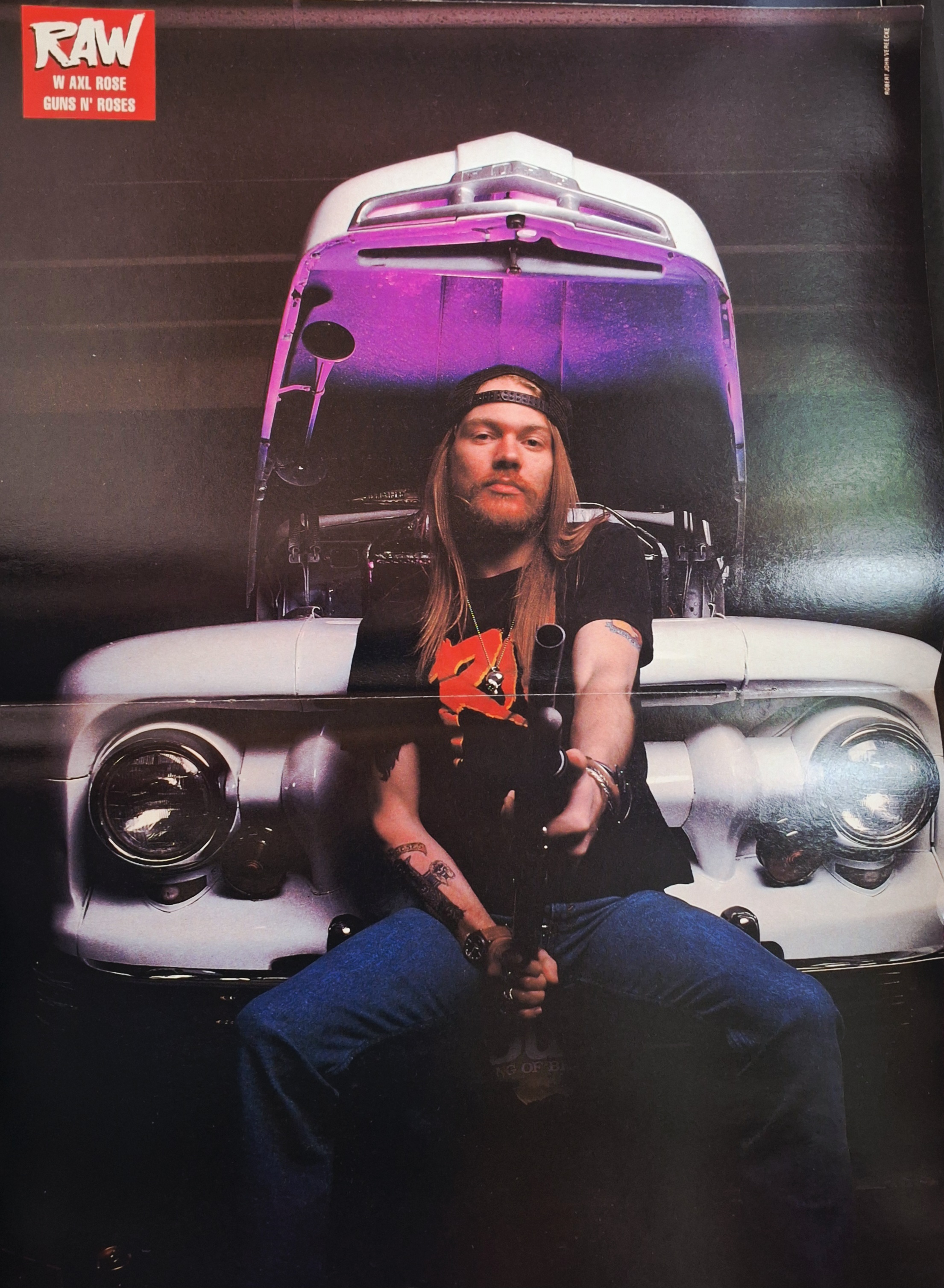
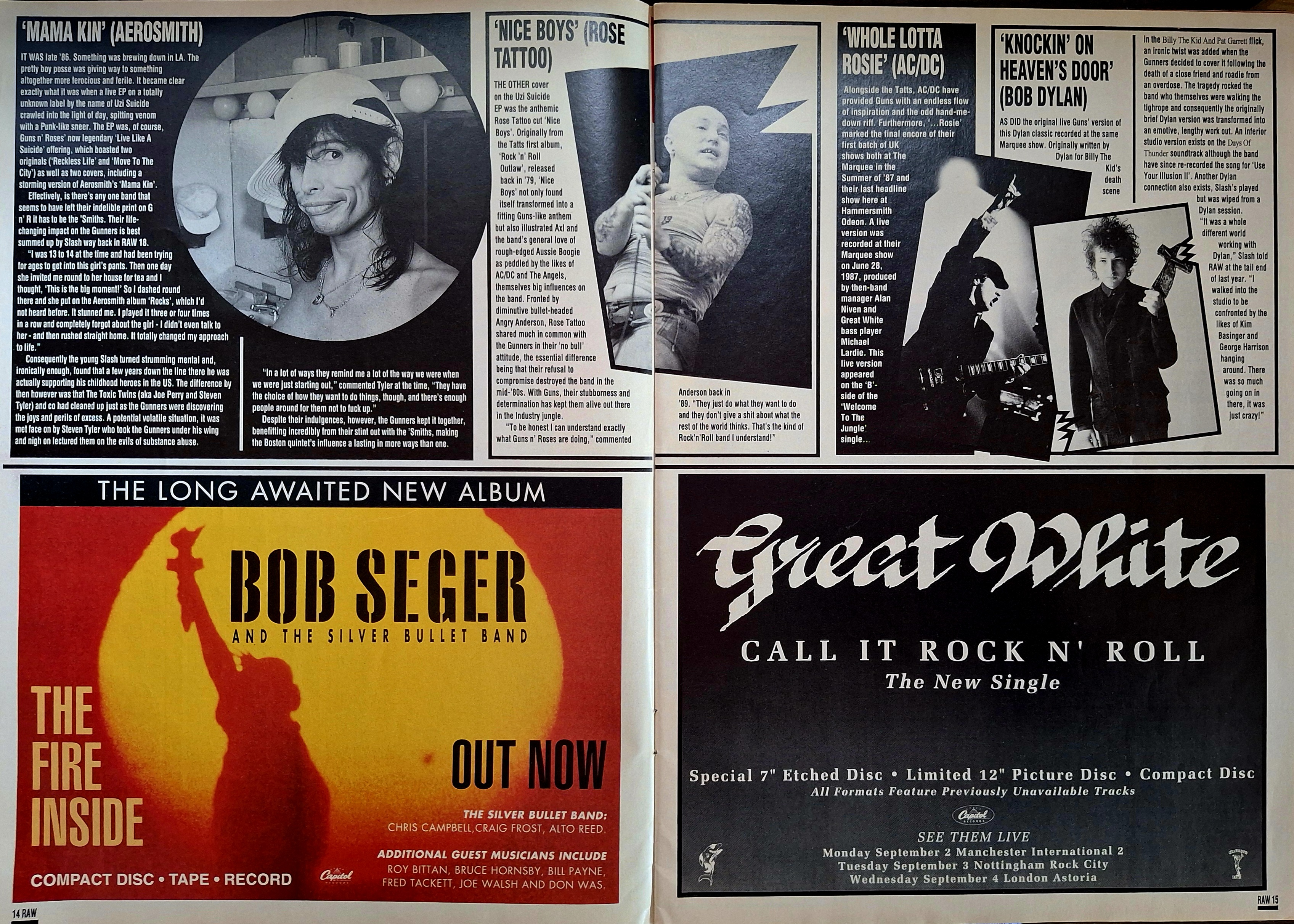
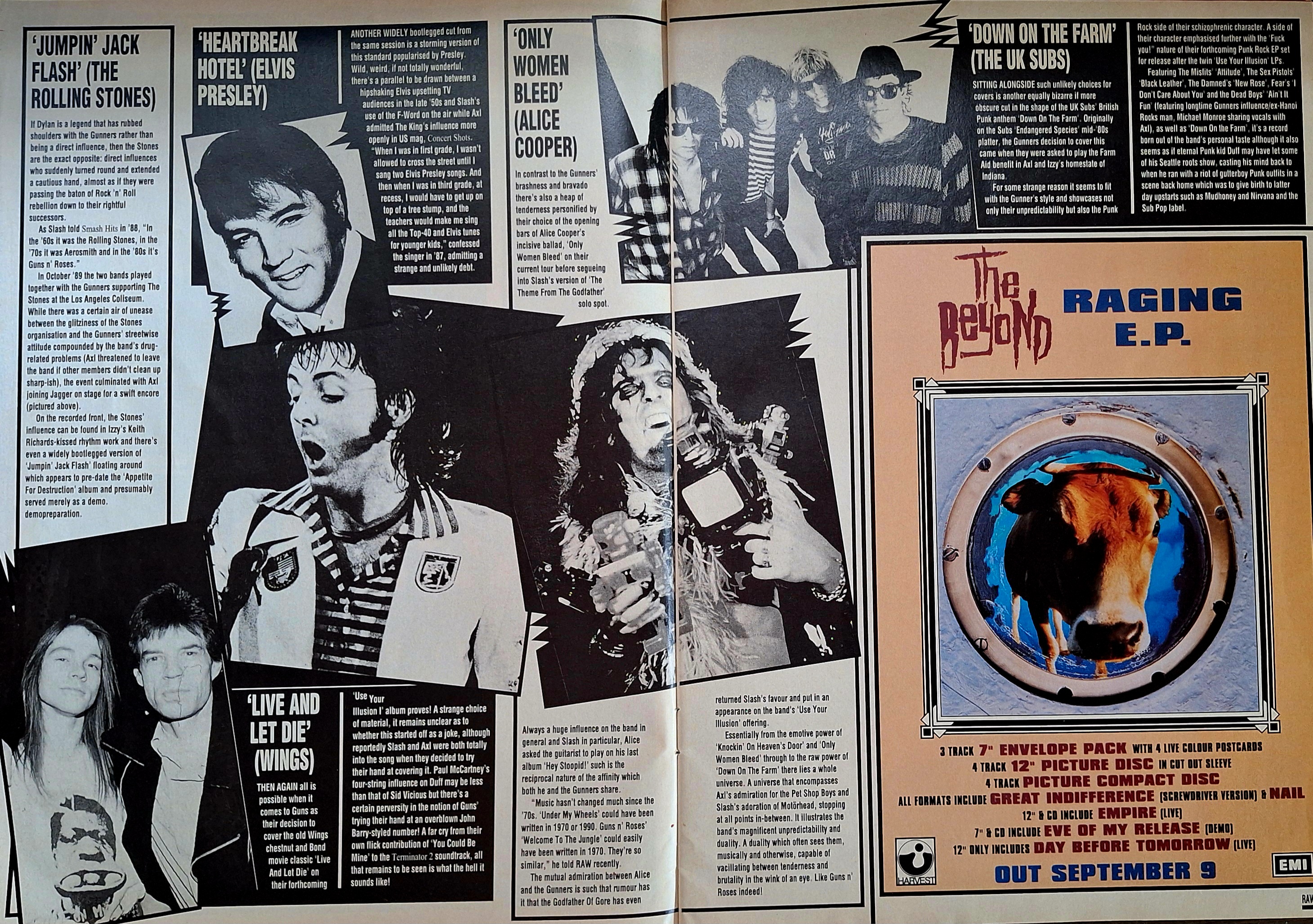
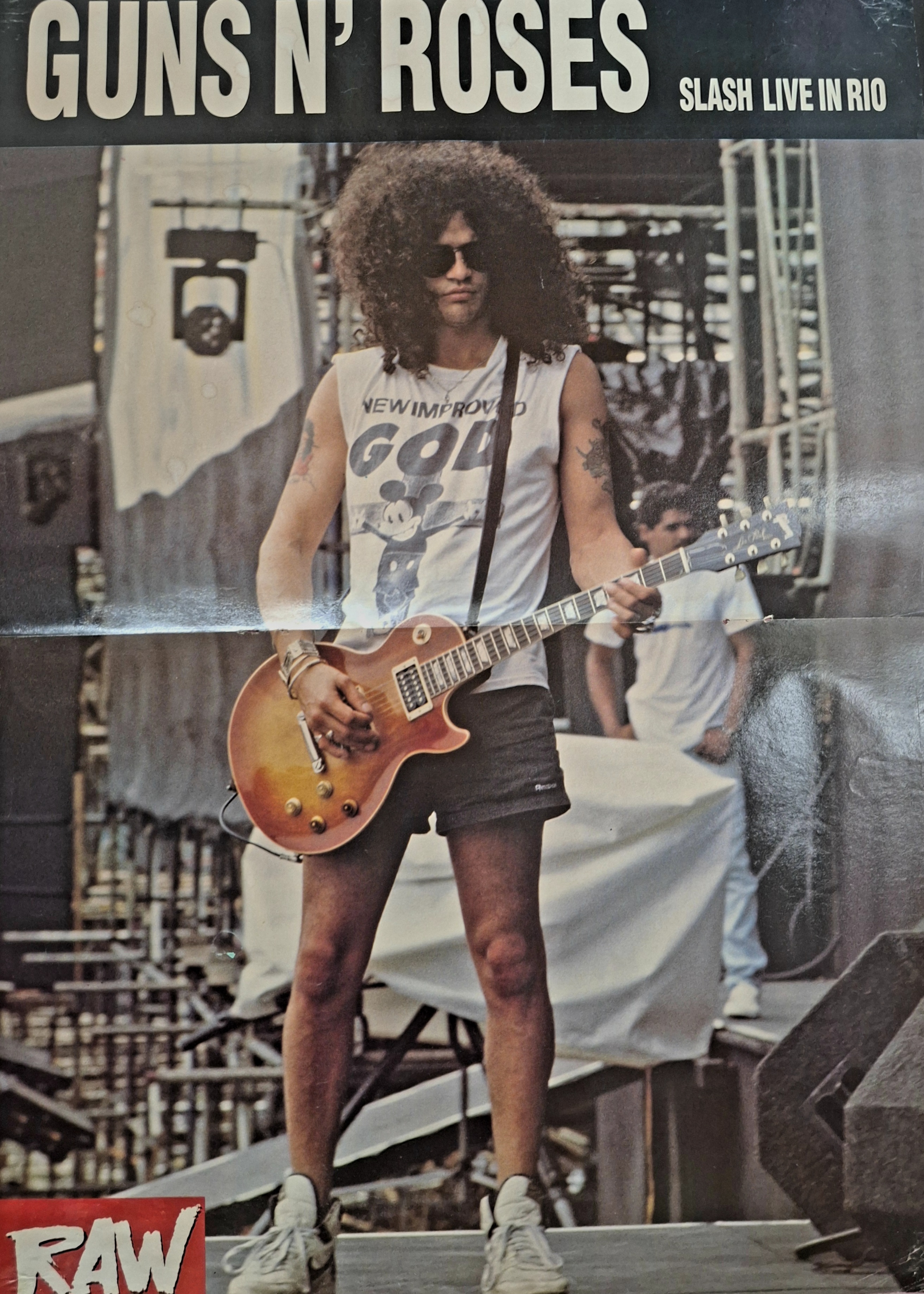
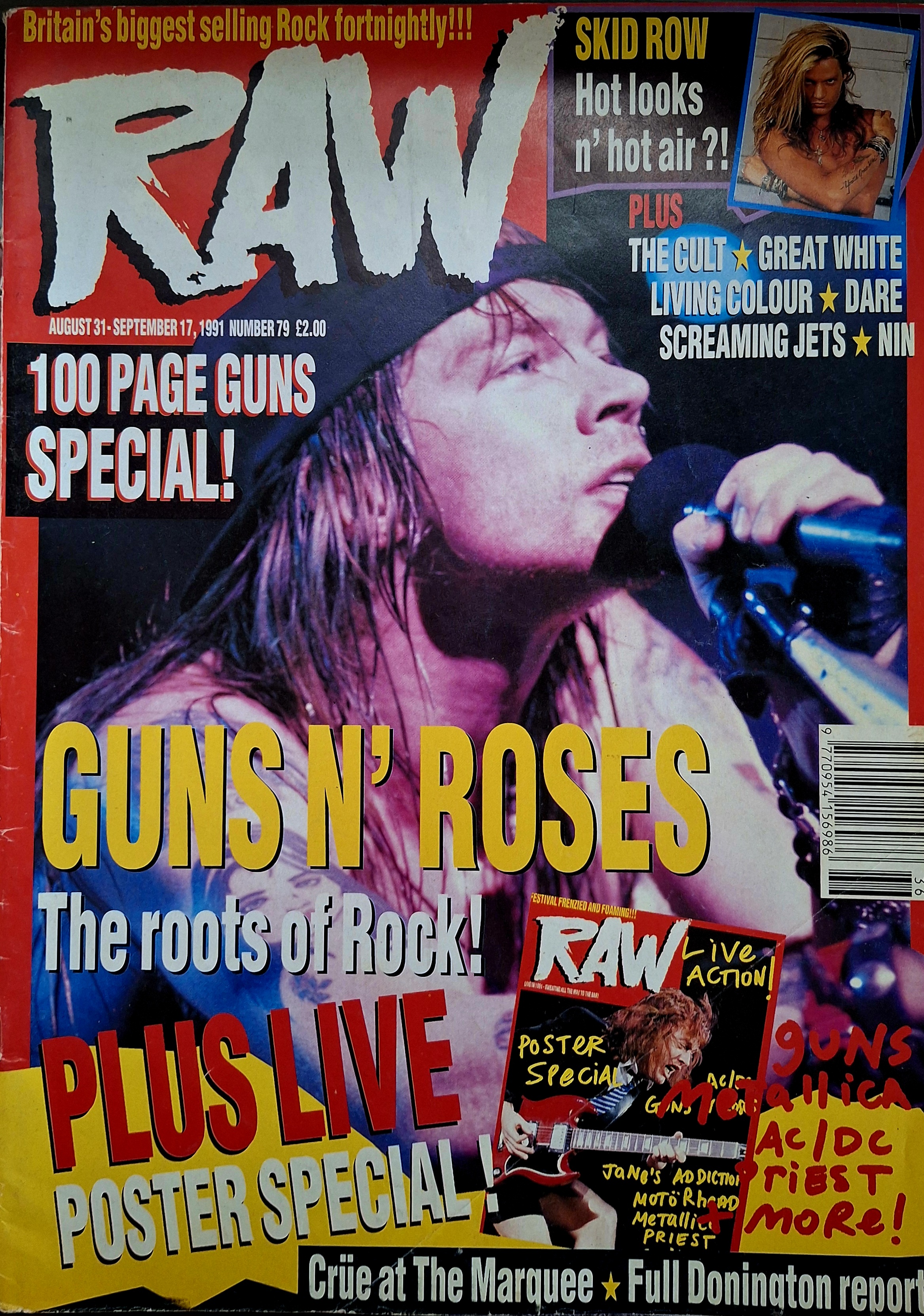
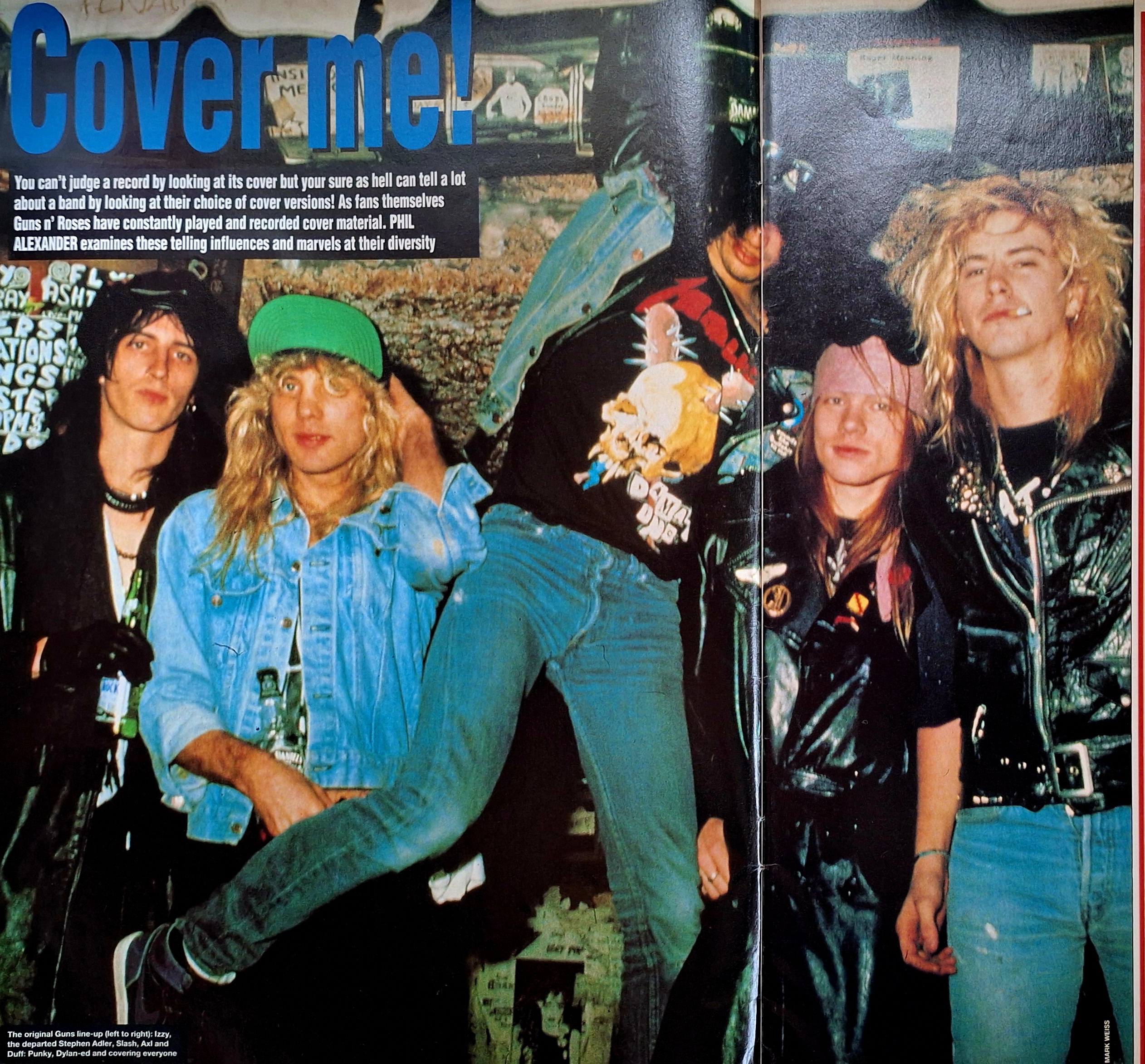
Prior to the Wembley show, in the absence of the yet to be mixed Use Your Illusion albums and to avoid doubling down on the never ending stream of scandal and controversy, Raw magazine opted to do a feature on the cover versions that frequently popped up in the band’s catalogue. Sure, there was also an interview with Sebastian Bach of Skid Row and a piece on Nine Inch Nails (But, are they Metal?), but with Axl and the band basically avoiding any media, and possibly with the timing of the issue (it ran on a two-weekly cycle) there was little else to talk about. However, it is noteworthy that despite the issue featuring a review of one of the most awesome Monsters of Rock line-ups in history – The Black Crowes, Queensrÿche, Mötley Crüe, Metallica, and AC/DC – it was Guns N’ Roses that graced the cover. Given that this was their first gig in England since their own ill-fated appearance at Donington back in 88, it is no wonder that the HR/HM scene in the UK was boiling over with excitement.
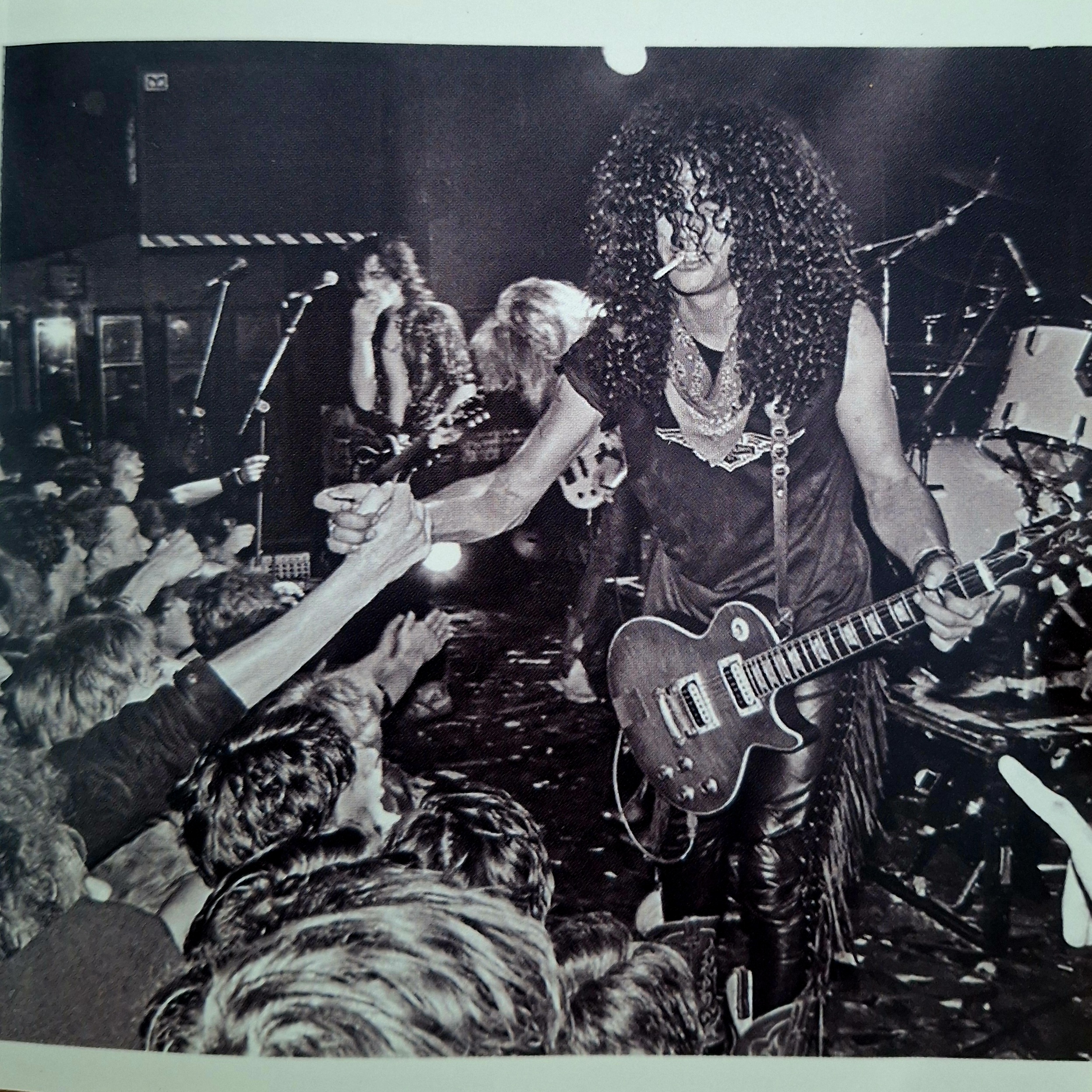
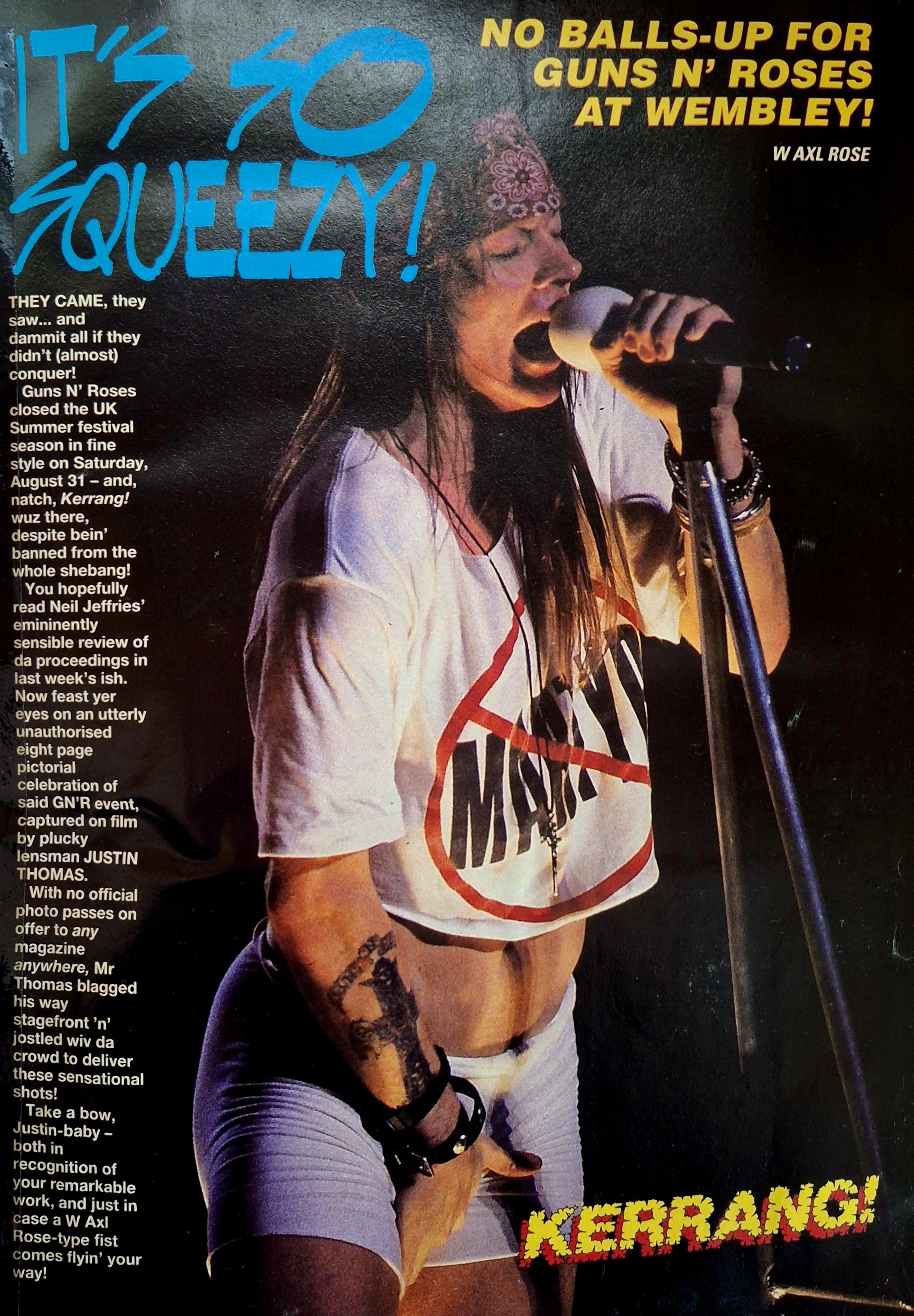
After Nine Inch Nails’ energetic opening set, an on-form Skid Row, with a very excited Sebastian Bach, won over the crowd and disappointed Brent Council by playing Get the Fuck Out. It was all bluster though. We were their to see Gn’R and they did not disappoint. With You Could Be Mine, backed with Civil War, having been released some months earlier, they were already familiar and much loved, so the peppering of new material amongst the songs from Appetite, Lies and assorted covers went down well. To be honest, my memory of the show is a little hazy – it was 35 years ago – but the YouTube videos show that all the swagger was there along with that hint of volatility bubbling just under the surface.

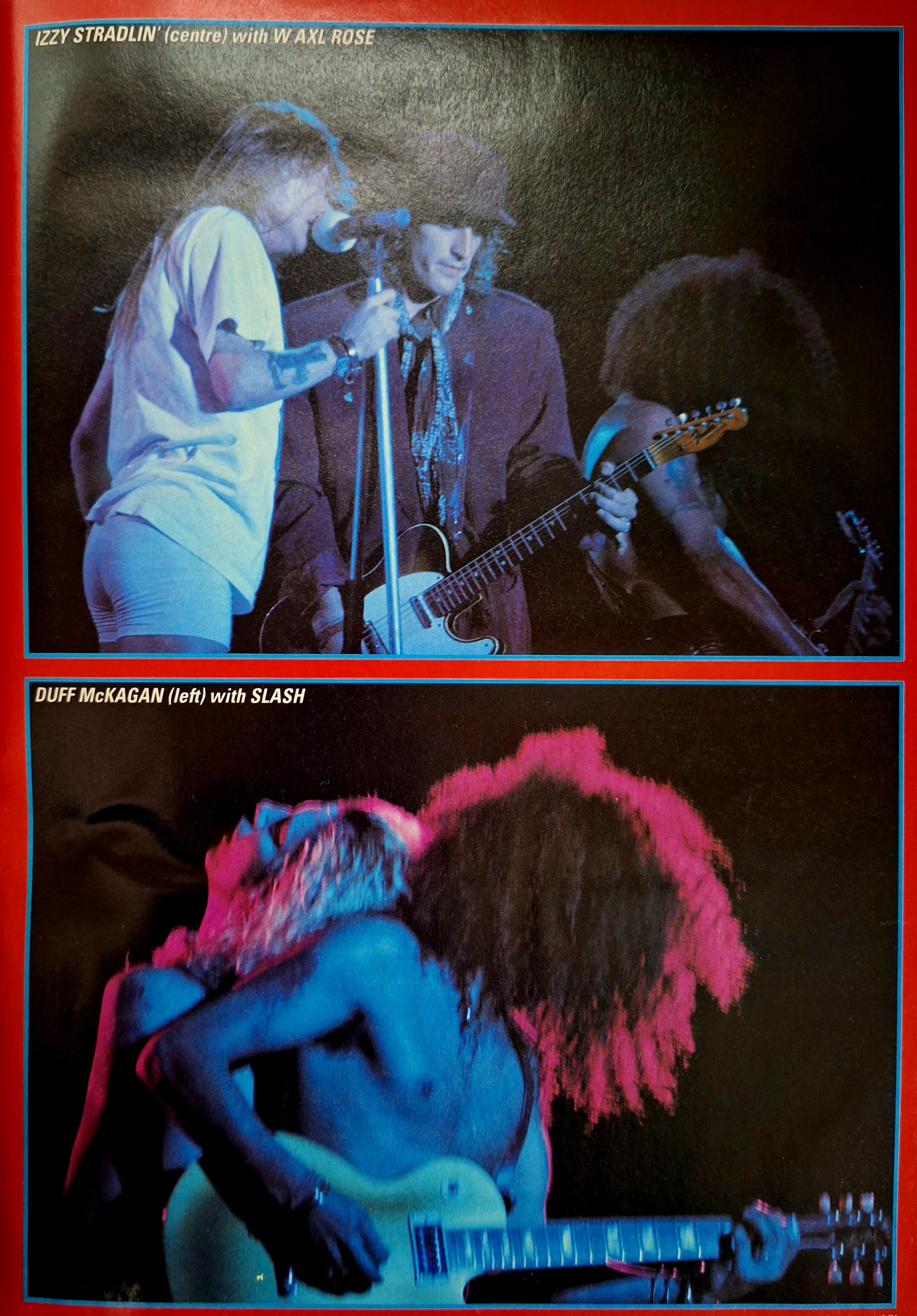
The short tour around Europe that culminated in the trip to Wembley had been difficult to say the least. In the wake of sparking a riot at the Riverport Amphitheatre in early July, the band had skiddaddled to Europe and Axl had been increasingly flexible with his timekeeping, while the other band members, except Izzy, had been increasingly liberal with their intake of toxins. At times, things were at breaking point and the Wembley gig would prove to be Izzy Stradlin’s last as a full time member of the band. Nevertheless, according to Duff:

“Izzy didn’t walk away and force the cancellation of the Wembley show. he stayed and played one last gig to draw the curtains on this leg of the tour—the last show before the release of the albums we were ostensibly touring.

Axl arrived on time.

We played spectacularly well, as fierce and inspired and together as ever before. If not for the additional people and gear onstage, it could have been mistaken for one of our club shows.“
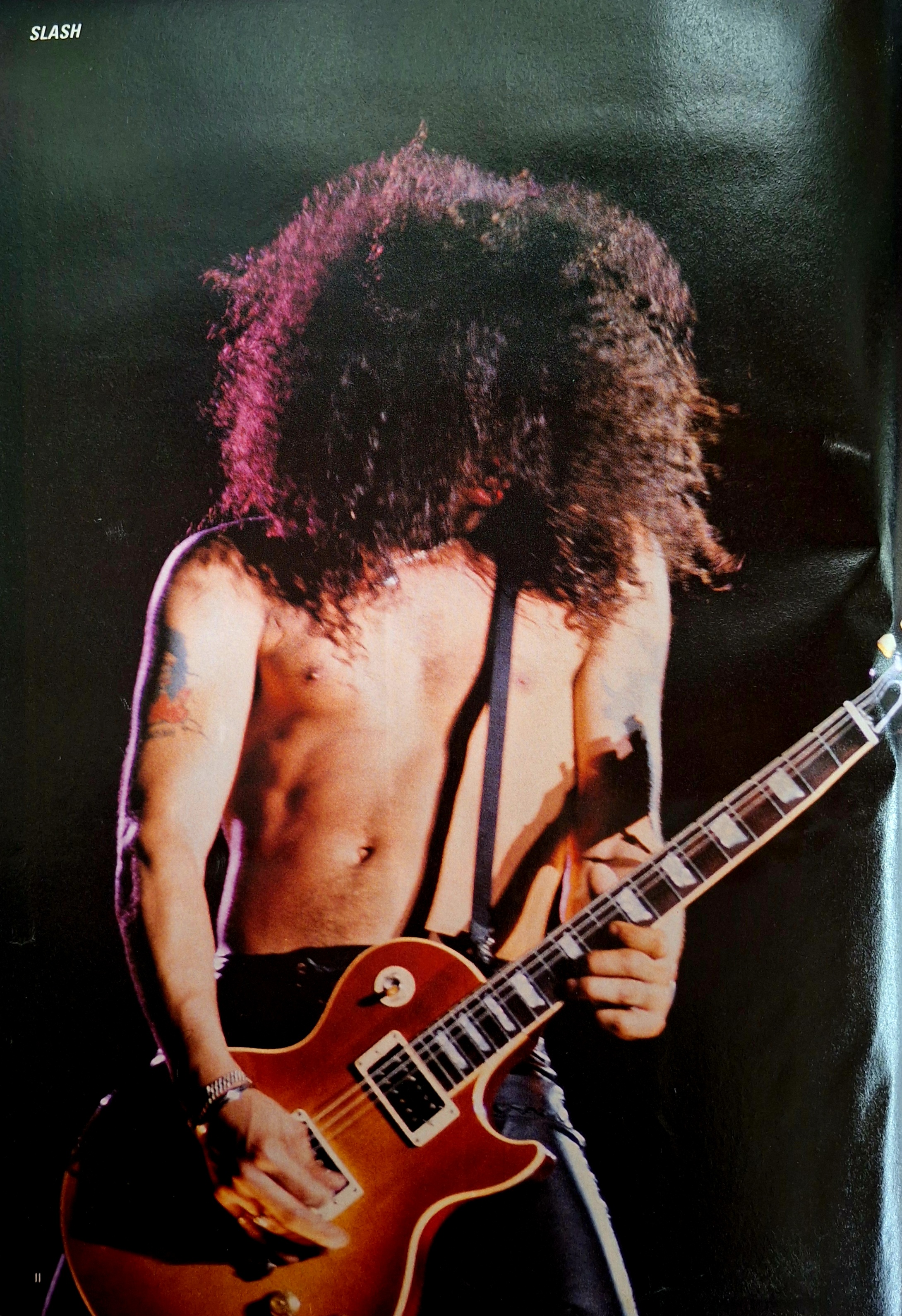
After a short break and the hiring of new guitarist Gilby Clarke, the Guns train kept on rolling for endless months of touring. Less than a year after the triumphant Wembley show, they were back for three more UK dates including another jam at the capital’s biggest stadium. My memory of the day is less positive as I remember there being a slightly nasty vibe as things got a bit heated near the front during Faith No More‘s cracking set, the usual, friendly mosh pit vibe absent in the heat.

Even so, despite certain band members not even remembering being in some of the cities on the tour, Guns were a pretty well-oiled machine by this time and Axl’s volatile brand of frontman fury was delivering the spectacle we all wanted. According to the Guardian: “Where the band used to be chaotic and unfocused, now they’ve learned to harness their strengths around Rose’s anarchic energy. Without him, they’d be an old-fashioned hard rock group, obsessed with Zeppelin, Hendrix and the Stones. But Rose is an alchemising presence, a suspect device, able to invest the dullest clichés with menace. Axl just doesn’t look right singing piano ballads like November Rain, but when the Gunners rock, Rose rattles your fillings.” Throw in a guest appearance from Brian May in the encores for Tie Your Mother Down and We Will Rock You and a good time was had by all. However, these were exciting times for the alternative rock scene and there was a lot more going on in the world besides Guns N’ Roses.
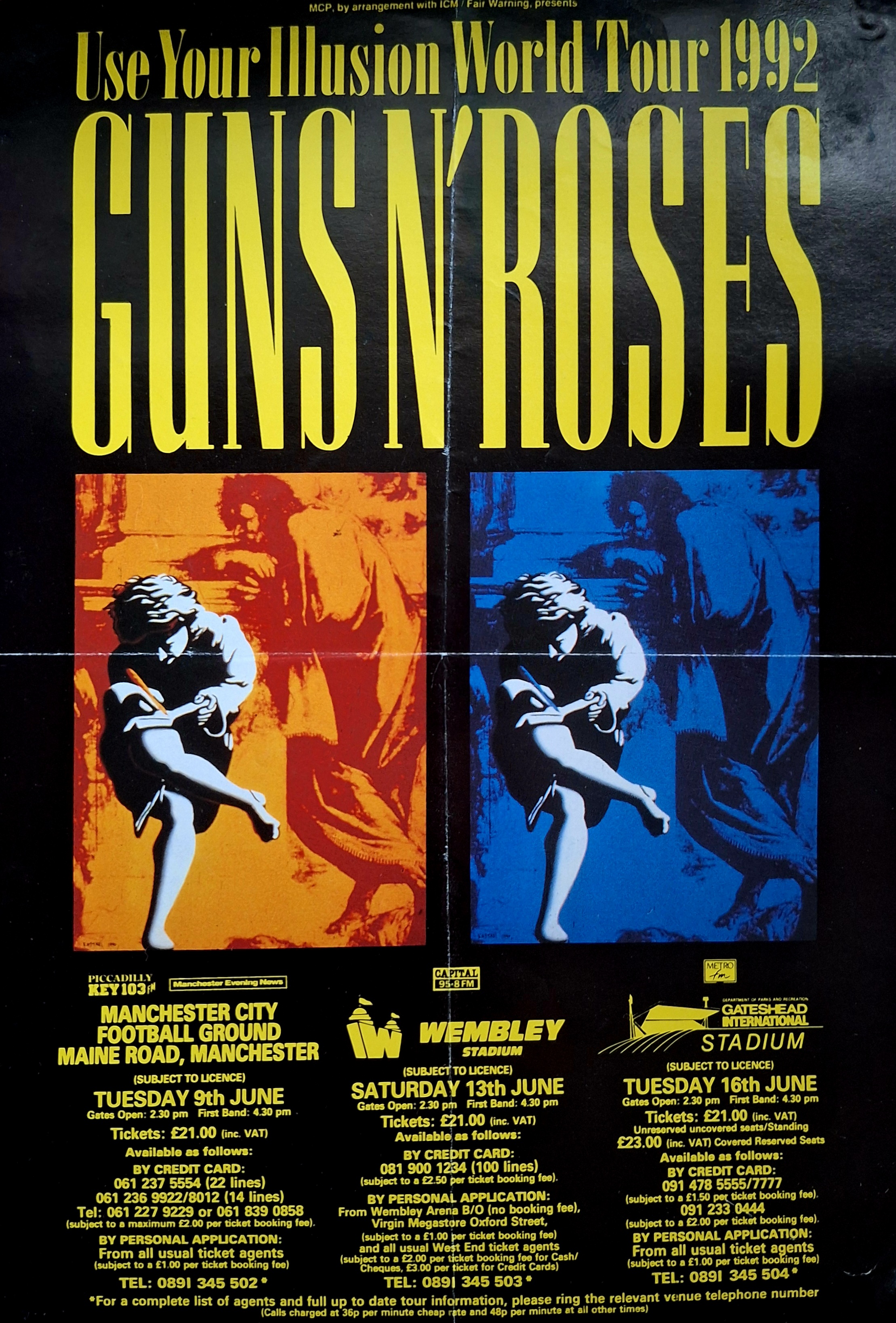
Precisely one week before the Guns gig at Wembley I had been to see The Cult at Finsbury Park for their one-day, UK version of their Gathering of the Tribes festival, which featured a diverse mix of alternative rock bands from Ned’s Atomic Dustbin and Mega City Four to L7 and Pearl Jam. A couple of months later I would see Nirvana, Mudhoney, L7 and the Beastie Boys at Reading. Then, in October, I went to see Suicidal Tendencies at the T&C in Kentish Town to be totally blown away by the support act, Rage Against the Machine, during their first ever UK performance. Things were changing on the music scene and in my life. Basically, I’d seen that there was more to life than the Hard Rock Heavy Metal scene and was slowly diversifying my tastes; Indie and Grunge bands were broadening my horizons and I was going to clubs like the Venue in New Cross to see bands like Swervedriver and Zodiac Mindwarp and get an early look at Pulp before they hit the big time. Jarvis threw Old Spice over the audience.

So, when Gn’R decided to come back to the UK for two nights at the Milton Keynes Bowl less than a year after the second Wembley gig, to be honest, I just wasn’t that excited by the idea. My mates were all going but I wasn’t really up for it, then The Cult were added to the bill and it was suddenly irresistible – Blind Melon, Soul Asylum, The Cult and Guns N’ Roses – a cracking day out was now on the cards. I’m so glad that I went; the planets aligned to make it an absolutely magnificent day and it ended up being one of the best gigs I have ever been to.

First up, MKB is a natural amphitheater that lends itself to big shows. Then there was my first experience of a VIP section, whereby the front area was separated from the main crowd, but instead of paying a premium, the wristbands were seemingly distributed at security’s discretion. The girl who was with us politely asked the dude at the entrance to the area to be let in, then asked if her 4 brothers could come in too! That was it…we were in!

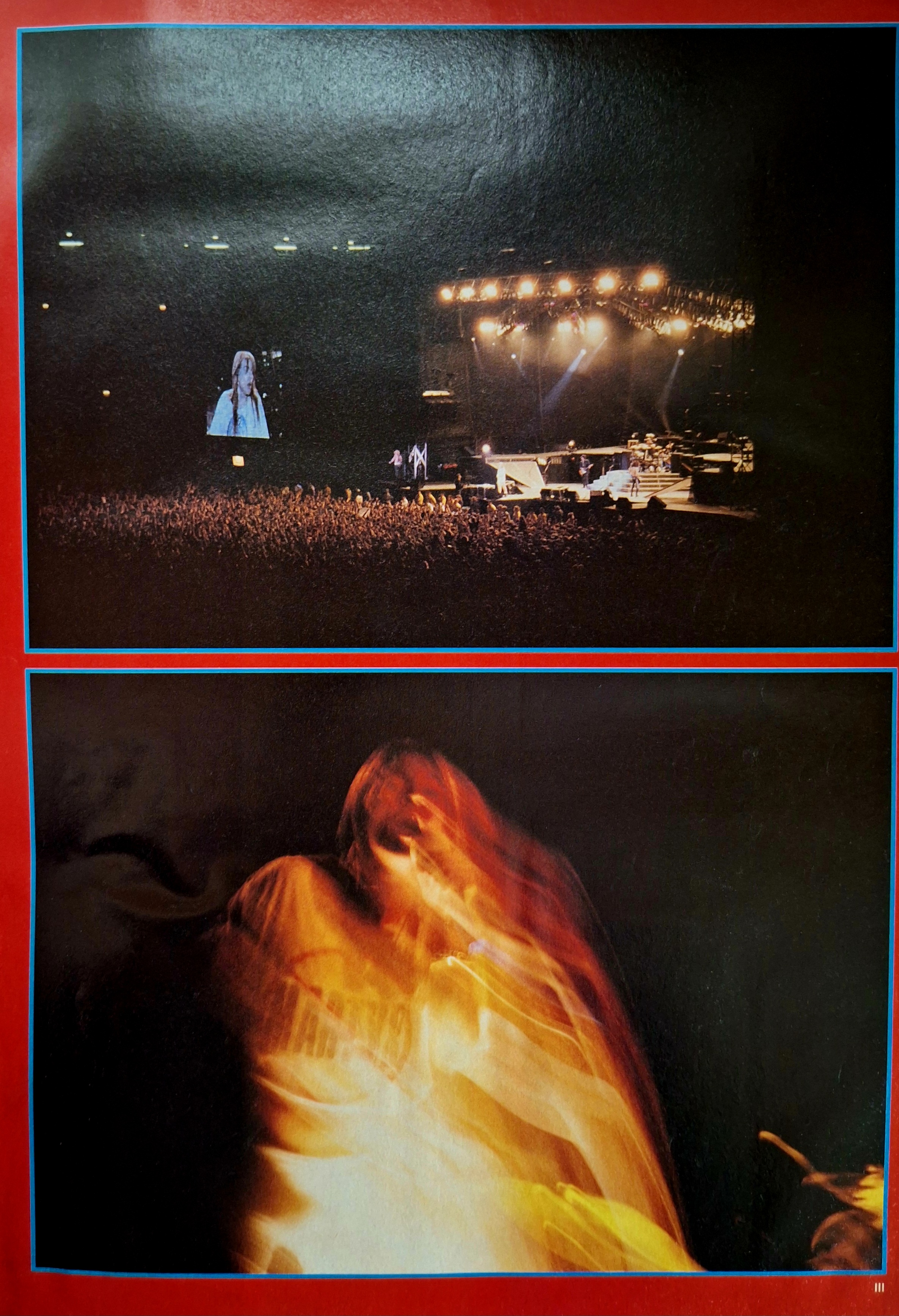
And Guns did not disappoint. Despite the band being deep into a never-ending tour and their fraught dynamic getting ever more tense, they delivered in spades. The show was something of a stripped down affair, just the band, no backing singers, percussionists etc; it featured a half-hour acoustic set complete with sofas on stage; Ronnie Wood came out to play an encore of the Rolling Stones’ Honky Tonk Women along with Michael Monroe of Hanoi Rocks, who also sang on Knockin on Heaven’s Door; but best of all Izzy Stradlin was back, filling in for the injured Gilby Clarke. It would be Izzy’s final show but his mere presence took the band to another level. As Duff says: “In our case, Izzy was probably the most significant force—without his initial vision and his songwriting cues, there would have been no Guns N’ Roses.”
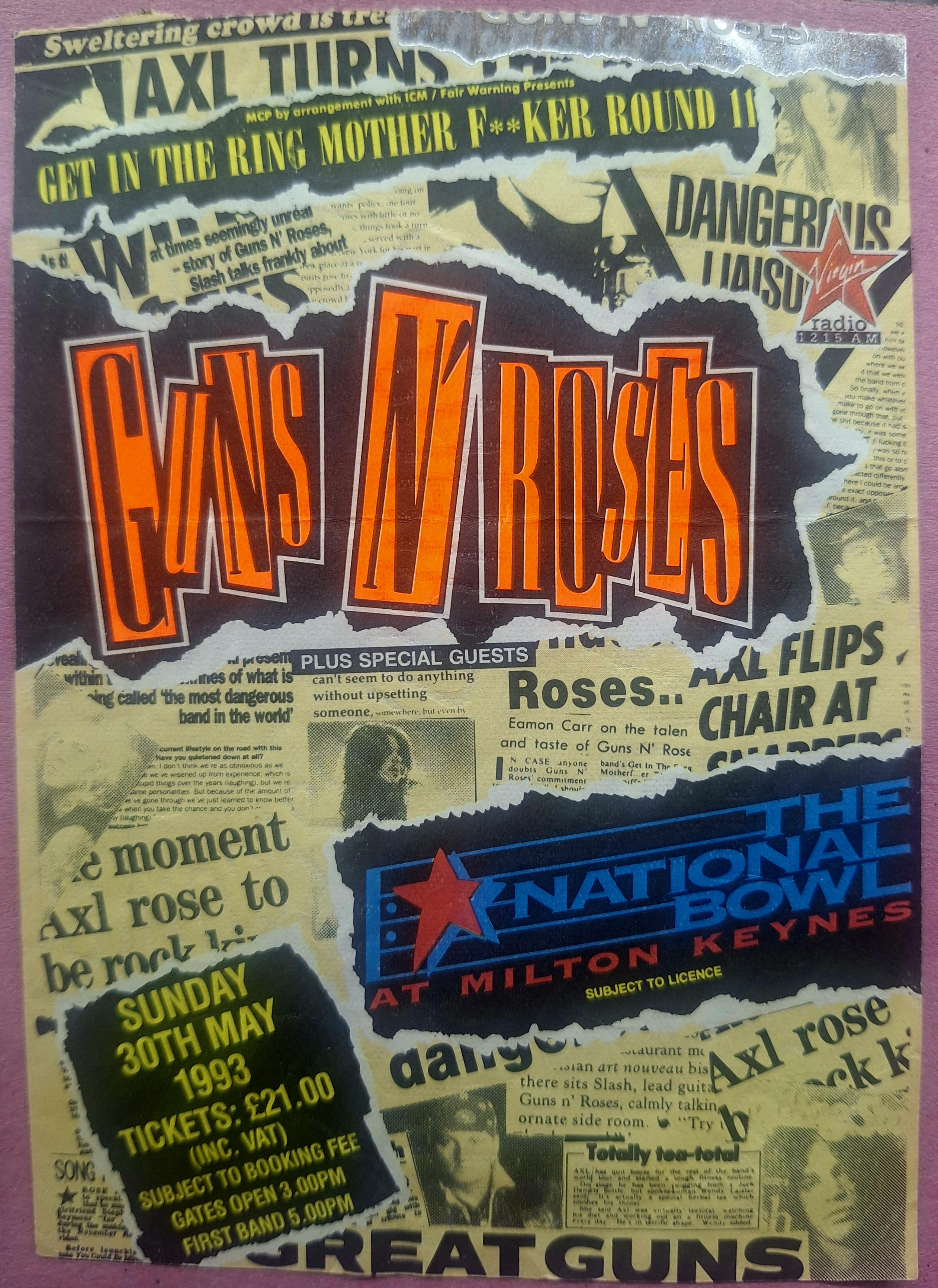
The Milton Keynes show ended up being a fitting farewell for me. I can vividly remember being arms outstretched and spinning round and round in a joyous state of abandon! It was a lovely last hurrah before I moved on. They released the Spaghetti Incident later that year, but it held little appeal. The cover of the Rolling Stones’ Sympathy for the Devil the following year was also far from a return to form. Despite the MKB shows reminding us how great they could be, it was short lived and the writing was clearly on the wall for the band with Izzy only back for a handful of dates and the never-ending tour grinding on and on.

Axl would then blindside the other members into signing over the rights to the Guns N’ Roses name, although he denies that it ever happened. But if there is any element of truth to it, Axl was shrewdly looking towards the future as what was left of the original band clearly had a limited lifespan—they were already doing everything separately on tour anyway. “Perhaps the simplest explanation for what was going on with Guns N’ Roses was that the band had stopped needing one another. […] we no longer needed one another to write ourselves out of poverty through our songs. Guns didn’t start out about money, but once we all had houses and cars, we just needed one another less. […] On the last European leg of the tour, we sometimes weren’t all together in the same city except for the performance itself. On a few occasions we weren’t even in the same country.“

And so it would prove. Slash left in October 1996, Matt Sorum would follow in April 1997 and Duff would be the final nail in the coffin in August of the same year. By this time, I was no longer abreast of the comings and goings, scandals and controversies. Essentially, I had grown up. I was listening to Nine Inch Nails, The Beastie Boys, Portishead and anything and everything else that was around back then – the nineties were vibrant times! If you look through my ample CD collection, the overwhelming majority of it is from the nineties and it goes way beyond Britpop and Grunge.

Guns N’ Roses had been the band of my teenage years. They were like a first love—an all consuming obsession that you can’t get enough of until some cracks start to show, the passion fades, and you eventually move on. Still, you always hold a soft spot and every now and then a bit of memory lane is a welcome reminder, especially as you get older. The timing of discovering Guns N’ Roses was essentially what made it so special for me. We make powerful memories and have strong connections to the music from our teens; we may move on, but the songs from that time will always have the power to move us like they did the first time.

“A global study of nearly 2,000 people across 84 countries found something remarkably consistent: the music that people remember as most personally meaningful was often released when they were around 17 years old. Psychologists call this the reminiscence bump. And it isn’t simply nostalgia playing tricks on you. Adolescence is a period when the brain is developing rapidly, social identity is taking shape, and emotional experiences can become deeply encoded in memory. Music happens to be there for all of it. That’s why a three-minute song can sometimes transport you decades into the past in just a few seconds.”
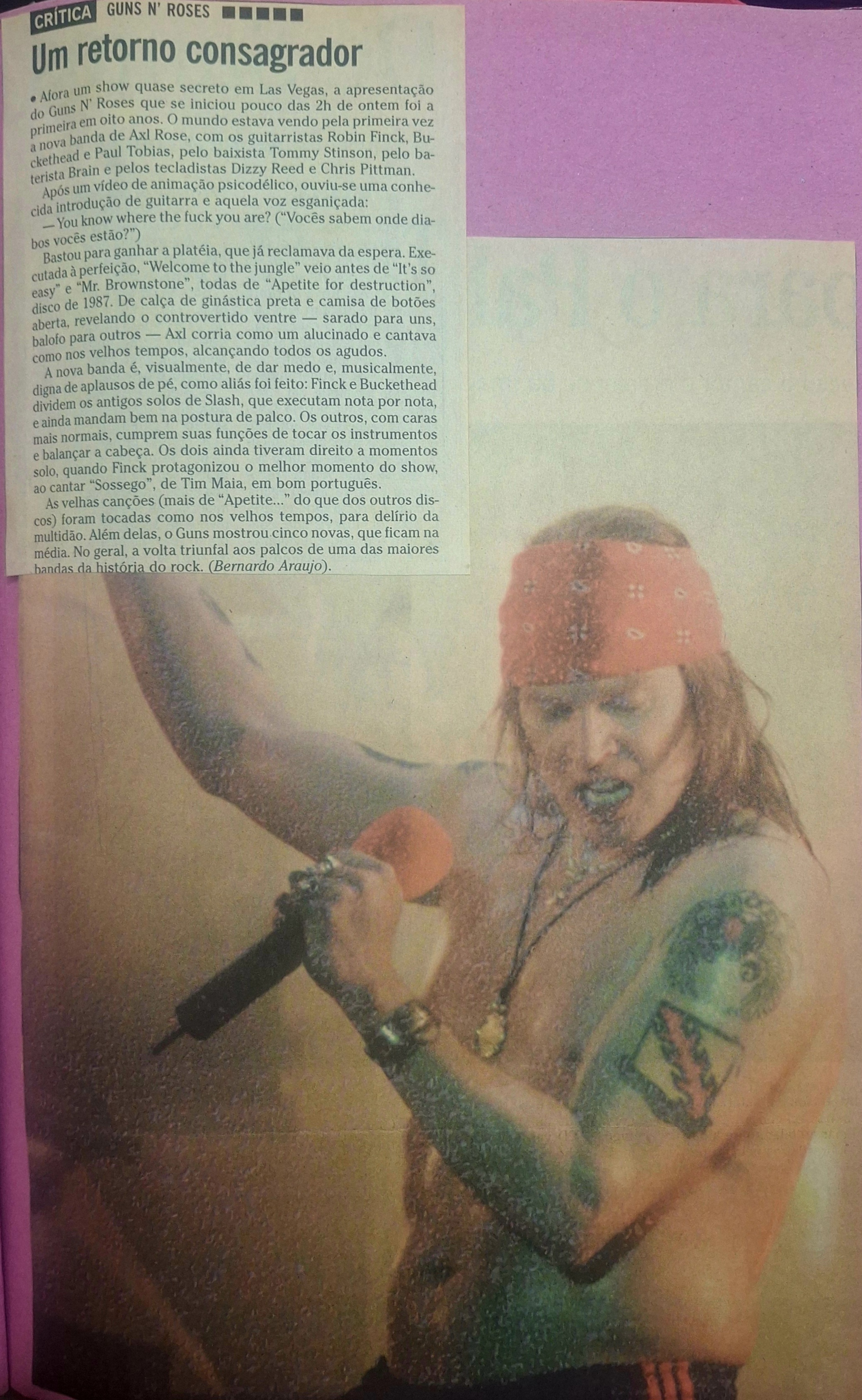
I would go on to see them again at Rock in Rio in 2001 as Axl Rose plus backing band, but it was not the greatest show I have ever seen. To be honest, I actually went that day to see Oasis, but having some memory lane thrown in was worth the ticket price. Subsequent television appearances and the eventual release of Chinese Democracy did little to reignite my teenage love for the band. It was like running into that first love years later and wondering what you had been thinking.

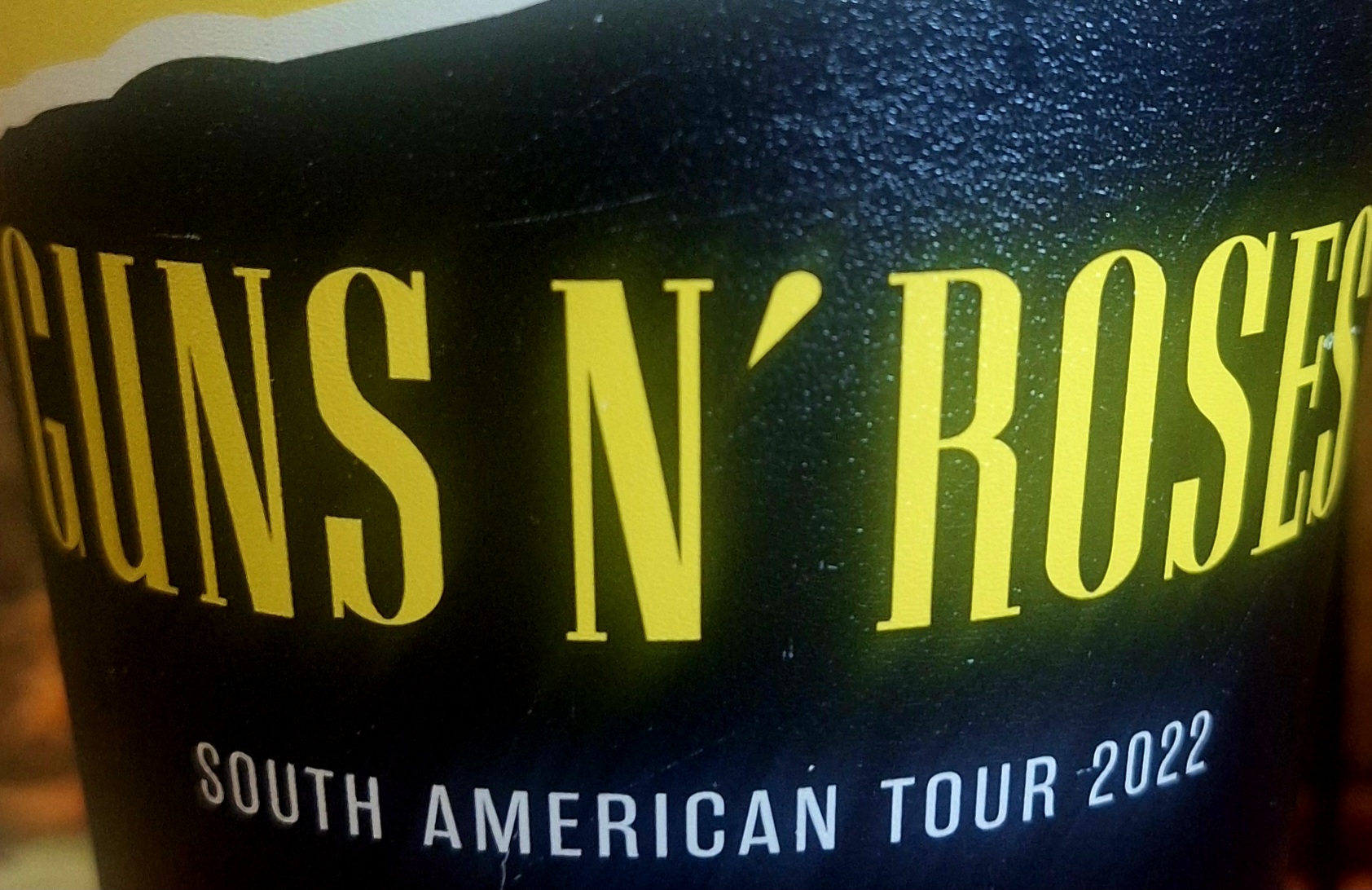
So, when the reunion with Duff and Slash was on the cards, I was not enthusiastic: “Looking back at what this band once was and what made them great just turns the whole circus surrounding this comeback all the more disappointing. Think I’ll stick with the memories.” But I did of course change my mind. I went to see them on the Not in This Lifetime tour in 2016 and again in 2022. I have to say that I may have been fully embracing the nostalgia of it all, but I thoroughly enjoyed myself on both occasions. In my review of the 2016 show I reflected: “Is it all just shameless nostalgia? Sure, of course, but when you are this good and the material still cuts it, then why the hell not?”

Moreover, in 2018, in a preview of the Download Festival for Already Heard I went on to say: “Since Slash and Duff McKagan returned to the Guns N’ Roses fold, Axl Rose has been somewhat rejuvenated; recovering a level of enthusiasm (and singing ability apparently) that had been largely missing for the previous twenty years since the original line-up imploded. Axl has been transformed from appearing to not really give a fuck into someone visibly enjoying his work again. Sure, a few of the higher notes are now out of reach and he doesn’t scamper about the stage with quite the same verve as the angry twenty something he once was, but GnR proved good value on their Not in This Lifetime nostalgia fest, regularly putting in performances pushing close to the three hour mark. And lets face it, when you have a bulging back catalogue of classics like theirs, they could play all damn night.”
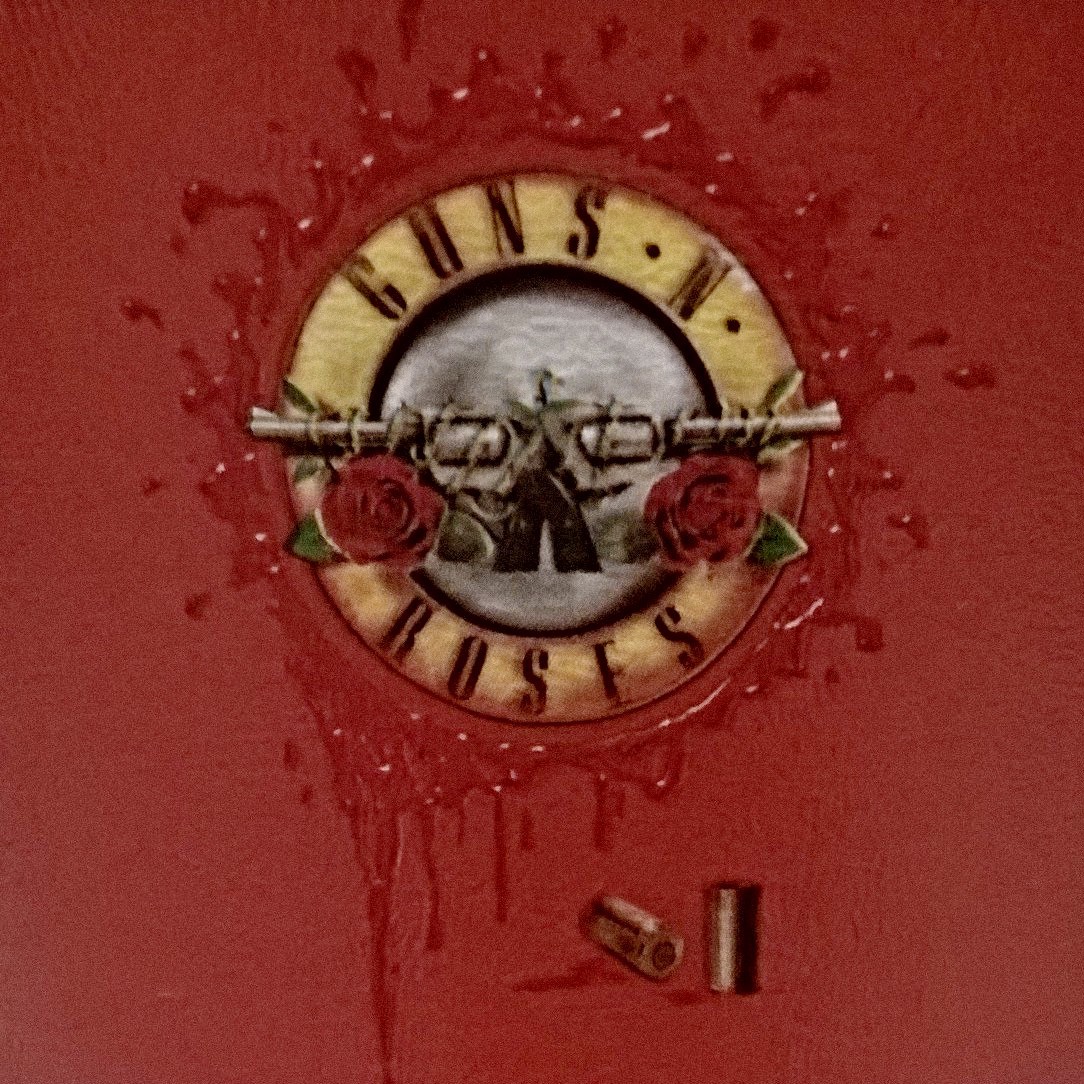
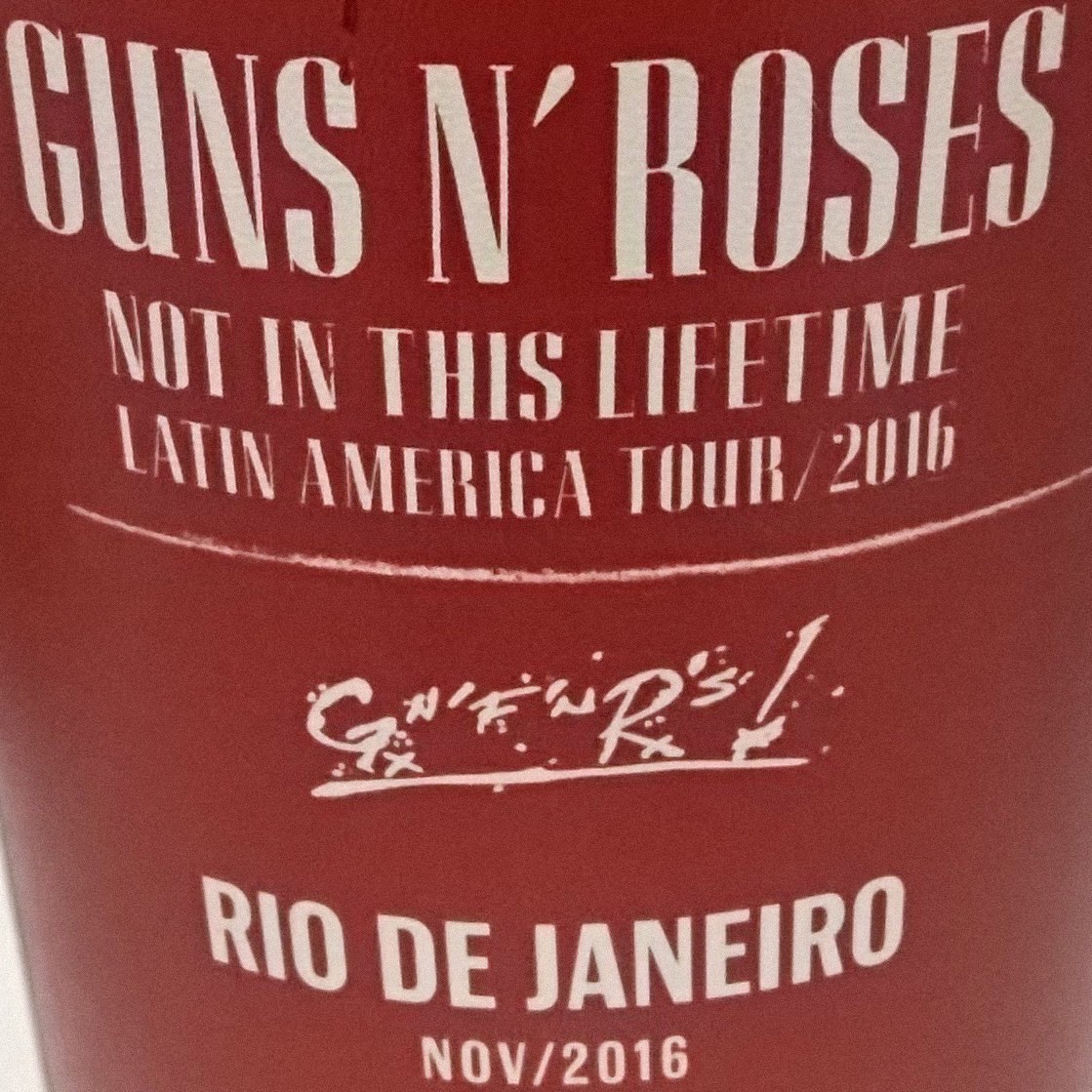
The Guns N’ Roses train is still rolling. They are still doing three-hour-a-night shows and, given the chance, I would go and see them again. I love listening to their songs again – the power of that teenage obsession is still a thing! However, I am under no illusions; I know they can never be what they once were. Effectively, they were never going to be the same after Steven Adler was fired and they lost his groove; or after Izzy called time on his presence in the band and they lost that swagger; or after the videos, the production and the image became as important as the music itself. In those early years, they were something else though; they were truly exciting and everything teenage me loved about heavy music. Appetite for Destruction remains one of the greatest rock records in history. Although I have had other favourite bands, I have been to other incredible shows, and there is plenty of other music that moves me, few bands or songs would have the impact of that Saturday morning back in 1988.
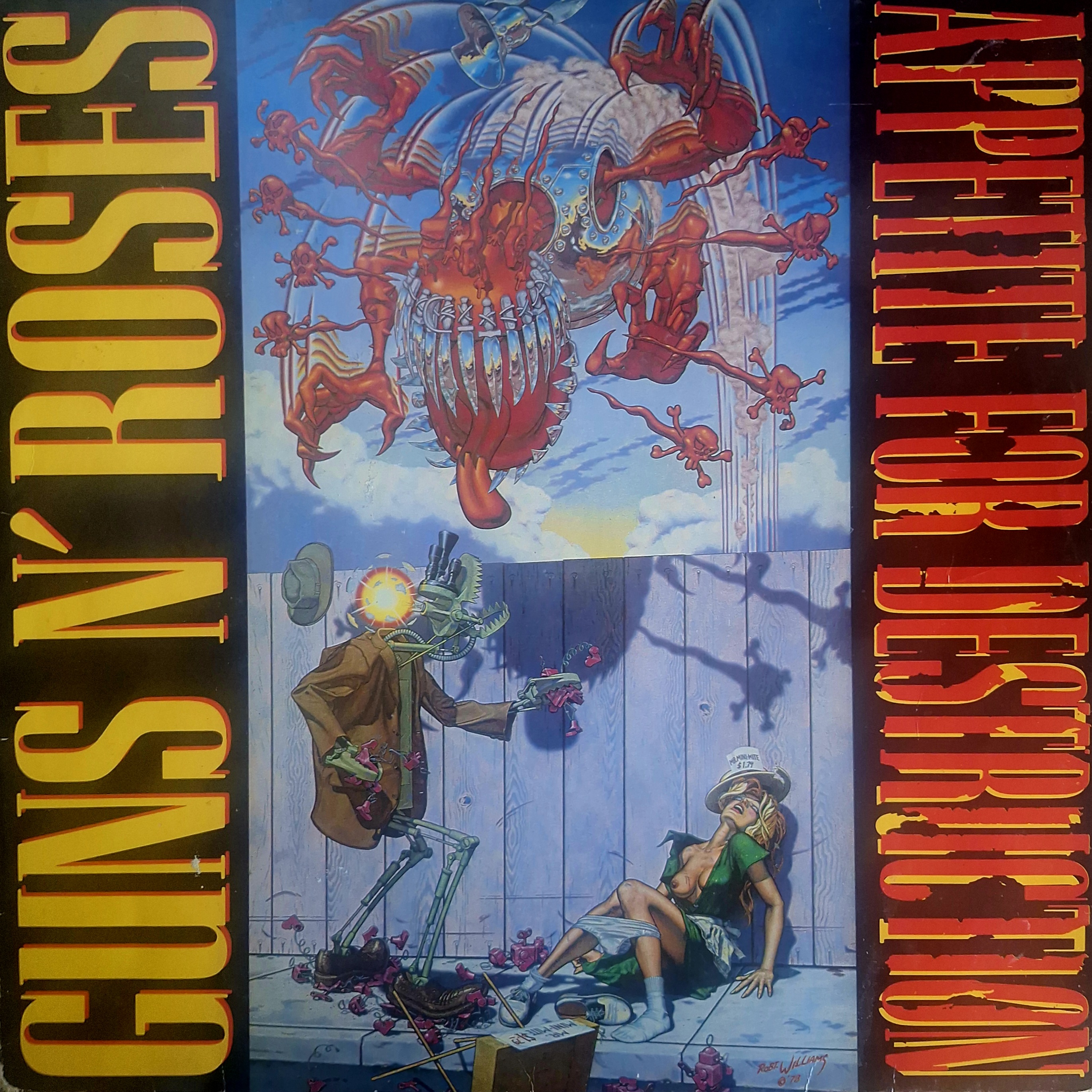
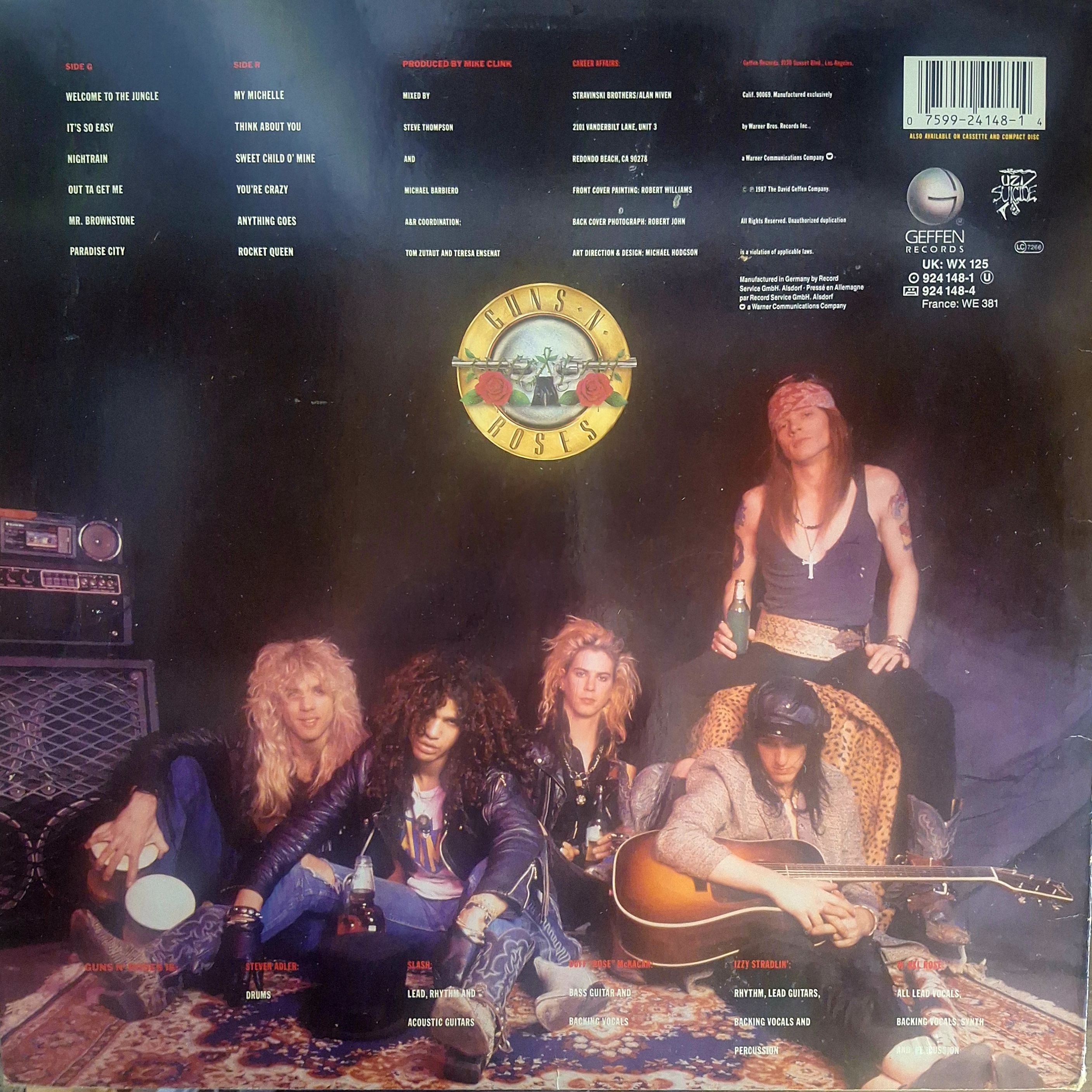
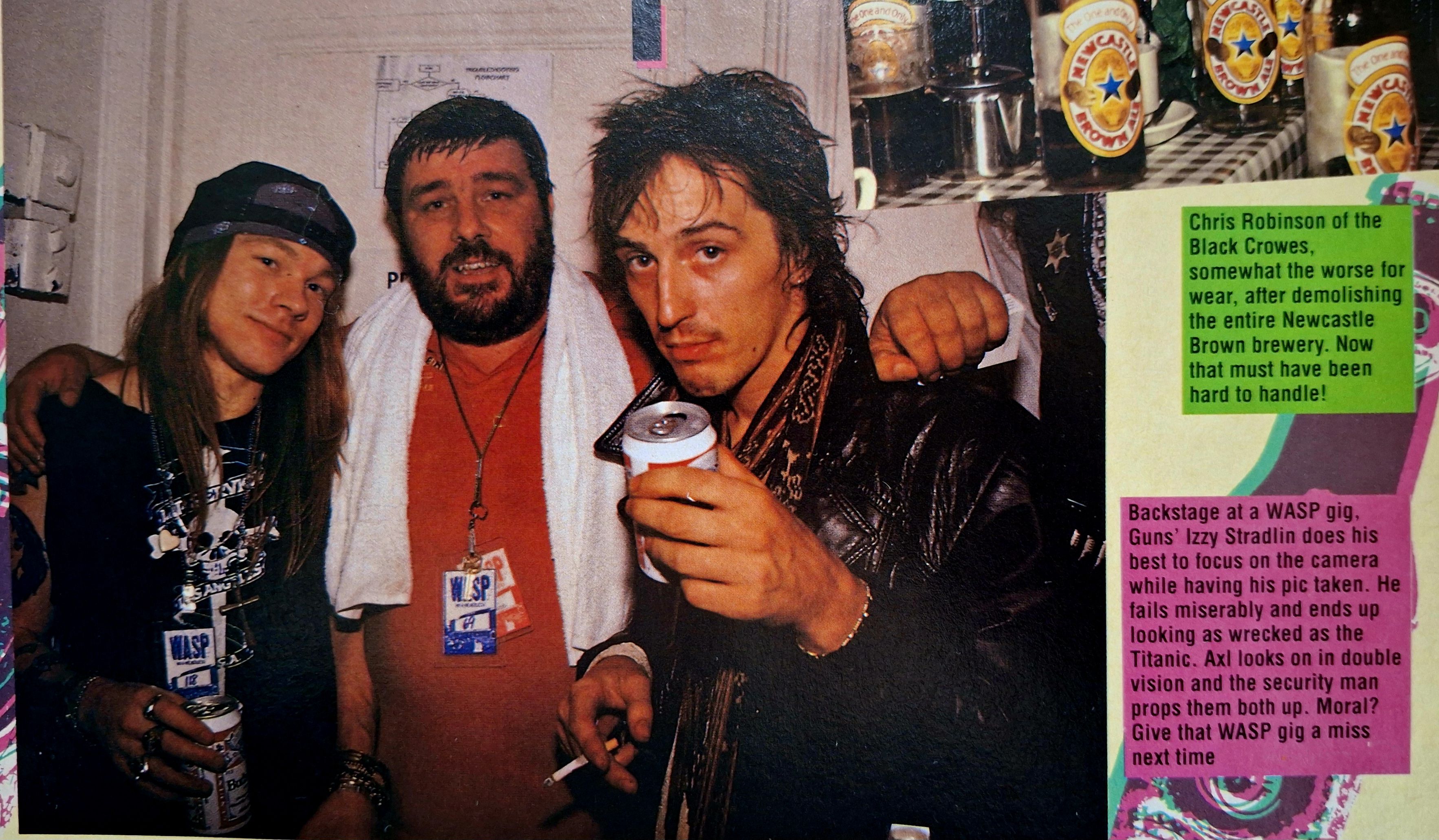
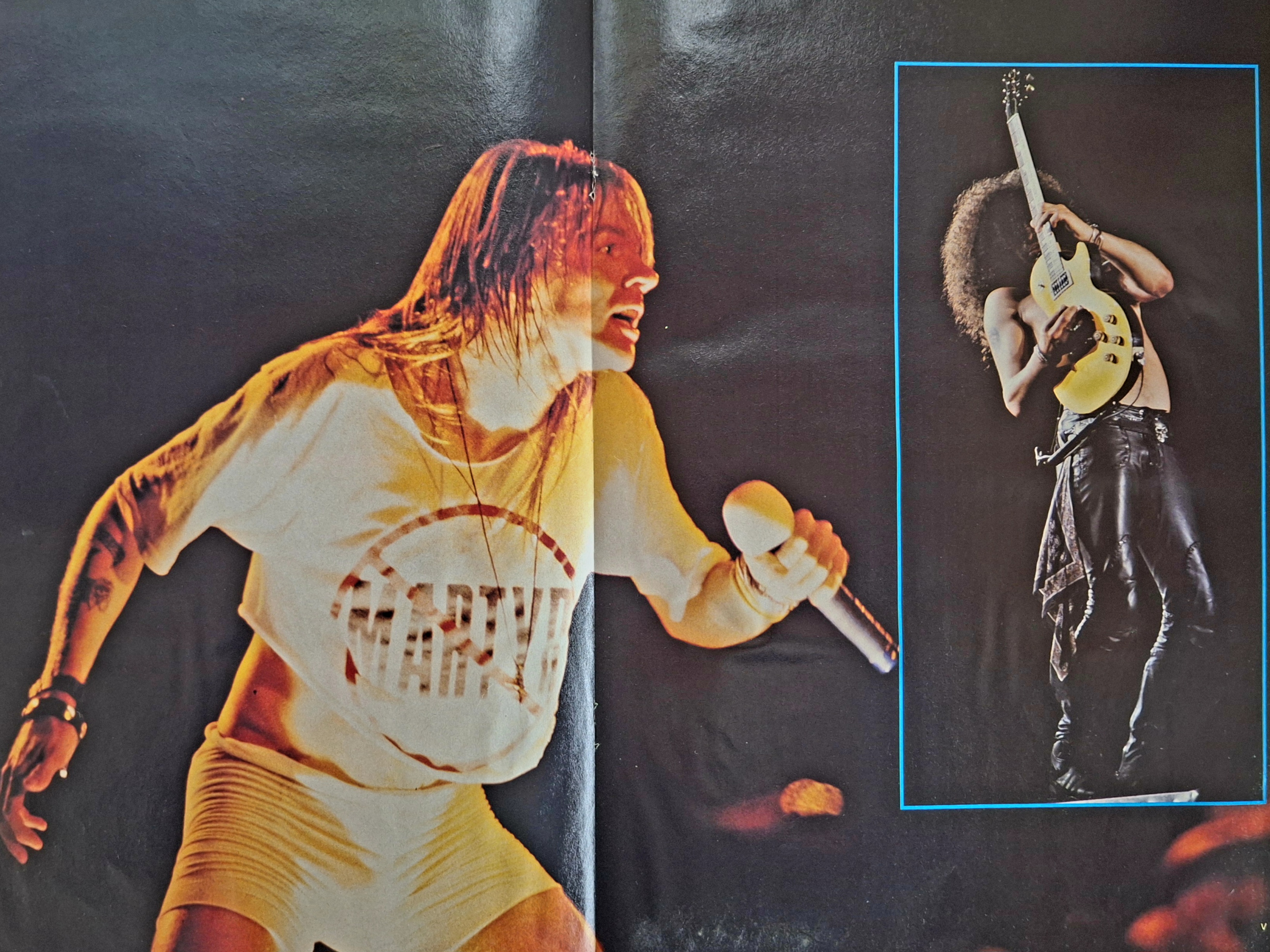
Author’s notes: This started out as a piece on the nostalgia aspect of the music industry I pitched to Sêan Reid, my editor at Already Heard, back in 2018. I couldn’t quite get my ideas together at the time, but that memory from ’88 kept nagging at me so I decided to pick it up again recently. It was meant to be a little walk down memory lane, but once I realised how much stuff I had and how important it had been to me, it took on epic proportions. The following is a list of references that I used in the article in addition to the photos of issues of Raw Magazine and Kerrang Magazine featured in the various galleries. All the galleries contain original photos of items that I actually own, be it the magazines, the CDs, the concert tickets or flyers.

https://www.officialcharts.com/artist/15737/guns-and-roses

https://bestsellingalbums.org/album/17763#google_vignette

30 Years Ago: Chaos Reigns as Guns N’ Roses Open for the Stones

https://www.theguardian.com/music/2016/jun/15/guns-n-roses-review-wembley-1992-archive

https://knowlegic.com/articles/why-the-music-from-your-teenage-years-never-really-leaves-you

Duff Mckagan It’s So Easy and Other Lies

https://alreadyheard.com/festival-preview-download-festival-2018

https://hardpressed.com.br/2016/11/19/guns-n-roses-live-in-rio-review/
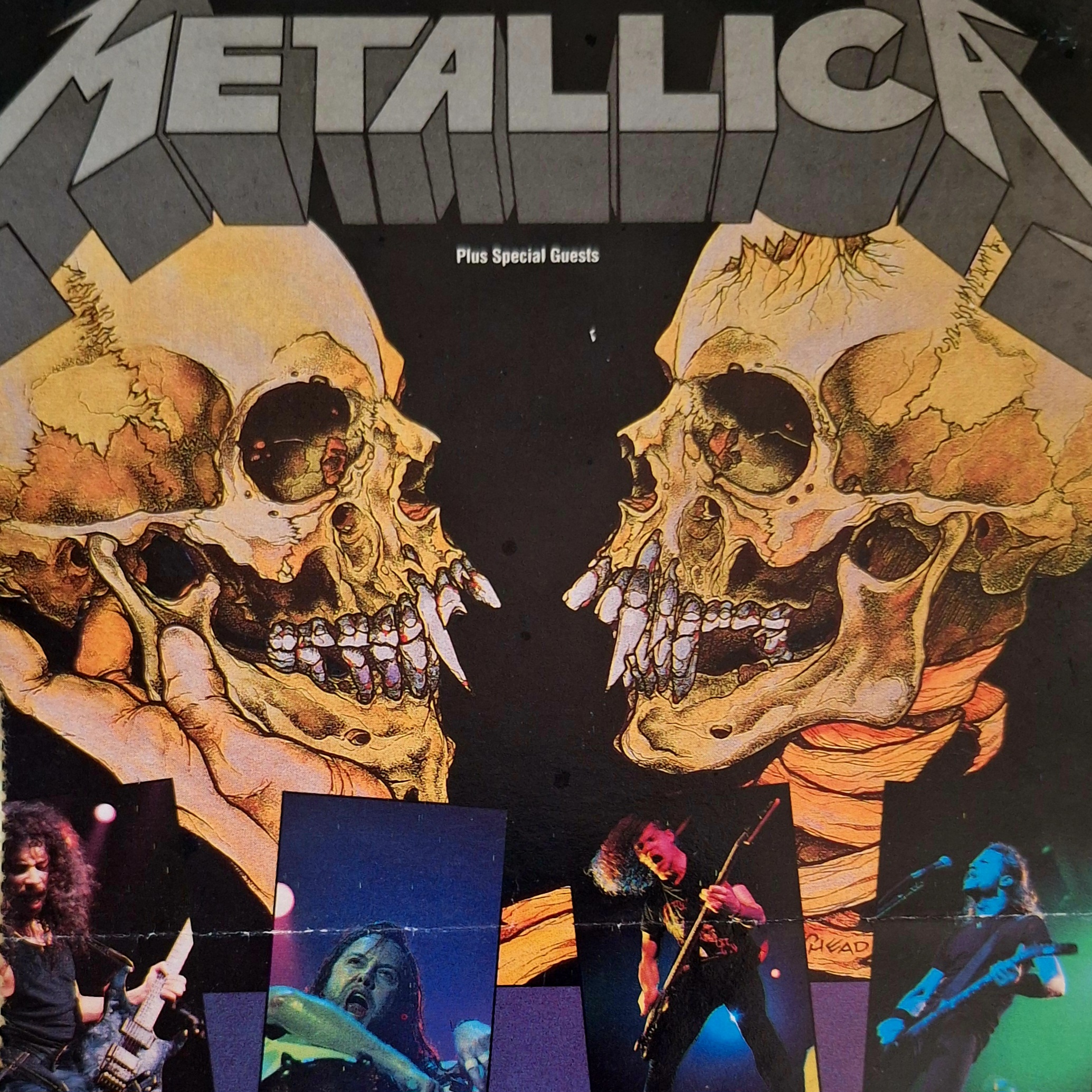
Metallica Memorabilia

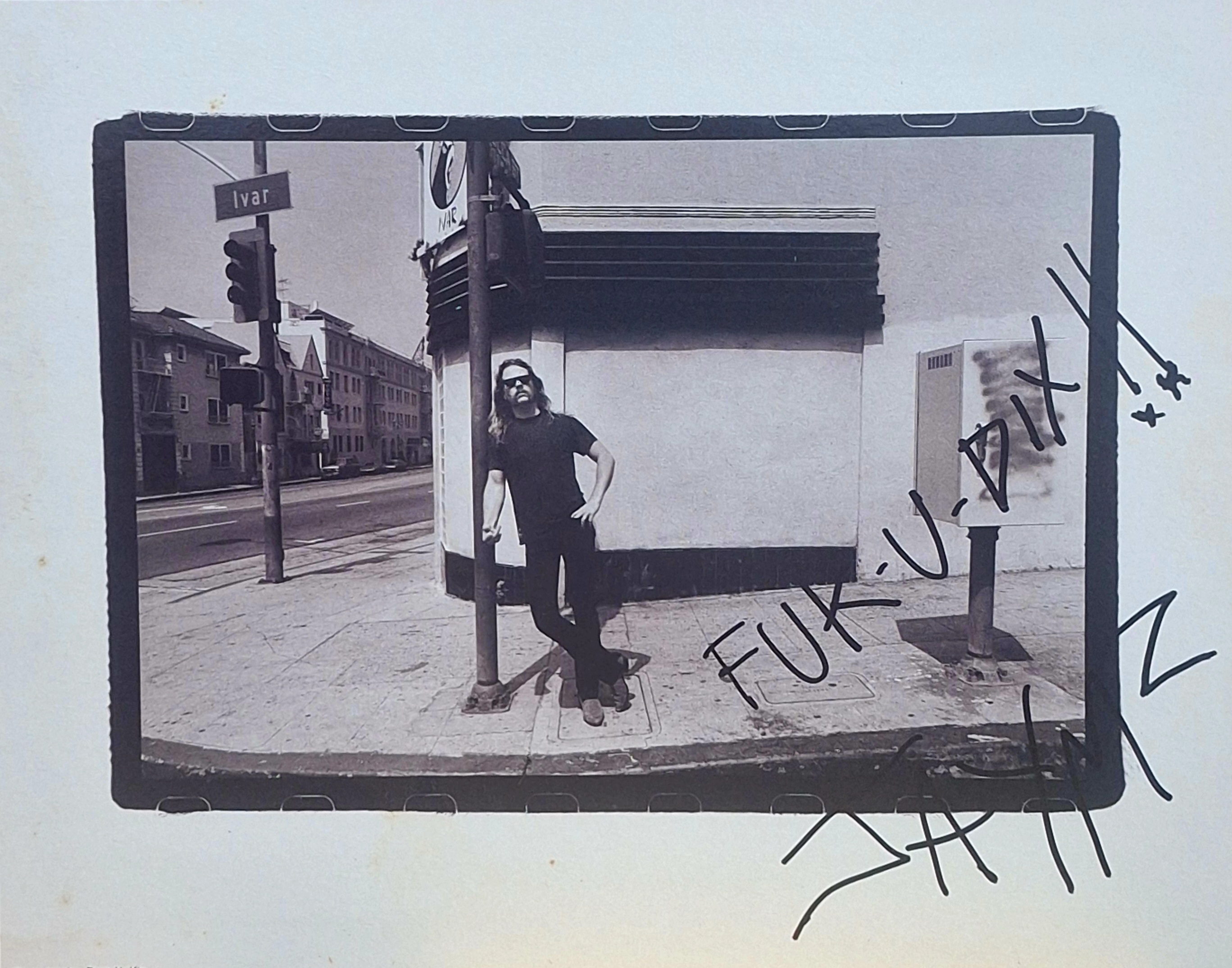
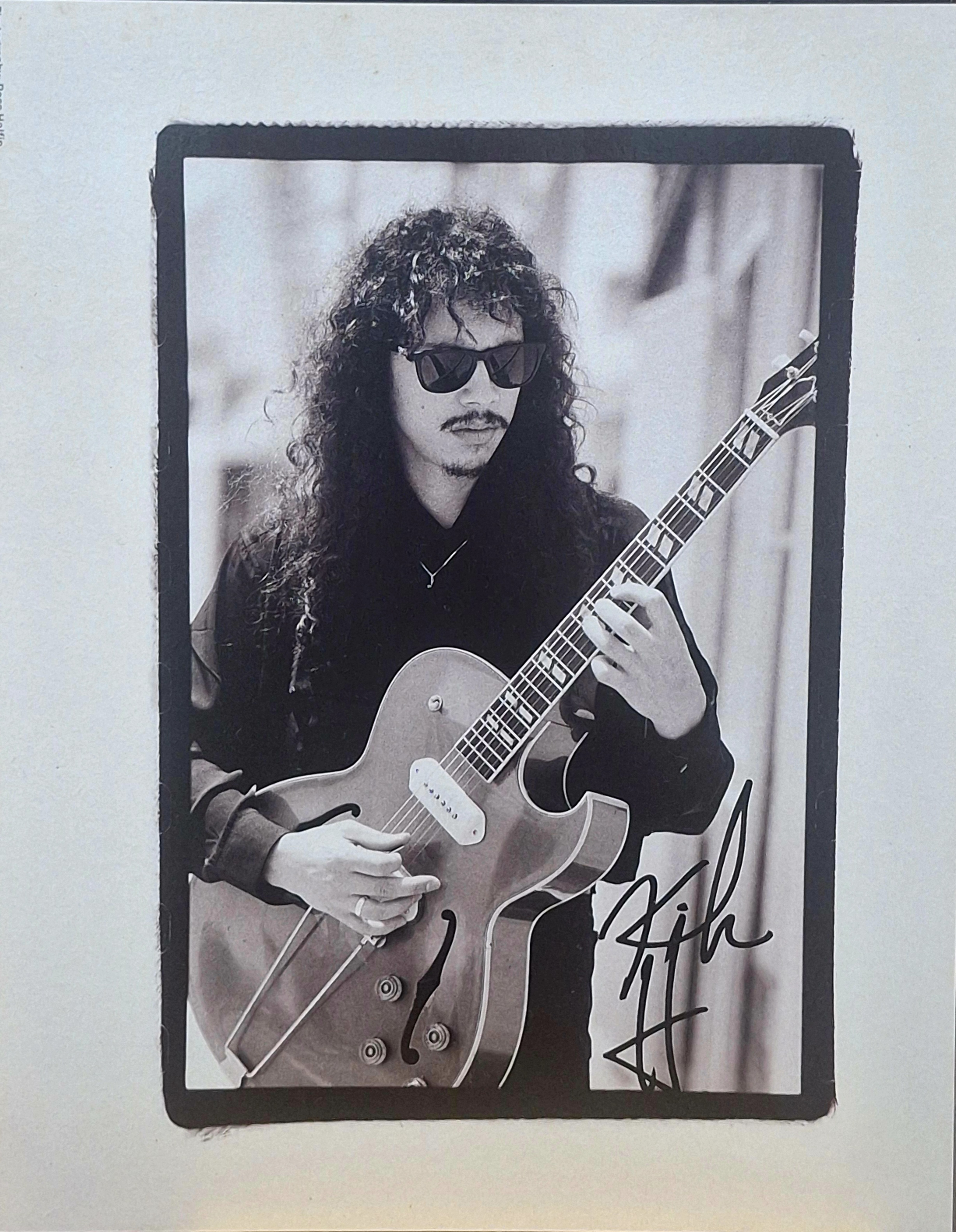
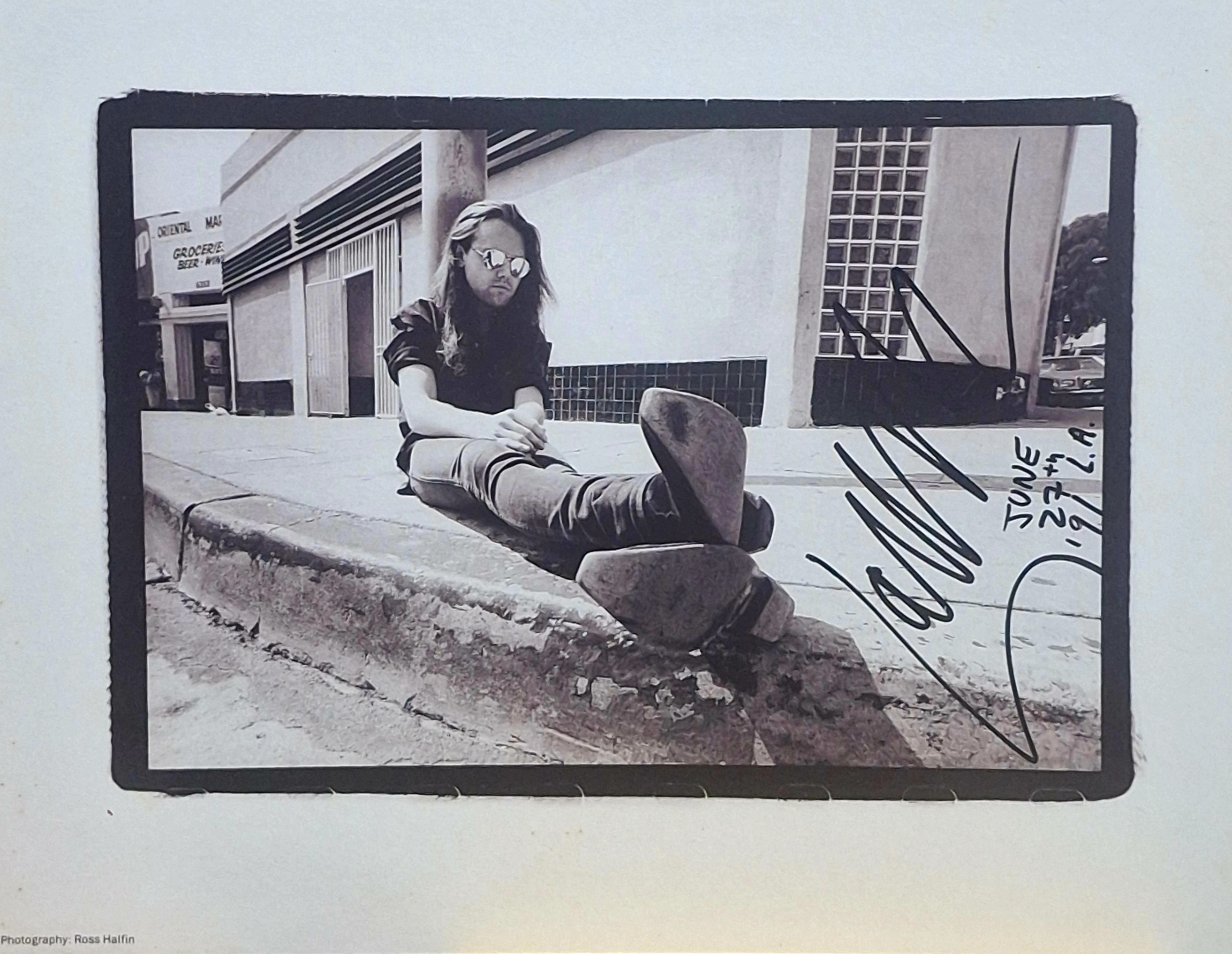
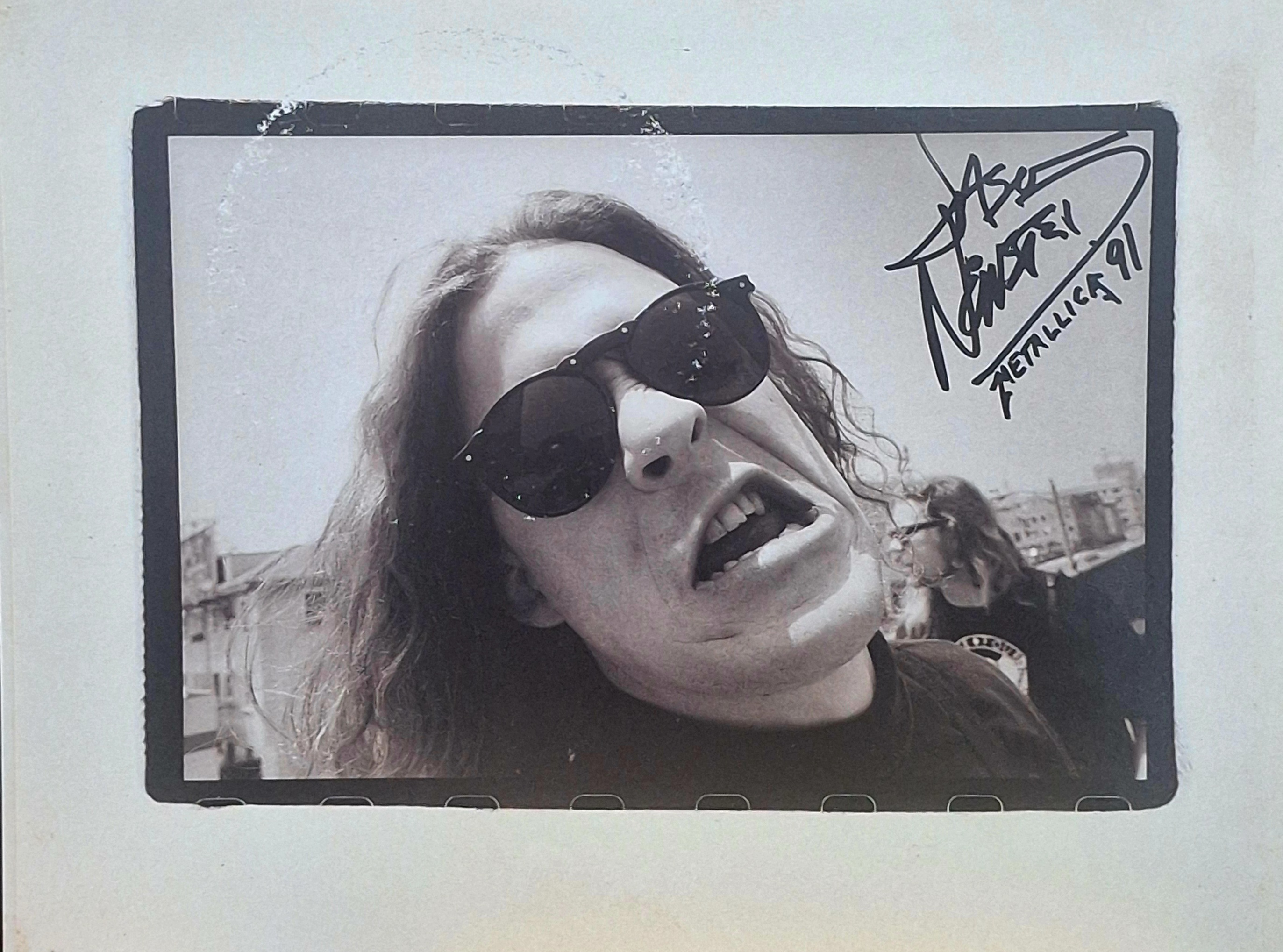
As described in my piece on Memorabilia (see here) collecting records was an experience in itself. However, it went much deeper than the joy of buying and owning a product, it was actually like a kind of feedback loop. You bought a collector’s edition of a single, 12″, boxed set or whatever because you were a fan, and buying it made you even more of a fan. Nothing can come close to my collection of records by The Cult (that’ll be an epic gallery), but my Metallica collection is also pretty damn cool!

When Metallica became a significant element of my musical life in the late 1980s, around the release of …And Justice for All, owning their products became a badge of honour among the metal tribe I was a part of. Essentially, it was cool to listen to heavier and heavier music; it was cool to like Metallica; it was cool to own all the albums; it was cool to have limited edition releases. Like the band’s own ethos, more was more – the more Metallica you were, the cooler you were. As a fifteen year old, heavily into metal, wanting more than anything to be cool, I bought into it and consumed as many of my favourite band’s products as I could, be it the Cult, Metallica, Guns n Roses, or whoever I’d got into. Also, I had grown up in a single-parent family with little in the way of luxury, but birthday money, Christmas money and what I could spare from my paper round and then my Saturday job went on an endless merry-go-round of first and second-hand vinyl and cassettes. The fact that I paid for these things myself gave them even more value.

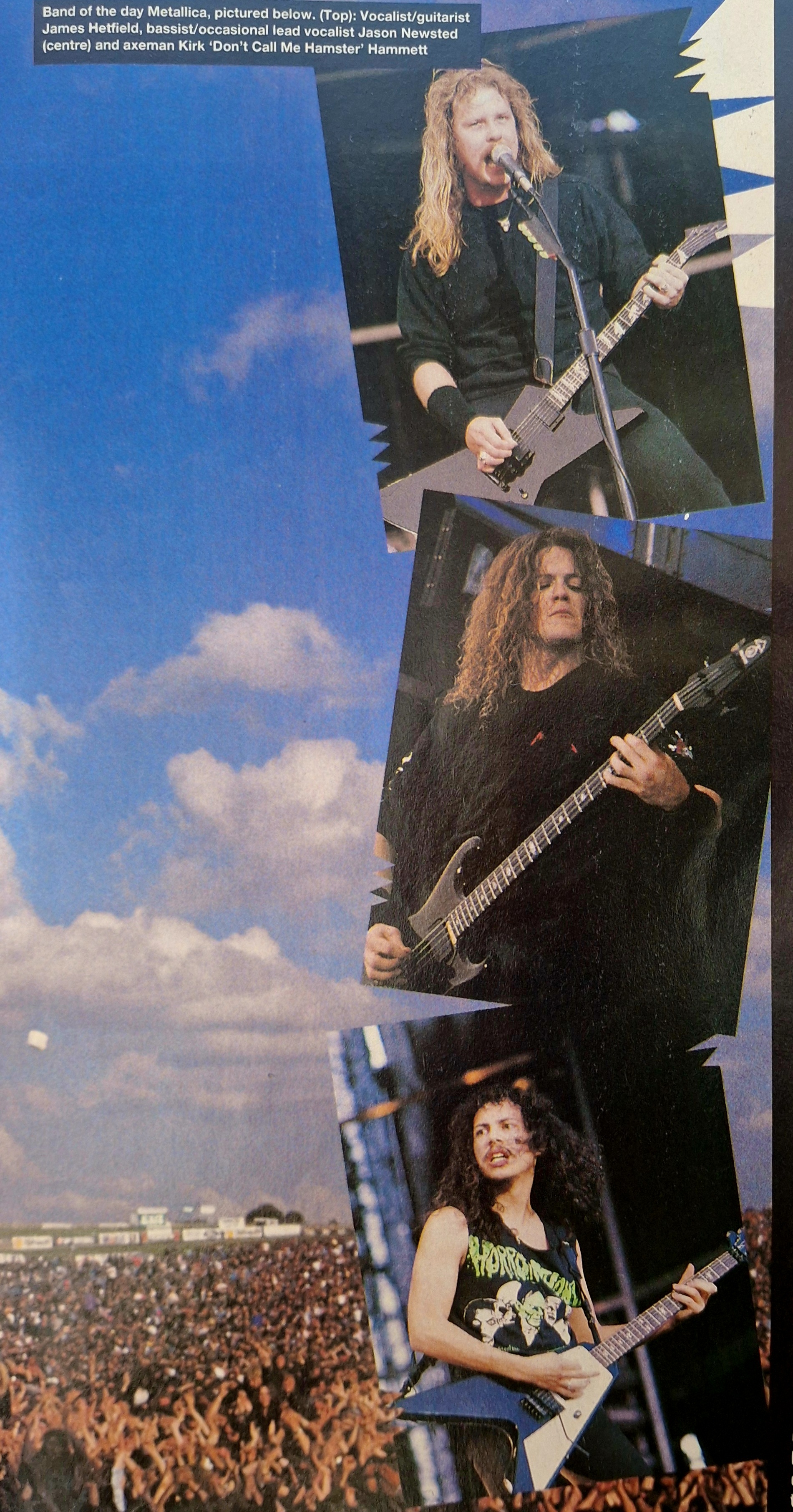
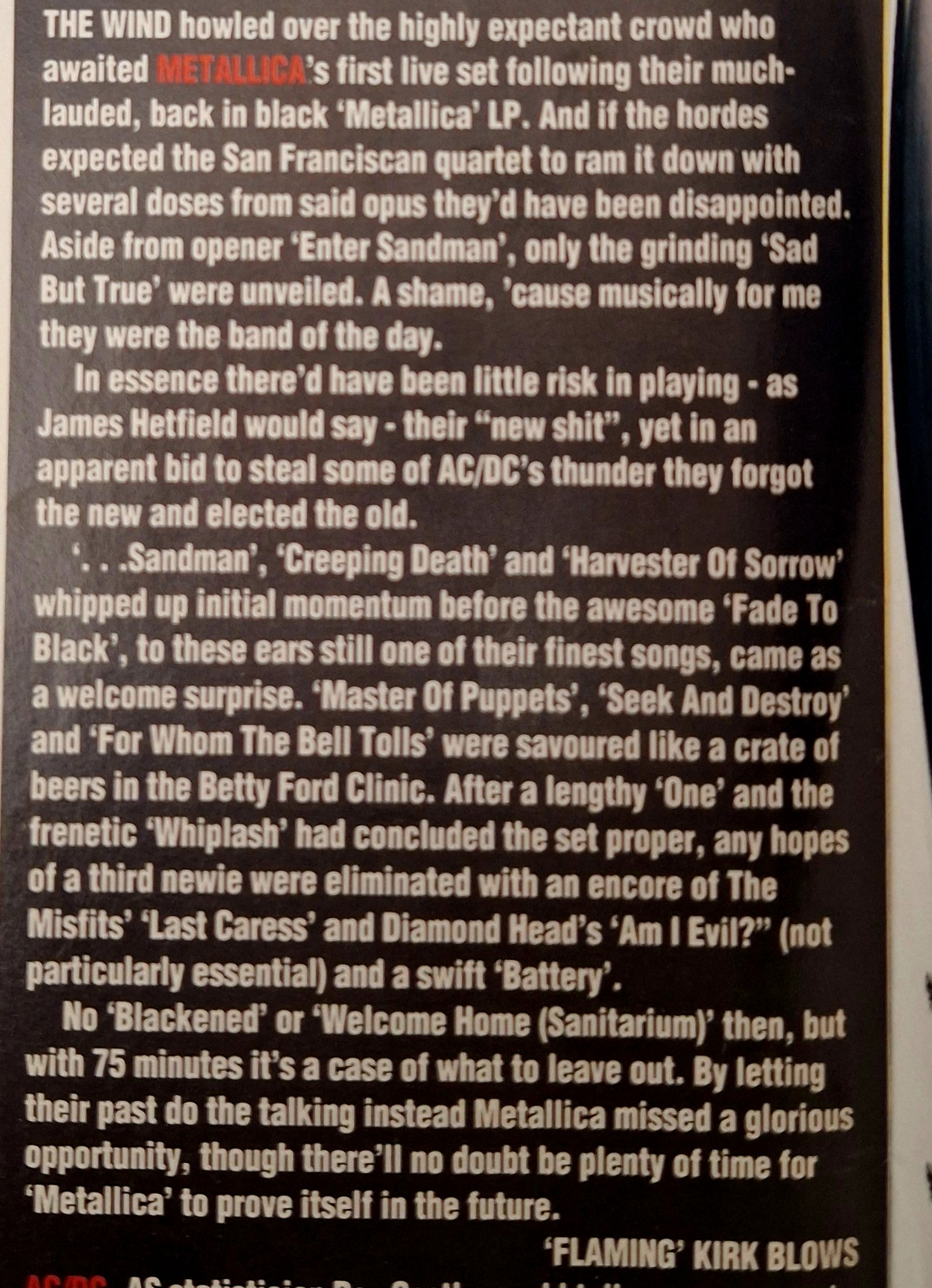
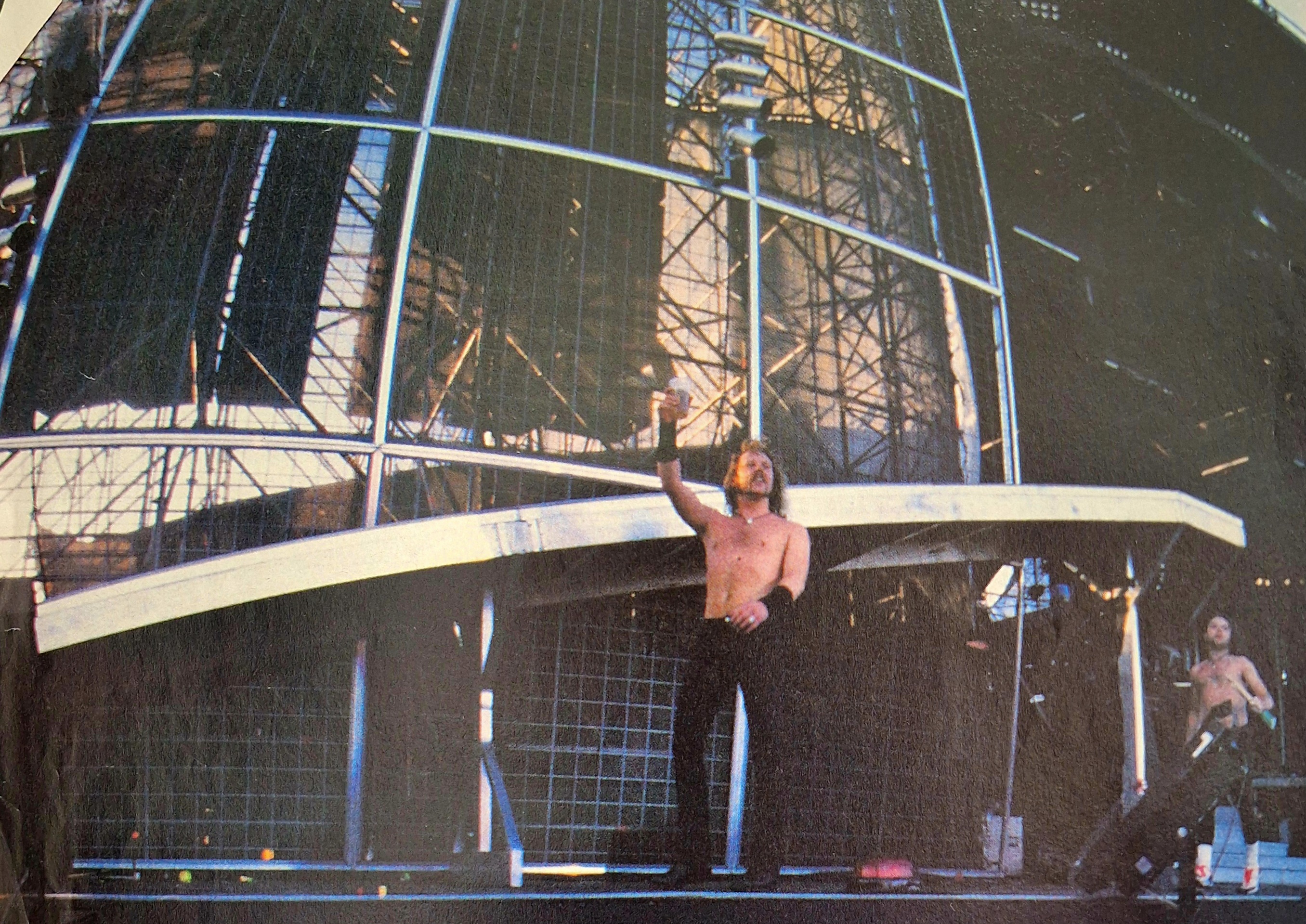
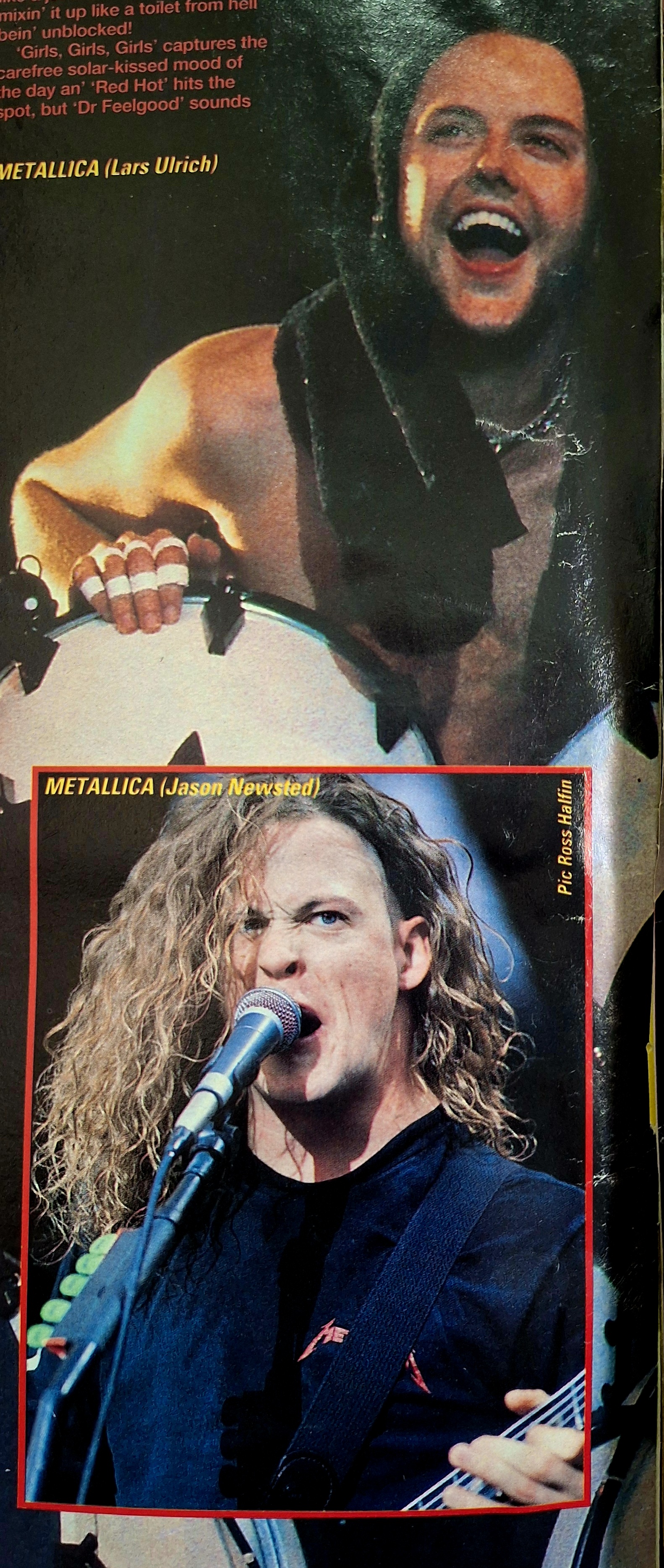
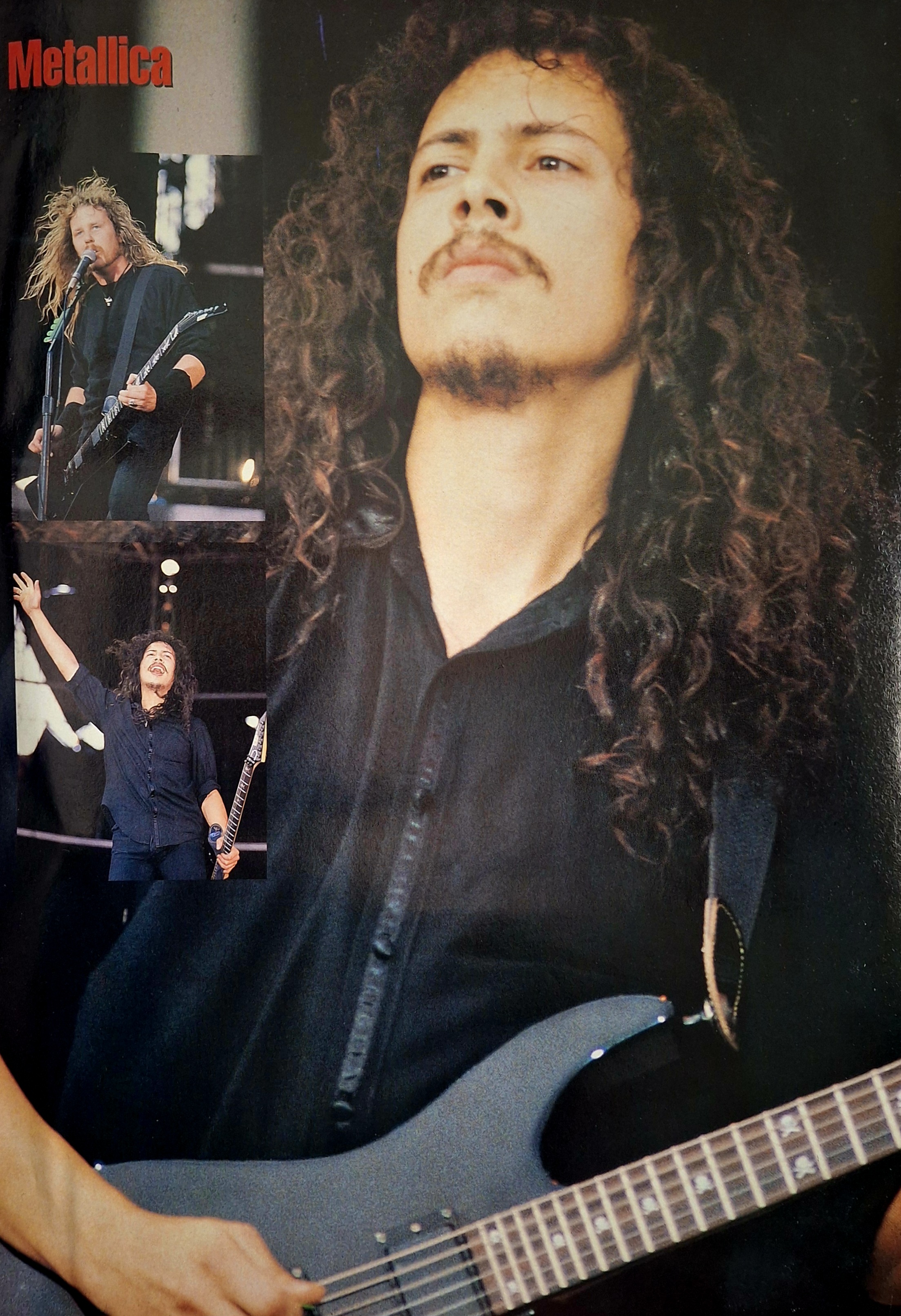
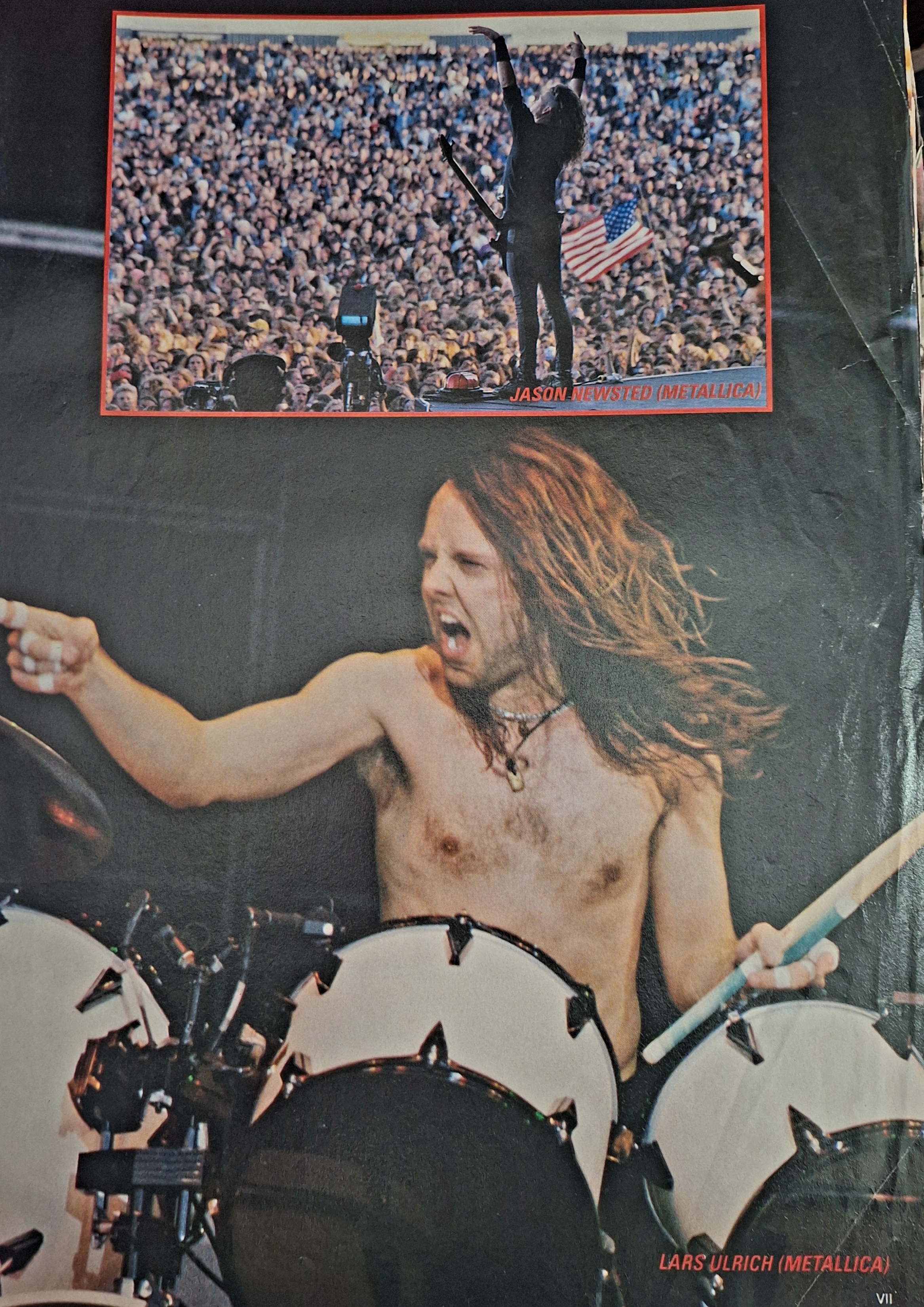
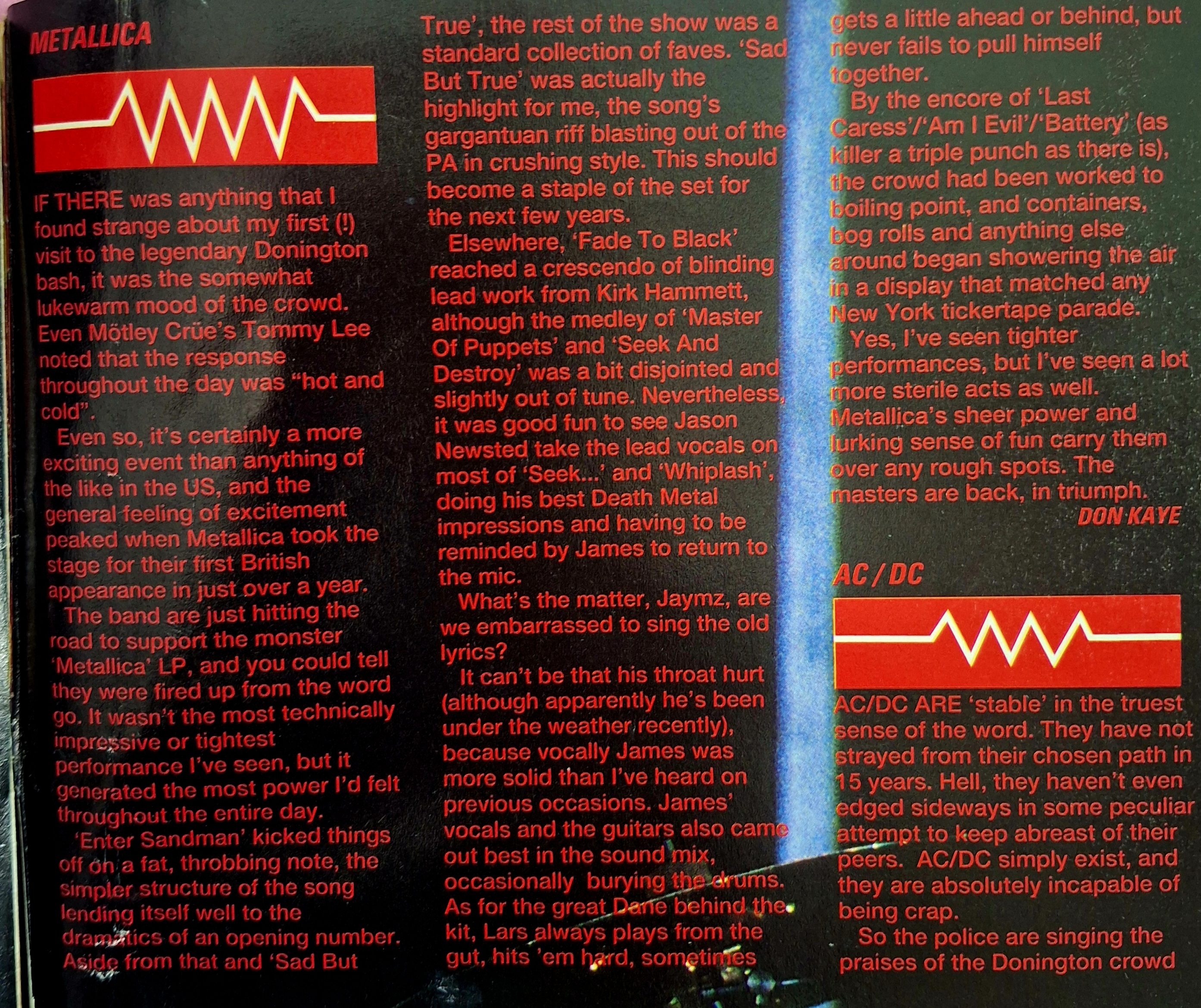
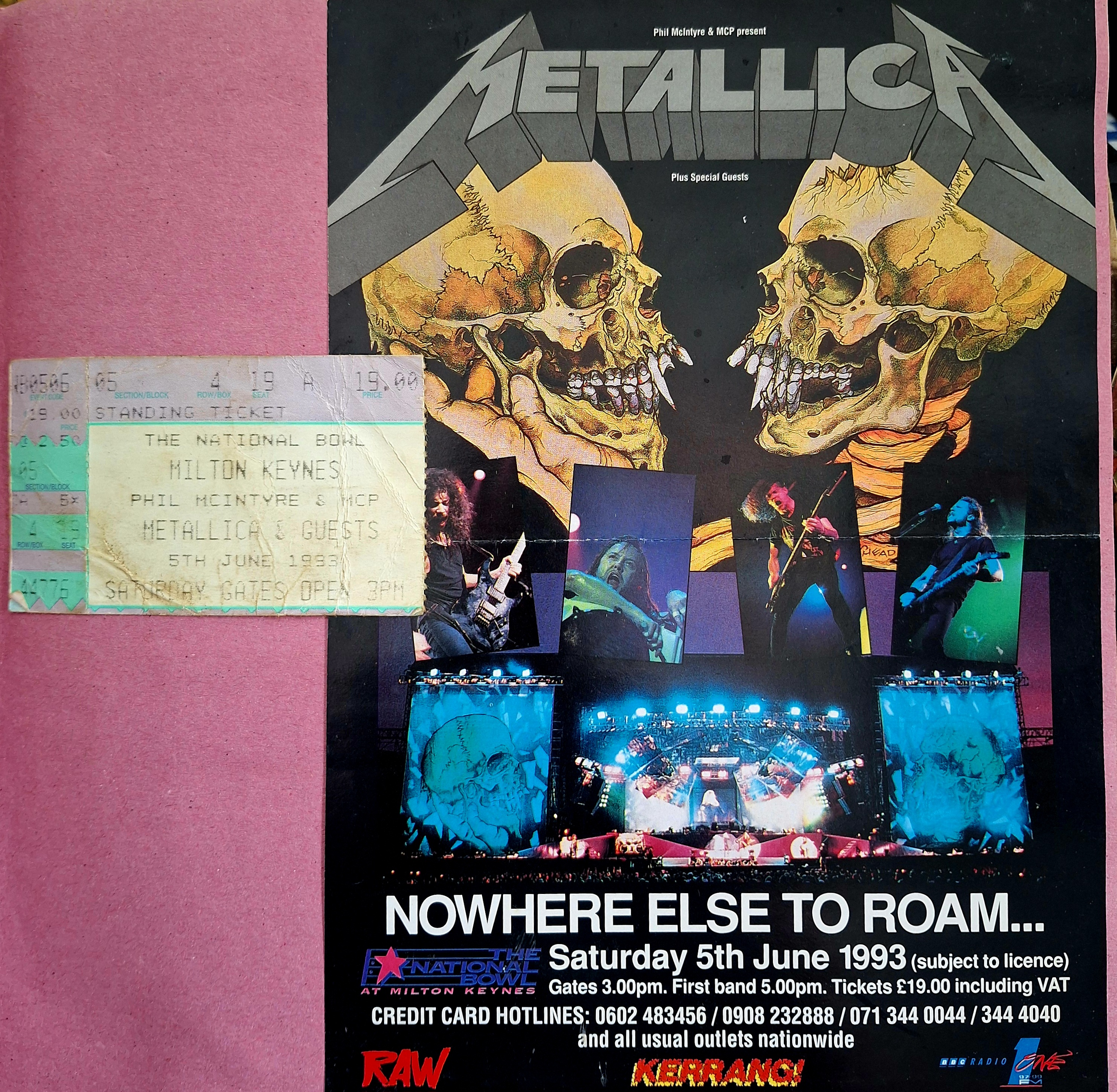
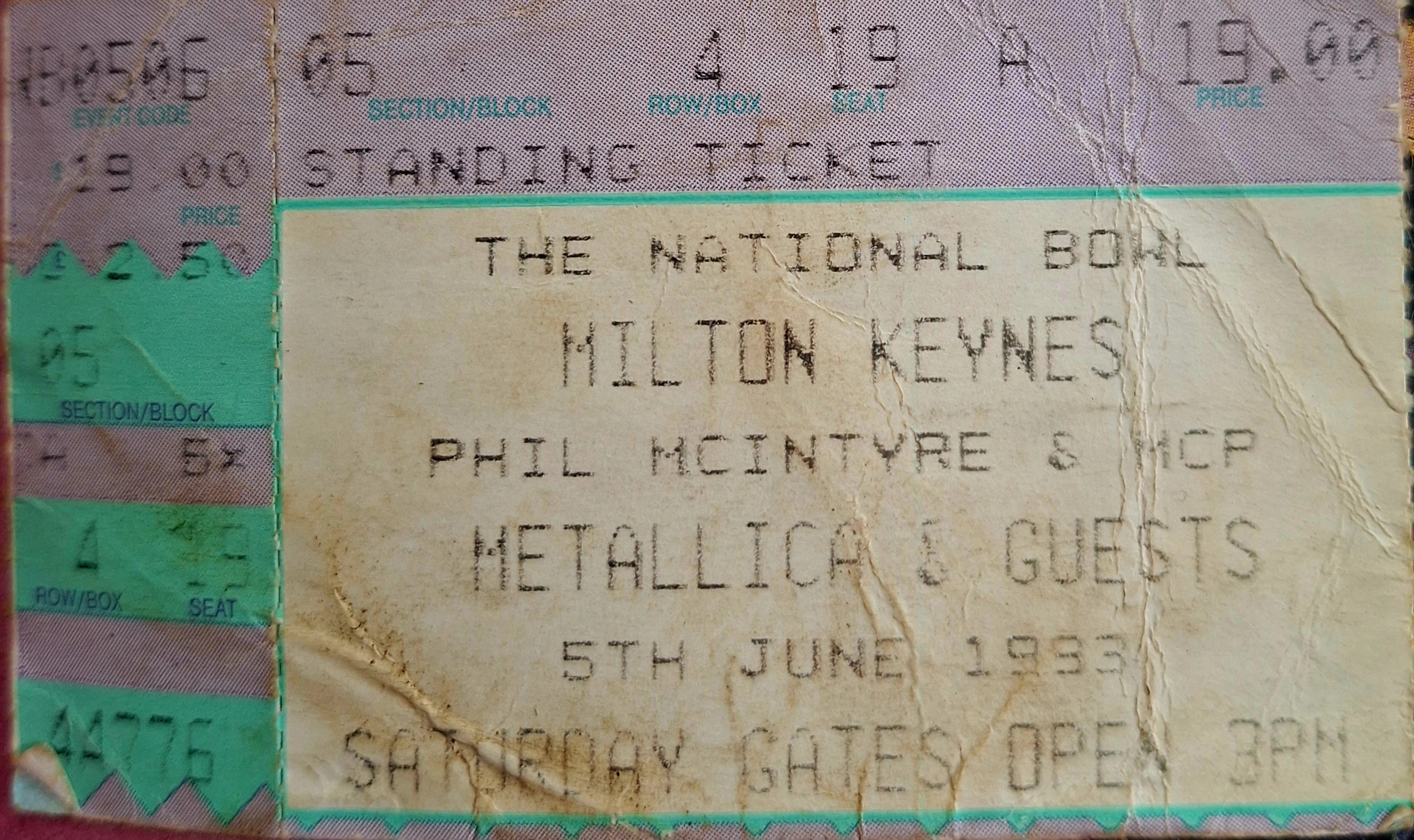
Obviously, the culmination of all this investing in my favourite bands came as I grew up a little and had the chance to see them live. Monsters of Rock at Donington in 1991 just after the release of the Black Album was quite simply prime Metallica, and I have included some shots in the gallery of reviews and pictures from the magazines of the day that I still have. The fact that I made a scrap book probably tells you that I was maybe not quite the cool metal kid I had aspired to be, but I no longer worry about these things. Milton Keynes Bowl in 1993 with Megadeth guesting, with The Almighty, who supported everyone back then (I saw them a bunch of times) and Diamond Head, should have been the peak moment in my love for the band. However, too much drinking and chaos took the shine off that day. Still got my ticket though (see below).

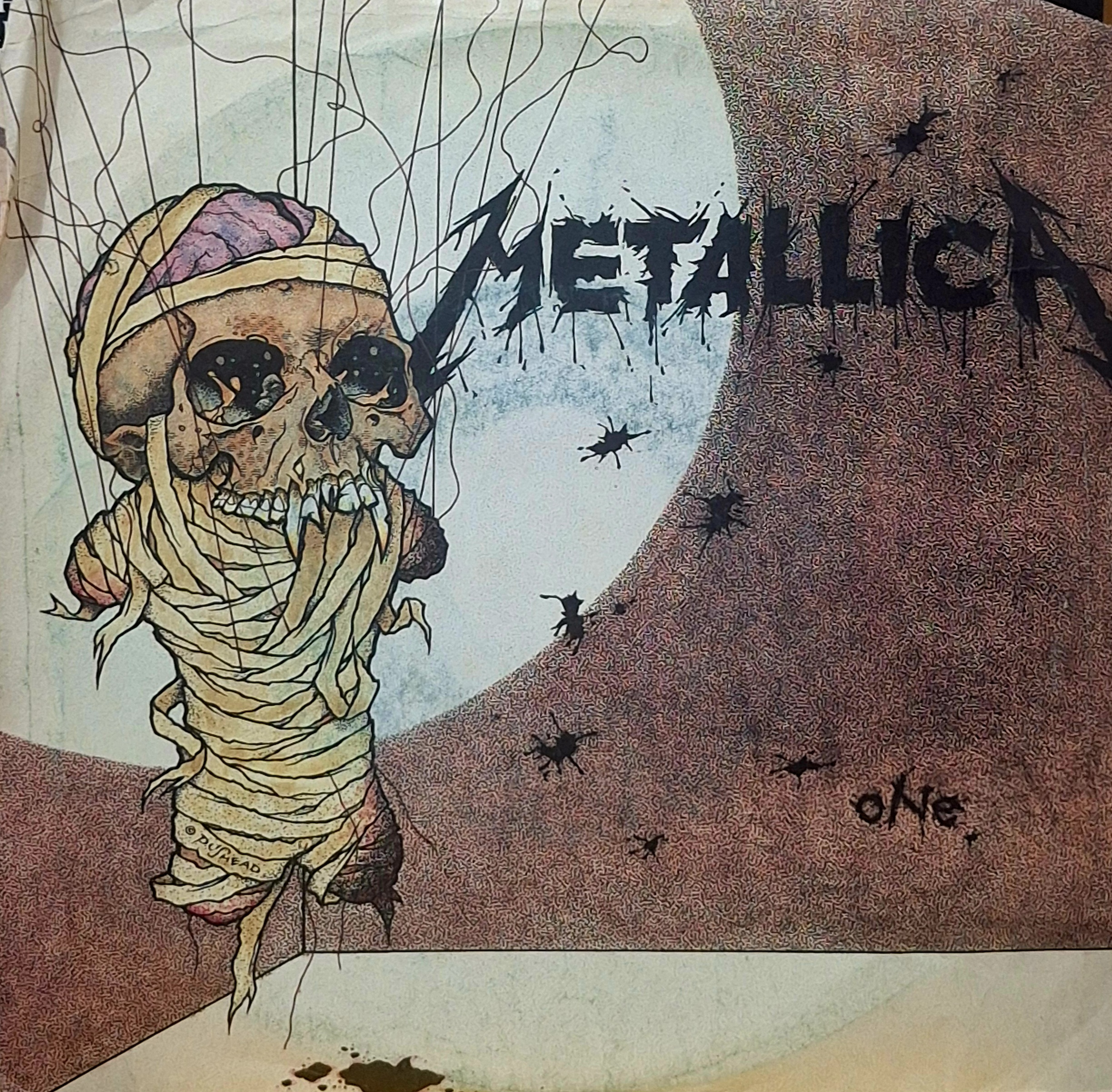
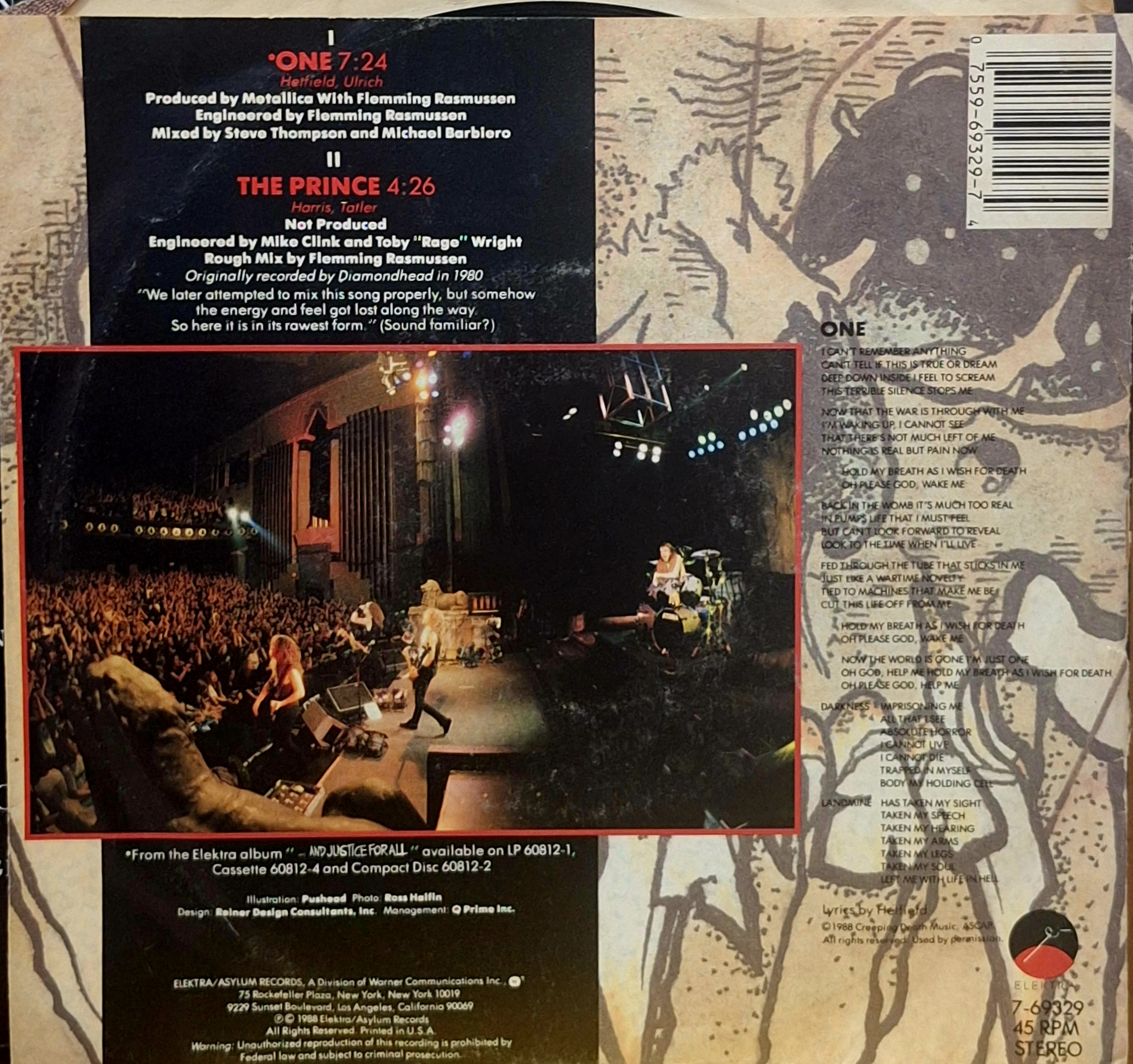
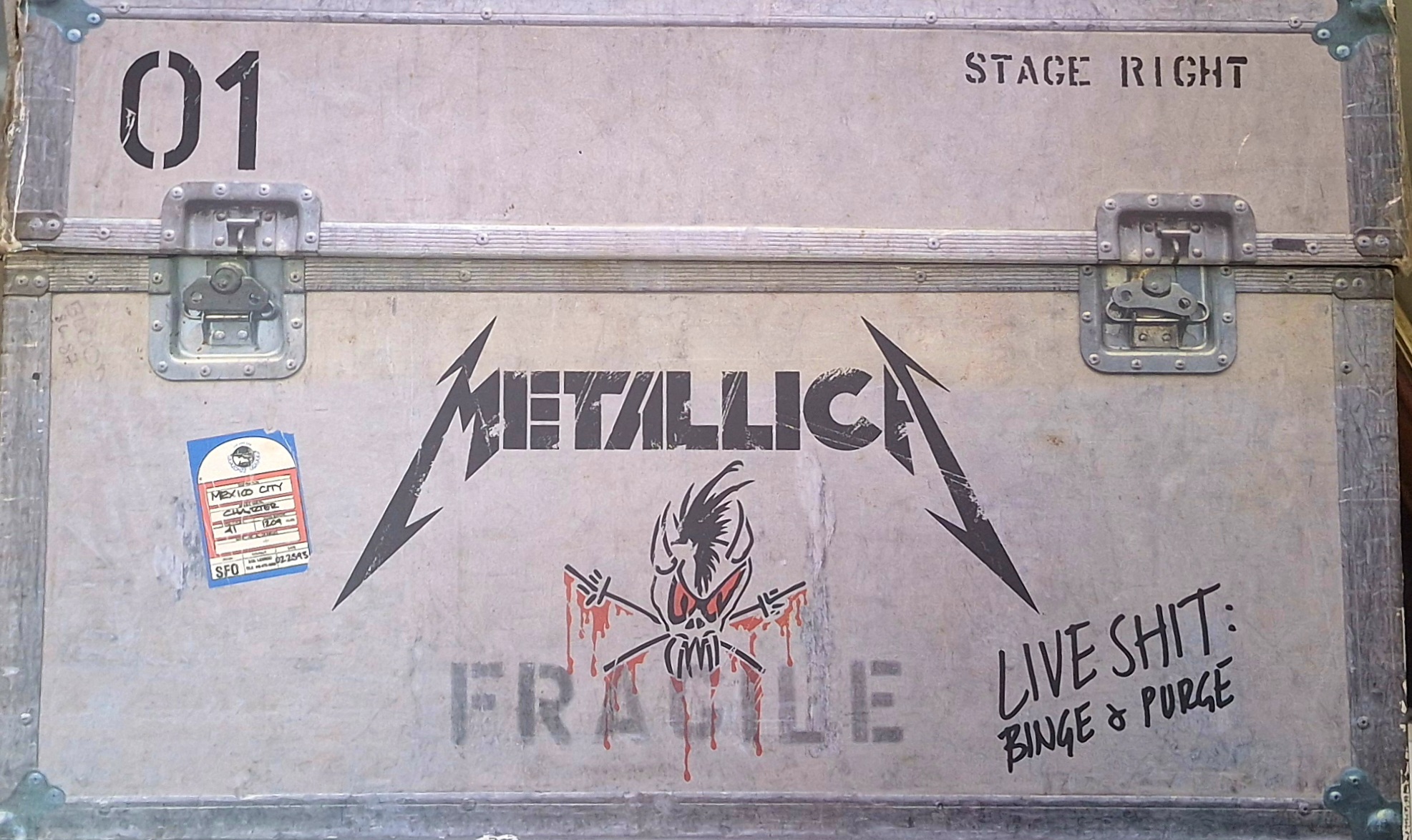
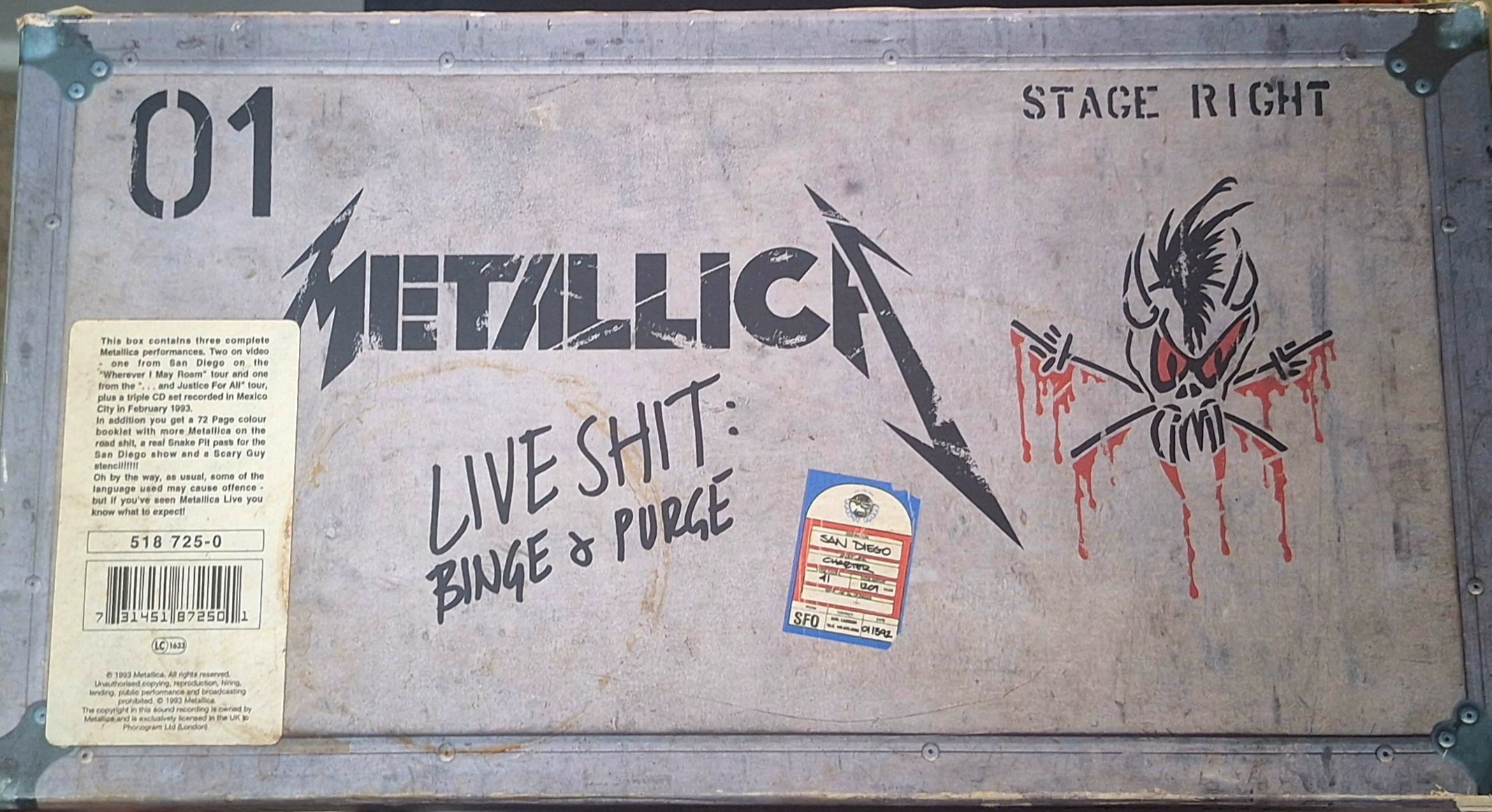
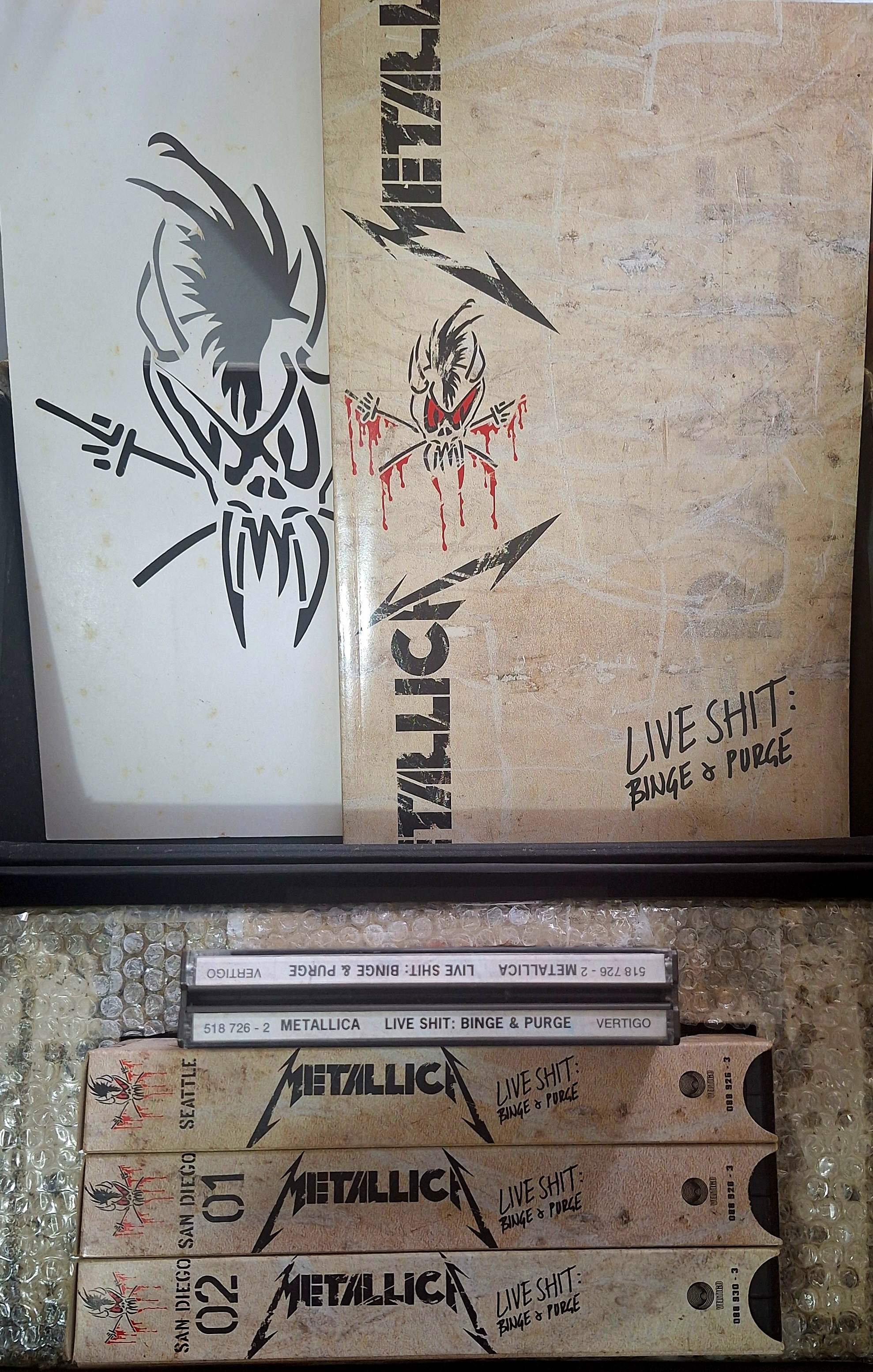
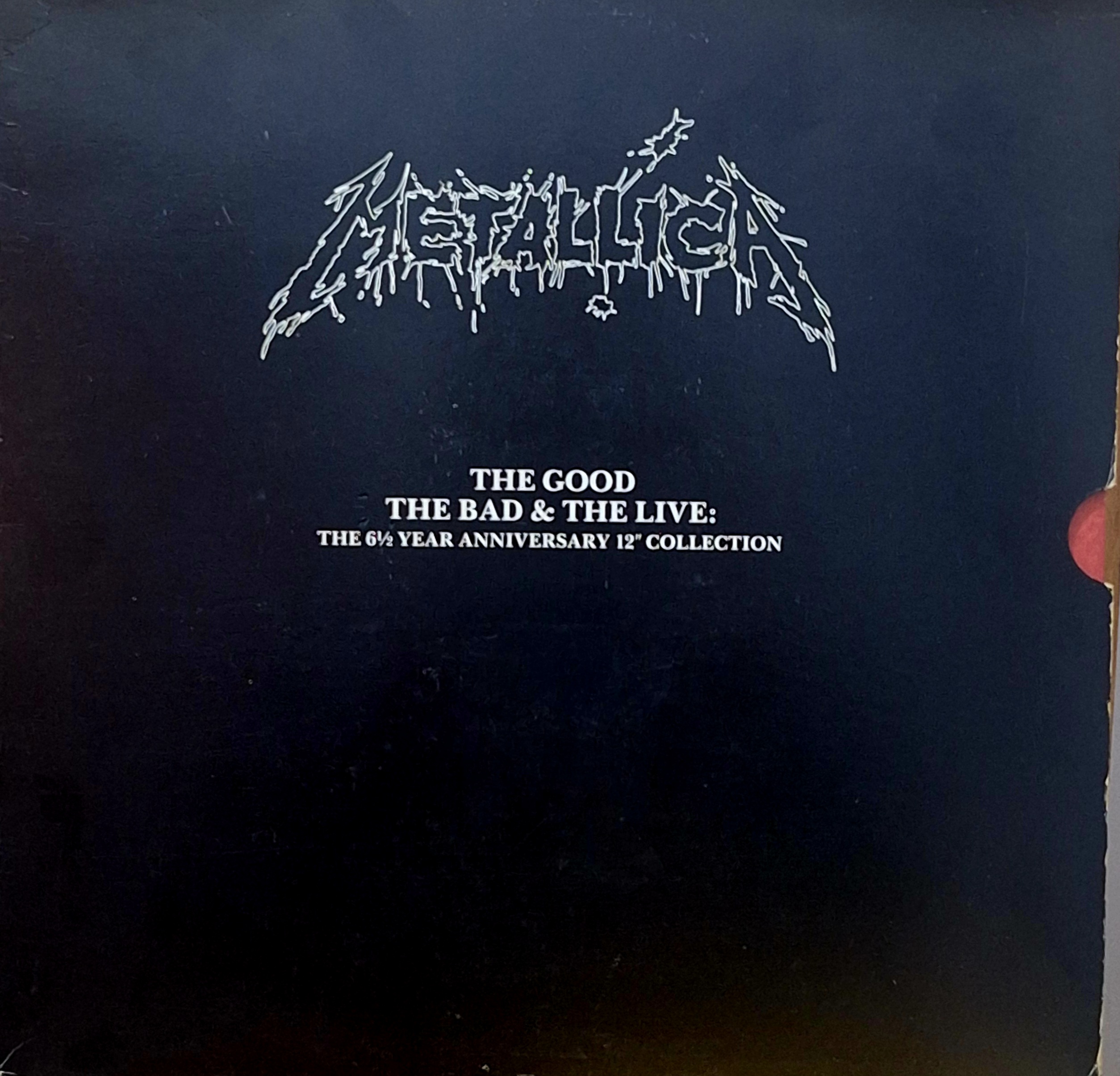
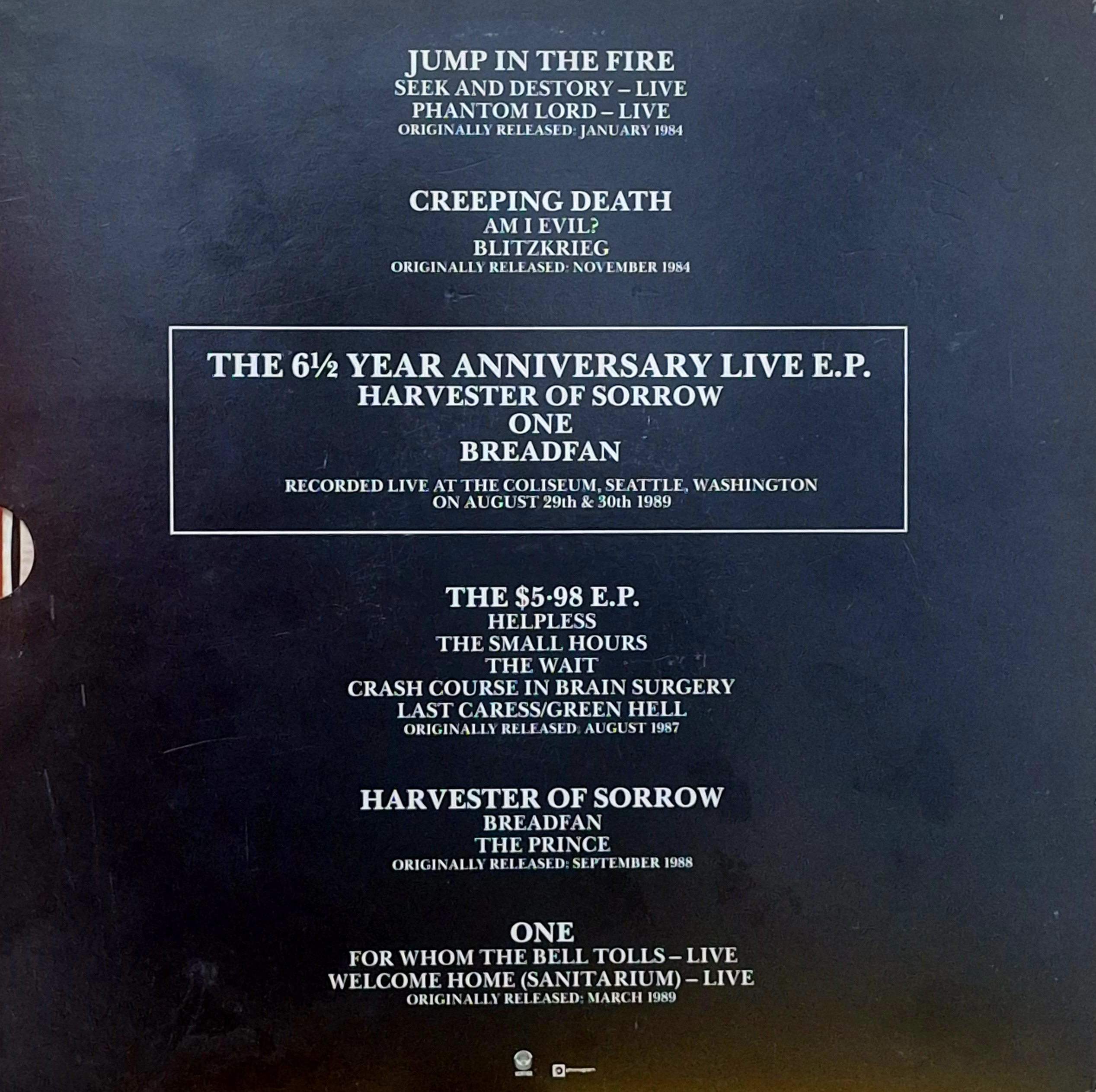
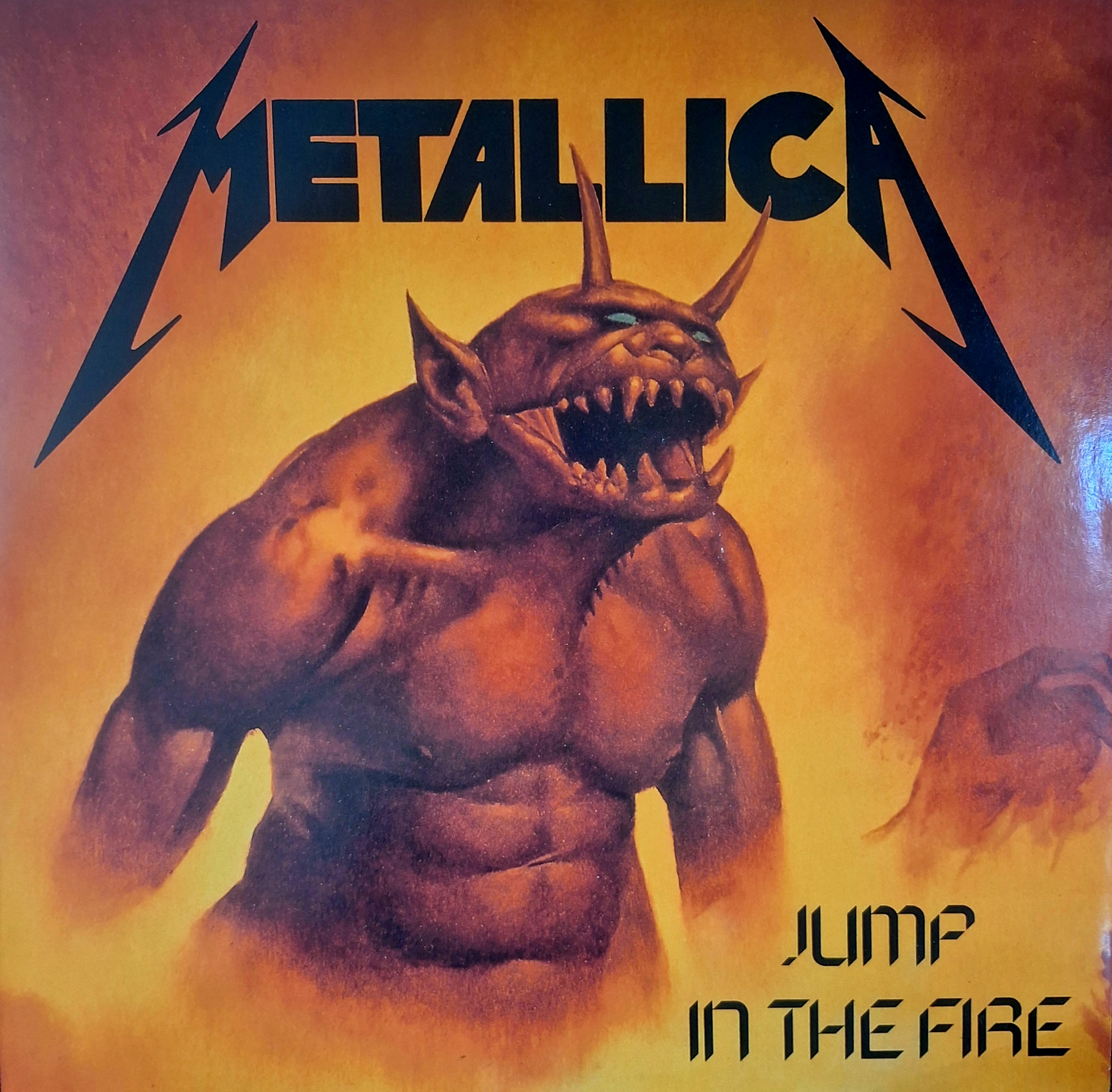
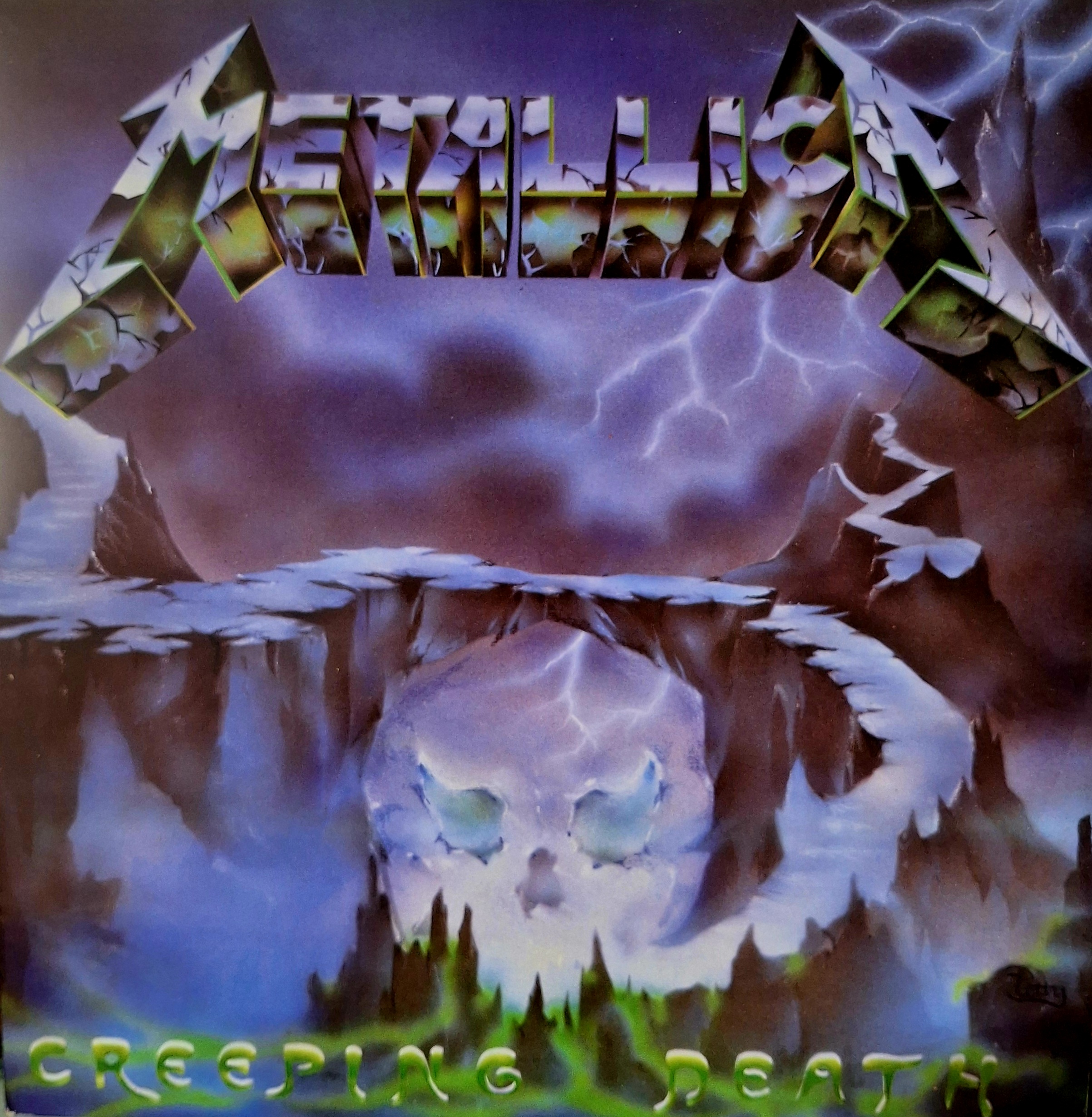
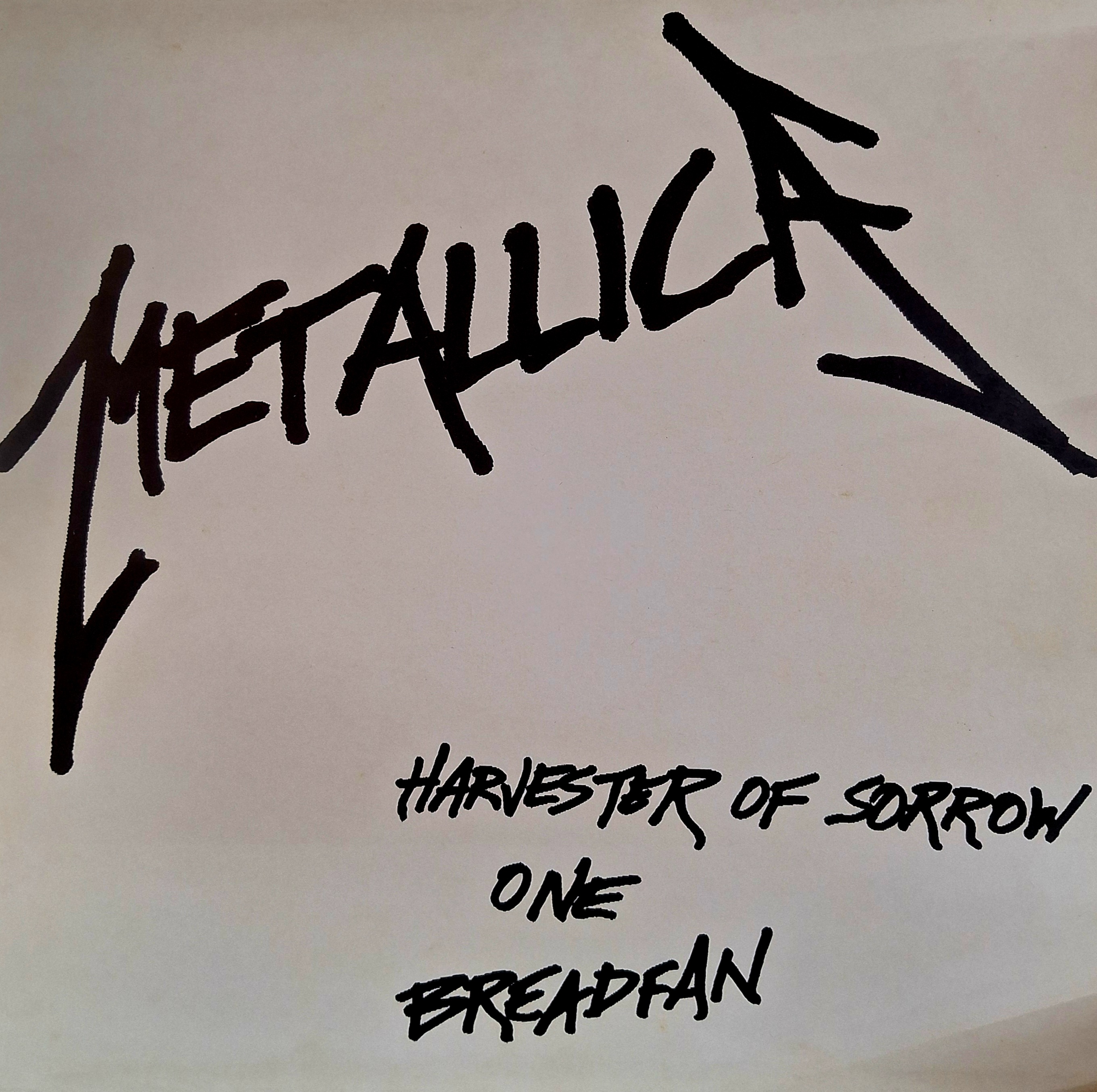
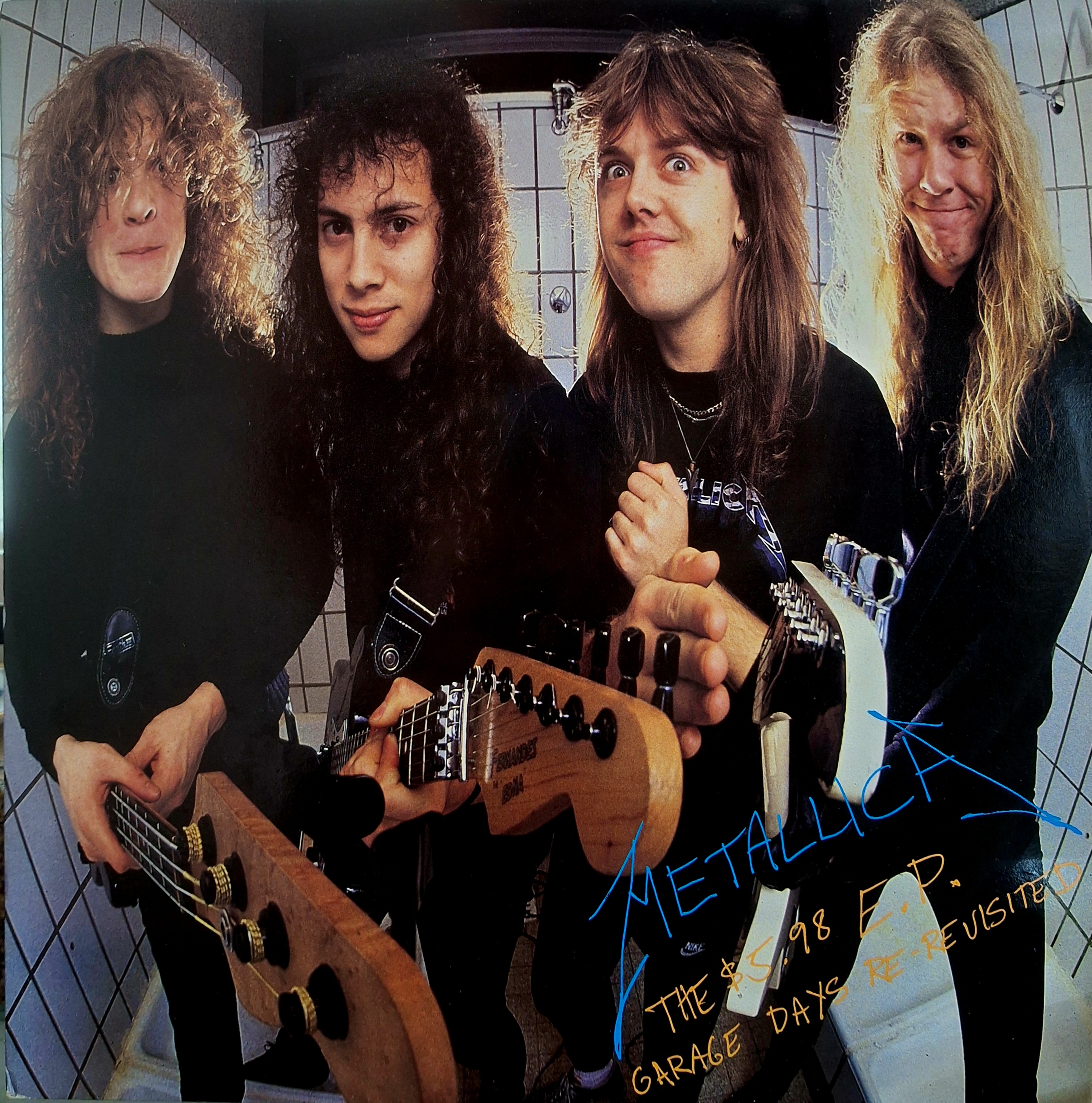
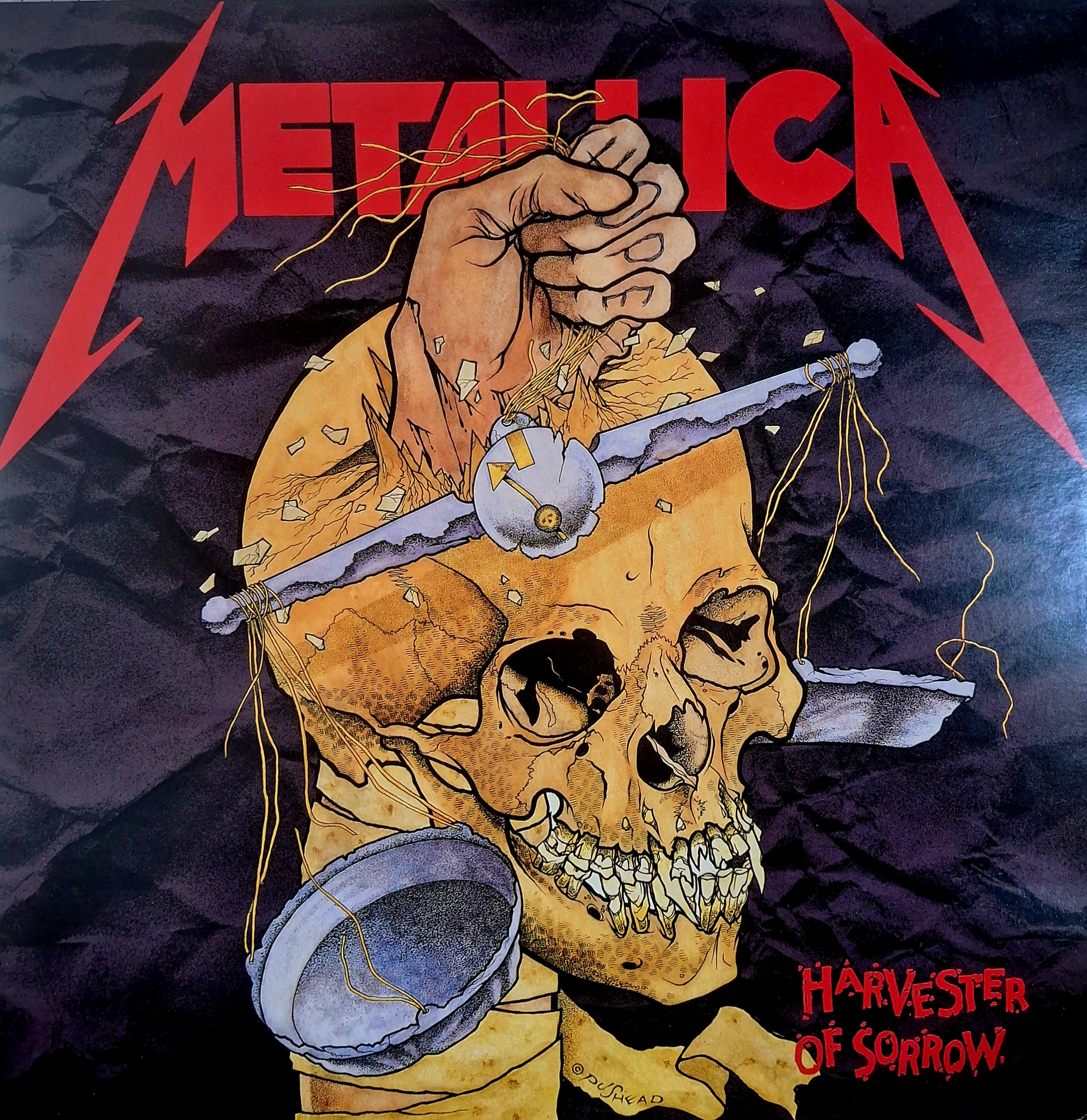
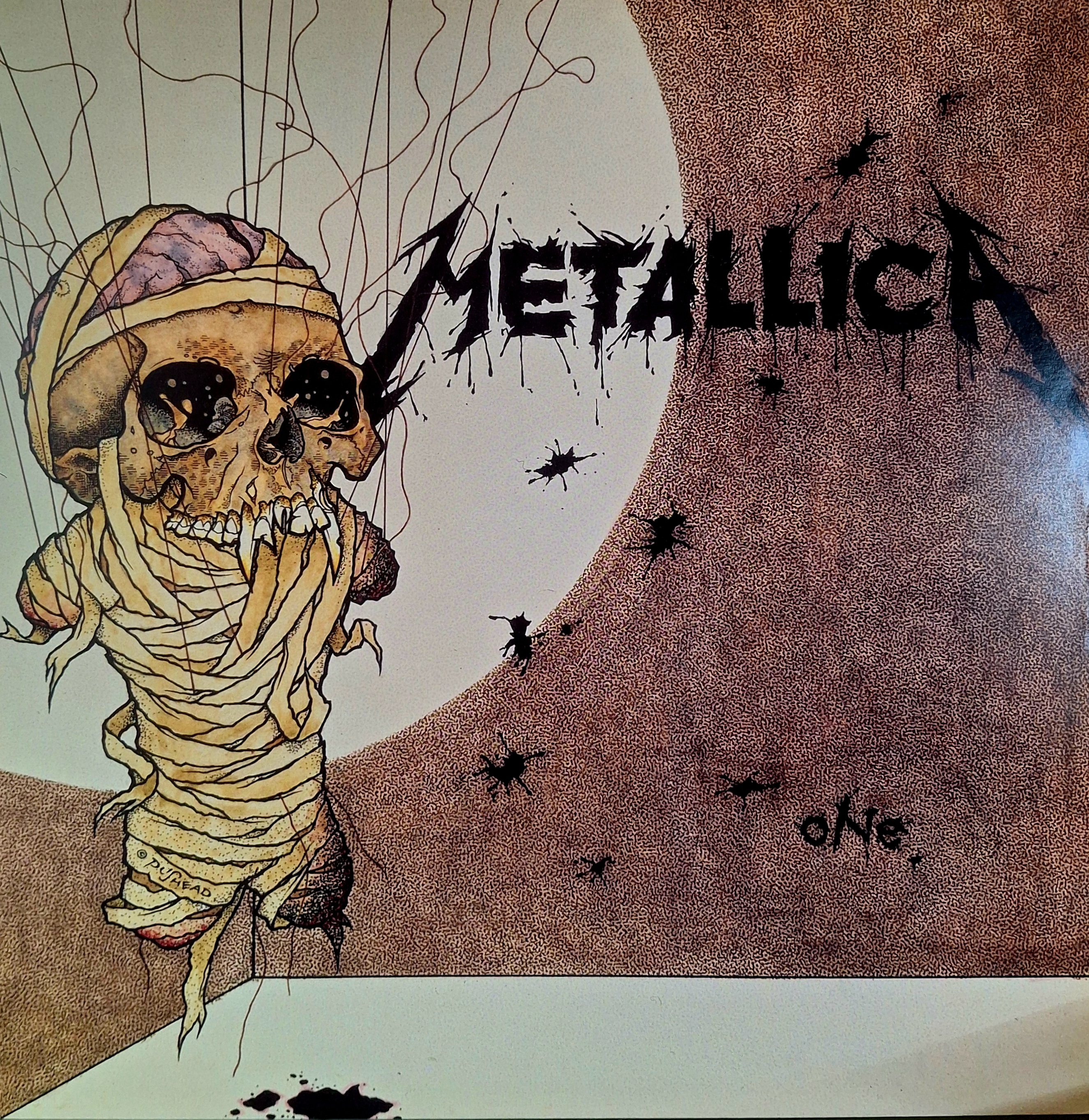
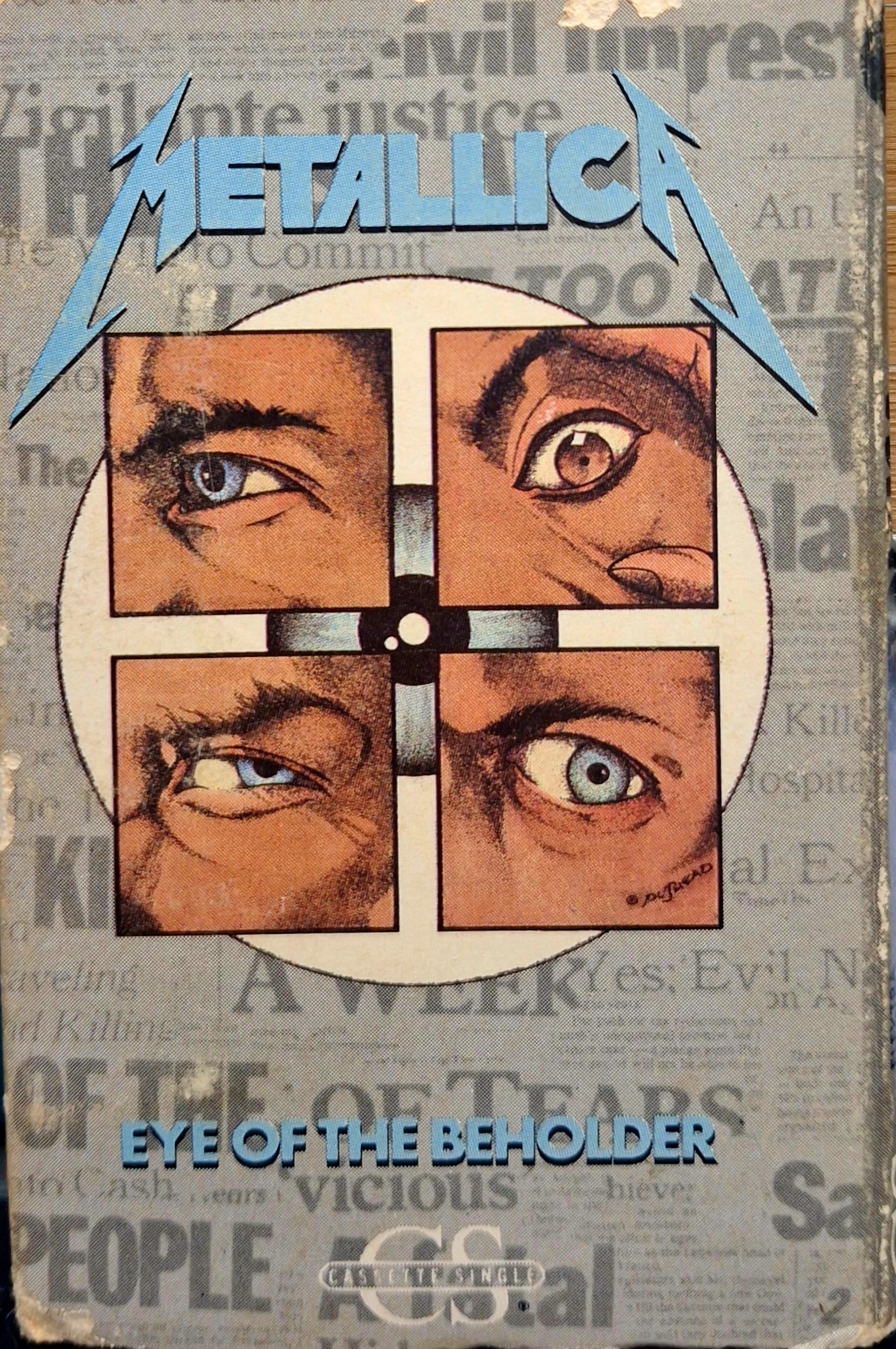
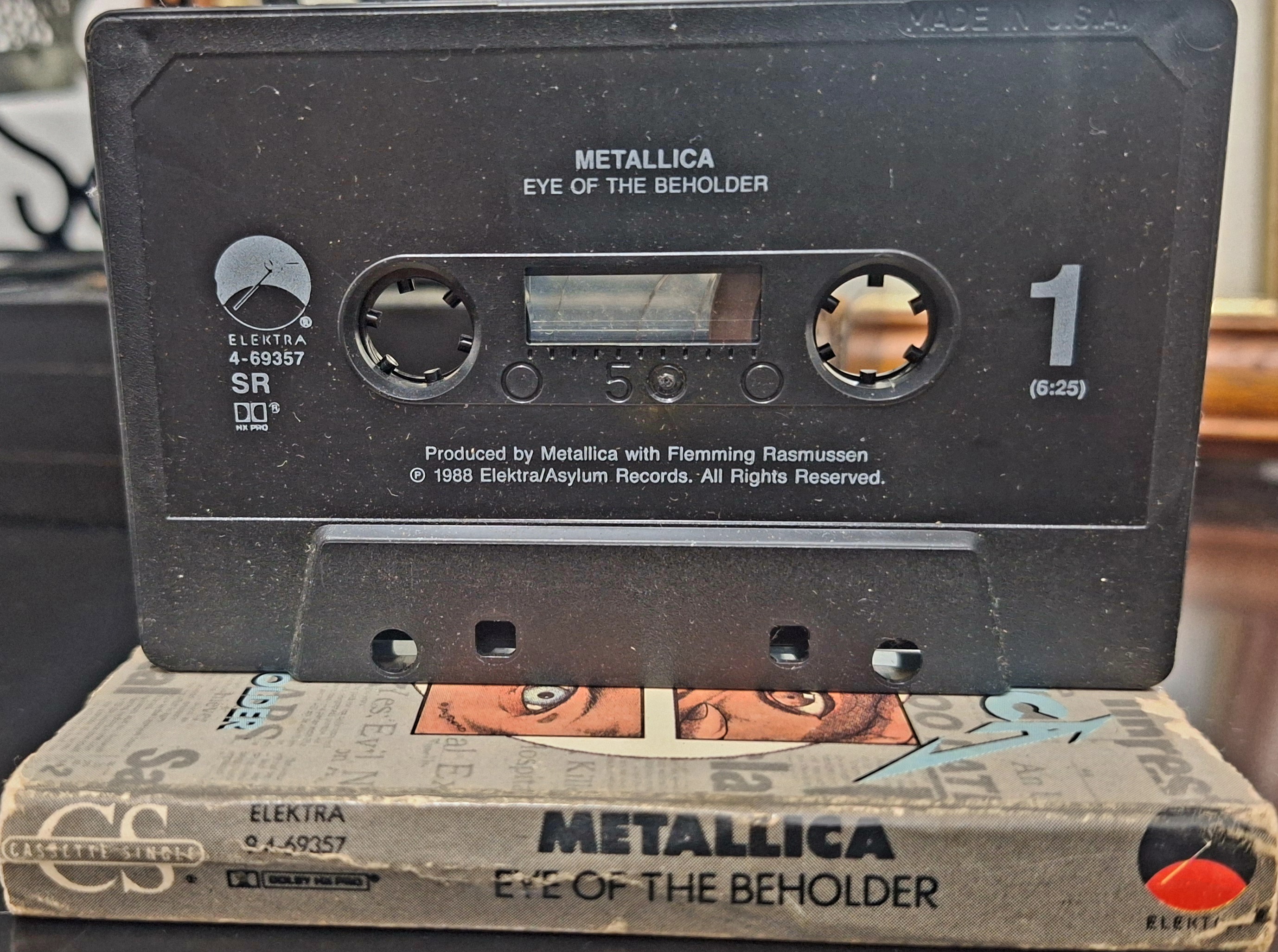
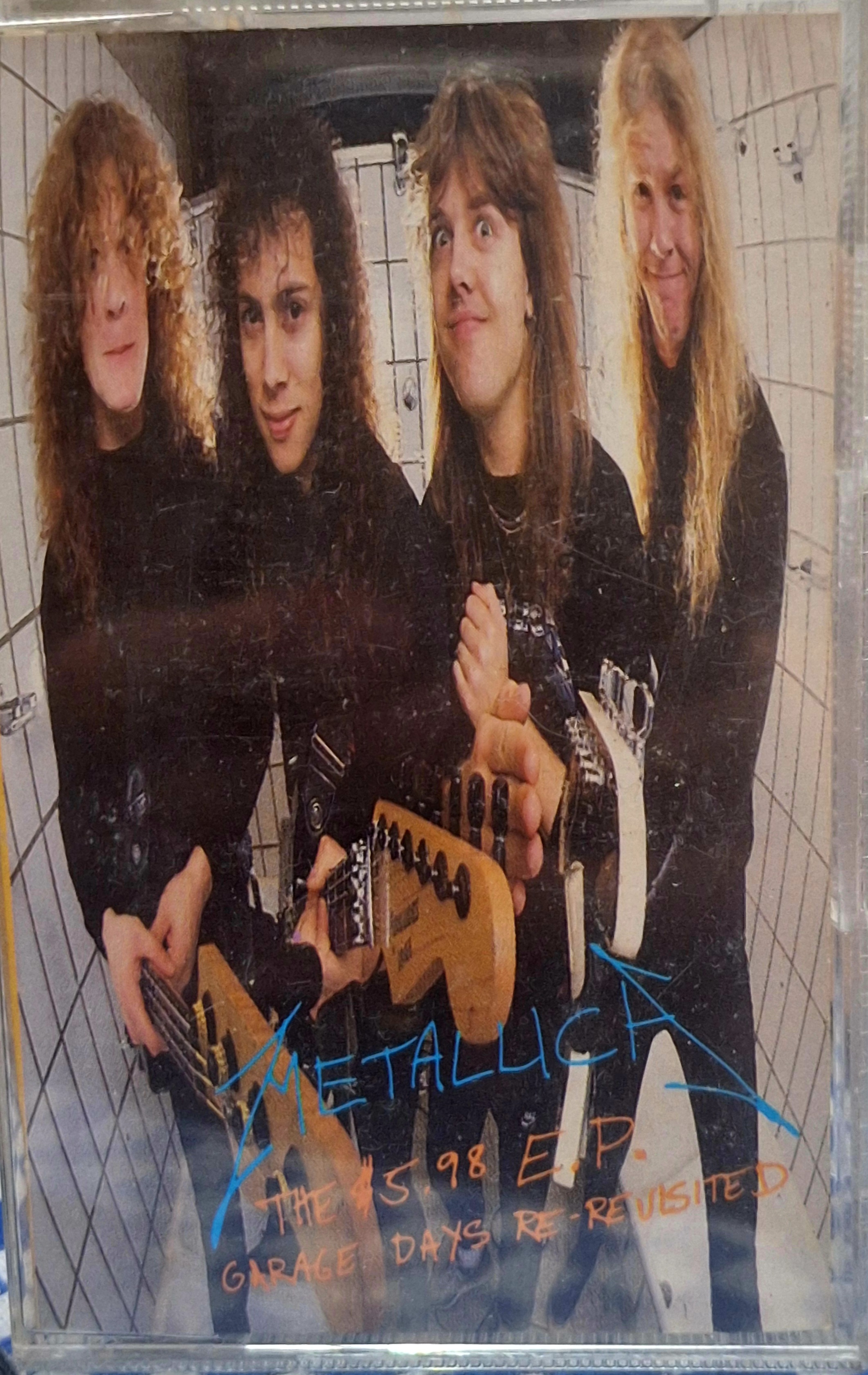
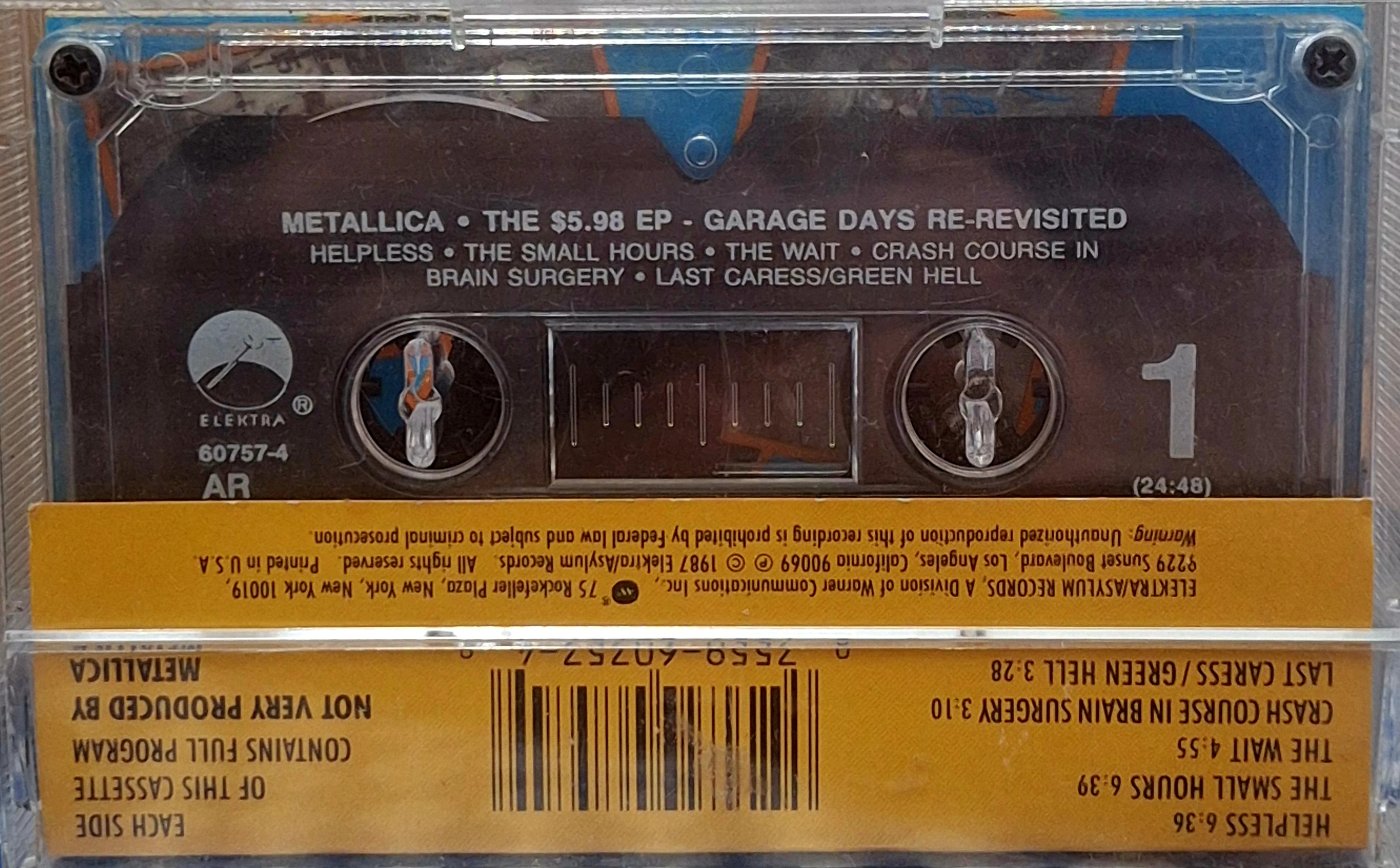
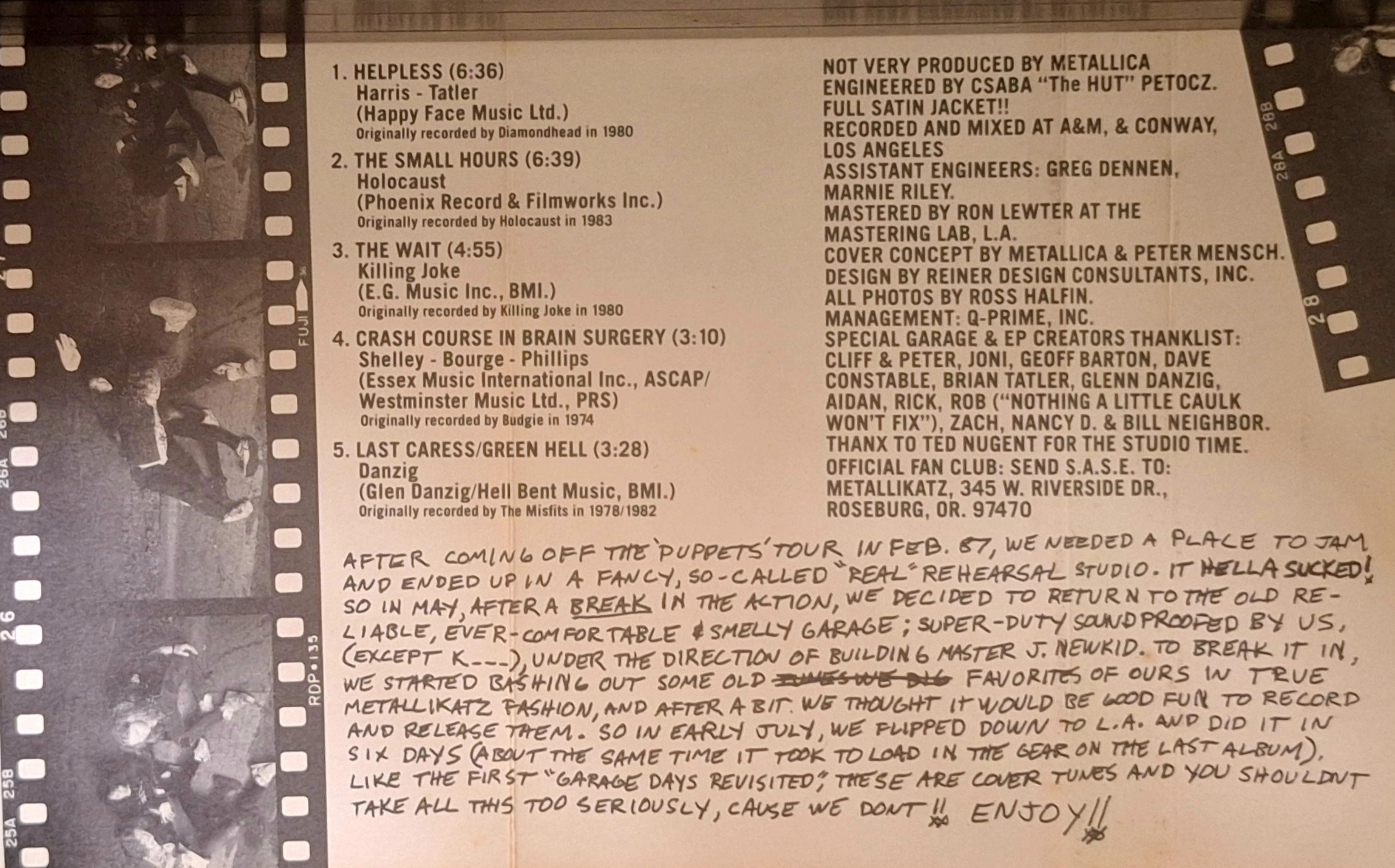
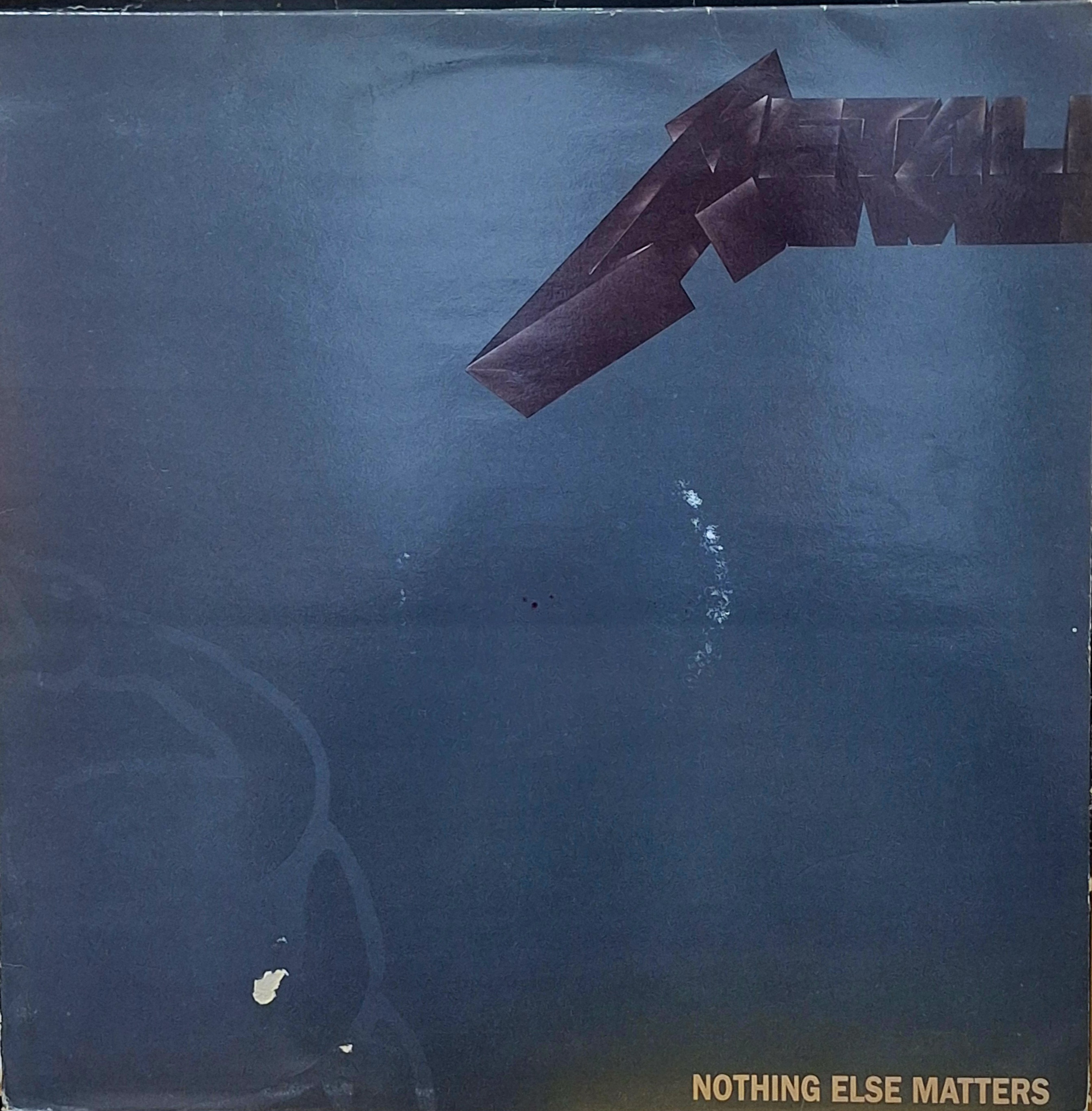
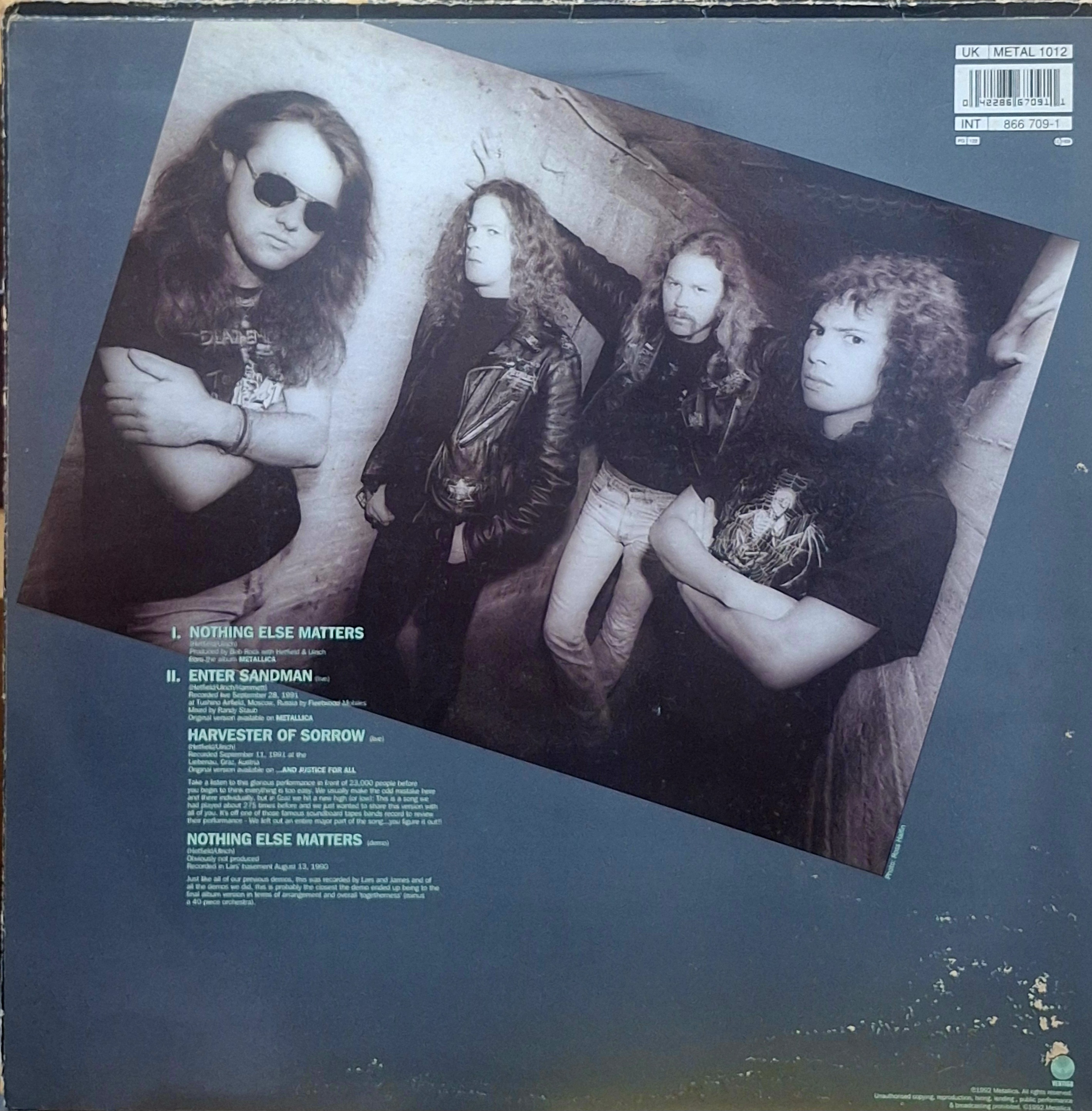
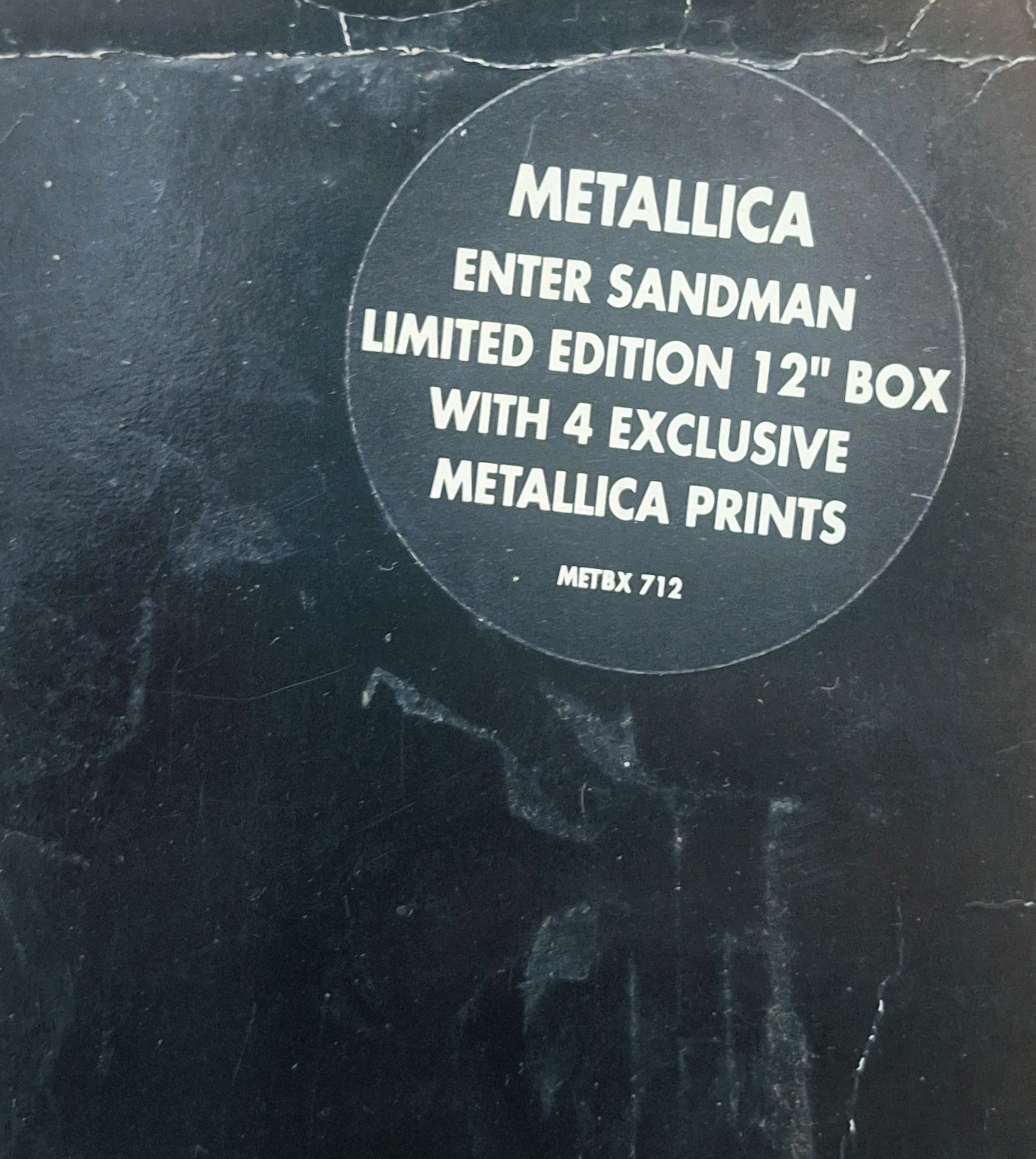
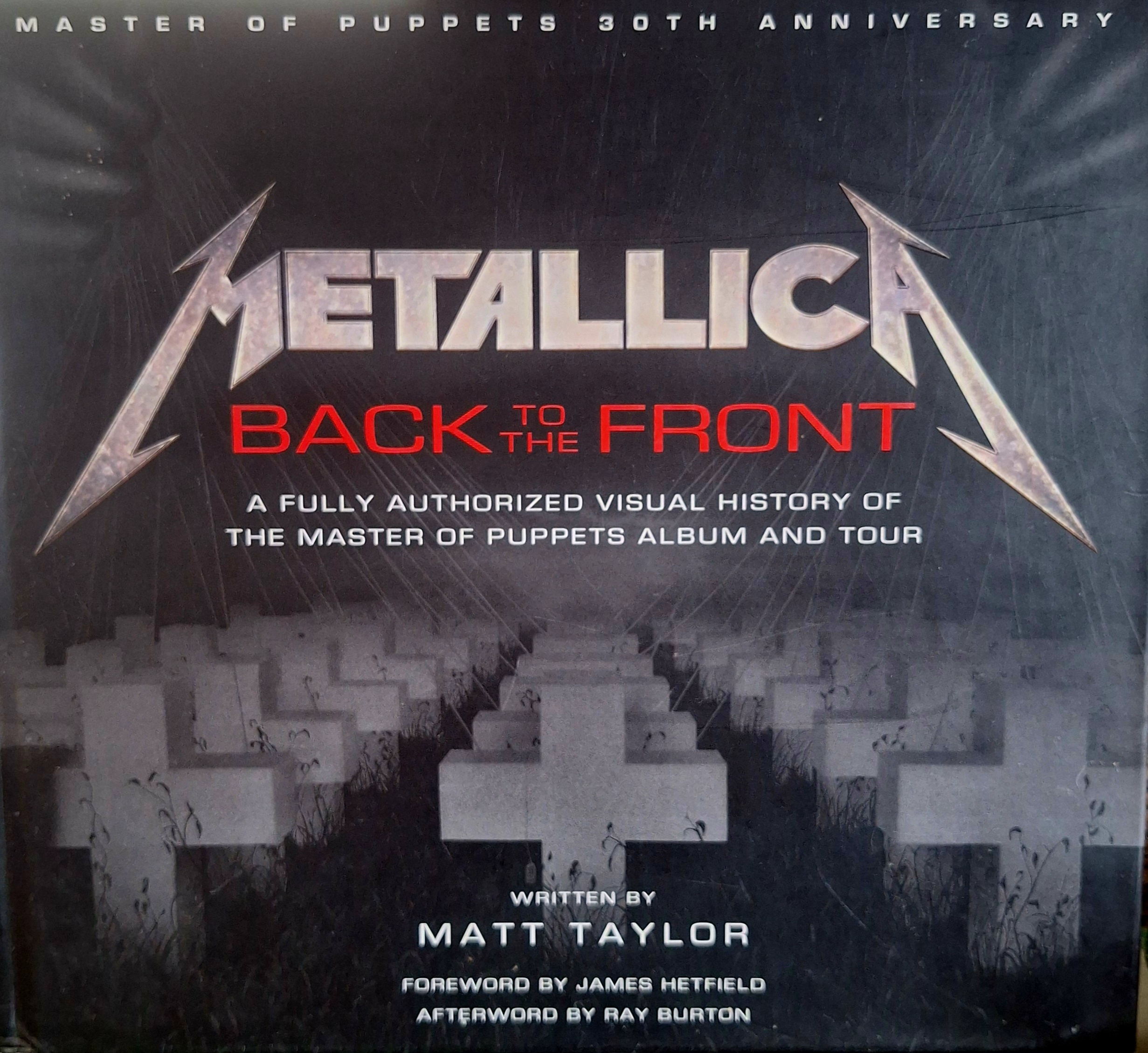
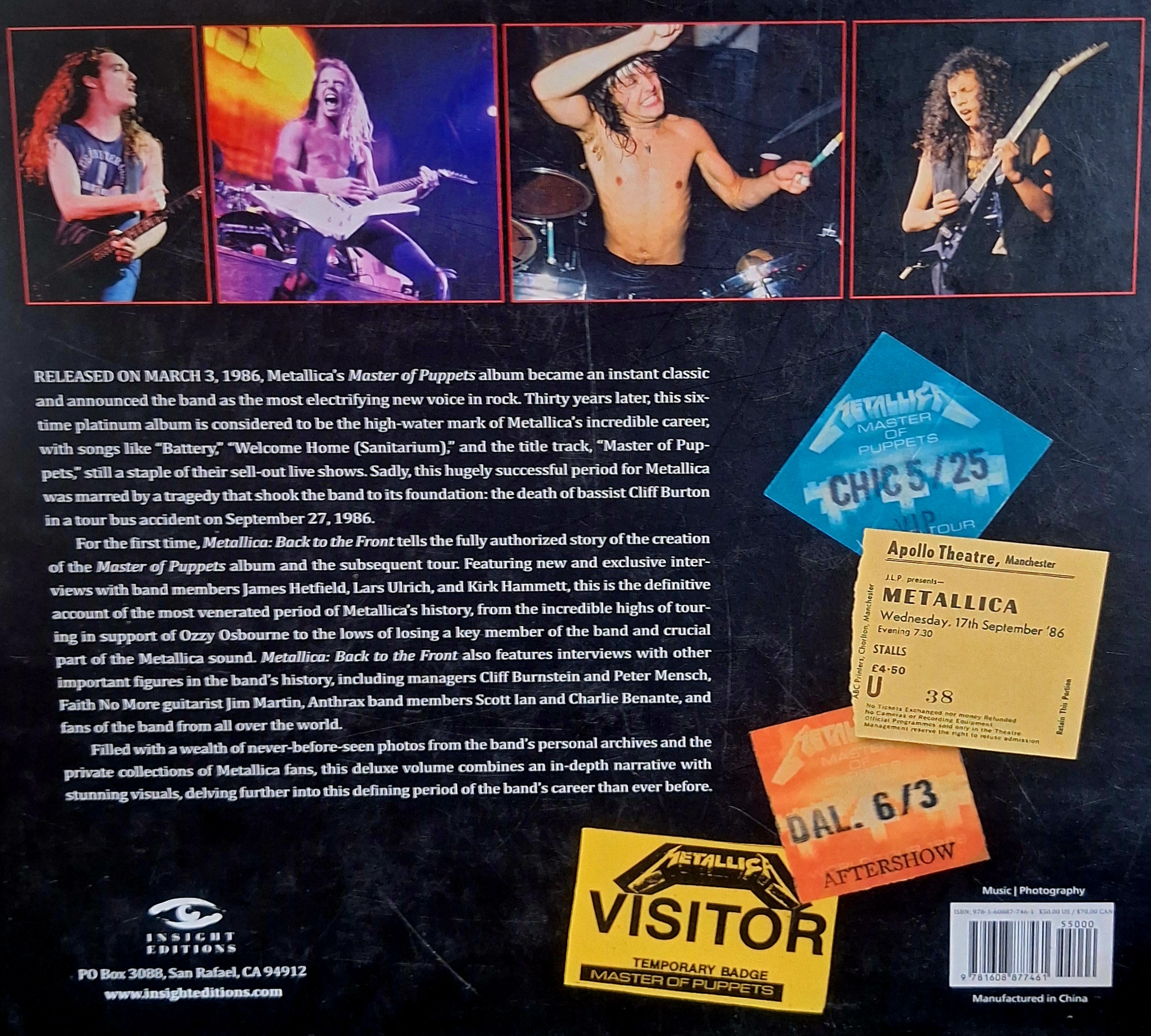
I’ll admit that I am no longer in possession of everything I have ever owned by Metallica – a few odds and bits got sold at a record fair recently and other items got lost in the mists of time (VHS Tapes of A Year and a Half in the Life of Metallica) – but I still have some significant, meaningful items that will no doubt end up being inherited! Featured in the gallery below are: the US edition 7″ of One; the crate edition of Live Shit: Binge and Purge; the six and a half year anniversary 12″ collection – The Good, The Bad & The Live (what was Metallica’s thing with half years?!); the cassette single of Eye of the Beholder; the cassette of The $5:98 EP Garage Days Re-Revisited; Limited Edition 12″ singles of Nothing Else Matters and Enter Sandman; and the Master of Puppets aniversary book, Back to The Front.

These are all just things, I know, but together they tell a story and represent the impact music can have on how we choose to live our lives. These memories represent moments of joy, disappointment, discovery and regret, and looking back now, I wouldn’t have had it any other way. Good times!

Anthrax – The Edge of Perfection

It’s been a week since Anthrax dropped The Edge of Perfection, the second single from their upcoming Cursum Perficio album. And I have to say that I cannot get enough of this song. It is simply unbelievable. It’s heavy, it’s epic, it soars like nothing they have ever done before, and every element combines to be about as perfect a slice of epic thrash as you are likely to hear.

Essentially, it is a love song about Scott Ian‘s family, yet it is darkly brooding with massive layers of guitars and rapid fire percussion building a wall of sound to underpin the ever excellent Joey Belladonna‘s huge vocal. In a recent interview with Allison Hagendorf, one of the most respected voices in rock, she described the song as an instant classic and pressed Scott for an opinion. The guitarist replied “I have zero modesty when it comes to that song. I truly think it is the best song we’ve ever done. It’s the apex of our career. It’s our magnum opus”. I cannot disagree.

Anthrax & Public Enemy – Bring the Noise

Released 35 years ago on July 09, 1991, the Anthrax and Public Enemy version of Bring the Noise remains the ultimate rap metal crossover. Sure, Aerosmith / Run DMC‘s version of Walk This Way had made a massive impact, but speed metal with rapping on it was totally unheard of. Scott Ian and Chuck D, however, were among the first to recognise the shared power of Hip Hop and Heavy Rock and made this irresistable mash up work so well that it still sounds awesome to this very day.

Although Anthrax had first covered the track in their live set some two years earlier, Chuck D didn’t really take the thrashers seriously, and given the tribal nature of music at the time there was plenty of concern that both groups might lose some of their audience. However, Scott Ian was heavily into Hip Hop and was the architect who made it happen, famously keeping Joey Belladonna the band’s vocalist, completely in the dark literally until Chuck and Flav showed up in the studio. Despite the misgivings, the bands totally hit it off while hanging out together, and once the song was in the can it was an obvious banger, with the tour that followed seeing Public Enemy up the intensity of their live show to match their fellow New Yorkers. It ended up being Anthrax’s biggest hit in the UK, peaking at number 14, and his been a staple of their live shows ever since.

The song standing the test of time is no real surprise, given its undeniable accessibility and solid gold quality, but the fact that both bands are still relevant is no mean feat. Anthrax are set to release their twelfth studio album later this year with the first single, It’s For the Kids showing that, 45 years into their career, they have lost none of their vibrancy. Chuck D, meanwhile, never stops creating: 2025 saw the release of PE’s superb 16th studio album, Black Sky Over the Projects: Apartment 2025; this year he released the classy doPE project with John Densmore; then there is the book of Chuck’s art – Livin’ Loud: ARTitation; not to mention everything else he curates, promotes and collaborates in. Chuck may be approaching 66 but he continues to prove that age is just a number.

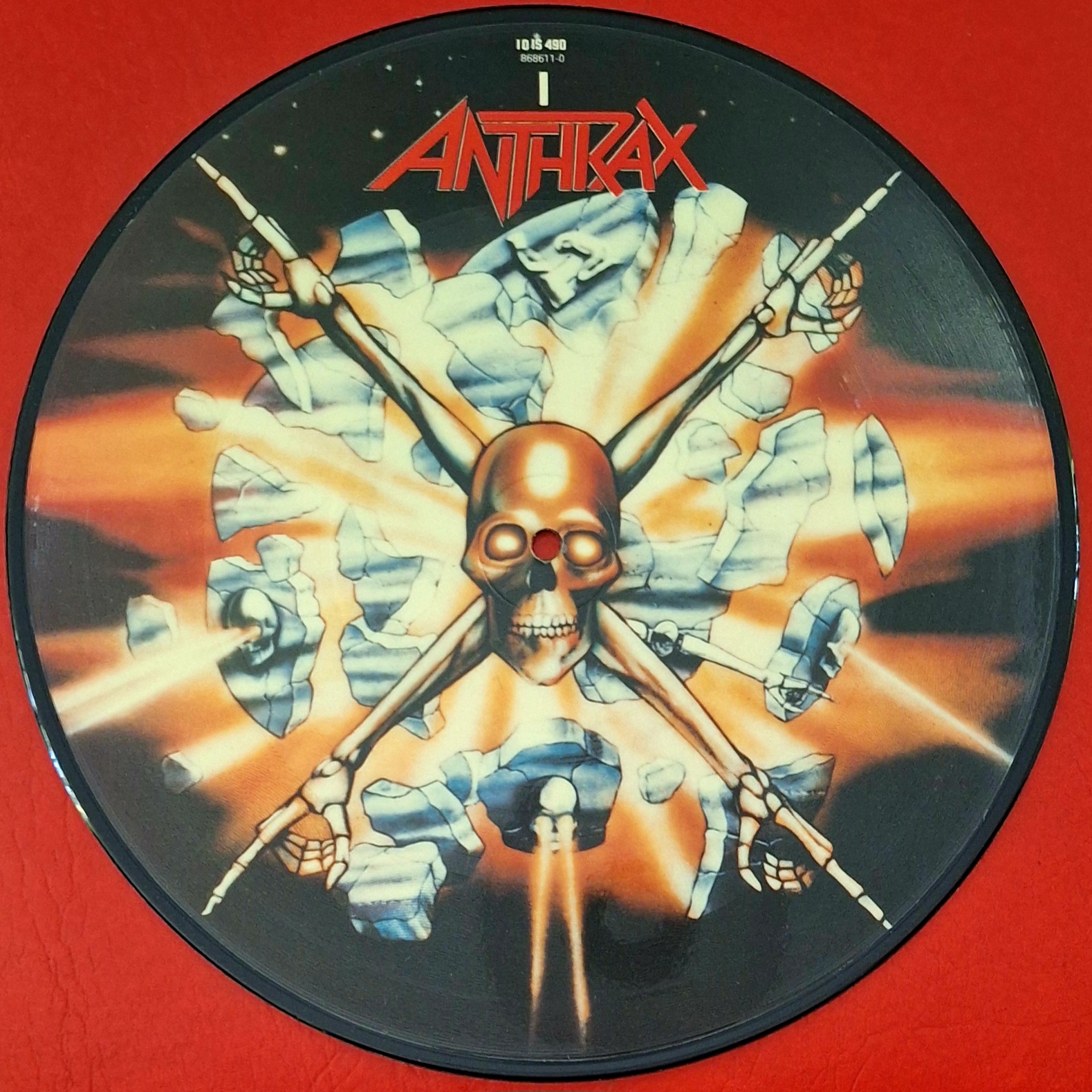
Check out the gallery below featuring the wonderful package of the limited edition 10″ picture disc. Classic.

Call To The Void – The Power of Intention EP

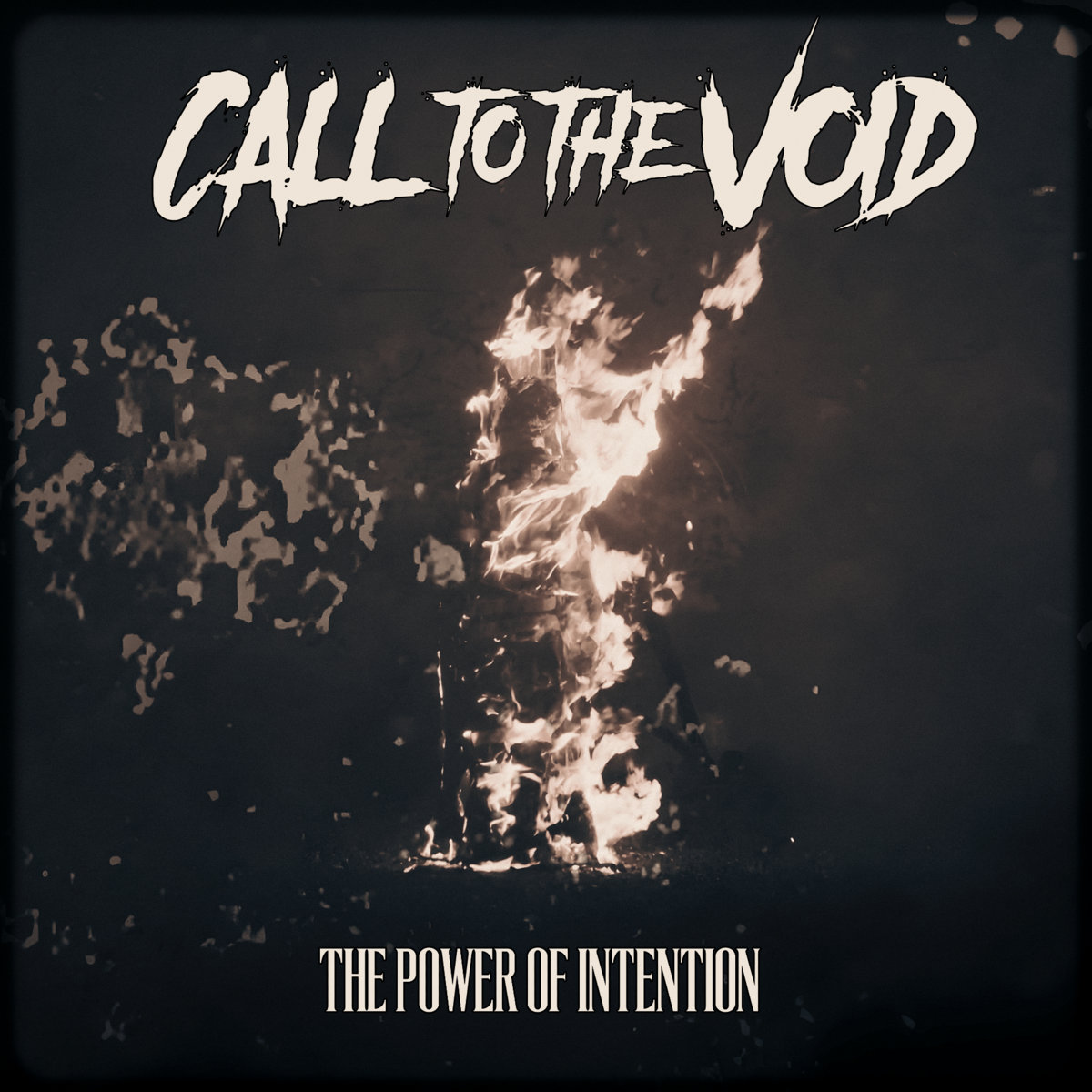
Last Friday, The Power of Intention, the excellent debut EP from Call To The Void, finally dropped. Gathering previous singles dating back to 2023 and a smattering of new material, the London-based four piece have banged out a quality slice of alternative rock that promises at a bright future. Although their influences are pretty evident they manage to carve out their own sound and they have clearly refelcted pretty deeply on the message they deliver.

The EP kicks off with the atmospheric incantation of The Power, highlighting vocalist Jack Osborne’s belief that anything in life is possible if you apply belief, intention and dedication, before latest single Resurgence muscles in with a hard-rocking riff and a versatile vocal ranging from a semi-spoken vibe to a ballsy scream. From the outset, there is a clear My Ruin influence, yet they retain their own identity as goth rock influences drift through the arrangement in the second half of the song.

Now that The Power of Intention is out, there is clearly a strong connection between CTTV and My Ruin beyond musical influence, with Mick Murphy mastering the record, Tairrie B. Murphy making a guest appearance and contributing to the band’s aesthetic (drawing my own conclusions here!), and Osborne having recently featured on the classy True Allies from My Ruin‘s Declaration of Resistance. Nevertheless, the friendship with the Murphys is a positive addition and complements the talent and hard work on display here.

As the EP progresses, it is clear that there is much more going on with some seriously dark undercurrents and a strong nineties vibe in the background – they cite Placebo, Soft Play, and Type O Negative among their influences. Early single Uncontrollable in particular conjures more than a hint of a goth-rock vibe, delivering a measured mid-paced flurry that keeps the musical melting pot bubbling nicely before stand-out track Viper’s Venom steals the show. The Placebo influence is evident in the melodic intro but once the heavy riff kicks in a loud-quiet-loud vibe takes it elsewhere, providing a backdrop for Jack’s most accomplished vocal on the record. There is deep emotion to his voice and the song delivers a killer hook that really slays and, once the tempo change takes it up a notch, John McGlade’s guitar lines lead us towards the stark a’capella conclusion – masterful.

After the fairly disposable but distinctly likeable ode to getting high that is Blow, we get CTTV’s cover of the Edwyn Collins classic A Girl Like You, featuring a cameo from the marvellous Tairrie B., whose influence runs right through the number. It has to be said though, it is freaking awesome. They stay pretty true to the original, but the heavier arrangement and the understated rap from Mrs Murphy take it to another level that absolutely rocks, with Jack once again showing that he has the chops to sing anything.

The band’s name comes from the French term L’appel Du Vide, describing the inexplicable urge to jump when faced with a fearful height, which they encapsulate on the track of the same name. Again, Osborne’s vocals are sublime as he switches easily between styles as they track drives along on the unrelenting momentum of McGlade’s solid riffing interspersed with his signature meanderings. Once more, it is an effective combination, hard rocking, memorable and sure to work a crowd into a sweat in the live arena. The EP closes out with the atmospheric ballad Alive – the first half is bare to the bone with a soaring vocal and guitar accompaniment before the rest of the band kick in for a visceral finale – quality.

All in all, this is a fine debut from the Londoners. Osborne is a charismatic frontman with an impressive vocal range and musically speaking the band is pretty damn faultless. Despite the undercurrent of influences, they don’t actually sound like anyone else, they forge their own identity with some catchy songs and plenty to rock out to. At eight, well seven and a bit, tracks and weighing in at a hefty 32 minutes, the EP is good value and well worth checking out.

9/10

https://calltothevoid.bandcamp.com/album/the-power-of-intention

Metallica and The Thing That Should Not Be

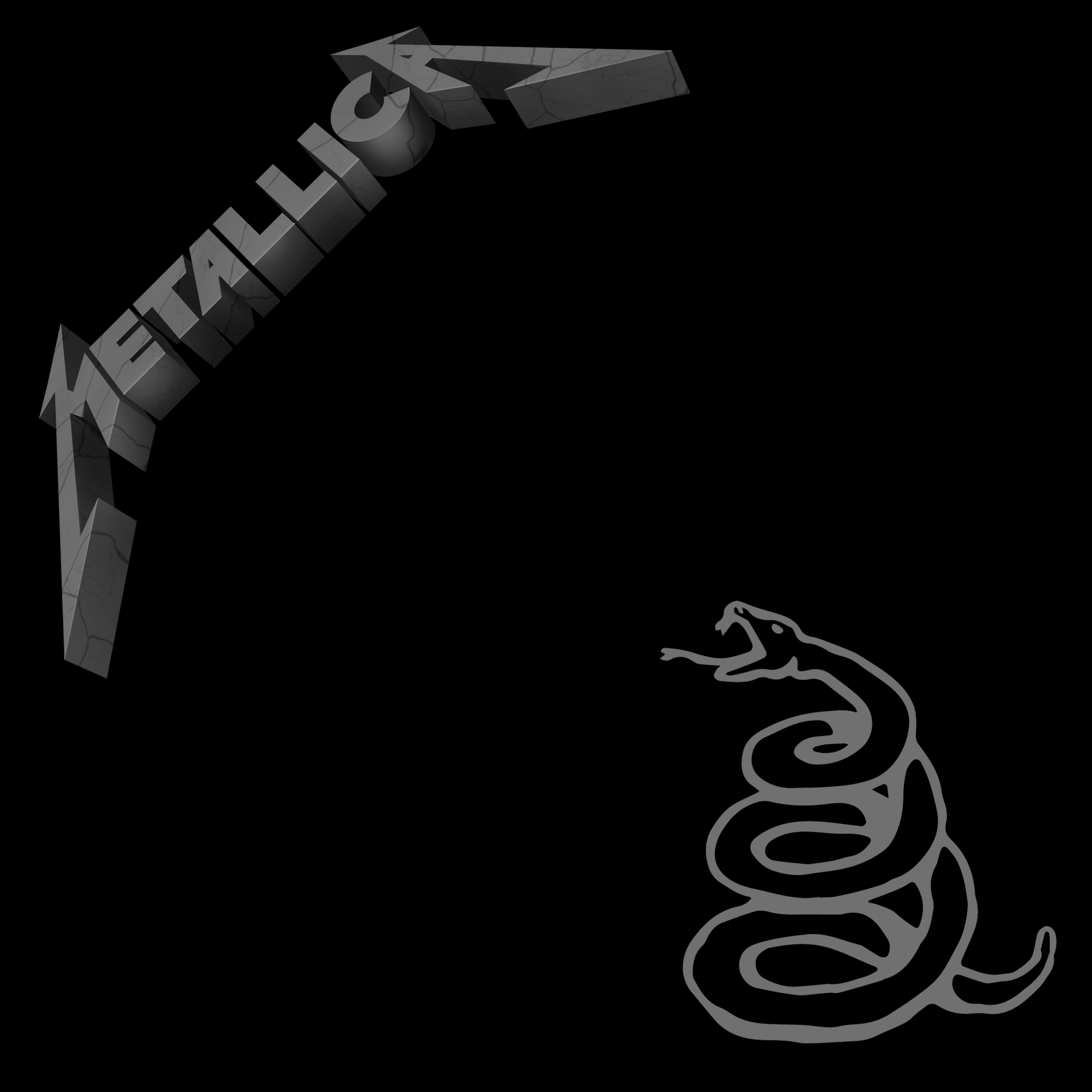
Metallica´s Black Album was a brave departure from the winning formula thrash of the first four records and resulted in stratospheric sales in excess of 30 million, making it one of the most important records in the history of rock. It includes some of their finest songs with the likes of Enter Sandman, Sad But True and The Unforgiven, and took their sound to a whole new level, catapulting the band to a status in the music industry few can hope to achieve. So, why have I never embraced it like the previous records?

Like so much of the music that I came to love in the eighties, I first heard Metallica while listening to the Friday Rock Show on BBC Radio 1. It wasn’t actually one of their best tunes, but with …And Justice For All set to drop that week, Tommy Vance played Eye of the Beholder and hooked me once again. I soon fell for all things Metallica and the Justice album became a staple of my teenage years and my gateway into their back catalogue. Although like many of their fans, it is the first four albums (+ Garage Days) that define Metallica for me, it was this period from Justice to the Black Album that really rocked my world – I bought the albums, I spent a shit ton on Live Shit: Binge & Purge; I managed to get The Good, The Bad & The Live: The 6½ Year Anniversary 12″ Collection; and even a US edition 7″ of One – I remember being excited to see the video on TOTP or the Chart Show. I also had the Year and a Half in the Life of Metallica videos on VHS. I could not get enough and it all culminated in seeing them at Donington Monsters of Rock in 1991 playing second fiddle to AC/DC.

However, there was something about the Black Album that just didn’t sit well with me. Sure, I loved Sad But True, it was heavy as fuck, and The Unforgiven was a masterpiece of song craft, so I didn’t feel like Metallica had sold out. I mean, it was obvious to all that they were moving forwards commercially and they were proactive in doing so, with James getting singing lessons, Kirk being taught by Joe Satriani, and hiring a more mainstream producer big enough to challenge the band to do better in Bob Rock. The result was a slicker sound and next-level Metallica – they were experimenting creatively and developing as artists – but that wasn’t the issue for me. It was more that some of the songs left me cold and, as I had the vinyl version, the record had a disjointed feel as four blocks of three songs. It was only years later, while reviewing Hardwired (https://hardpressed.com.br/2016/11/22/metallica-hardwired-to-self-destruct-album-review/) that I realized what the problem was – “their lack of capacity to self edit has made for an album with excess baggage“.

Metallica has rarely employed a philosophy of less is more. They have never been a band to give their songs space as, even today, according to Rob Trujillo: “We have more riffs than we know what to do with“. It seems as if they come from a perspective of building songs around the riffs, so the impression is that it becomes more about fitting a song to a riff, or multiple riffs, rather than fitting a riff to a song. Obviously, this mostly works for Metallica and they do, apparently, discard much more than they use, but there are clearly moments where the resulting song is just not that great, which is also not a big deal – all bands have filler. However, in my humble opinion, as Metallica’s bar got set so much higher than most, for the Black Album to be the all conquering record it is lauded to be, a few of those songs could have been saved for b-sides as they are simply not adding anything to the record as a whole.

Given the gargantuan success they have achieved over the last forty plus years, James, Lars and co obviously know what they are doing, but the fact that they rarely play live some of the songs from the album says a lot. I mean, the three tracks that I would drop – Holier Than Thou (nice riffs but vocally and lyrically poor), Don’t Tread on Me (awful), and Struggle Within (meh) – have amassed a grand total of 150 live performances between them. There are songs from 72 Seasons that they have played more often than the latter two. I would, however, keep My Friend of Misery for the atmospheric texture, the bass line, and how it fits the vibe better, even though it is another song with only 20 live outings.

I am not trying to say that I know better than Metallica, but as a massive fan, I felt sure that a bit of editing could make for a more enjoyable experience. So, I have reworked The Black Album in a Spotify playlist, cutting the three offending songs listed above and rejigging the running order for a more satisfying listen. I have kept what works with the big hitters staying in more or less the same position, but, for me, the second half now flows much better and doesn’t find me skipping to Nothing Else Matters before I switch off. Have a listen and see what you think.

The Dogs D’Amour – A Graveyard of Empty Bottles Vol. 1

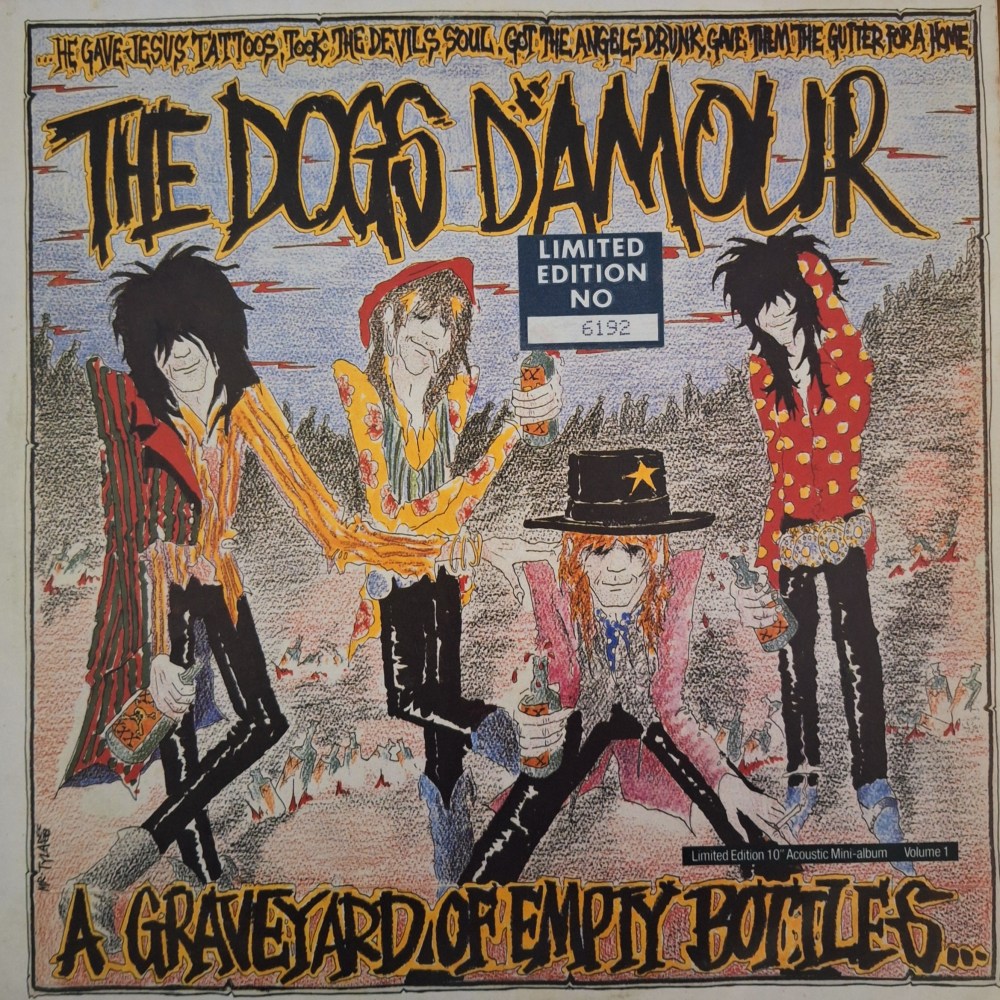
With tales of love and loss, maverick heroes and loveable rogues, The Dogs D’Amour‘s mini album A Graveyard of Empty Bottles was one of the most delightful surprise releases I’ve ever encountered. Sandwiched between the Dynamite Jet Saloon and Errol Flynn albums, it came just over a month after the superb How Come It Never Rains had flirted with breaking the top forty. It would prove to be the premature peak of the band’s success and showcases their songwriting at it’s finest.

MTV Unplugged was still some eight months away and, although Guns N Roses Lies had set a precedent, acoustic albums/versions were not yet in vogue when the Dogs unexpectedly dropped Graveyard with an initial run of fifteen thousand limited edition, numbered 10-inch mini albums. It would go on to get a 12″, CD, and cassette release, propelling it to the dizzy heights of number 16 on the UK albums chart, but none would have the charm of the 10″. It’s a beautiful little package dominated by Tyla‘s artwork that so perfectly encapsulates the band’s aesthetic. The best thing about it though, was the songs themselves.

A Graveyard of Empty Bottles kicks off in upbeat fashion with the laid back, blues tinged, foot-tapping vibe of the jaunty I Think It’s Love Again, before the stark contrast of the bleak minor chords of So Once Was I, which doubles down on Tyla’s romantic view of modern day cowboys and wasteland heroes. There is more contrast as we segue into the blues shuffle of Comfort of the Devil, which finds the frontman at his most poetically sublime: “The devil runs his fingers down the spine of fate / Grins at me with a smile that spells out hate / Spins his chamber of his gun / There’s only one soul loaded for fun / Much more fun.”

But it is on Saviour, which closes out side one, or the Blue Blooded Bar Side, where the planets really align. It is two glorious minutes of the Dogs D’Amour at their very best as a heartbroken acoustic backdrop underpins a bittersweet tale of dereliction tinged with hope. In my humble opinion, this is where Tyla just about peaked as an artist, both poetically – “Let me lay your soul to rest / Let my lips drip red wine on your breast / Let me stain your pain with disinterest / Just let me be there for the rest” – and vocally as his voice soars on the killer hook, making this delicate pull on the heart strings nothing short of irresistable.

The flip side, or the 5th of Whiskey Side, opens with the original version of the title track of the then forthcoming album, Errol Flynn. Despite being a catchy, upbeat, mid-tempo romp it adds little to the record as a whole, serving more as a contrast to the heartbroken melancholy of what is to come. And come it does in the measured, atmospheric tale of disgrace that is the drunken downfall of the preacher stumbling from his castle of sin in The Bullet Proof Poet, before the understated When the Dream Has Gone brilliantly continues the story of the heartbroken lovers in How Come It Never Rains with surprising delicacy.

Once again, they save the best ’til last though. Angel initially sounds like a continuation of the previous track given the similar vocal melody, but it soon takes on a life of its own. Weighing in at a positively hefty 3 minutes 19 seconds it tells a serious of near misses for the self destructive, deftly covering loss, depression and grief in one fell swoop. The verses are as ponderous and full of heartache as the other ballads, yet the chorus soars with an absolutely sublime hook before they throw off all previous restraint in an electrified finale of blistering guitars – perfection!

A Graveyard of Empty Bottles may be short at around 19 minutes in total, but it is a delightful little collection that inadvertently showcases a much-loved band at their very best. It captures everything that was great about Tyla J Pallas and his Dogs D’Amour, from their romantic, booze-fueled melancholy to their raunchy, blues-soaked balladeering. This is unpretentious, good old fashioned acoustic rock n roll and deserves twenty minutes of your time.

Behind the Mask of MegaDave

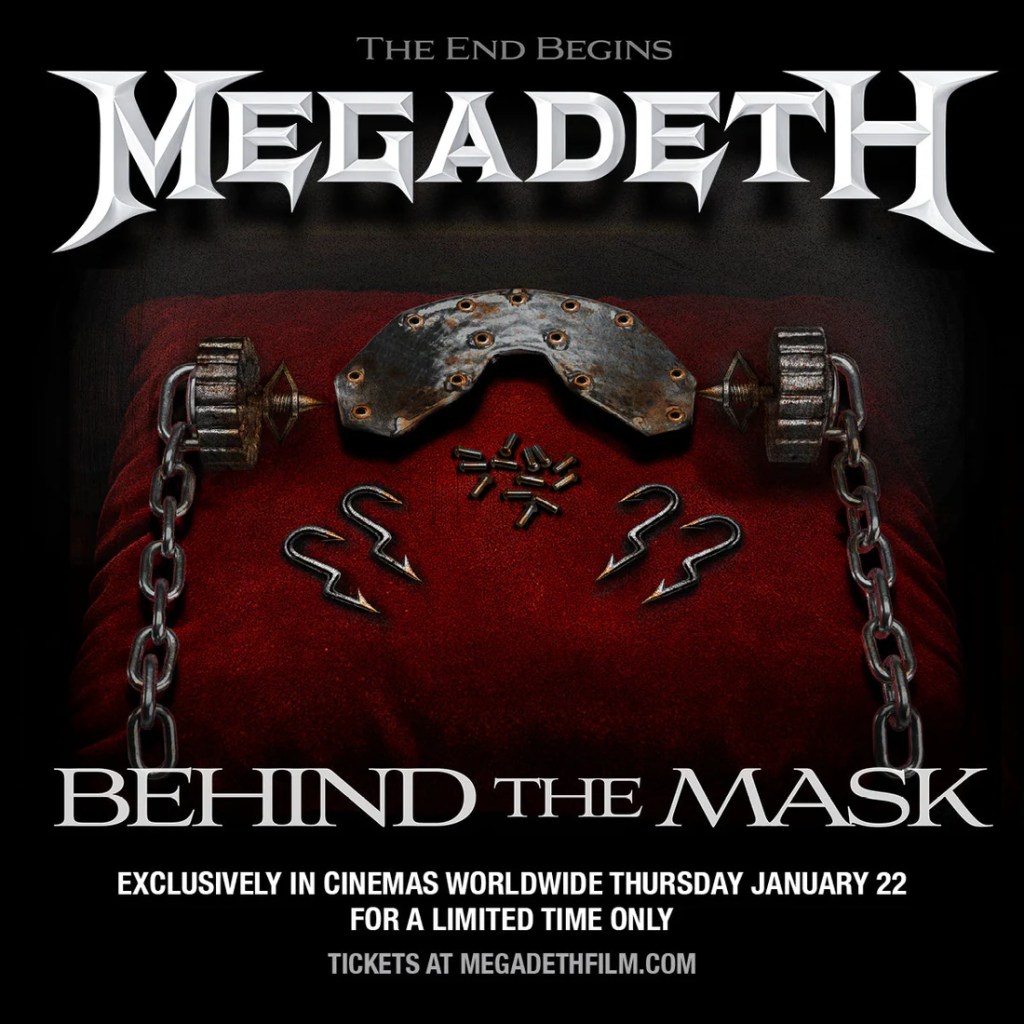
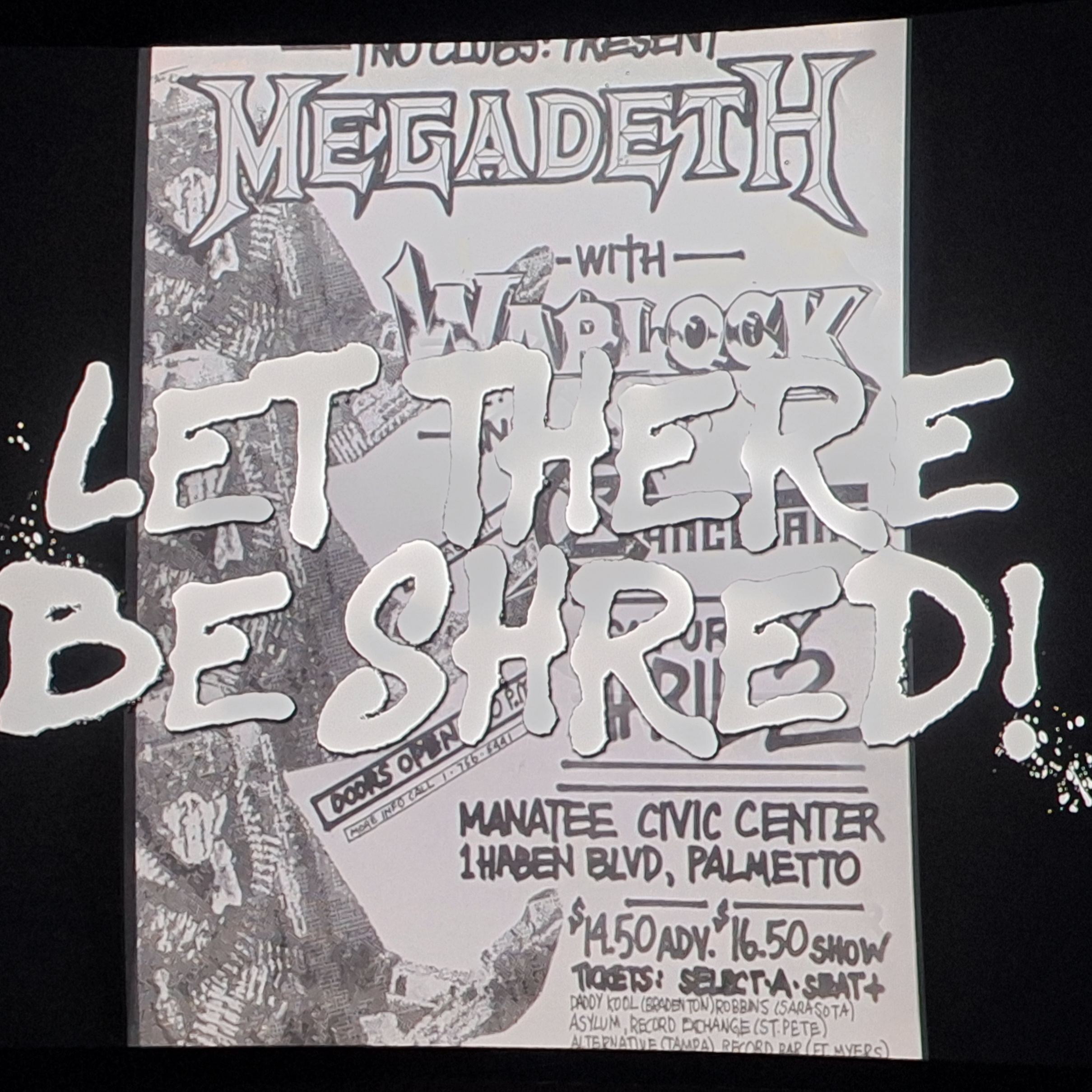
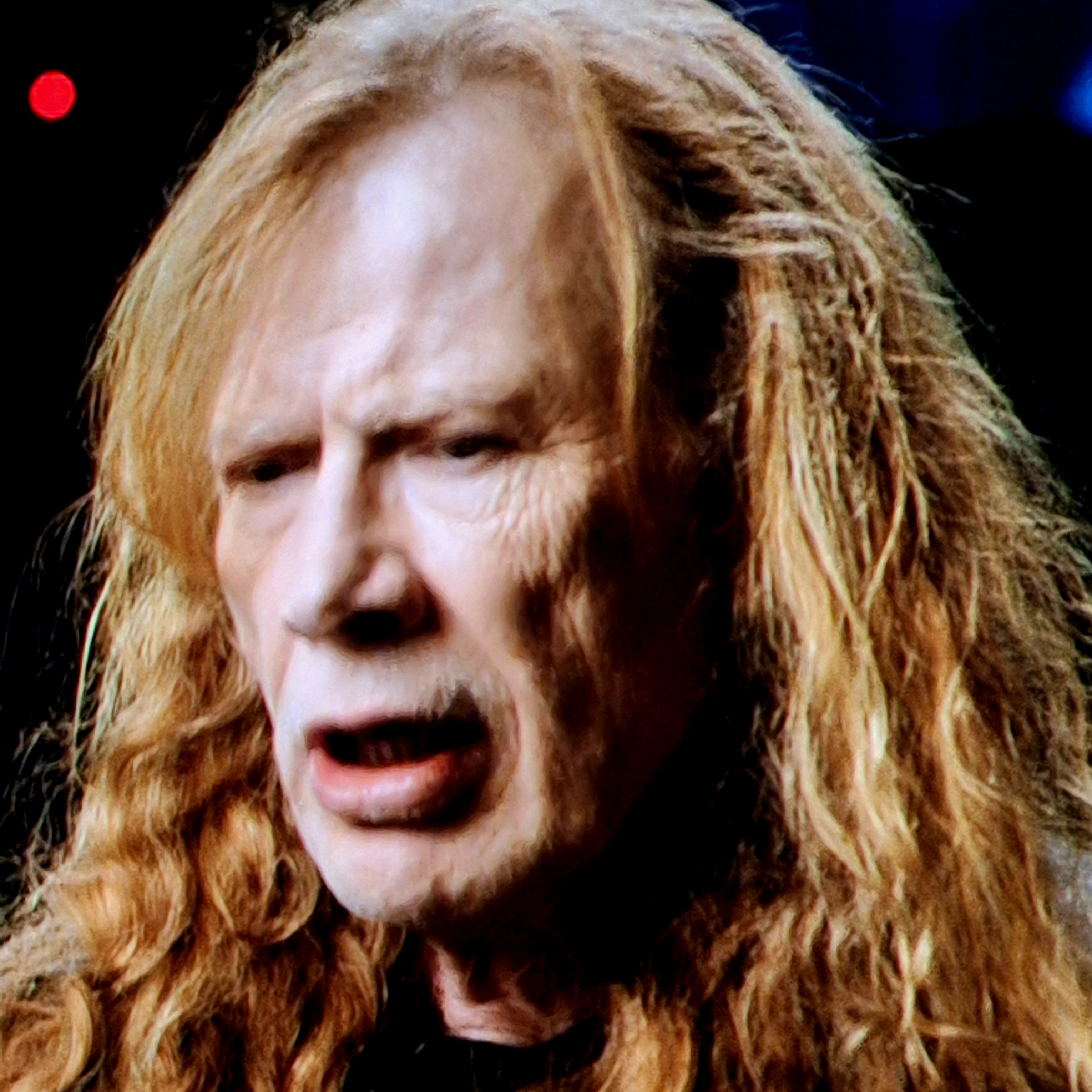
I am a Megadeth fan. I have been listening to their music for the best part of forty years, I saw them at their very best on the Rust in Peace tour and supporting Metallica, and I have written about them extensively. So, last Saturday, I was really excited about watching the cinema release of the Behind the Mask movie. However, this intimite look at the world’s second most important thrash band indirectly revealed much more about its leader than providing deep insight into the life, times and music of a band the fans love so much.

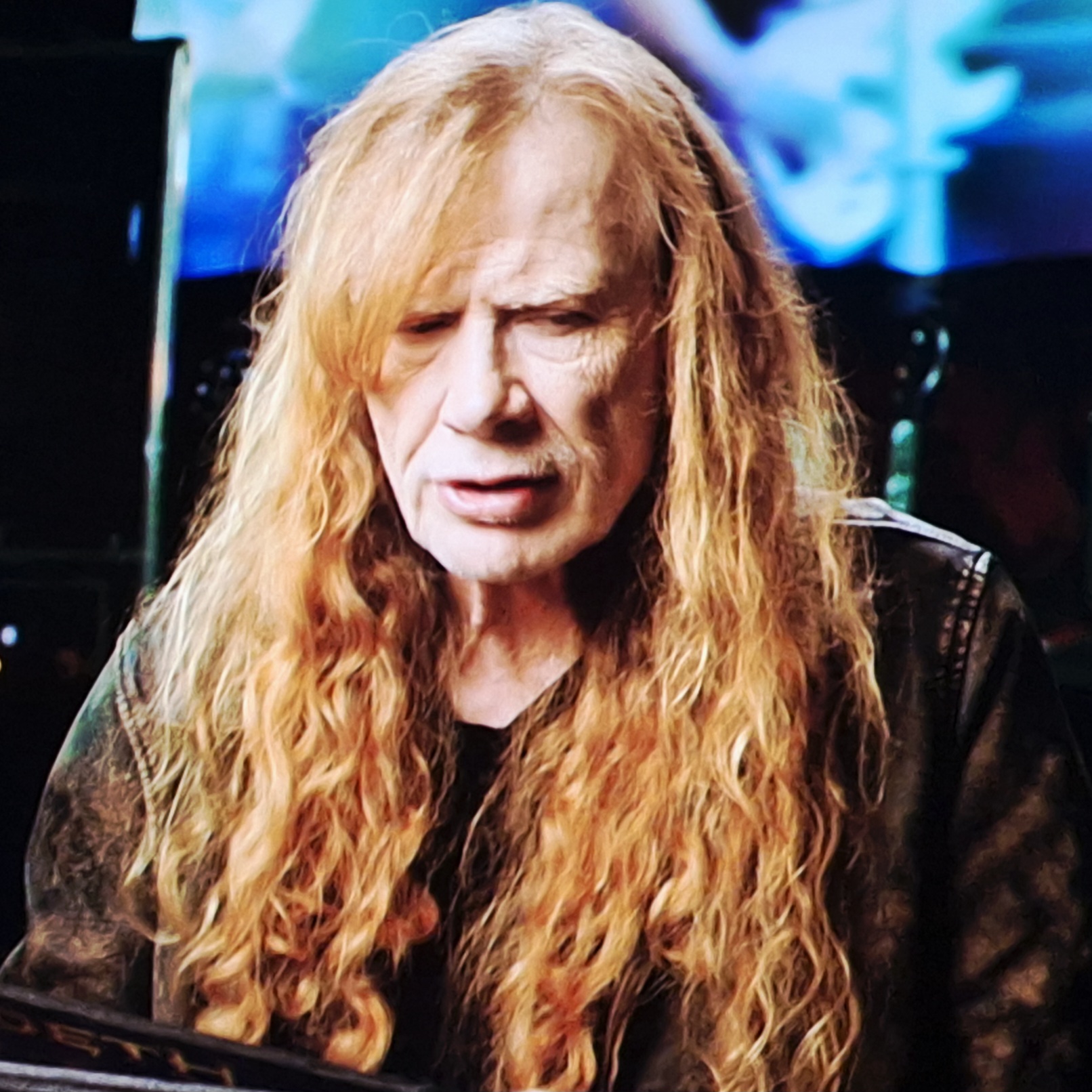
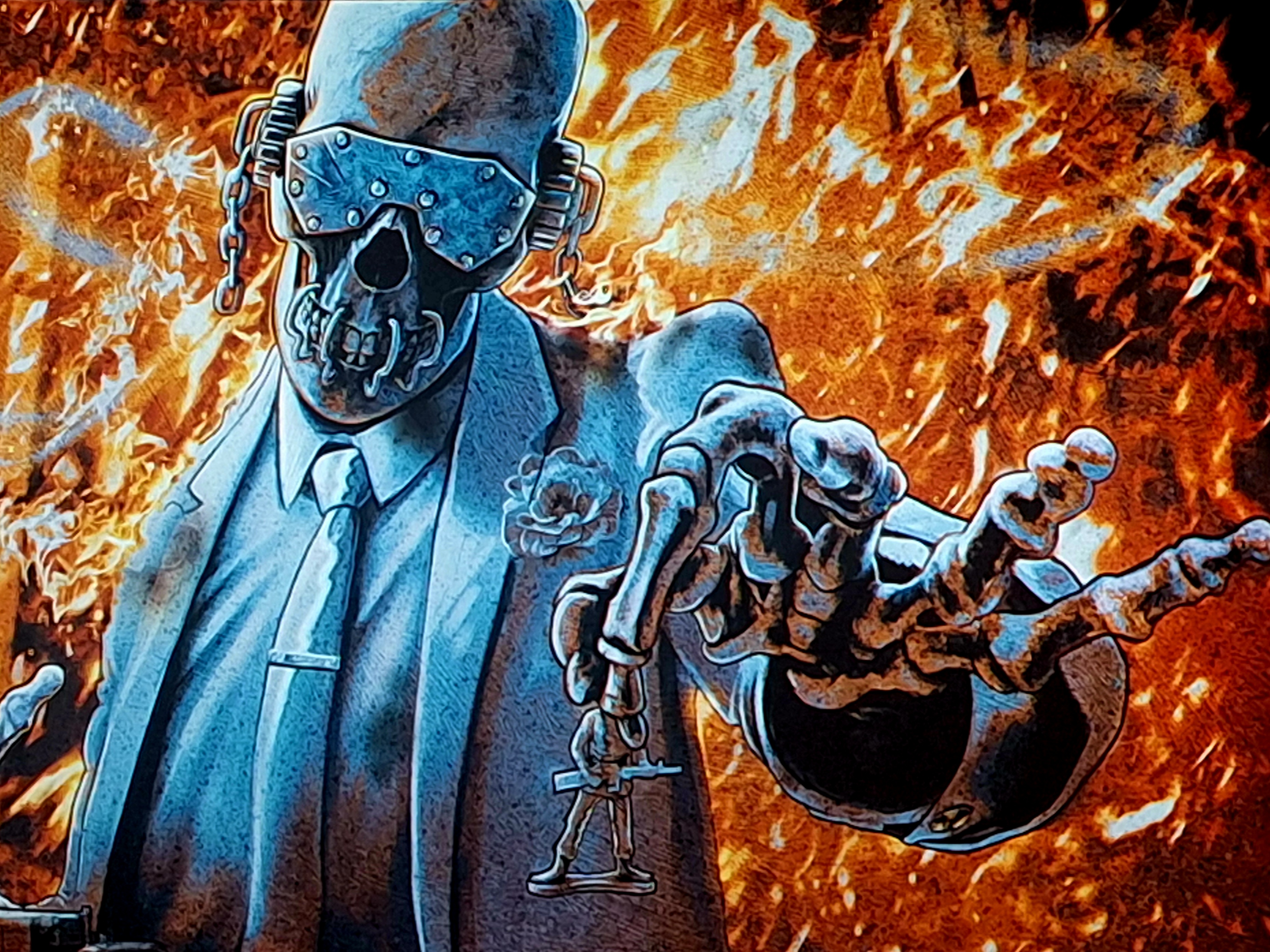
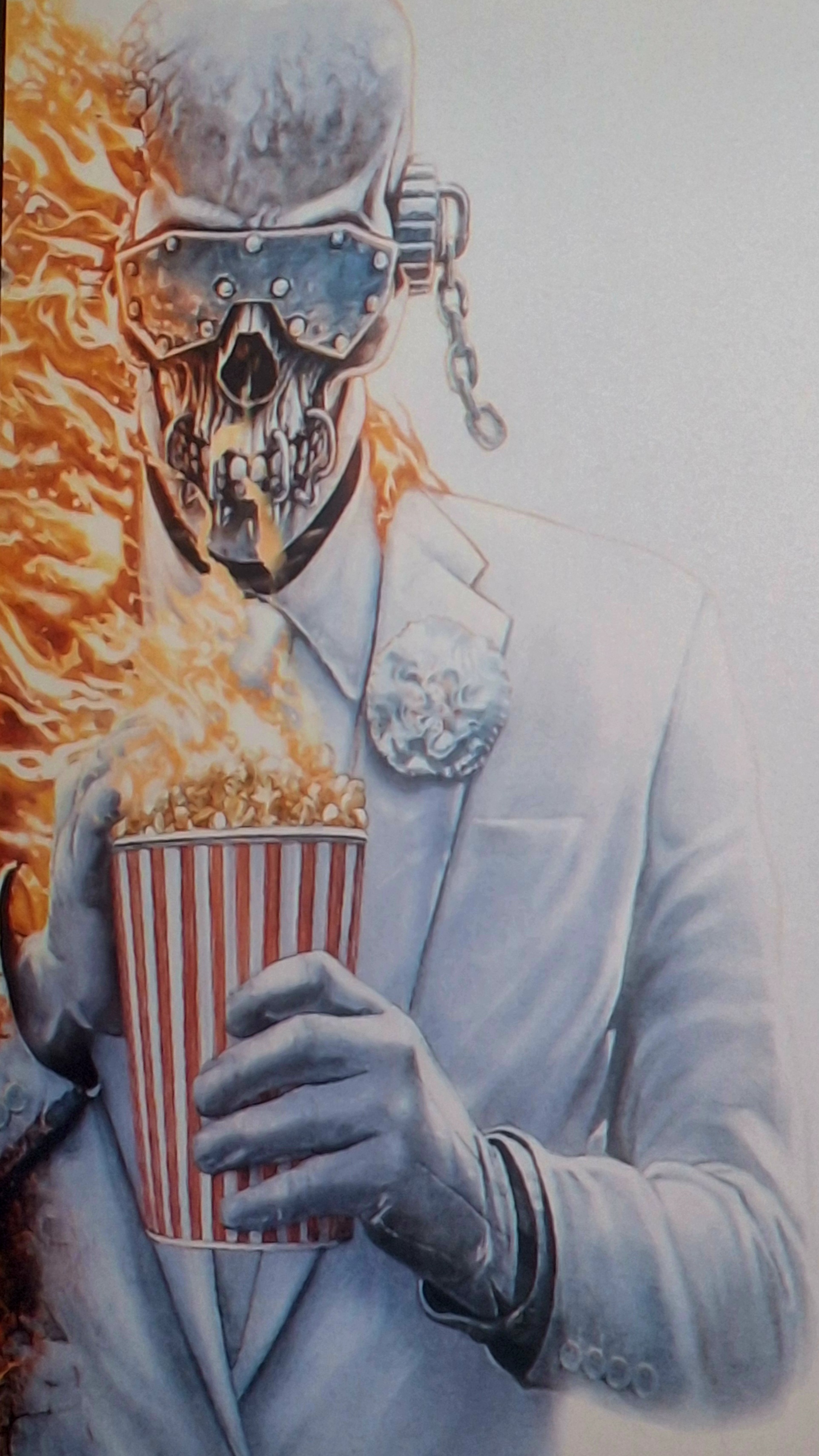
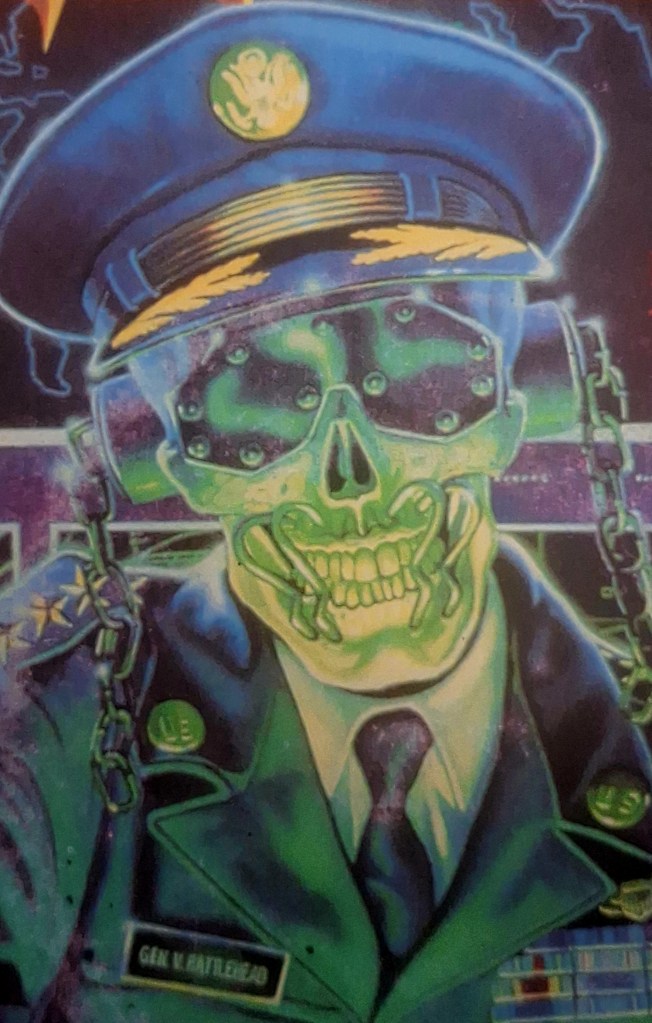
Behind the Mask largely achieves its purpose of being a listening party for the band’s final release and it has an engaging format with Dave Mustaine telling us about the new songs and providing a potted history of the band’s journey between tracks. Although the film doesn’t appear to be particularly scripted, as Dave is often on a stream of consciousness skipping blithely over important moments in the band’s career, it does appear a little contrived with the frontman sitting at a desk surrounded by Megadeth merch such as the Vic Rattlehead Funk o Pop and copies of the Rust in Peace book.

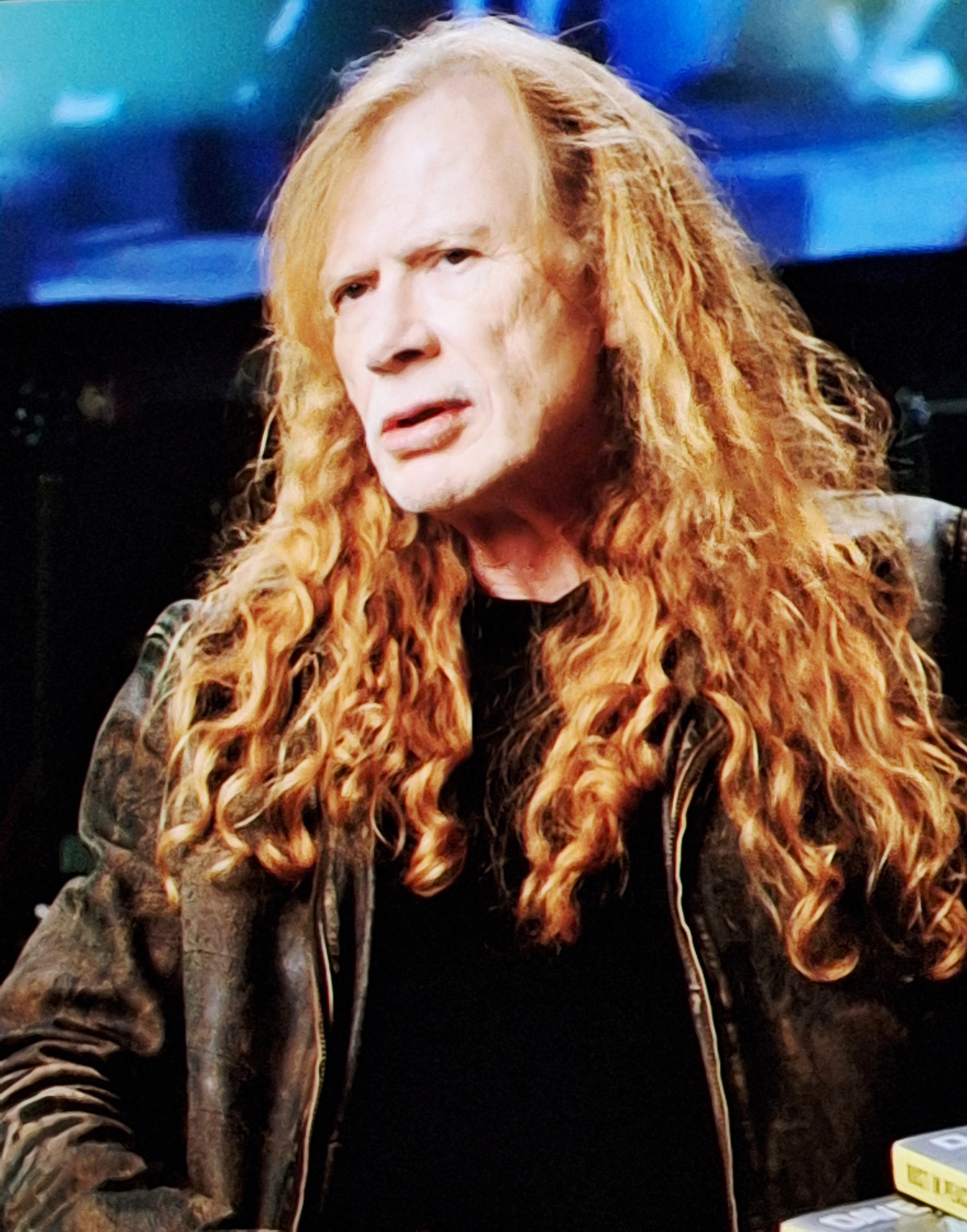
We get to hear the entire album at full power through the cinema sound system, with a series of lyric videos alongside the official releases for the ferocious Tipping Point and the punky I Don’t Care, which we discover was written in place of covering a punk tune. The new record is actually pretty damn good, some of the visuals are stunning, others less so, and gaining some insight into how the songs were made and what goes on the studio made it all worth the ticket price. There is a fabulous scene of Dave dancing in his seat during playback, hair tied back, glasses on and waving a popsicle (ice lolly) around, revealing that he is still just a kid at heart.

However, I can’t help but feel that this is one massive missed opportunity and that Dave has a lot of things he needs to work out. The three main points that he makes, besides reminding us of being a black belt (he slips it seemlessly into a story about Nick Menza becoming the drummer) and revealing the ability to predict earthquakes based on the weather, are that he really doesn’t have a problem with the guys from Metallica (no, really), he does have a problem with band members receiving collaboration fees for “being in the room” when he shows them a song, and he is the first metal guy to thank Jesus at the Grammys. All of these things get mentioned twice.

The overall impression is that Dave never got past being the new kid at school that he often was and still feels the need to try hard to impress people and that he never got over being dumped by Metallica and still feels the need to show that he has “closed the circle”. He tells us how Megadeth was the first metal band to have a website and Gene Simmons wanted one just like it. On said website, Dave was hanging out in the chatroom one night and a kid got beaten by his drunk dad but Dave asked if anyone lived nearby and managed to get someone to intervene, thus saving the kid’s relationship with his father. Then there is how songs like Darkest Hour saved people or how Train of Consequences gave a girl who had been hit by a train the will to carry on! It all seemed to unnecessarily magnify the importance of Megadave in people’s lives.

The people watching the film already know how good Megadeth is, knowing about Dave being a black-belt fighting, earthquake predicting, internet pioneer, chatroom saviour inspiration to the depressed and disabled doesn’t really add to our appreciation of their speed metal awesomeness. Rather than telling us how amazing he is, Dave, who has been praised for his honesty in the film, could have told us about his addiction issues, or how he got through cancer and a debilitating nerve condition, or how he successfully navigated the grunge era, or given us some insight into accepting slots to open for Metallica, or what it was like touring Clash of the Titans or the Big Four, or how much it meant to go multi-platinum and receive an award for Countdown to Extinction or finally receive a Grammy for Dystopia.

Instead we get a stream of consciousness about Dave’s superiority and pettiness (there is a fine for any promotor who spells Megadeth with an A) and zero ownership of anything that went wrong. Despite making it clear that it is his band and he has creative control, he basically blames Bud Prager and Marty Friedman for the Risk fiasco. At one point, there are three (classic) song titles on the screen with the writing credit below each just listing Dave Mustaine; when the fourth song appears (I think it’s Crush ‘Em), it lists Mustaine, Prager, and Friedman as the writers as if to say “ya see what happens when other people get involved”. In fact, he is pretty dismissive of Friedman’s contribution to the band, saying that his solos for Rust in Peace were based on Chris Poland’s demos and that once Marty had said he preferred The Doctor is Calling after Dave slowed it down he knew that was the end.

Then there is the Metallica issue. The last song that gets played is Ride the Lightning. Fair enough, it is the last song on the record and it does take us back to the roots of Megadeth. But why allow your success to always come back to you being dumped out of Metallica? What about everything Megadeth achieved and all the great records you made? Some poignant music and a montage of photos from 1983 with James and Lars is not what defines the Megadeth legacy. If Dave genuinely has no problem with those guys, why keep bringing them up? Also, there is more of the distancing himself from anything that went wrong as he downplays the whole thing by saying that they were all young and alcoholic and that things got said, preferring to make it a collective scenario. It’s true that how Dave got fired was pretty shitty, but as to why he got fired, a lot of that is on him.

Anyway, I digress. Behind the Mask could have been an incredible experience for Megadeth’s family of fans – it has its moments with the new songs really standing up and the insight into making an album – but, unfortunately, Dave kinda rains on the parade a little with his discourse, leaving a sense of disappointment and a little sadness at his approach to life. Nevertheless, I will always love the music of Megadeth the band and remember that sometimes we need to separate the artist from their output.

The Definitive Megadeth Top Ten: https://hardpressed.com.br/2026/01/23/the-definitive-megadeth-top-10-2/

The Definitive Megadeth Top 10

With Megadeth releasing their eponymously titled, seventeenth and final studio album, the cinema release of the Behind the Mask film, and a fairwell tour on the horizon, it’s no surprise that all things Dave Mustaine are trending right now. As such, it seemed relevant to revisit their work and take another look at the top ten I came up with a few years back, which, while I stand by the songs included, I have rejigged a little. Also, despite the strength of their last three albums since the return to form on Dystopia, there hasn’t been anything new to compare to the tracks listed below, although the continued omission of Devil’s Island and A Tout le Monde may be cause for debate. Anyway, here’s what I had to say…

When Megadeth released their fifteenth studio album Dystopia ten years ago (almost to the day!), I was charged with the task of flexing my writing muscles on a Starter Pack piece for Already Heard (http://alreadyheard.com/post/137748764480/starter-pack-megadeth) as a kind of introduction for the uninitiated. As such, I spent many a waking hour with Mustaine and Co blasting through my headphones at breakneck speed as I explored their ample back catalogue; I listened to everything they have ever recorded! Although Dave’s work is consistently high quality, with even some of the newer releases boasting hidden gems, there are a handful of songs which stand head and shoulders above the rest. So here goes my take on a Megadeth top ten, buckle up!

10) Foreclosure of a Dream
Normally when people talk about ‘Countdown to Extinction’ they remember the title track, ‘Symphony of Destruction’ or ‘Sweating Bullets’, but for me Foreclose is untouchable. It’s got the riffing and the solos that epitomize the Megadeth sound, but it also has an absolutely killer hook – seriously underrated song.

9) Good Mourning/Black Friday
Maybe not the first song that springs to mind, but recent listens to ‘Peace Sells…’ revealed it to be one of their finest tracks. The atmospheric intro and sinister guitar lines to ‘Good Mourning’ was something nobody else was doing at the time. The song then gathers in brooding atmosphere, taking its time, before exploding into life with a blistering solo. ‘Black Friday’ then rocks to a mid paced groove and engine like riffing, before accellerating for a ball busting race to the end. Breathtaking.

8) Hook In Mouth
One of Megadeth’s most underrated tracks from an album many overlook. ‘Hook In Mouth’ deals with the issue of censorship and the moralistic stance of the PMRC (the reason we have those parental advisory stickers). It is a more measured track, but is a prime example of Mustaine’s songwriting prowess with its intelligent lyrics and top drawer arrangement.

7) Rust In Peace…Polaris
Only Megadeth do this – the two part song thing I mean – and ‘Rust’ is one of their finest examples. It puts the icing on the cake of their best album, Mustaine putting in one of his most vicious vocal performances on this politically charged track, whilst also delivering a killer hook. Just when you think it’s done the second part kicks off and basically it’s a guitar frenzy as solos blaze and riffs chop and change, while Nick Menza provides the groove.

6) Countdown to Extinction
As a whole, the ‘Countdown’ album lacks the teeth of earlier releases, yet it showcases the bands highly developed songwriting skills; the title track itself being one of its standout songs. The whole thing is highly accomplished, from the riffing being expressive of the lyrical matter, past the killer chorus and on to the hot rocking solo – it has everything a top rock song needs. Not surprising that it won awards.

5) Tornado of Souls
After the first two killer tracks on the R.I.P album some of the other songs pale in comparison to their monumental attack. However, ‘Tornado of Souls’ is similarly special and is surely one of the most complete Megadeth numbers. This is a guitar player’s song; the wonderfully complex arrangement layering riff upon riff, whilst giving Marty Friedman free reign on a raging solo. The rhythm work is also superb and Dave even manages a hint of melody to the hook; quality.

4) Hangar 18
The partner in crime to Holy Wars; you can’t hear one without the other following. Hangar is the ultimate conspiracy theory and one of the band’s finest moments.

3) Peace Sells
The first Megadeth track to show off Mustaine’s ability to write a hit. Killer bass line, killer hook, frantic thrash finale. “Can you put a price on peace?”

2) In My Darkest Hour
Famously written in one hour, upon hearing of the death of ex-band mate, Metallica’s Cliff Burton, In My Darkest Hour is a monster of a song. It broods intensely on the back of grinding riffs as Mustaine spits his bitter lyrics, before exploding into a thrashing finale, love it.

1)Holy Wars…The Punishment Due
Holy War’ is without question one of the greatest rock songs in history. It has everything: Powerhouse riffing, scorching solos, sublime time changes, politically charged lyrics and a level of technical excellence beyond compare; thrash metal perfection goddammit.


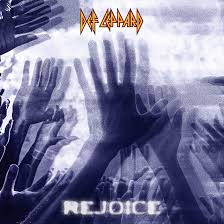
Def Leppard – Rejoice

Ahead of their upcoming Las Vegas residency, Def Leppard have dropped stand-alone single Rejoice, their first new music since last year’s cover of the Ben E. King classic, Stand by Me. Despite knocking on the door of 50 years since they formed, the veteran rockers show no signs of slowing down with a busy year on the road coming up and the new single sounding as fresh as ever.

With a slow-boiling groove, a classic Phil Collen riff, their signature drum sound and a hook-filled chorus, Def Leppard sound as good as they ever have. It’s as slick, tight and professional as you would expect, but most importantly, it’s a fine tune and as fine a slice of hard rock as you are likely to hear these days. The uplifting theme, slick harmonies and some cheeky delays hark back to the glory days of Hysteria while retaining a heavy edge to keep their poppier tendencies in check. It is, nonetheless, something of an earworm that is hard to ignore – you can definitely imagine a packed arena getting behind this one.