Memories of Guns N’ Roses
So, I went to see the excellent Oasis documentary Don’t Look Back in Anger the other day and really enjoyed it. It was surprisingly profound, with Liam demonstrating a deep understanding of not only what Oasis means to people but also what life is all about. It was interesting to see just how much of an impact the band has had on different generations and just how much their music has meant to people over the years. There’s a whole bunch of stories of people being “saved” and finding a sense of belonging. It is fair to say that Oasis provided the soundtrack for a generation and their reunion and tour was overwhelming for band and fans alike. However, Oasis are not exactly the only band in the world that have had this kind of impact on people, I mean, there are bands from the same era that have had equally momentous reunions. Anyway, all this got me thinking…which bands have had that kind of impact on me? Which bands have I been deeply obsessed by? Which bands kept me in my bedroom, repeatedly playing their music and poring over the lyrics, the art and everything else? Which bands kept me awake at night on the eve of a new release or concert tickets going on sale?
Fuckin Guns N’ Fuckin’ Roses.
Picture the scene. It’s 1988. No internet, no digital on demand TV, no Spotify, and no 24/7 bombardment of information or sensory overload at our fingertips. When it came to entertainment channels, we simply did not have access to or control over what we heard and when we heard it, which made certain things essential to the lives of music loving teenagers, especially if your interests were outside the pop mainstream. So, when the Saturday morning Chart Show on ITV was showing the Rock Chart, it was unmissable. One such Saturday would change my life forever. Fifteen year old me was hungry for all things rock and metal, so when a video clip with five dudes swaggering around a studio playing what would become one of the most iconic songs in rock history hit my screen that day, by the time Slash had finished the most incredible guitar solo I’d ever heard, I was hooked. Guns N’ Roses were my new favourite band.
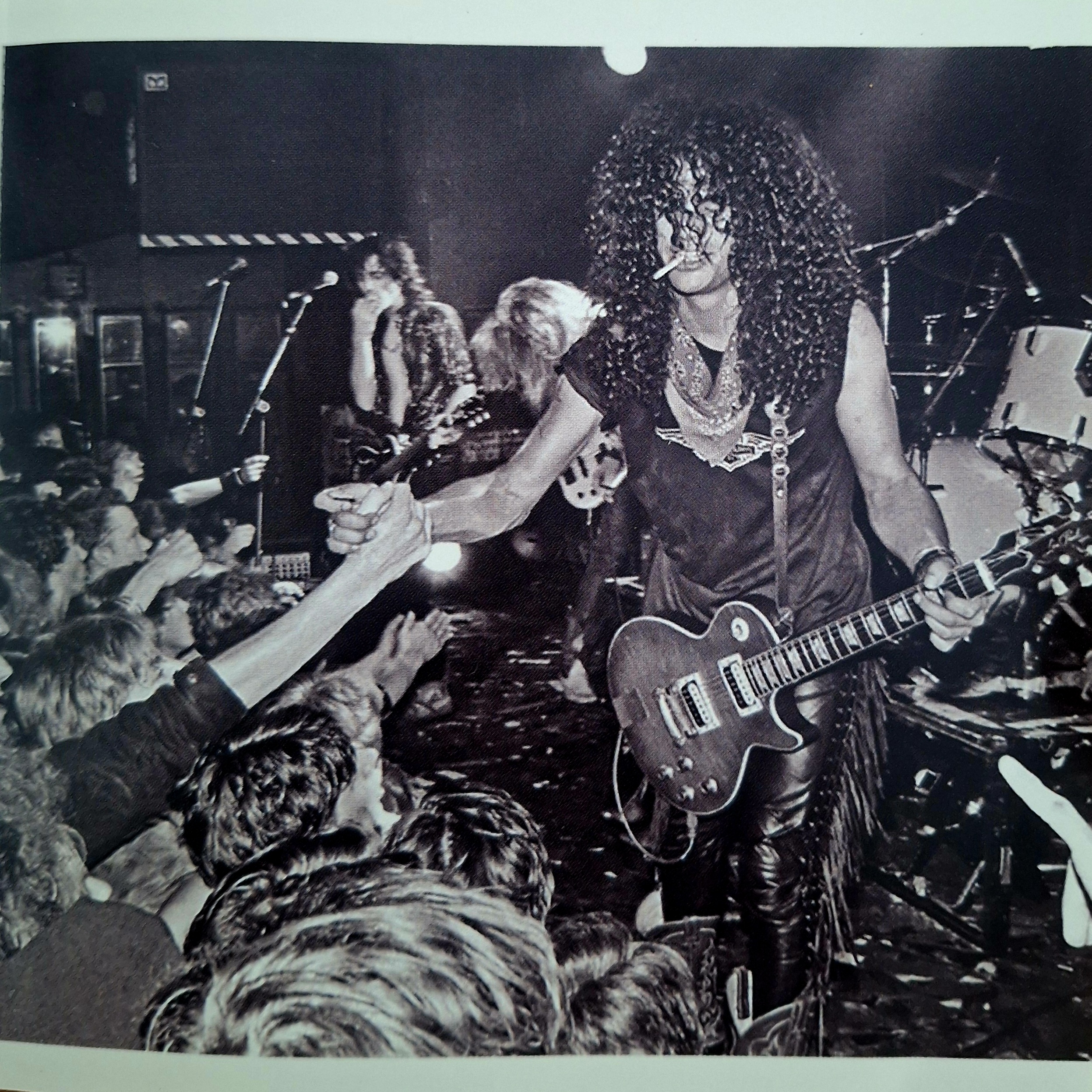
Then came the buzz. Having played three sold out nights at the Marquee in 87, and already labelled as the greatest rock n roll band in the world, excitement had actually been brewing in the UK for some time, but was at fever pitch prior to their slot at Donington 88, which would end so tragically and lead to a revolution in festival safety. The rhetoric was such that they were set to “become to the next decade what Aerosmith were to the seventies and the Rolling Stones to the sixties“. They were already massive in the US by this time with over 3 million in album sales and their magnetism and raw power was starting to sweep through the UK. Sweet Child O Mine would hit the top thirty the first time around (later making the top ten in 89), as would Welcome to the Jungle. By the end of the year, Appetite for Destruction with its infamous rape scene cover had already spent 17 weeks on the UK album chart and was no longer enough to satisfy the growing legion of die-hard fans.
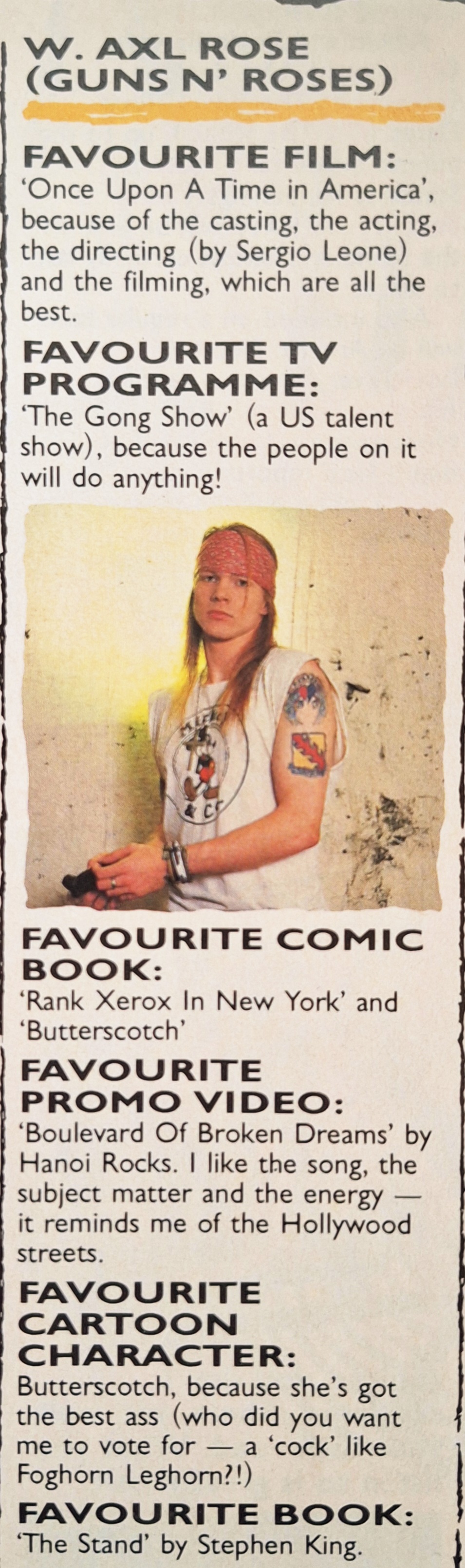
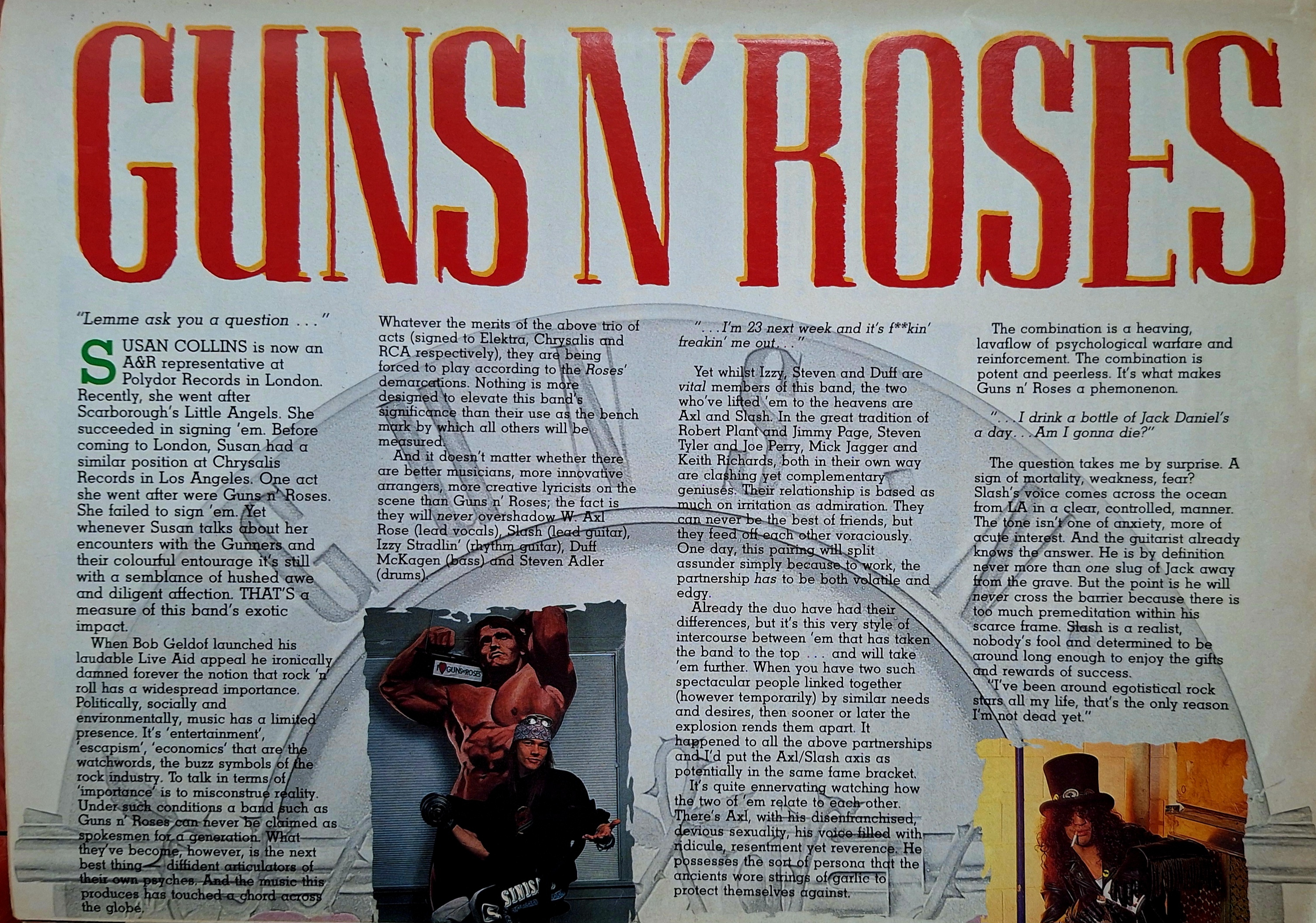
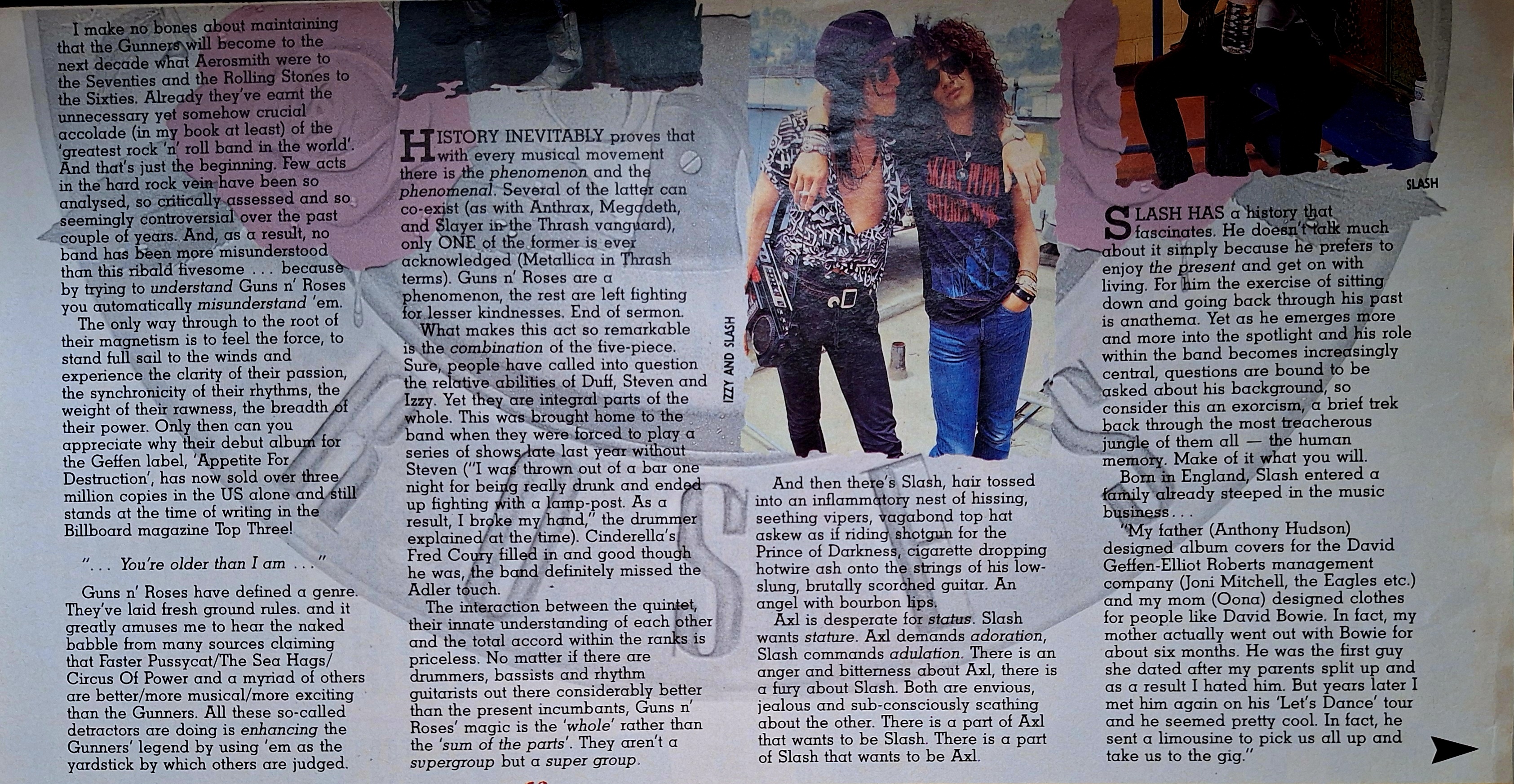
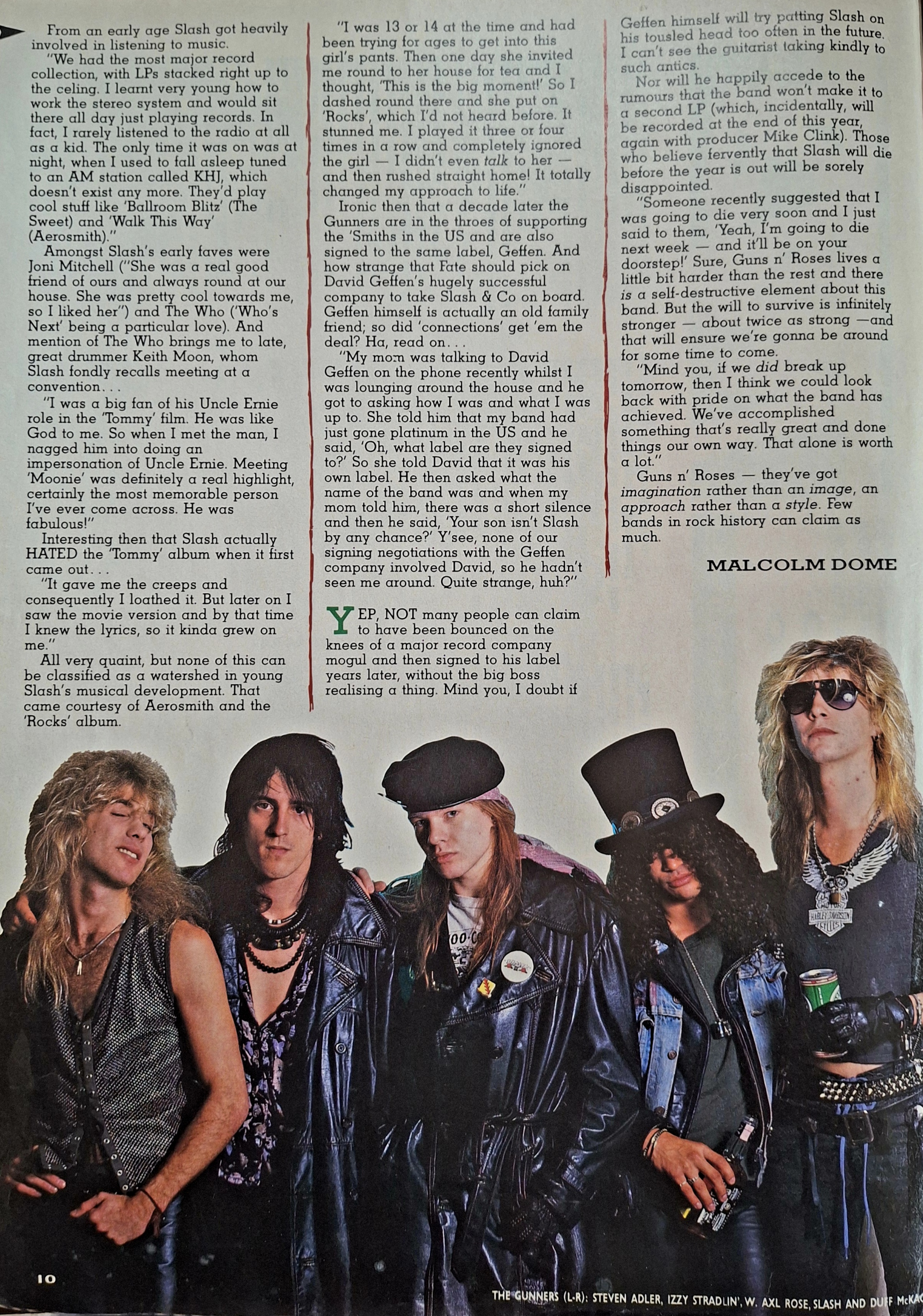
The thing was that although a ton of bands were trying to sound like them, GnR didn’t sound like anyone else. They were fresh; they were exciting; there was a punk edge to their rough and ready sound and despite being spawned by the LA scene, they had little in common with the hair metal bands of the time and we wanted more of it. The hunger for more Guns N’ Roses product meant the Live! Like a Suicide EP was trading for stupid money and a Japanese import featuring five other live tracks from their Marquee shows, and including AC/DC‘s Whole Lotta Rosie, was also costing an arm and a leg.
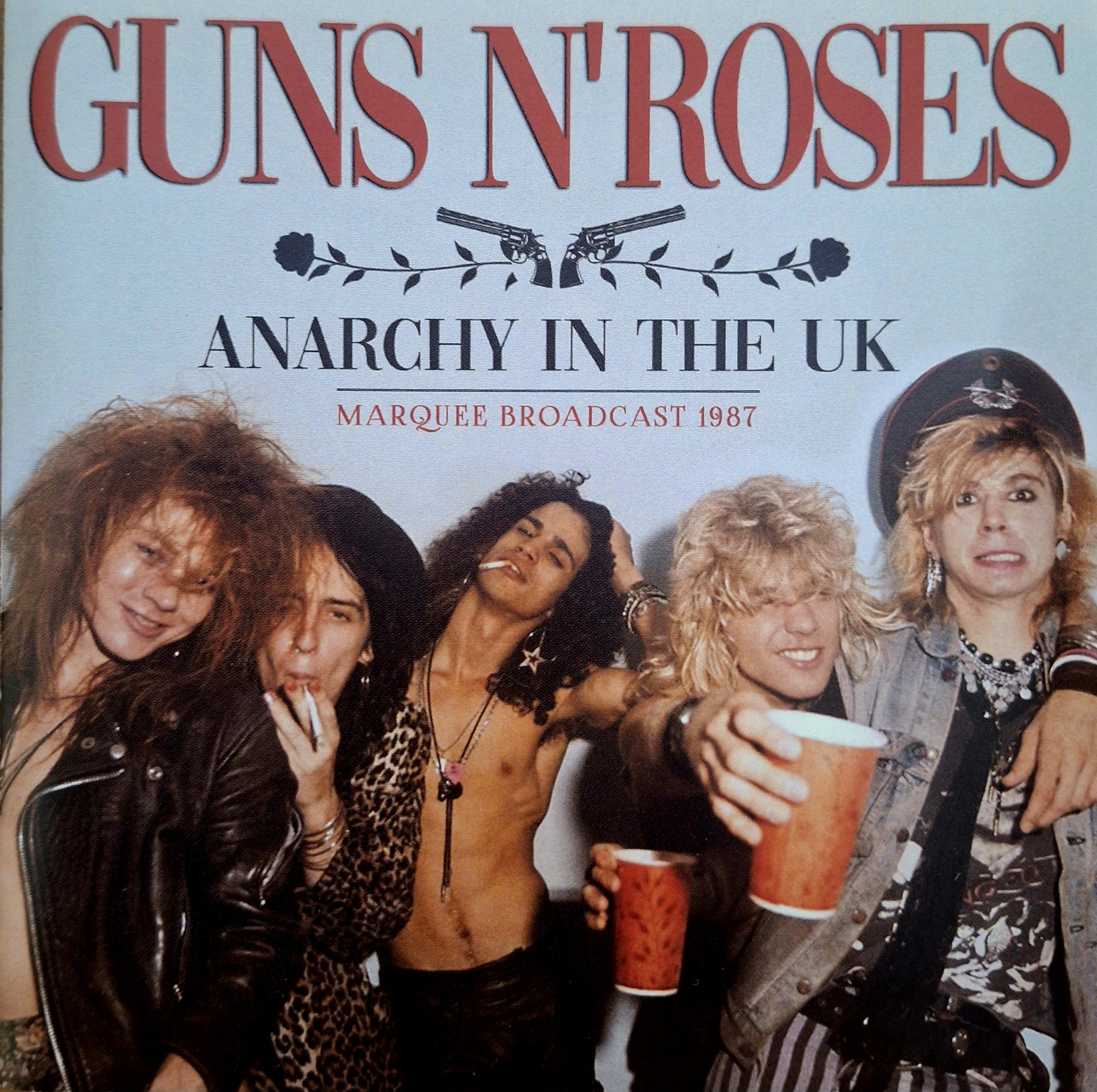
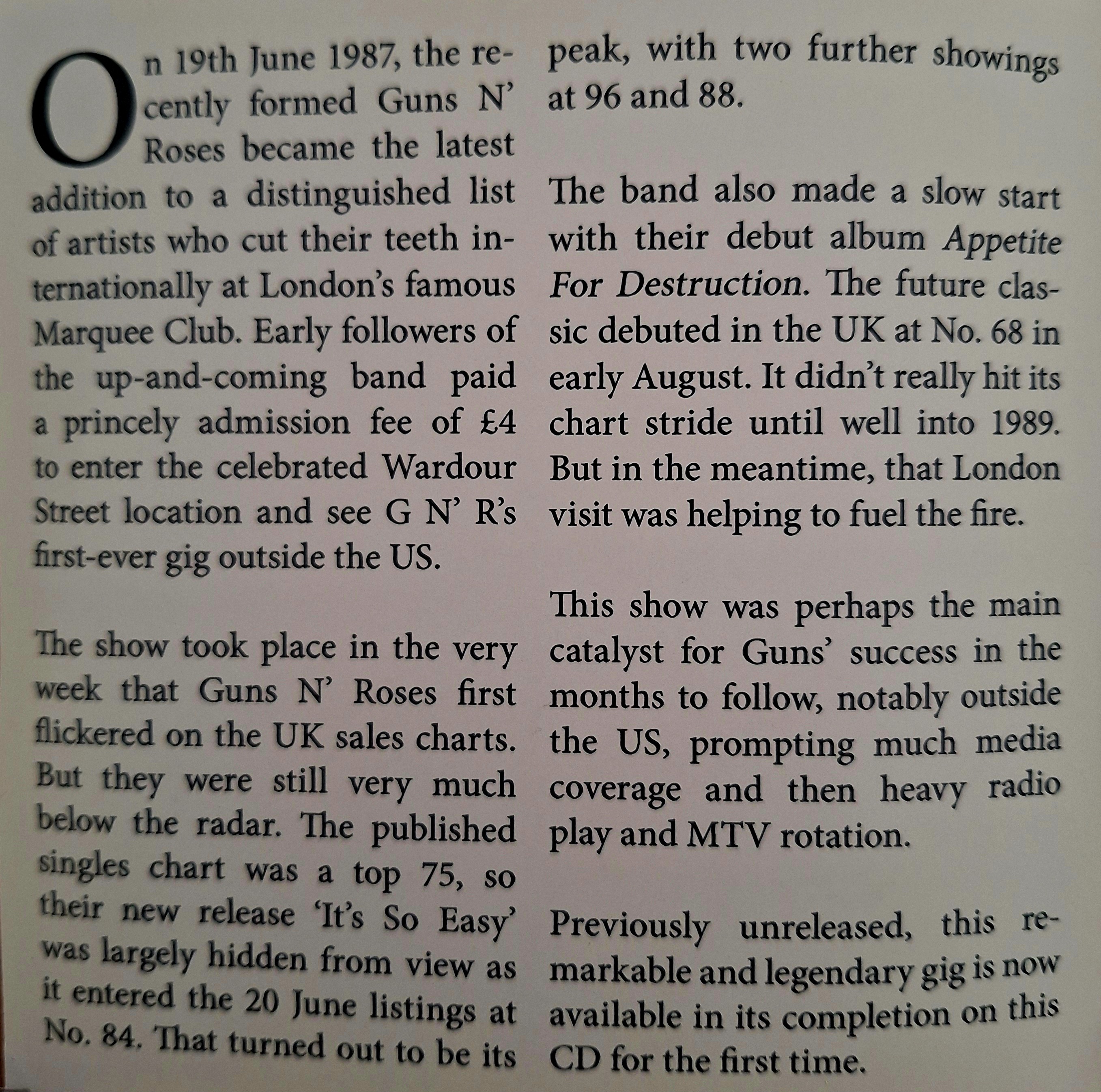
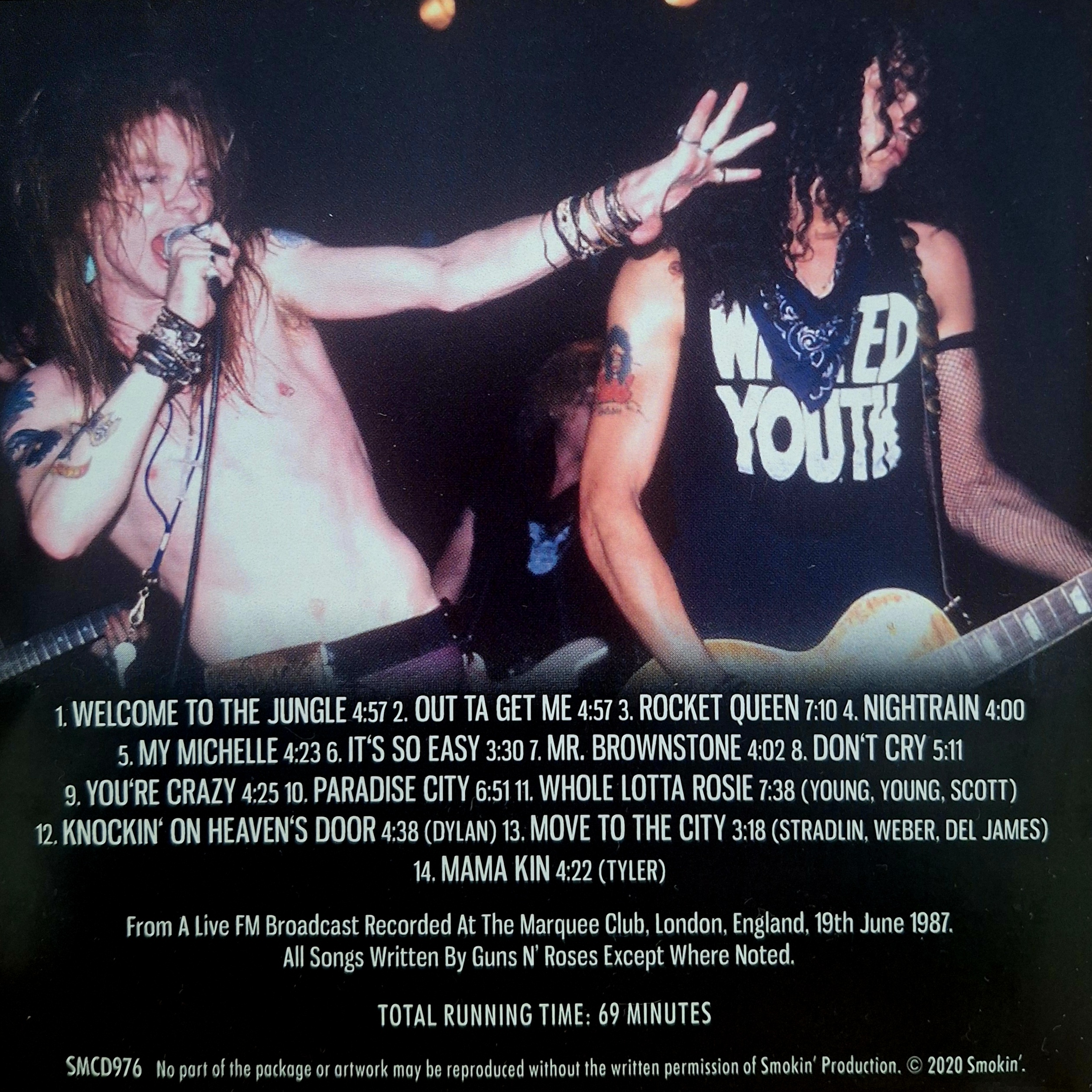
So Geffen Records cashed in and released GnR Lies as a stop-gap. It featured the four tracks from Live! Like a Suicide on the A-side and four acoustic numbers on the B-side – the now classic Patience, the tounge-in-cheek Used to Love Her, a sublime version of You’re Crazy from Appetite and the ill-judged, controversial One in a Million. It would hit the shelves in time for Christmas 1988. My mum was not a happy bunny in the early evening of that December 25th when she heard the first words of the album blaring from my bedroom record player – Hey fuckers! Fucking Guns n’ Fucking Roses!
Things would really go mental in 89 though; with their charismatic swagger and ever-present hint of danger, two albums out and plenty of singles to be released, Gn’R went stratospheric in the UK. The naggingly familiar Paradise City with its massive hook, would go top ten, peaking at number 6. The re-release of Sweet Child O Mine would hit the same position. Patience would come a month later and also go top ten, with Nightrain later going top twenty. Appetite spent 48 weeks of 1989 on the album chart with half of those weeks inside the top twenty, while Lies spent a more modest 36 weeks on the album chart. And I was mad for it all – buying the 12″ versions of the singles, waiting anxiously for the videos on Top of The Pops and the Chart Show, listening to Slash being interviewed on the Friday Rock Show, and seriously wondering if I could pull off a bandana. I couldn’t. I was sixteen years old and Guns N’ Roses were my religion.
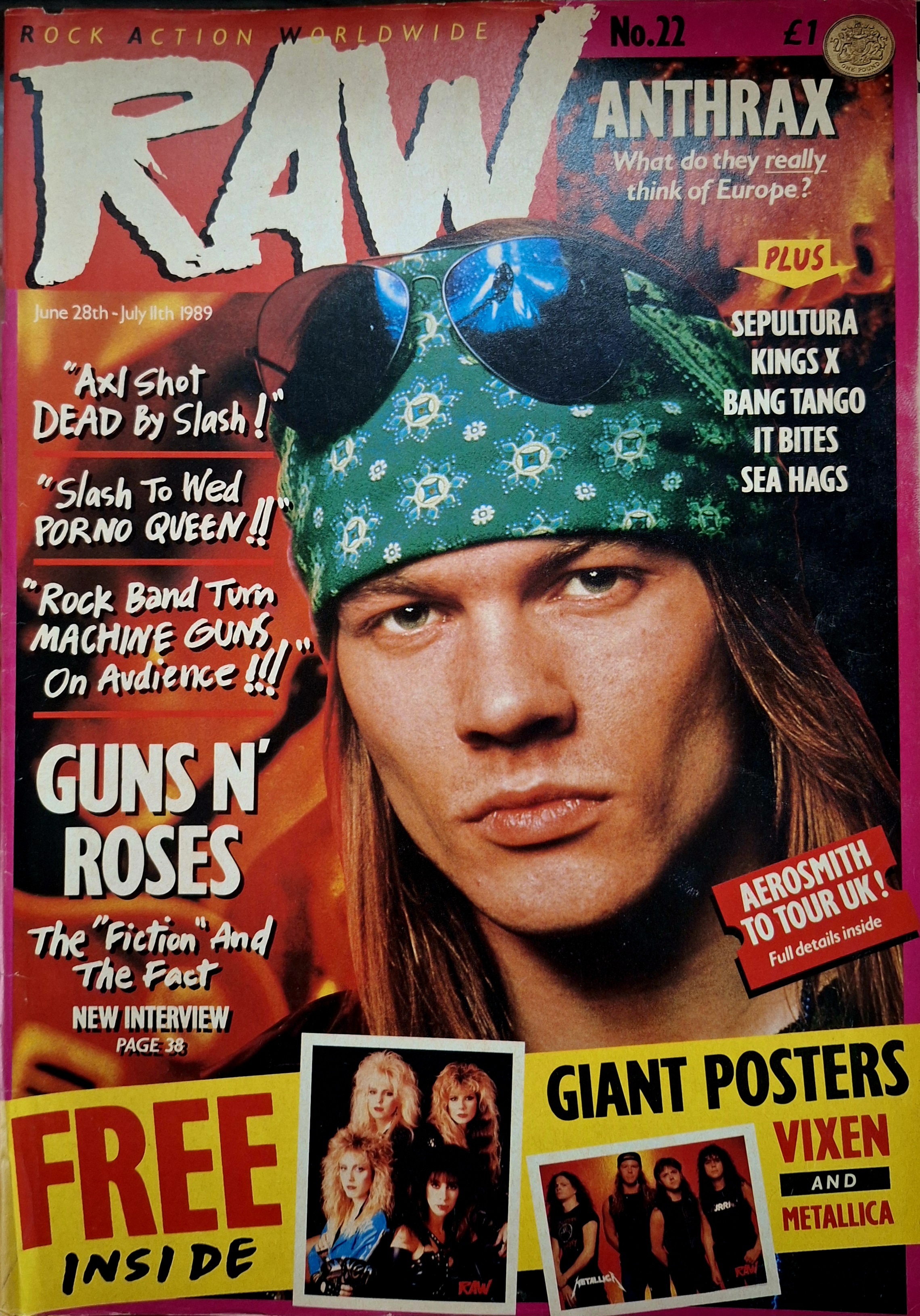
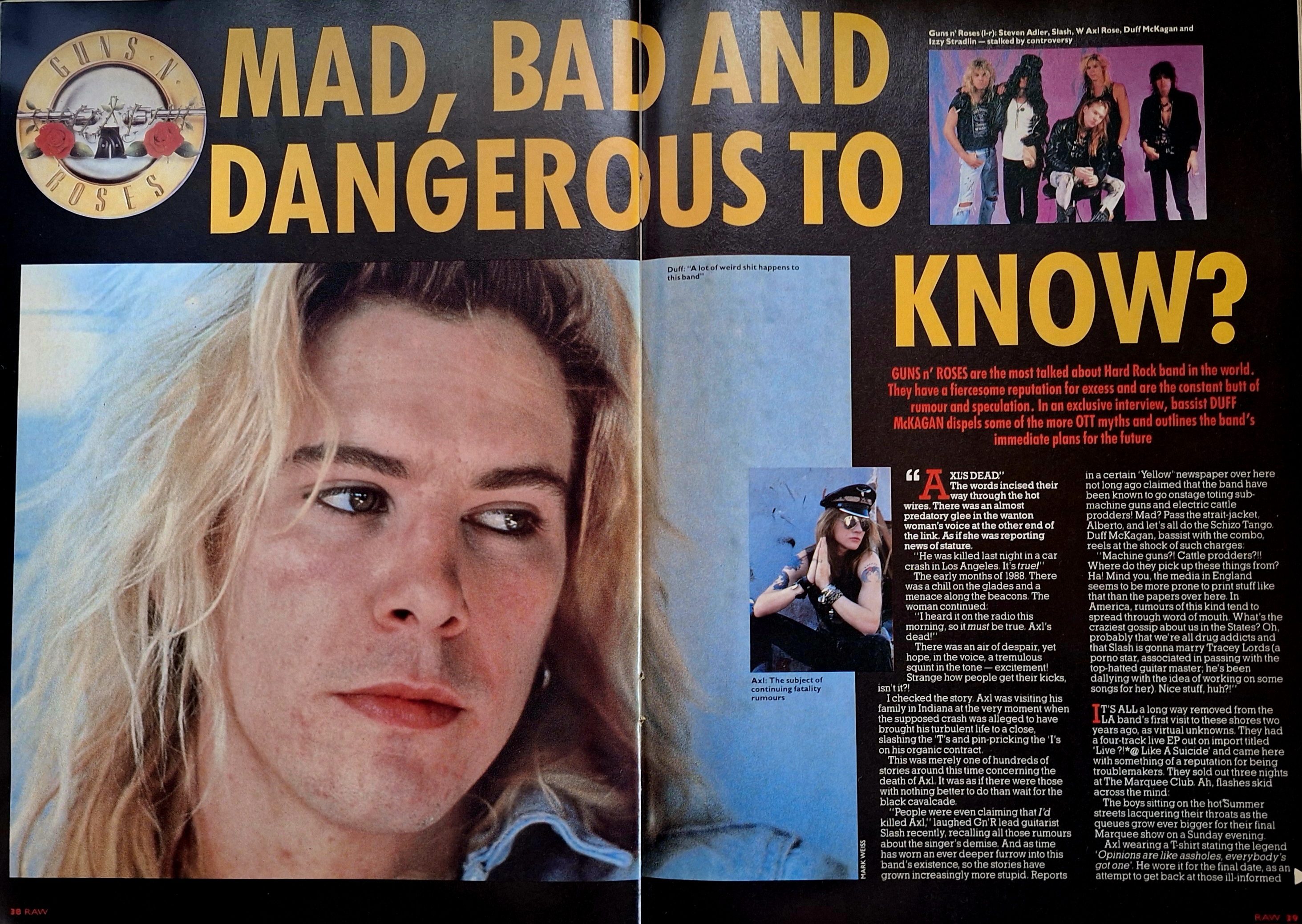
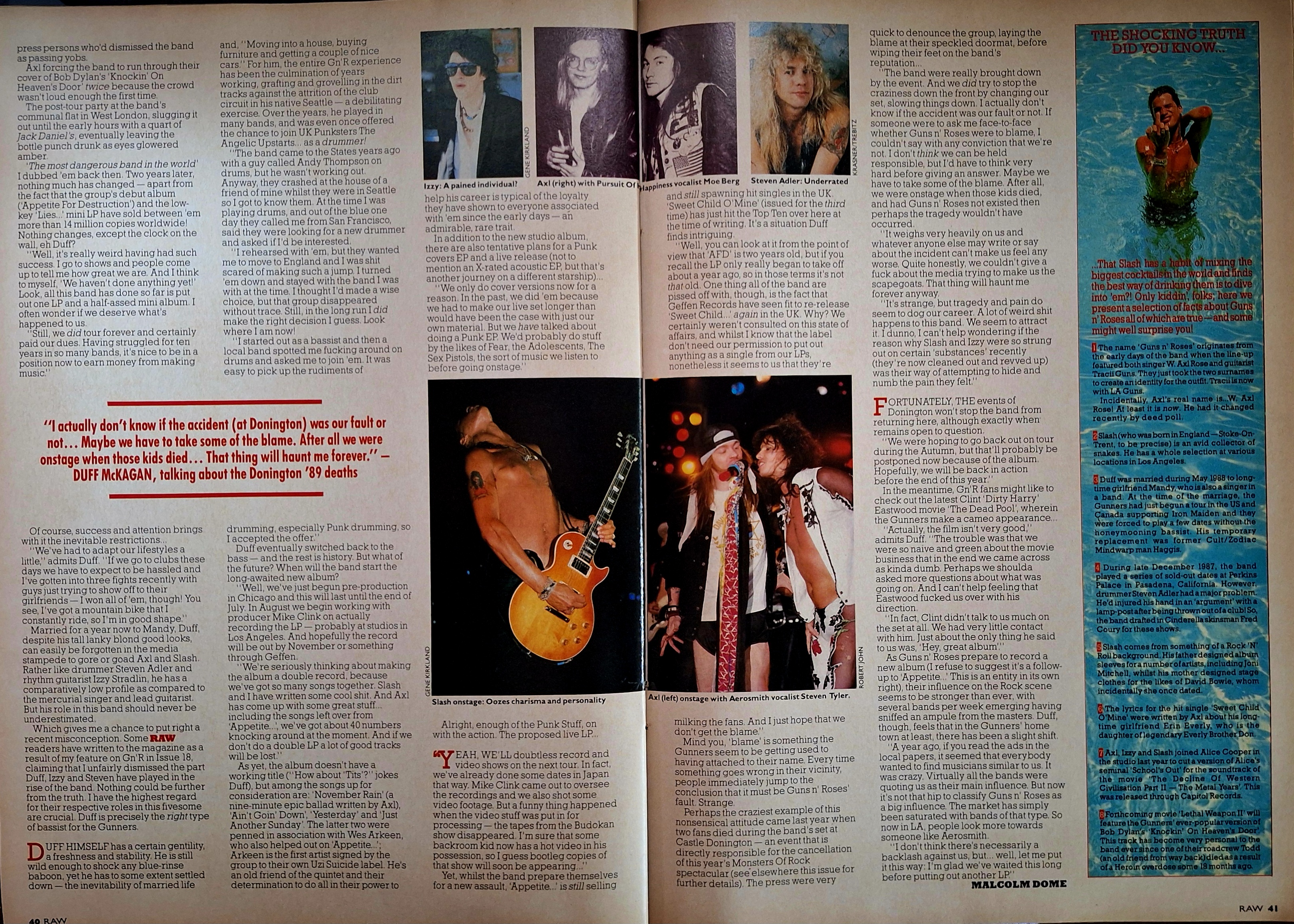
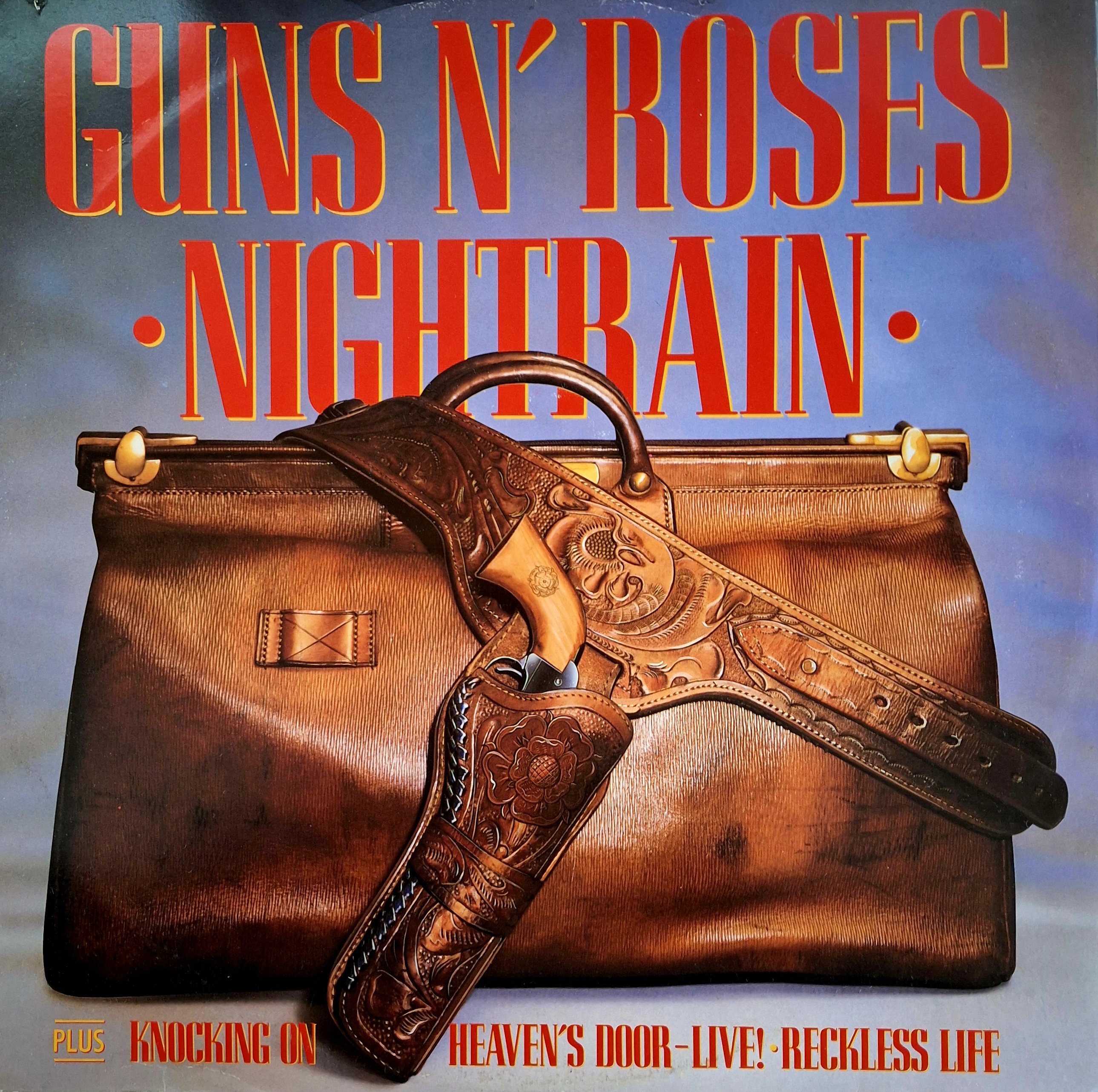
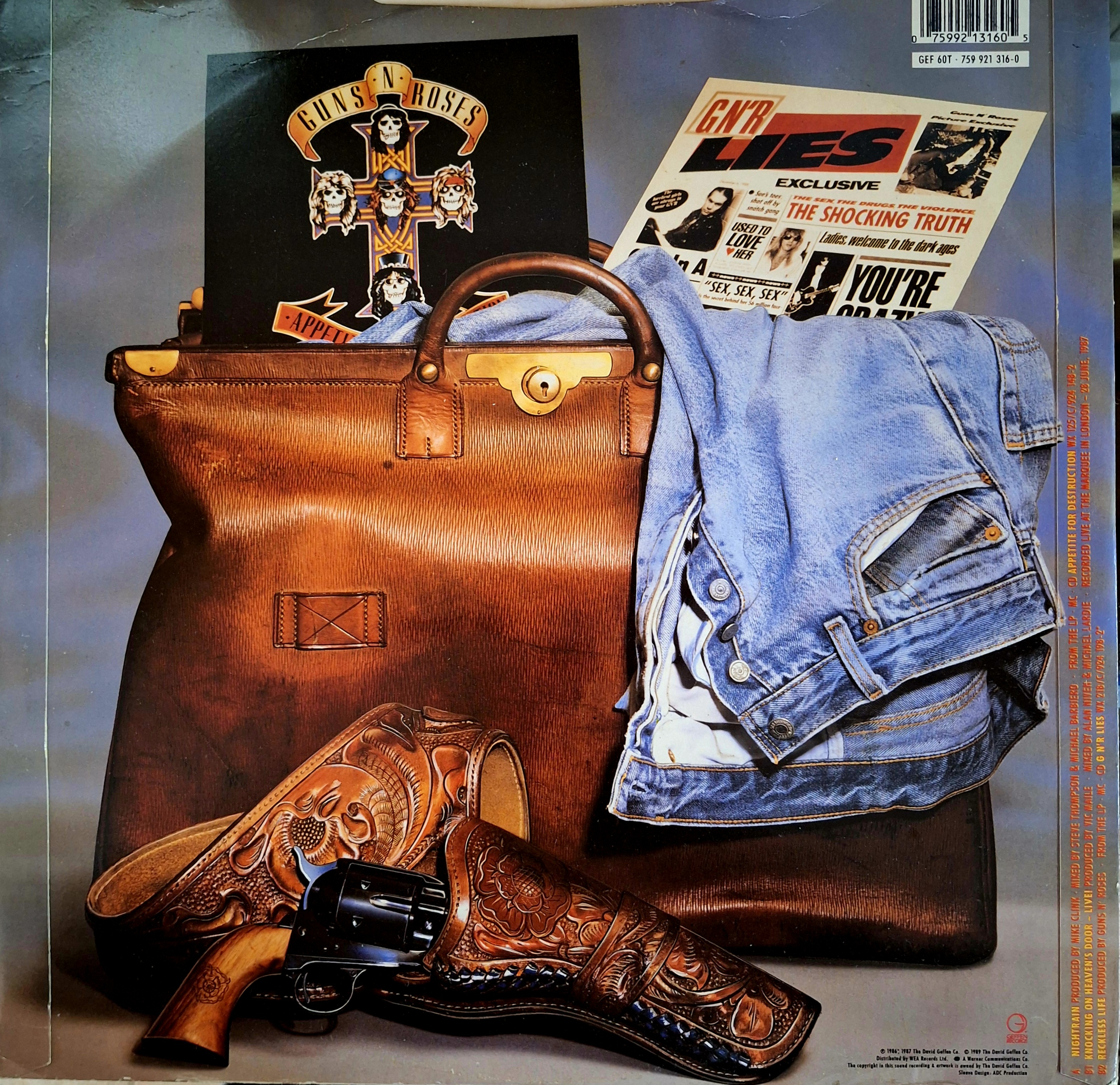
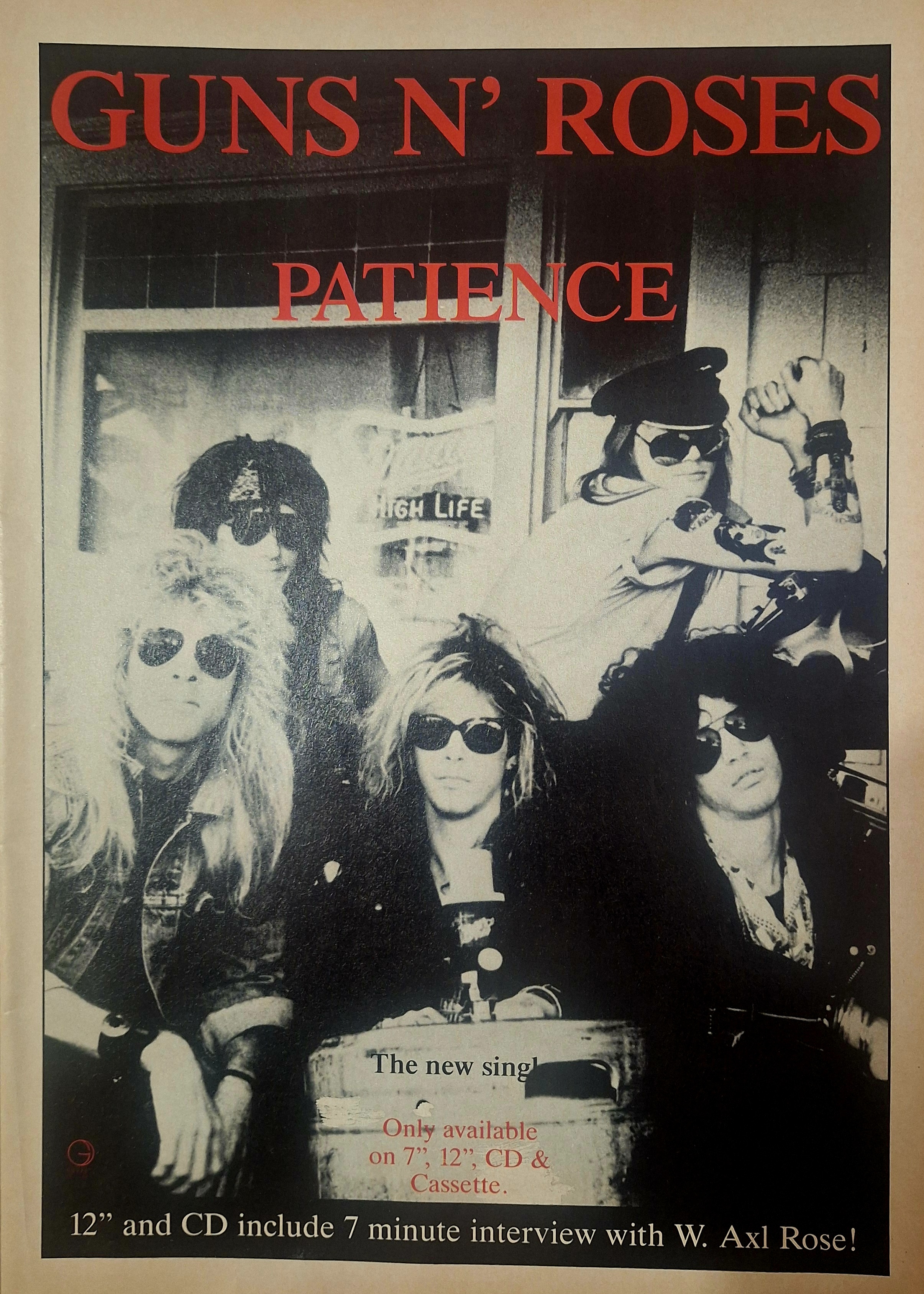
Little did we know that there was already trouble in paradise city. There had been a divisive trip to Chicago, at Axl’s behest, to try and galvanize the band and write and rehearse songs for the next record. But Axl turned up weeks late and things got ugly. Although Izzy was desperately trying to get sober, drug use in the rest of the band was gradually getting out of control, as was Axl’s volatility and the frustration at his behaviour. According to Duff: “The harsh reality was that the old us-against-the-world mentality had waned this year for sure. Steven was fully strung out and babbling incoherently much of the time. Slash had one foot out of the band as a result of feeling betrayed. Izzy had all but checked out. The techs, I soon found out, were secretly looking for other gigs. And to top it all off, we had an expensive bill to pay for the rehearsal space and apartments, the plane trips back and forth, and all the destruction Axl had inflicted on the apartments.”
The heady mix of Axl’s megalomania and a potentially lethal cocktail of powders, pills, crack rocks and booze were tearing the band apart. In these pre-internet days, the news that was filtering across the Atlantic wasn’t exactly good, but as Guns was the most dangerous band in the world, we took it for the usual tales of rock n roll debauchery. For instance, when GnR supported the Rolling Stones and Axl dropped the following bombshell – “unless certain people in this band get their shit together, these will be the last Guns N’ Roses shows you’ll fucking ever see. ‘Cause I’m tired of too many people in this organization dancing with Mr. Goddamn Brownstone” – it was just another headline, a consequence of the band’s success and an affirmation of their reputation. However, for Duff, even though it was still only 1989 and Guns were basically the hottest ticket in the world, the incident rang serious alarm bells: “Once Axl took his concerns public, the times of being a gang—us against the world—were over. We played the rest of the show, but it was a halfhearted effort at best. Afterward, and really for the remainder of our career, we just went our separate ways. That night officially rang the bell for the end of an era in GN’R.”
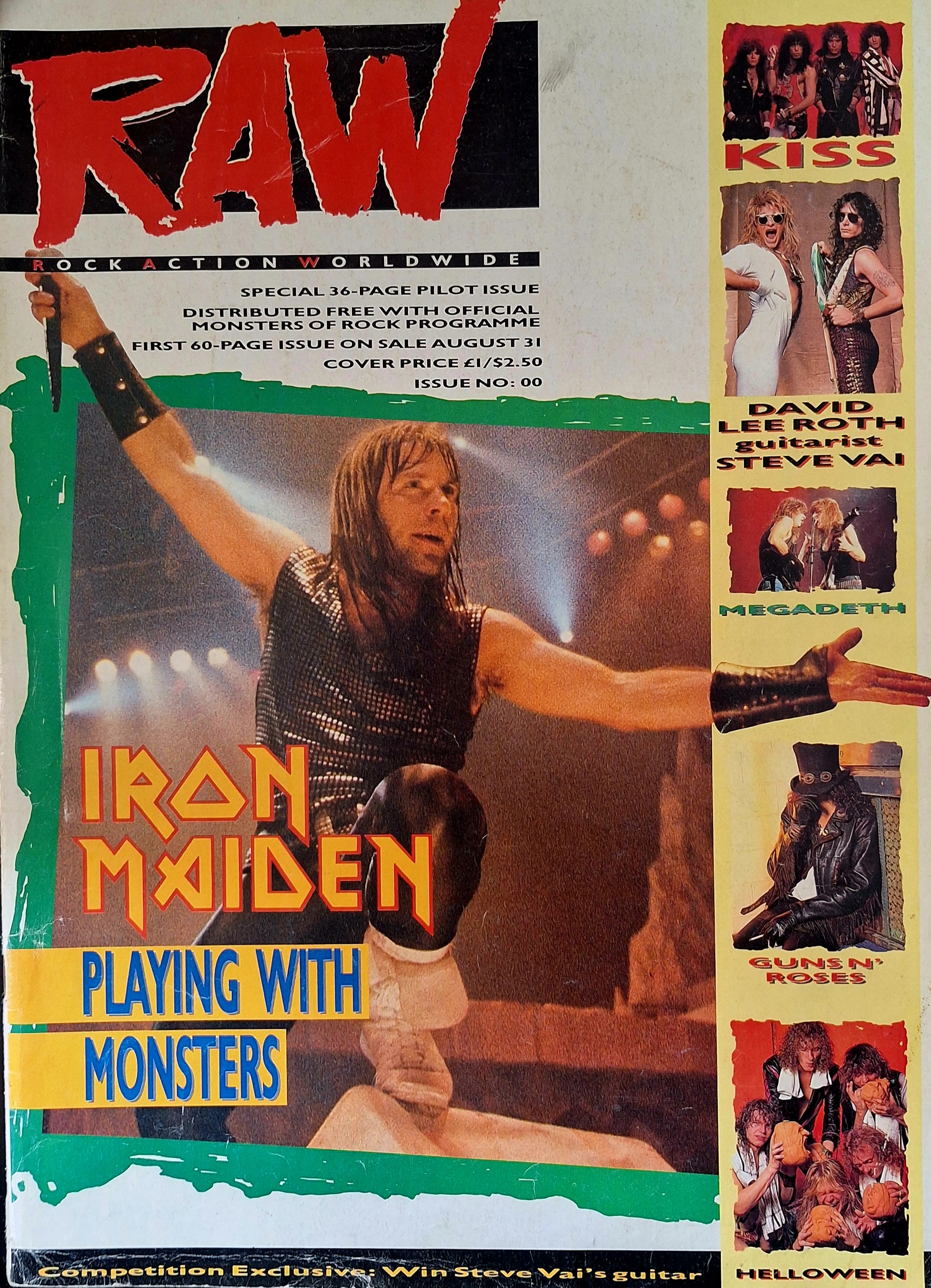
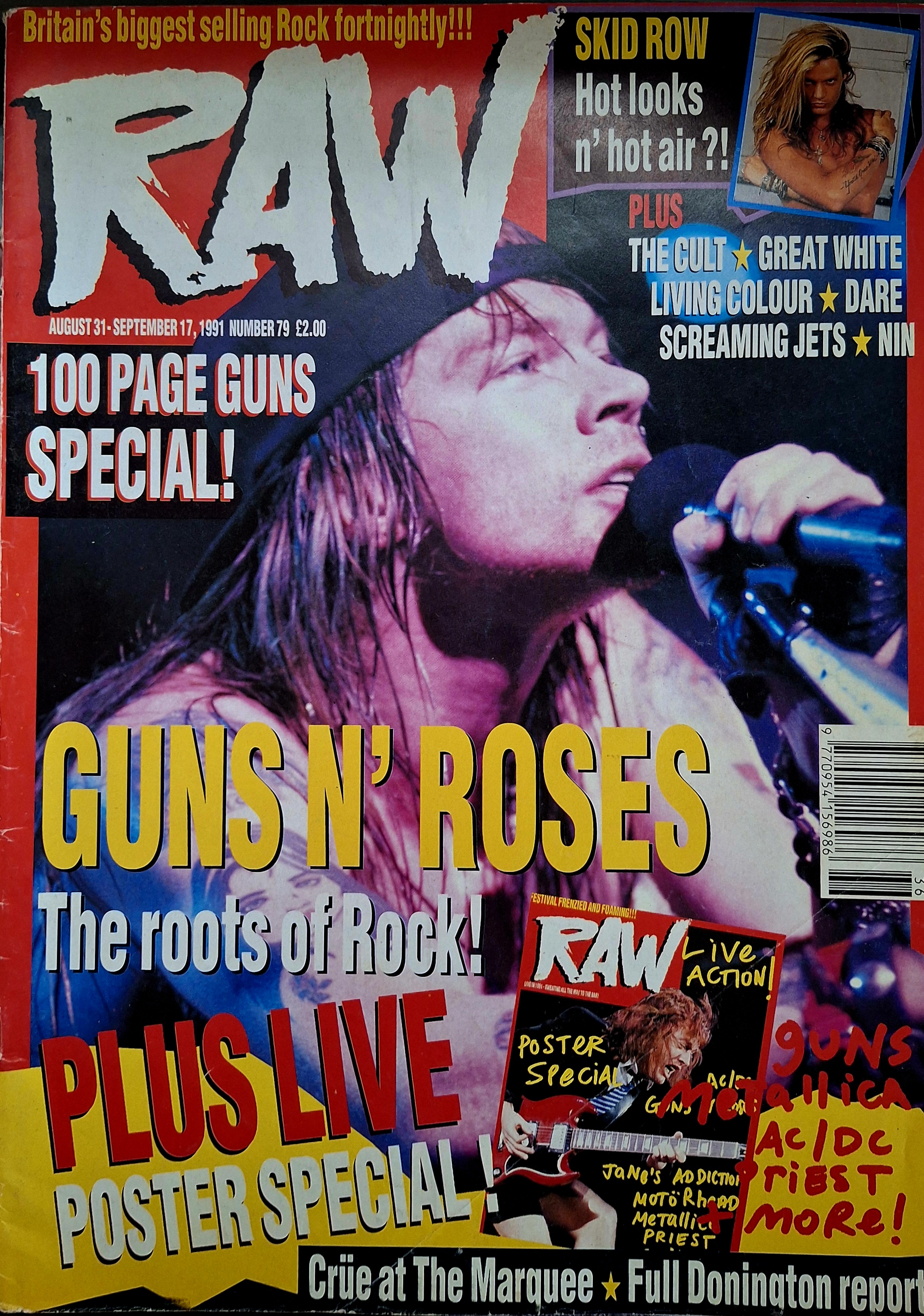
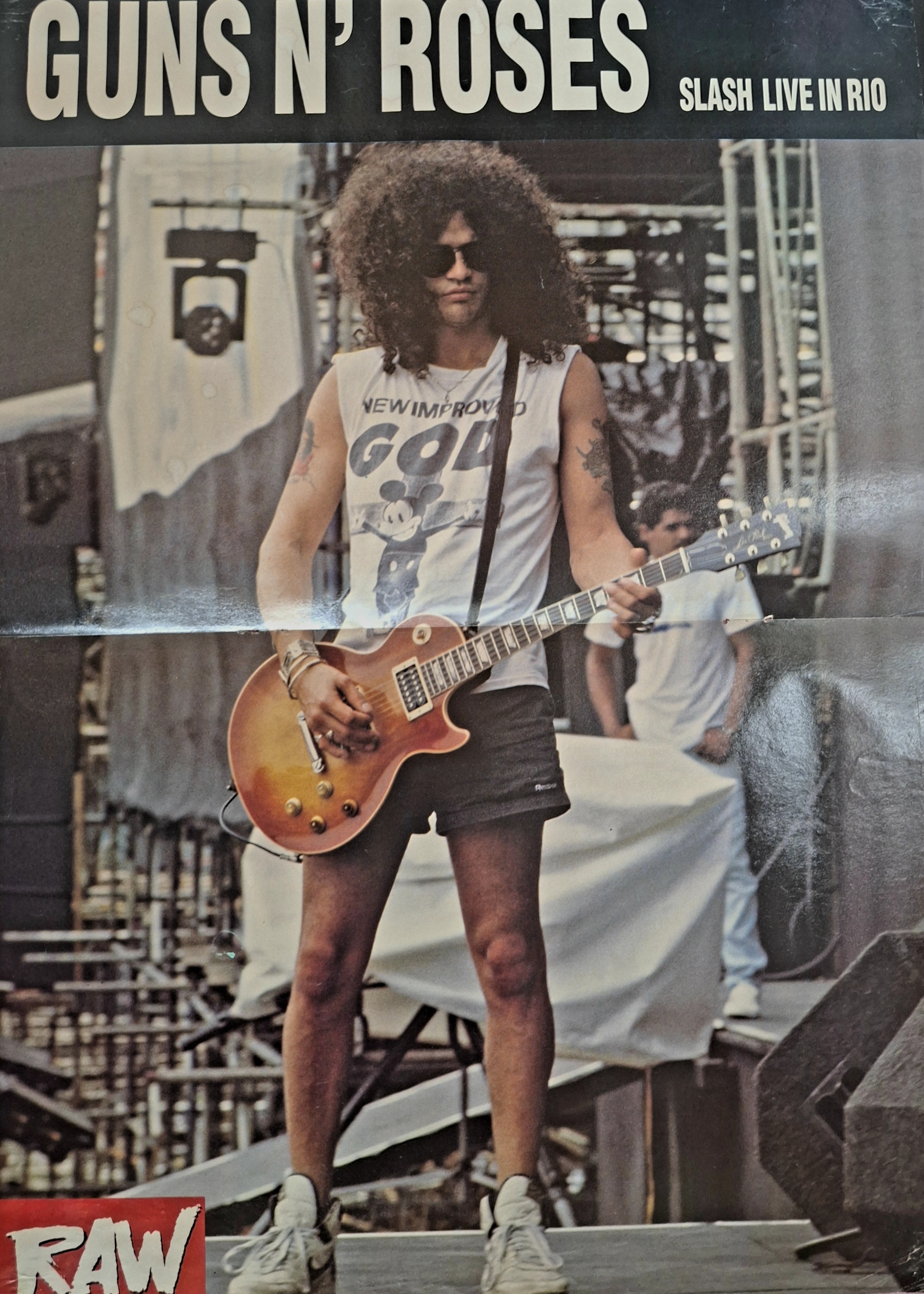
In the meantime, they were shifting units like proverbial hotcakes, with Appetite for Destruction going on to sell over 24 million copies, becoming the fifth best selling album and the most successful debut album release of the 1980s, but there was no new product in 1990. Even so, their popularity was such that the promise of activity in 1991 meant that they still graced the cover of Raw Magazine‘s 1990 yearbook, which included a candid interview with Slash.
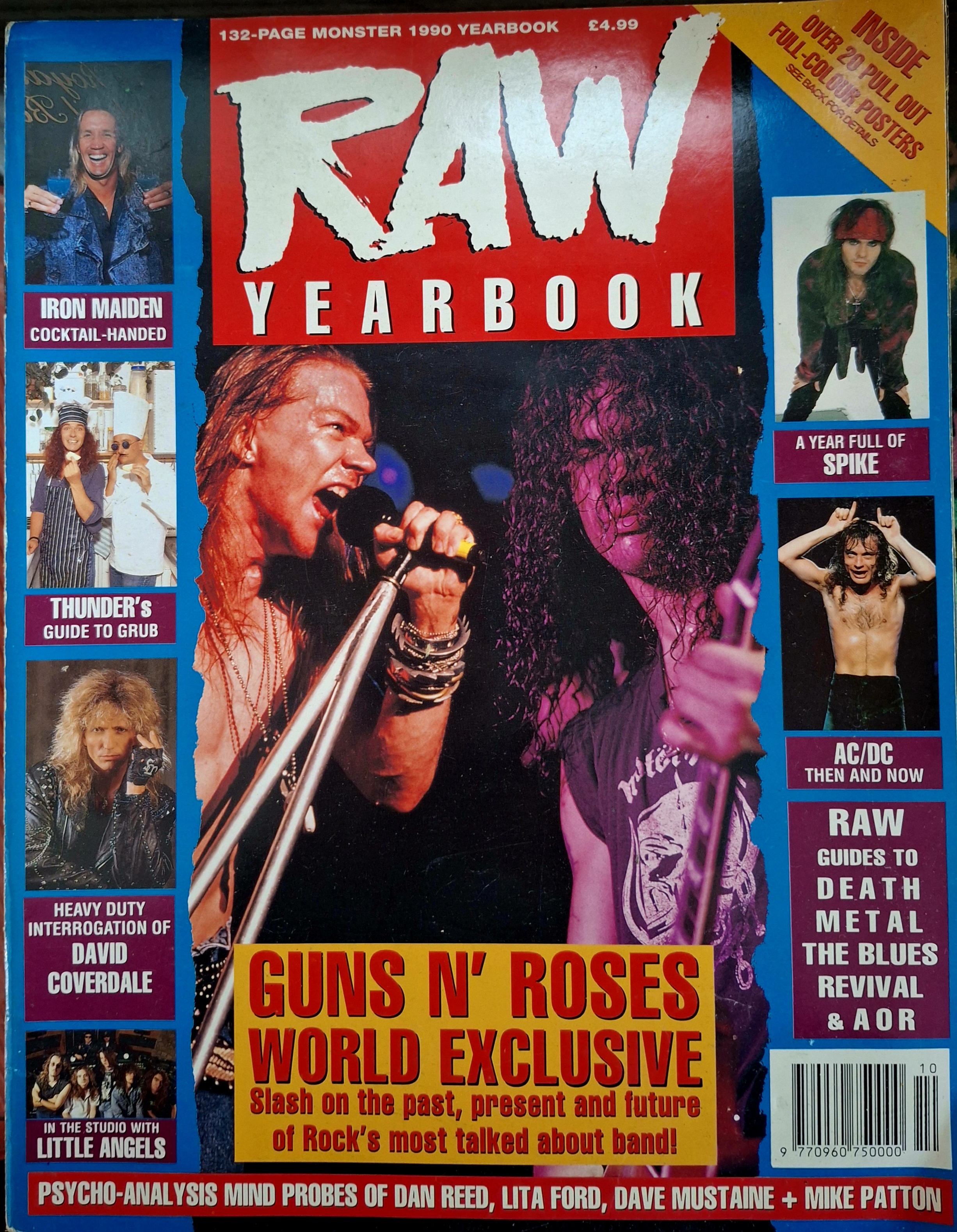
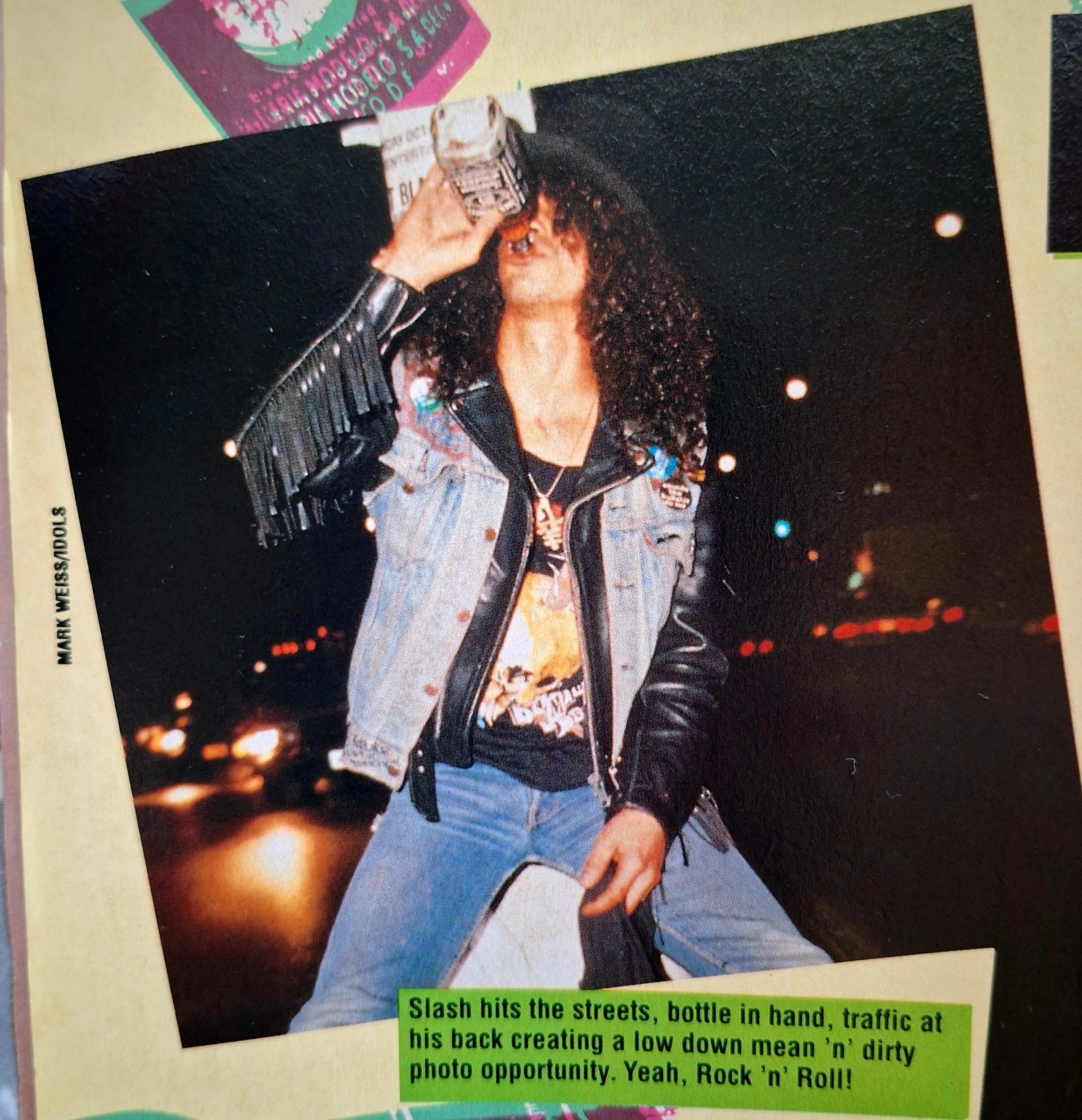
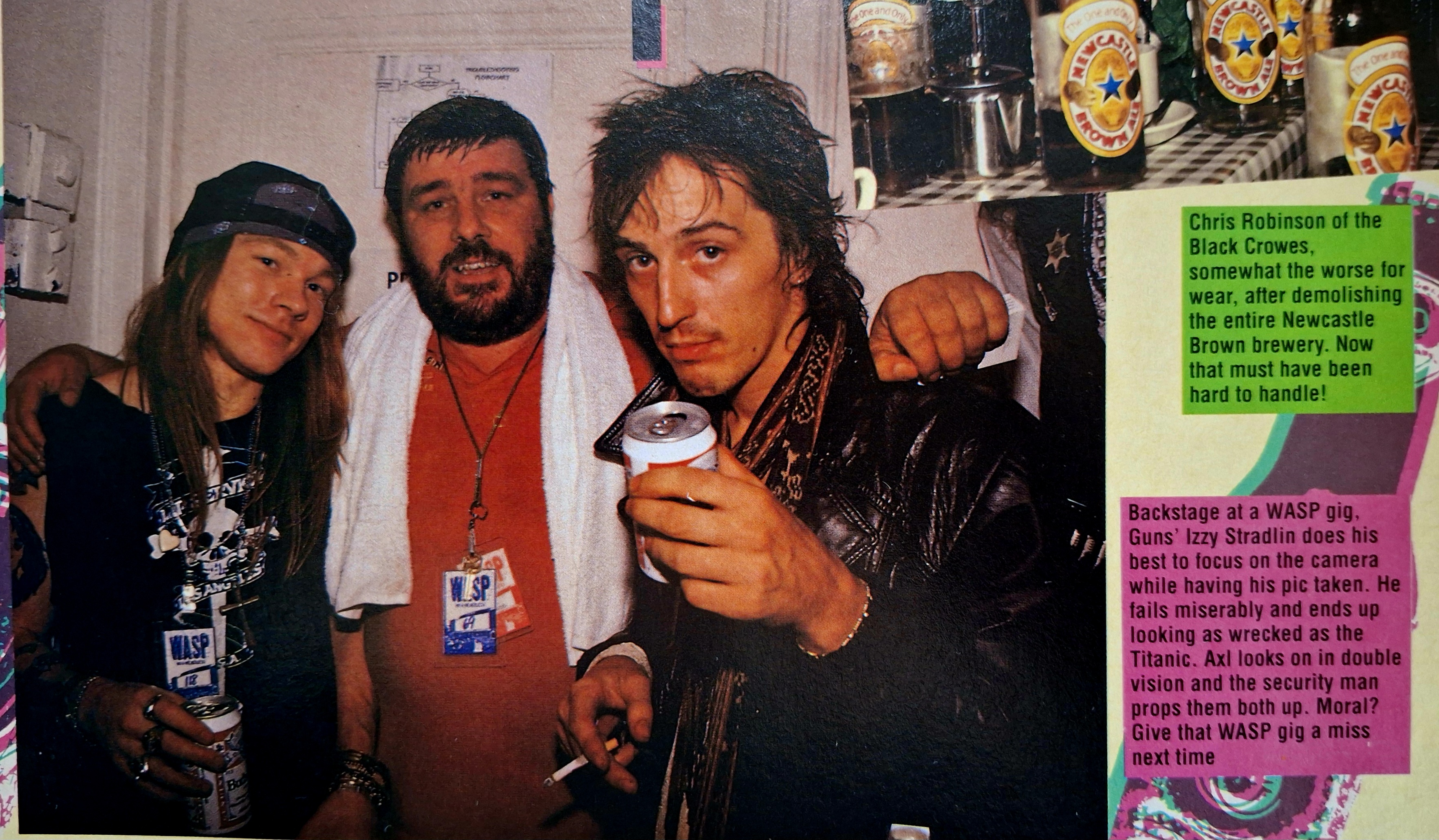
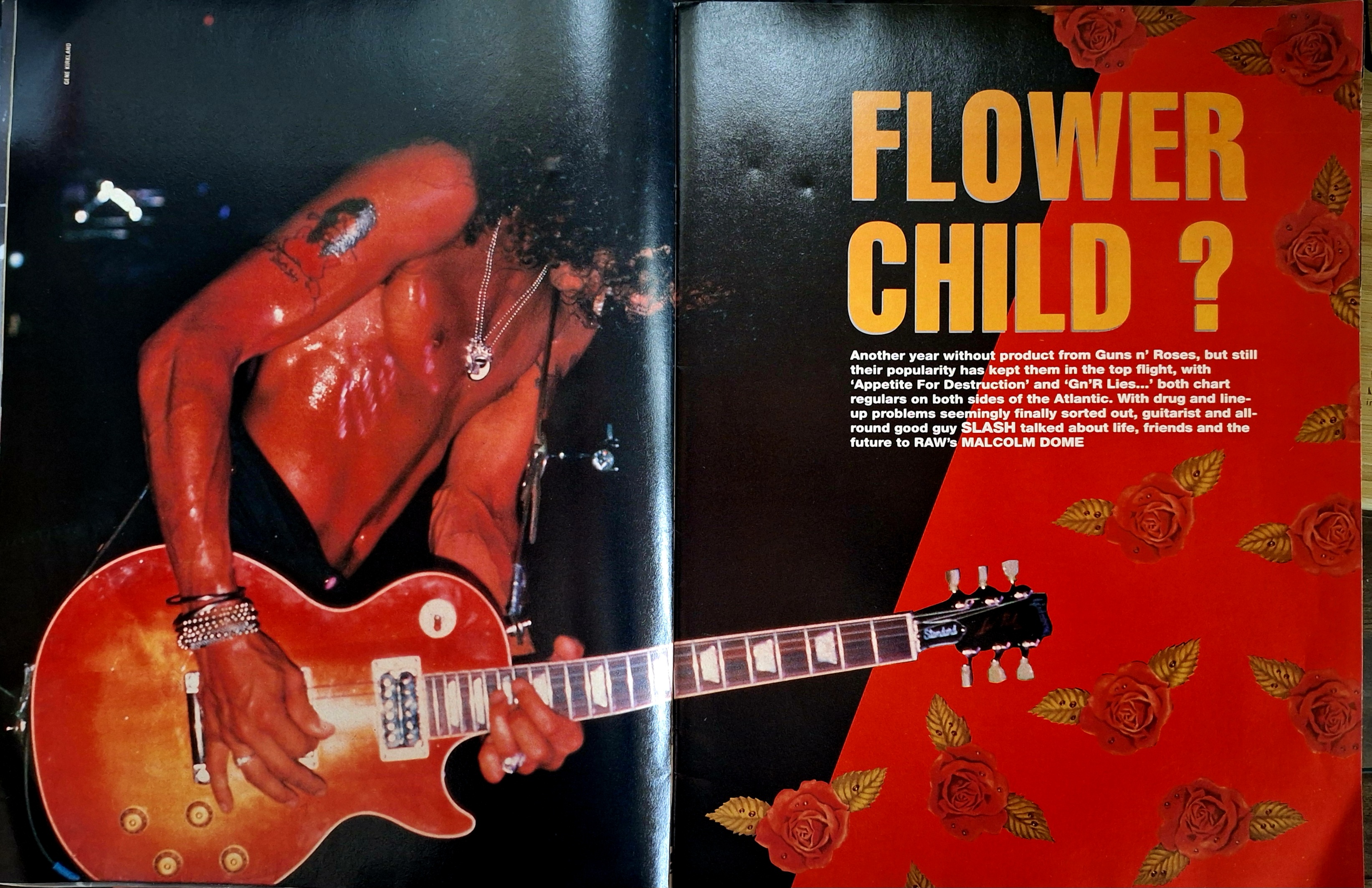
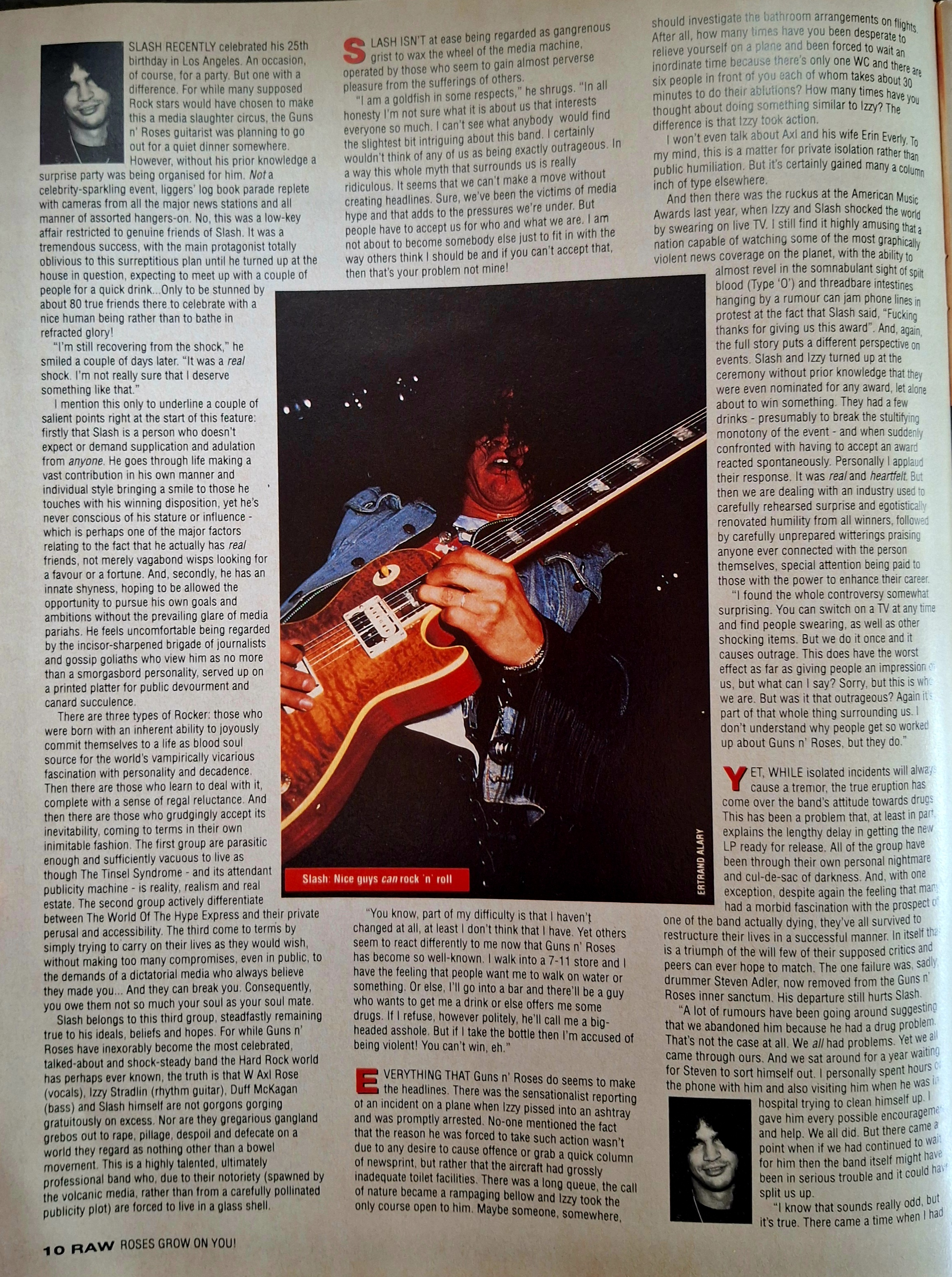
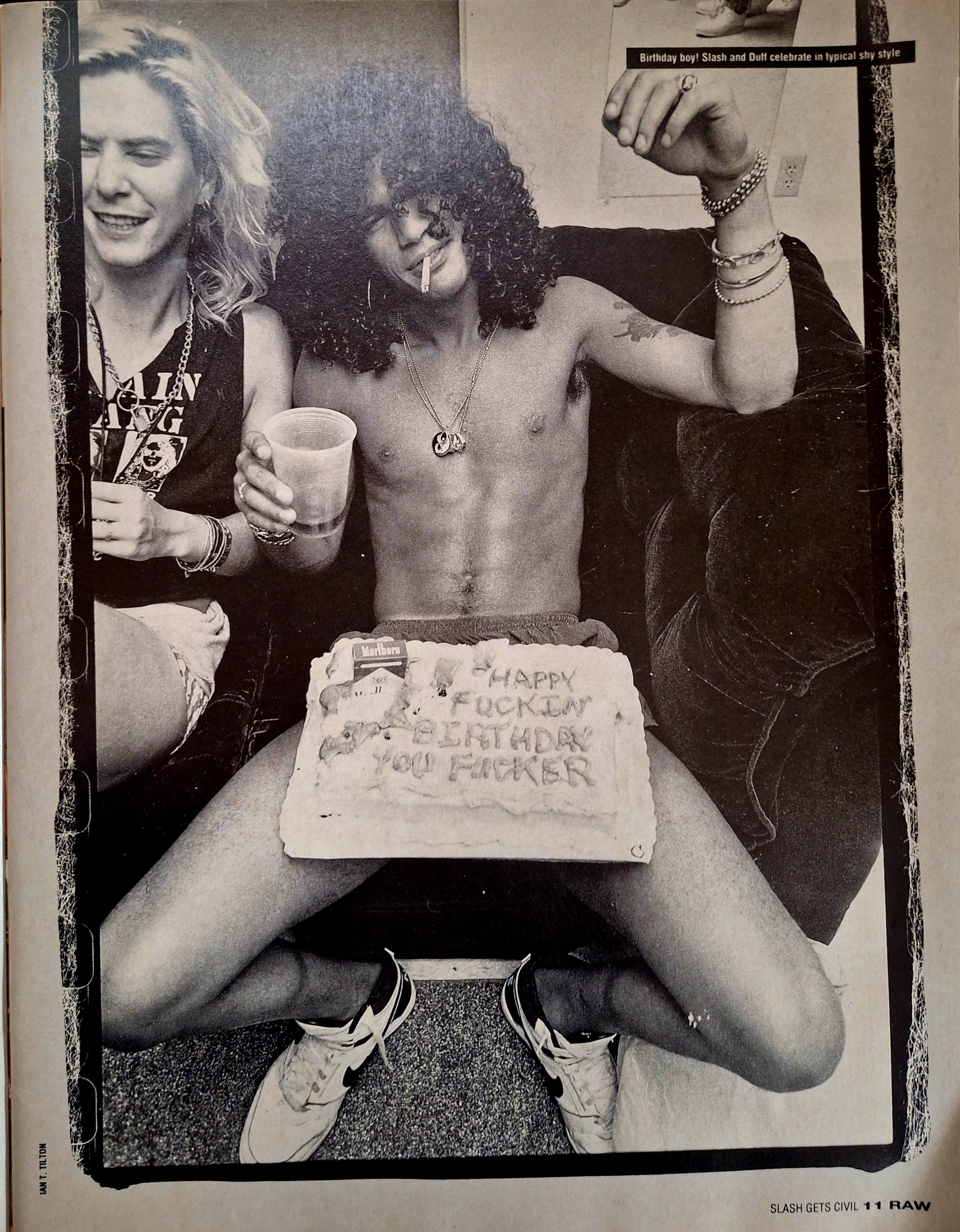
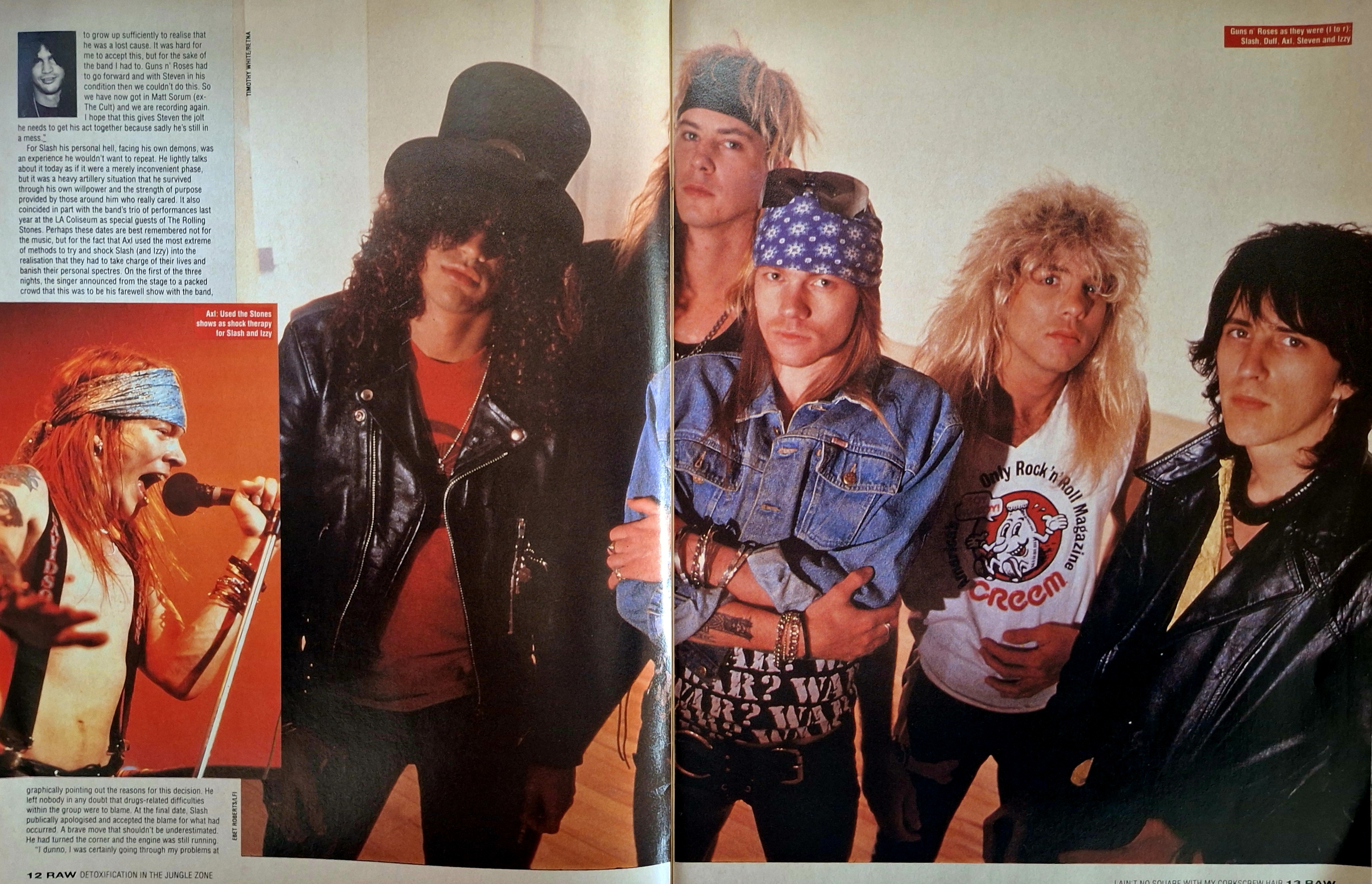
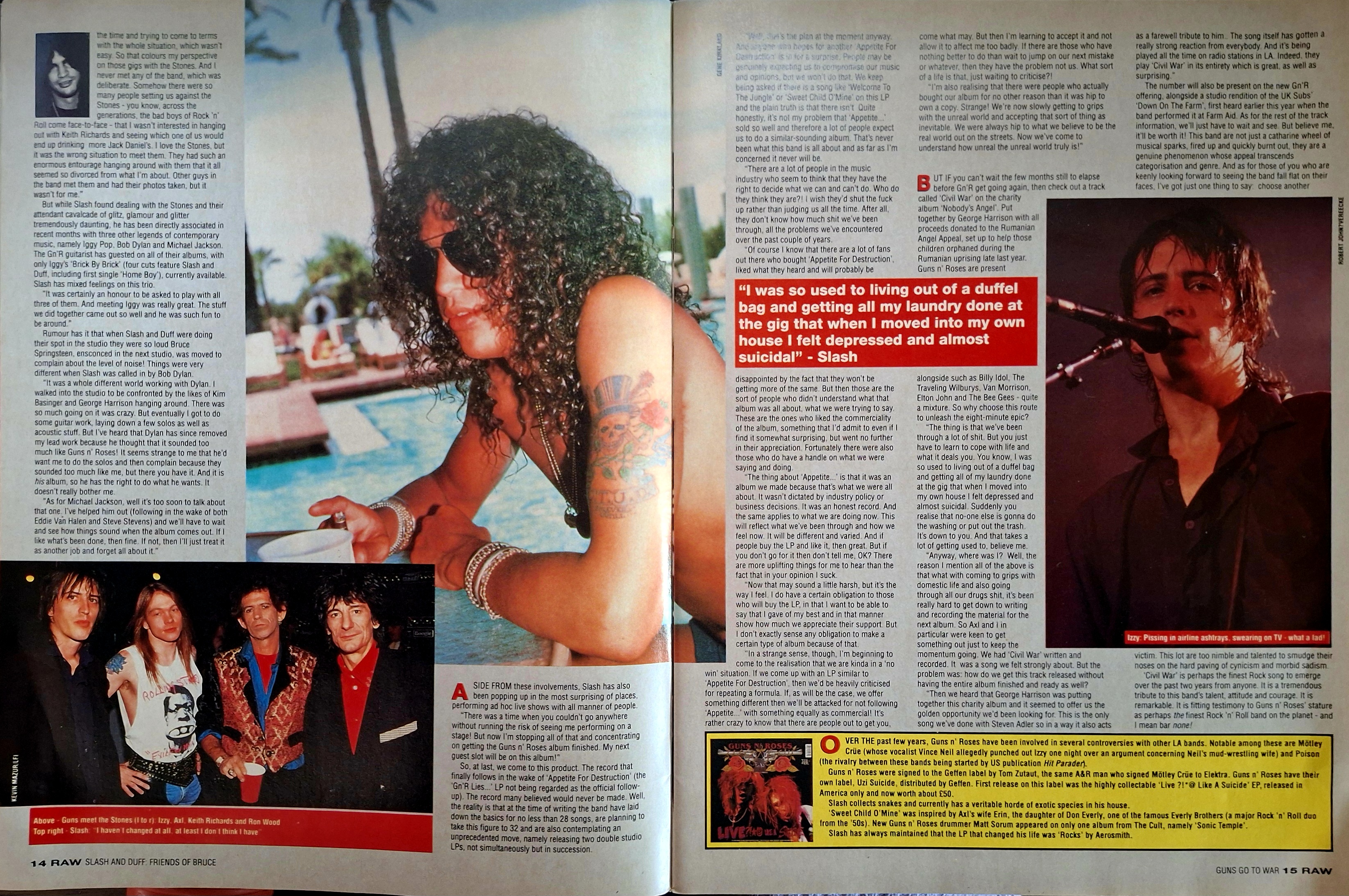
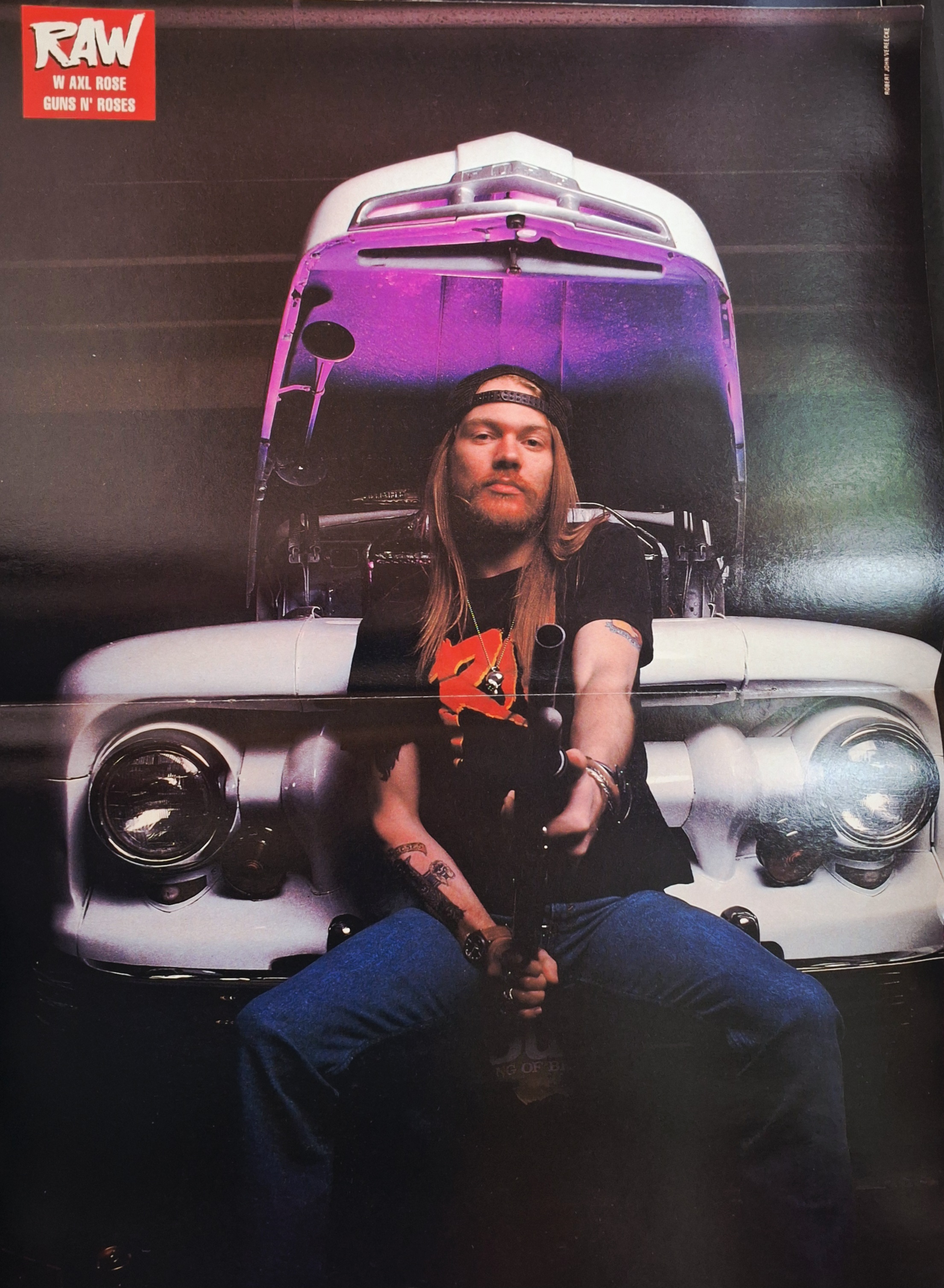
The guitarist addresses their treatment by the media, the fascination people have for the band, the (drug) problems they’d been through, and the uncerimonious firing of Steven Adler. For a group of very heavy drug users and drinkers to fire someone for excessive use meant that Adler must have been really screwing up, and according to Slash: “there came a time when I had to grow up sufficiently to realise that he was a lost cause. It was hard to accept this, but for the sake of the band I had to. Guns n’ Roses had to go forward and with Steven in his condition then we couldn’t do this. So we have now got in Matt Sorum and we are recording again.” Despite the clear implications of chaos within the band over the last couple of years, it seemed that things were settling down and the promise of not one, but two double albums had me chomping at the bit. As such, 1991 would edge into dreams come true territory.
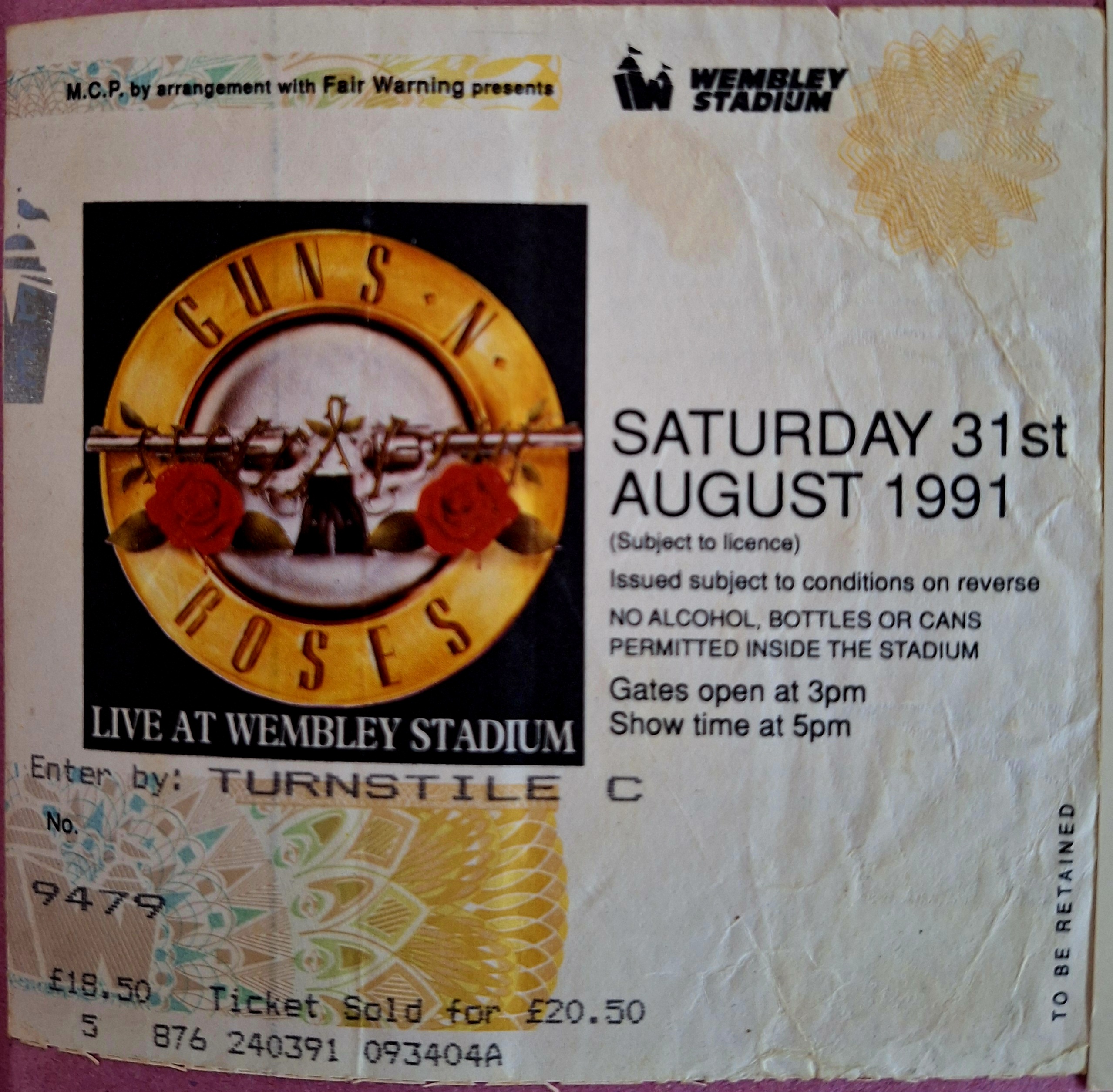
After two hours of frantic redialling – yes actually dialling, not pressing redial – we had tickets for the headline show at Wembley Stadium at the end of August. With Skid Row at their peak and a then unknown Nine Inch Nails in tow (Axl showing great insight into the coming changes in the world of rock – he later tried to get Nirvana to tour with GnR) the Wembley show was the culmination of my teenage Guns N’ Roses obsession.
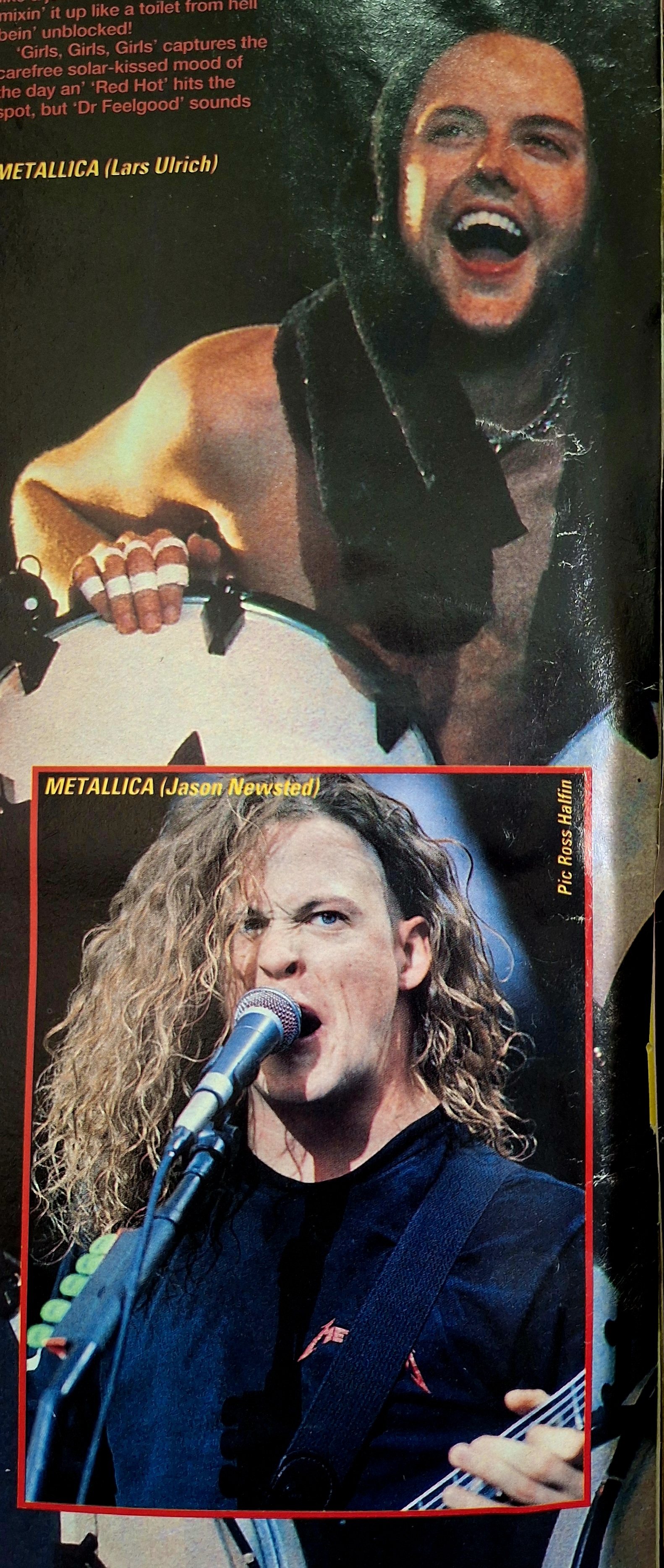
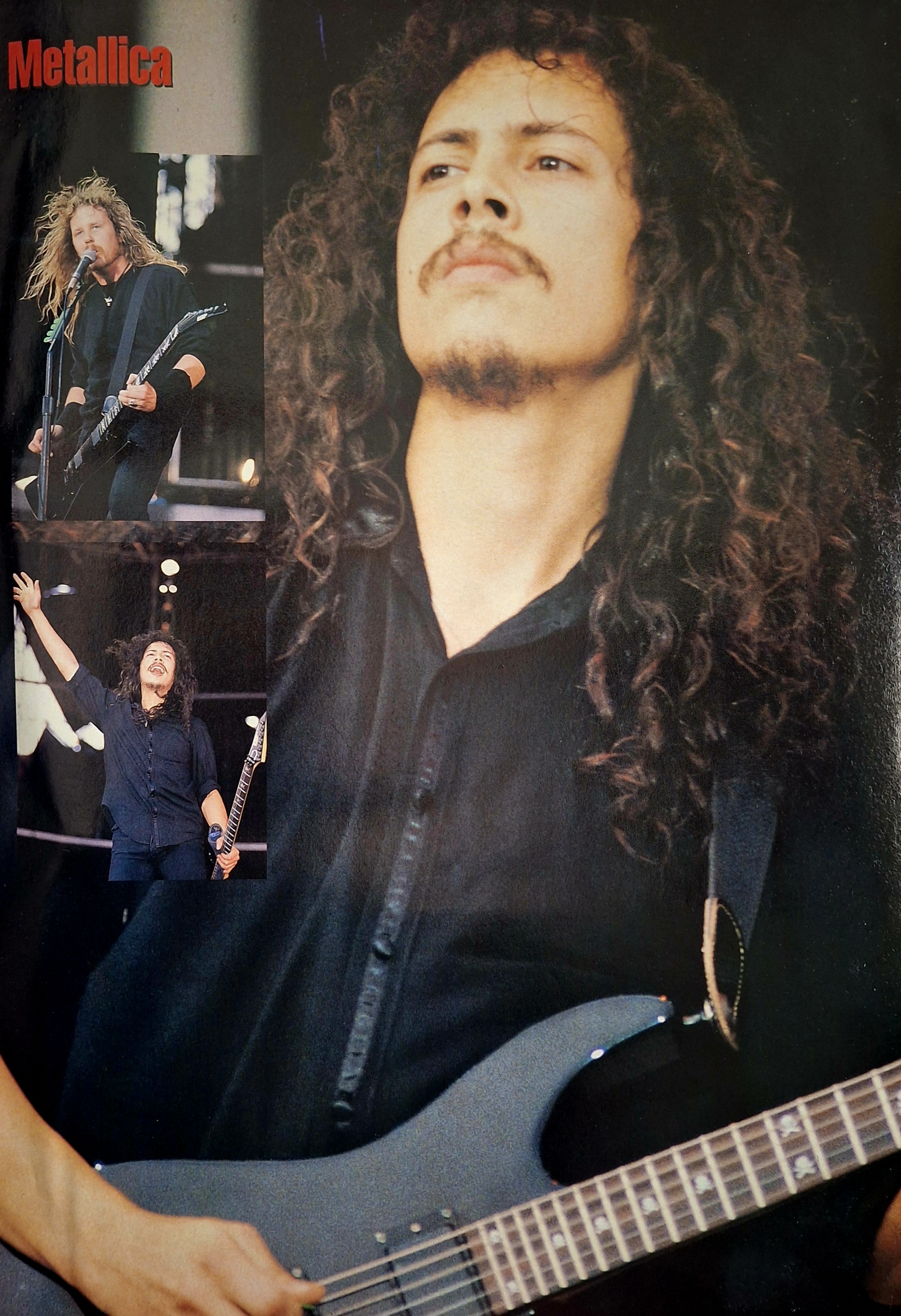
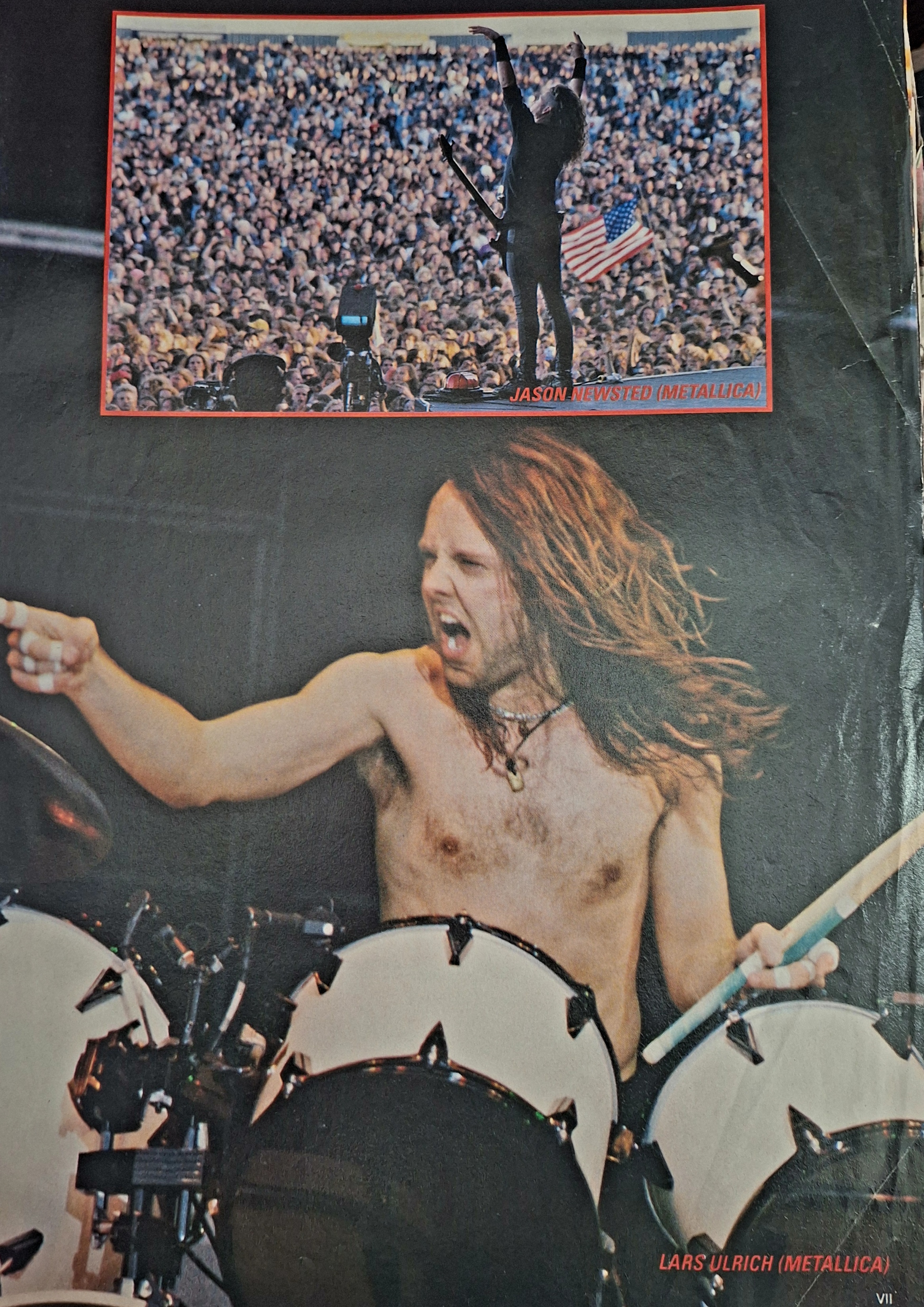
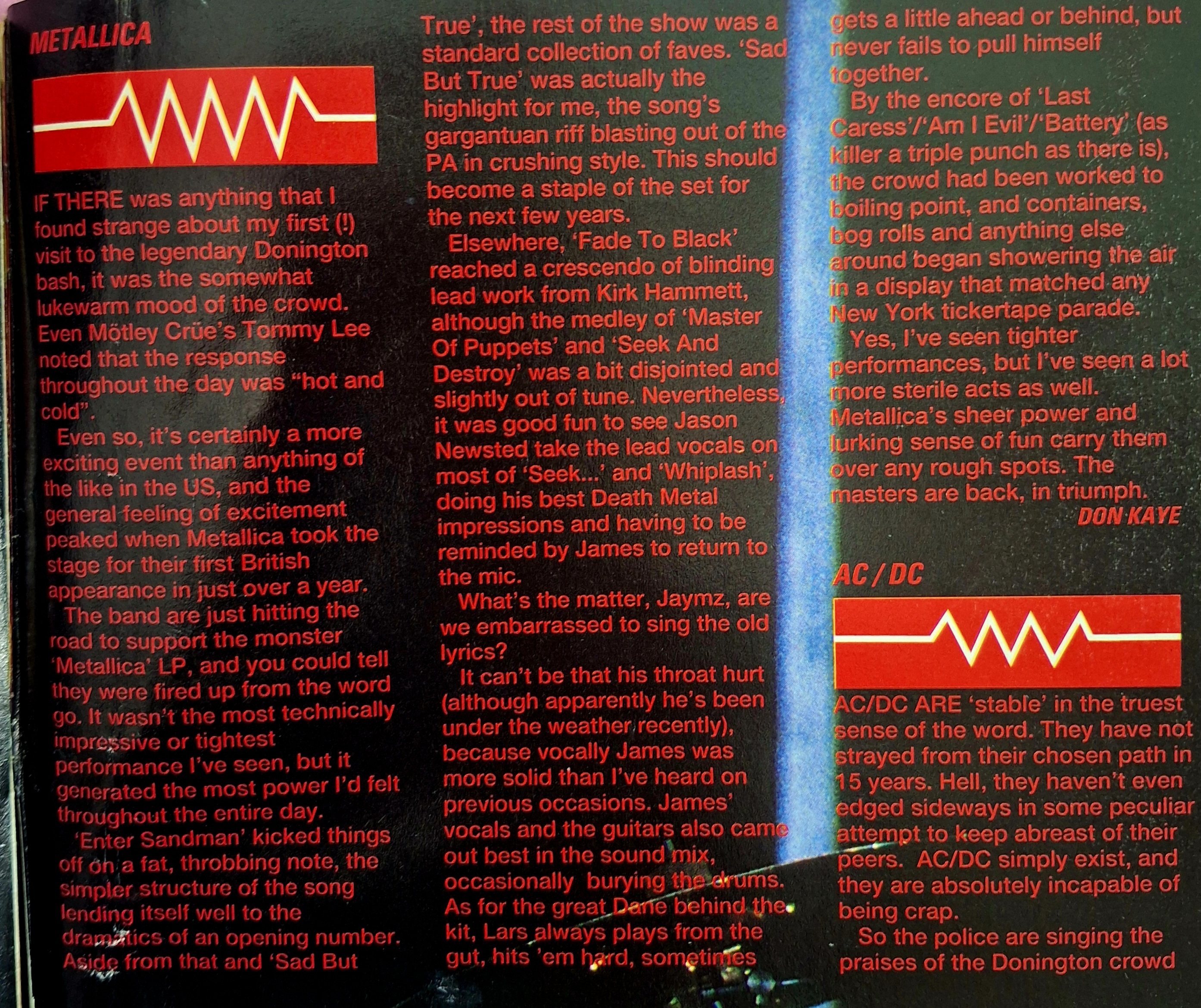
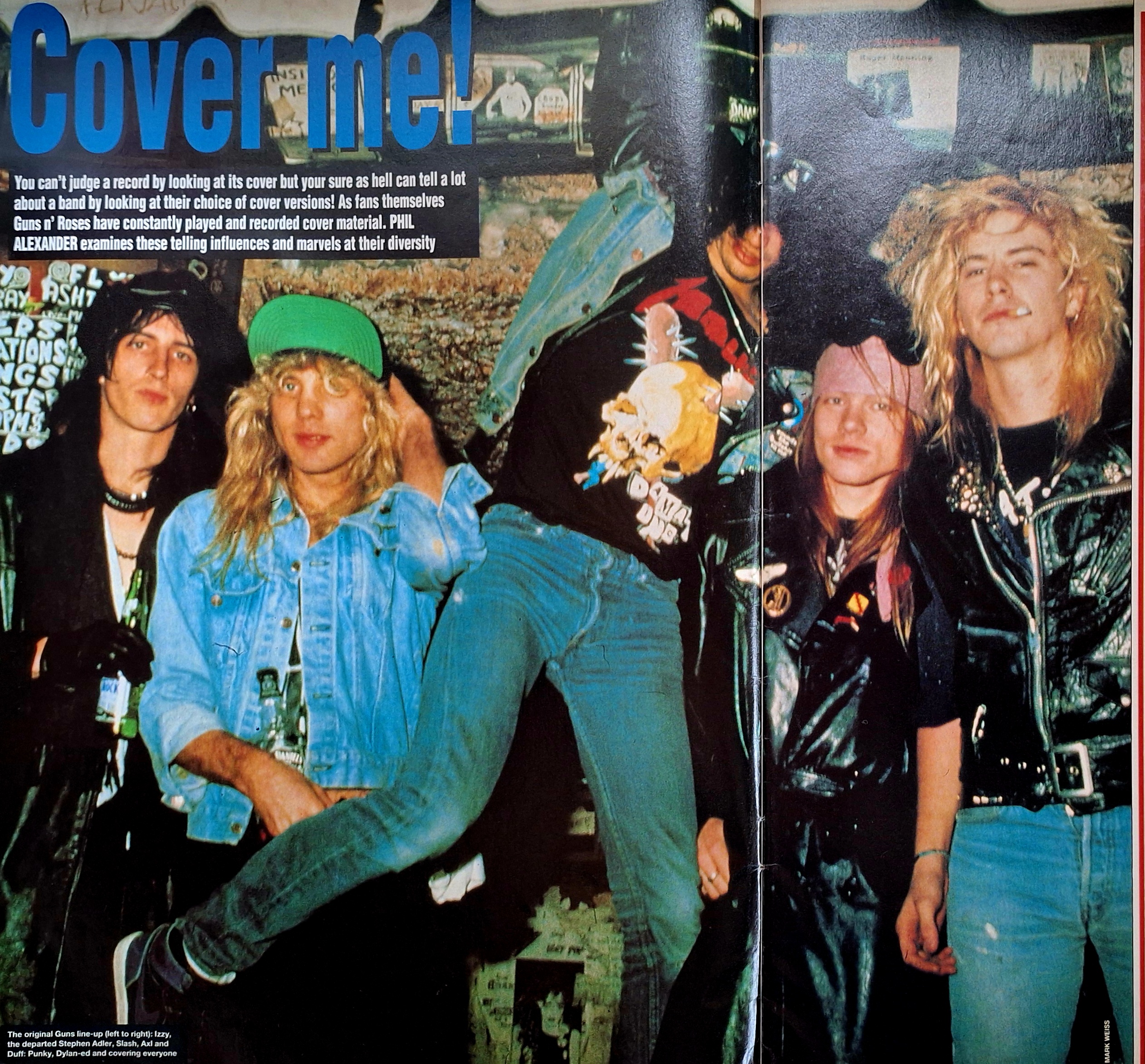
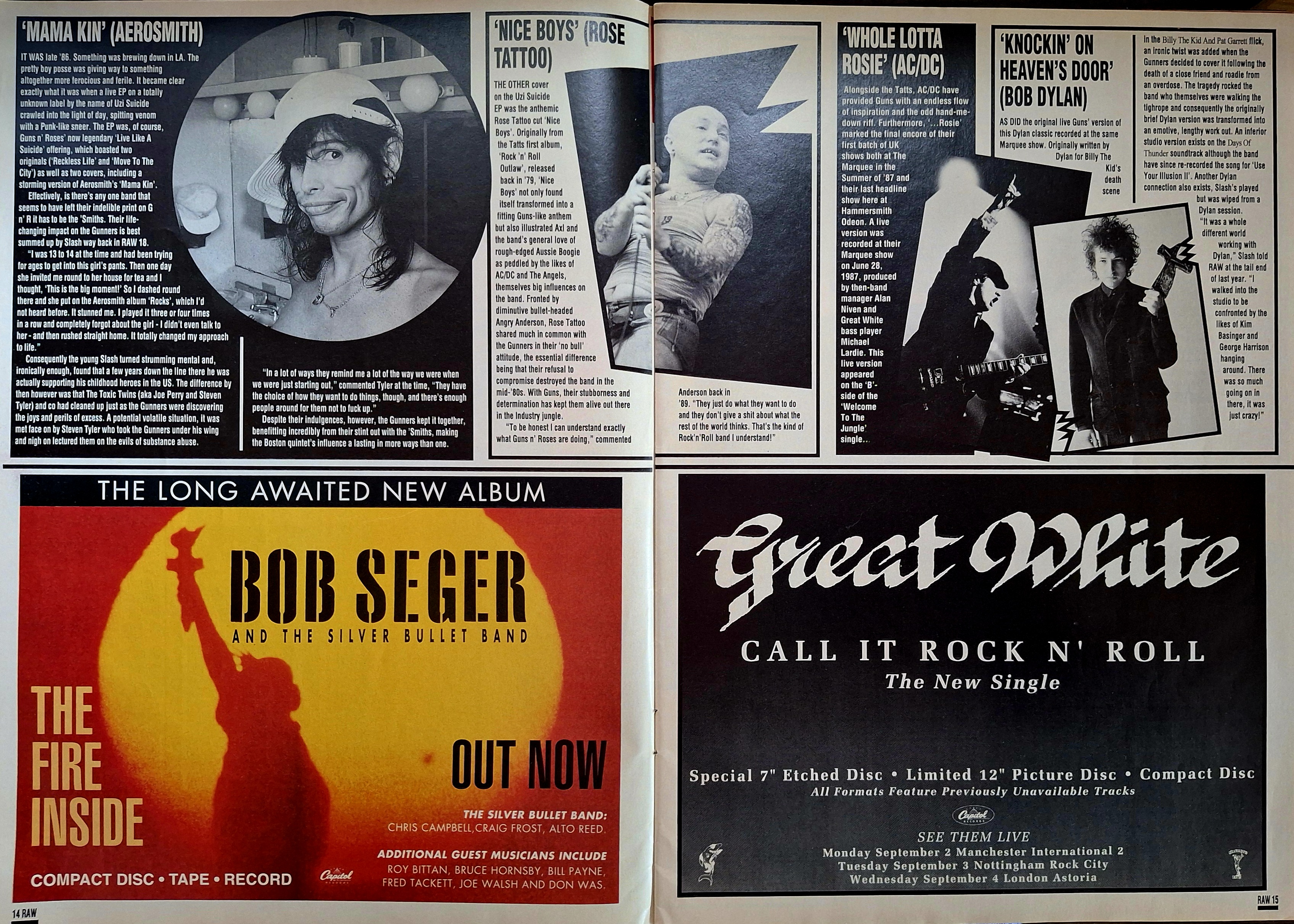
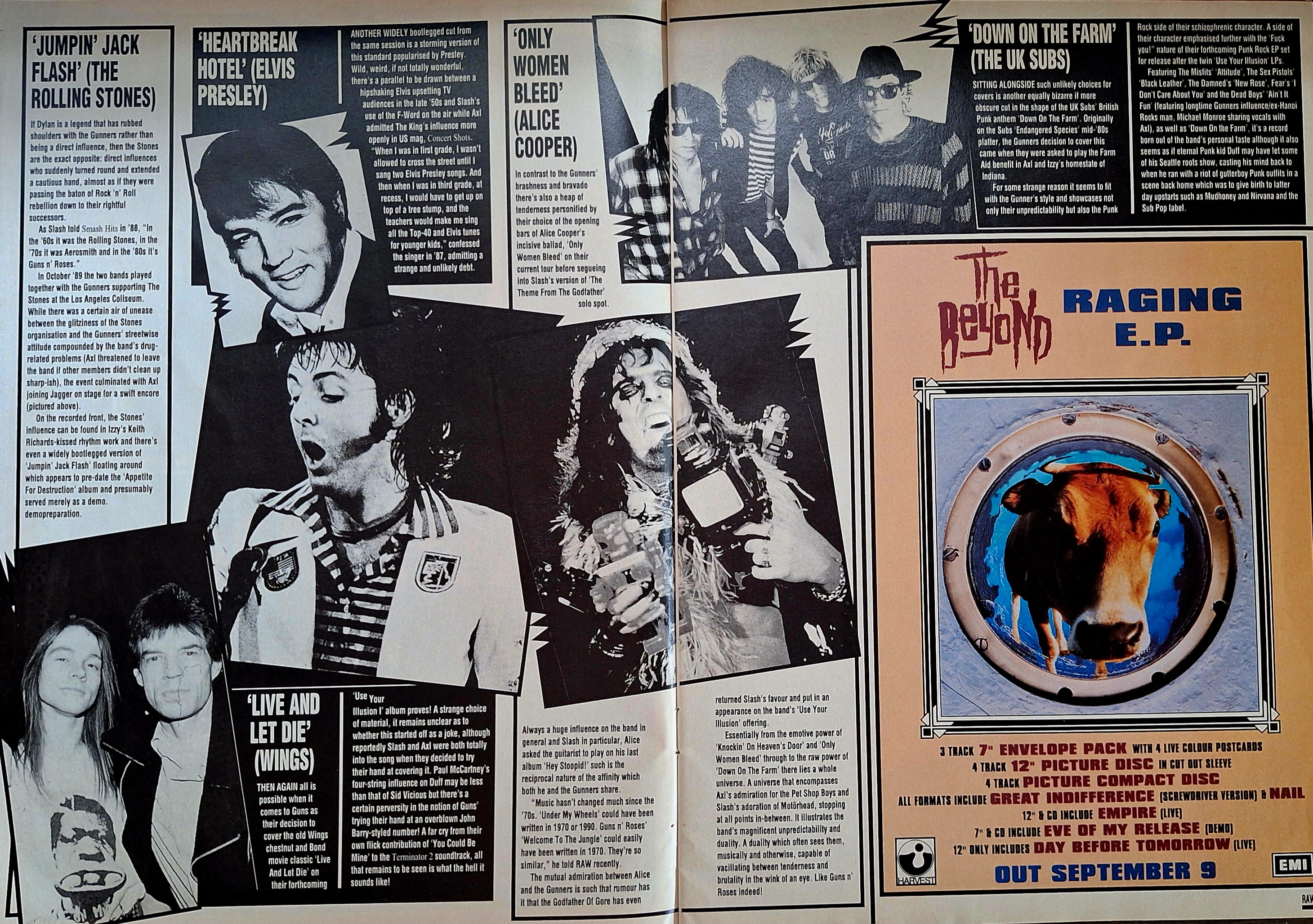
Prior to the Wembley show, in the absence of the yet to be mixed Use Your Illusion albums and to avoid doubling down on the never ending stream of scandal and controversy, Raw magazine opted to do a feature on the cover versions that frequently popped up in the band’s catalogue. Sure, there was also an interview with Sebastian Bach of Skid Row and a piece on Nine Inch Nails (But, are they Metal?), but with Axl and the band basically avoiding any media, and possibly with the timing of the issue (it ran on a two-weekly cycle) there was little else to talk about. However, it is noteworthy that despite the issue featuring a review of one of the most awesome Monsters of Rock line-ups in history – The Black Crowes, Queensrÿche, Mötley Crüe, Metallica, and AC/DC – it was Guns N’ Roses that graced the cover. Given that this was their first gig in England since their own ill-fated appearance at Donington back in 88, it is no wonder that the HR/HM scene in the UK was boiling over with excitement.
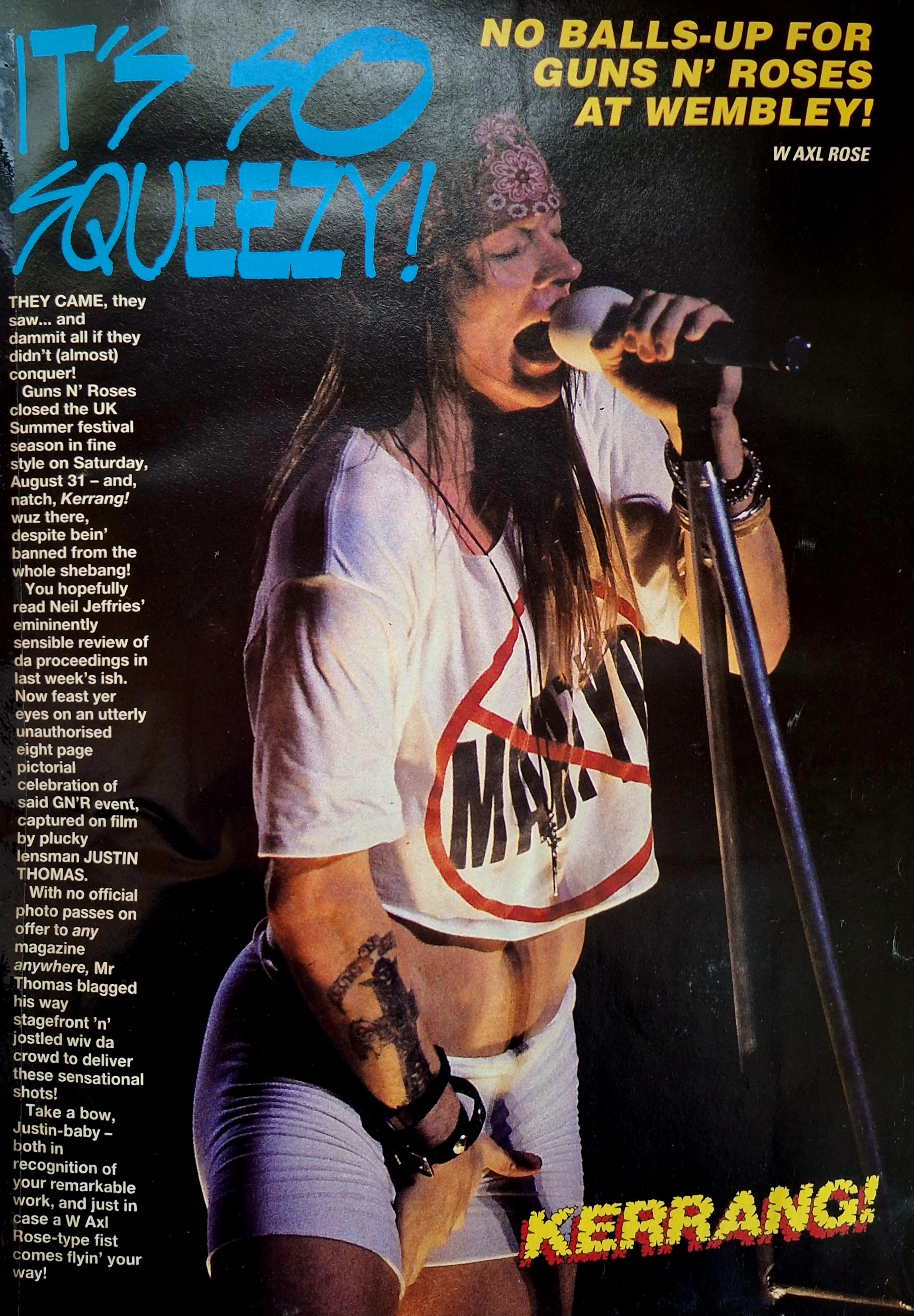
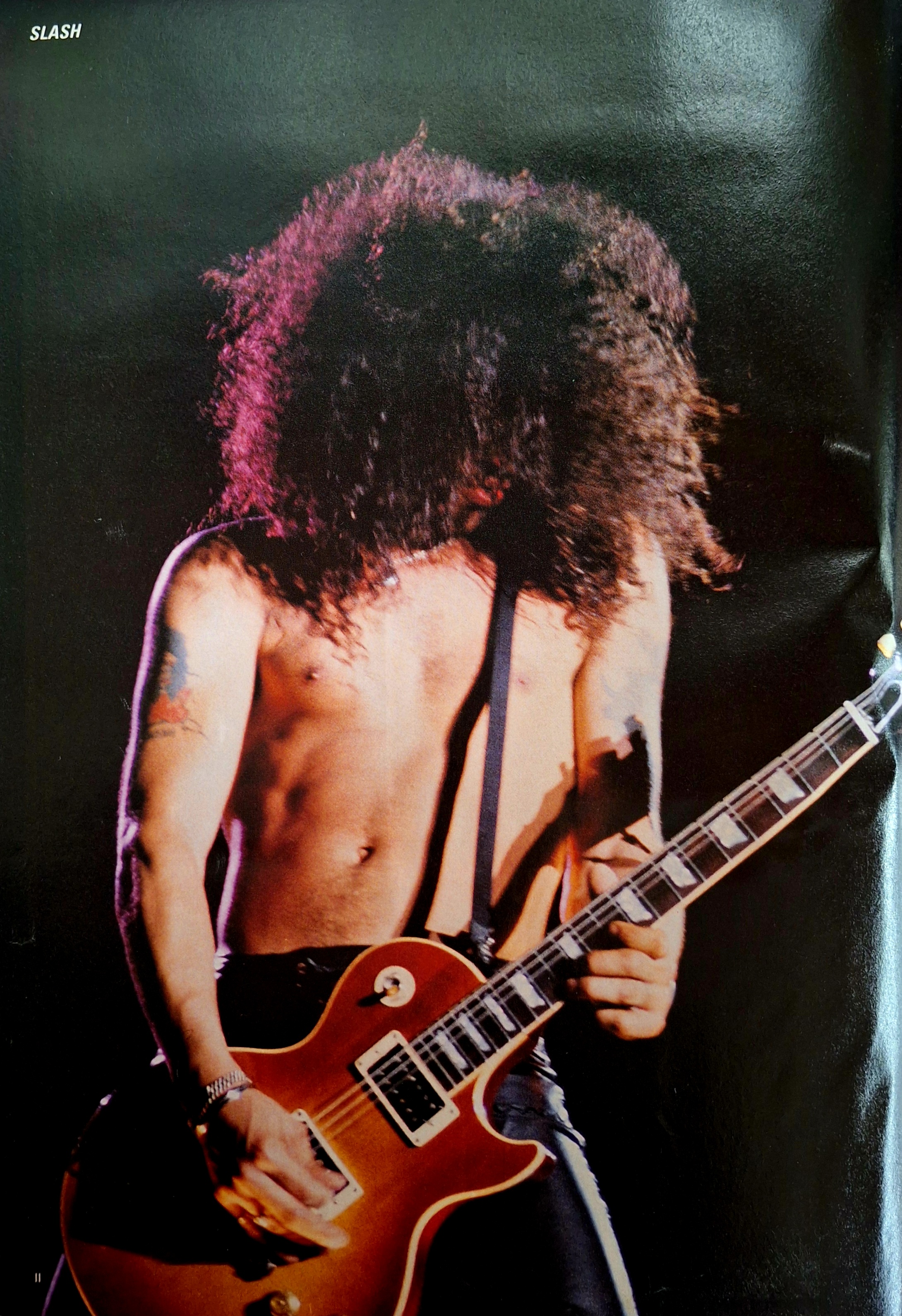
After Nine Inch Nails’ energetic opening set, an on-form Skid Row, with a very excited Sebastian Bach, won over the crowd and disappointed Brent Council by playing Get the Fuck Out. It was all bluster though. We were their to see Gn’R and they did not disappoint. With You Could Be Mine, backed with Civil War, having been released some months earlier, they were already familiar and much loved, so the peppering of new material amongst the songs from Appetite, Lies and assorted covers went down well. To be honest, my memory of the show is a little hazy – it was 35 years ago – but the YouTube videos show that all the swagger was there along with that hint of volatility bubbling just under the surface.
The short tour around Europe that culminated in the trip to Wembley had been difficult to say the least. In the wake of sparking a riot at the Riverport Amphitheatre in early July, the band had skiddaddled to Europe and Axl had been increasingly flexible with his timekeeping, while the other band members, except Izzy, had been increasingly liberal with their intake of toxins. At times, things were at breaking point and the Wembley gig would prove to be Izzy Stradlin’s last as a full time member of the band. Nevertheless, according to Duff:
“Izzy didn’t walk away and force the cancellation of the Wembley show. he stayed and played one last gig to draw the curtains on this leg of the tour—the last show before the release of the albums we were ostensibly touring.
Axl arrived on time.
We played spectacularly well, as fierce and inspired and together as ever before. If not for the additional people and gear onstage, it could have been mistaken for one of our club shows.“
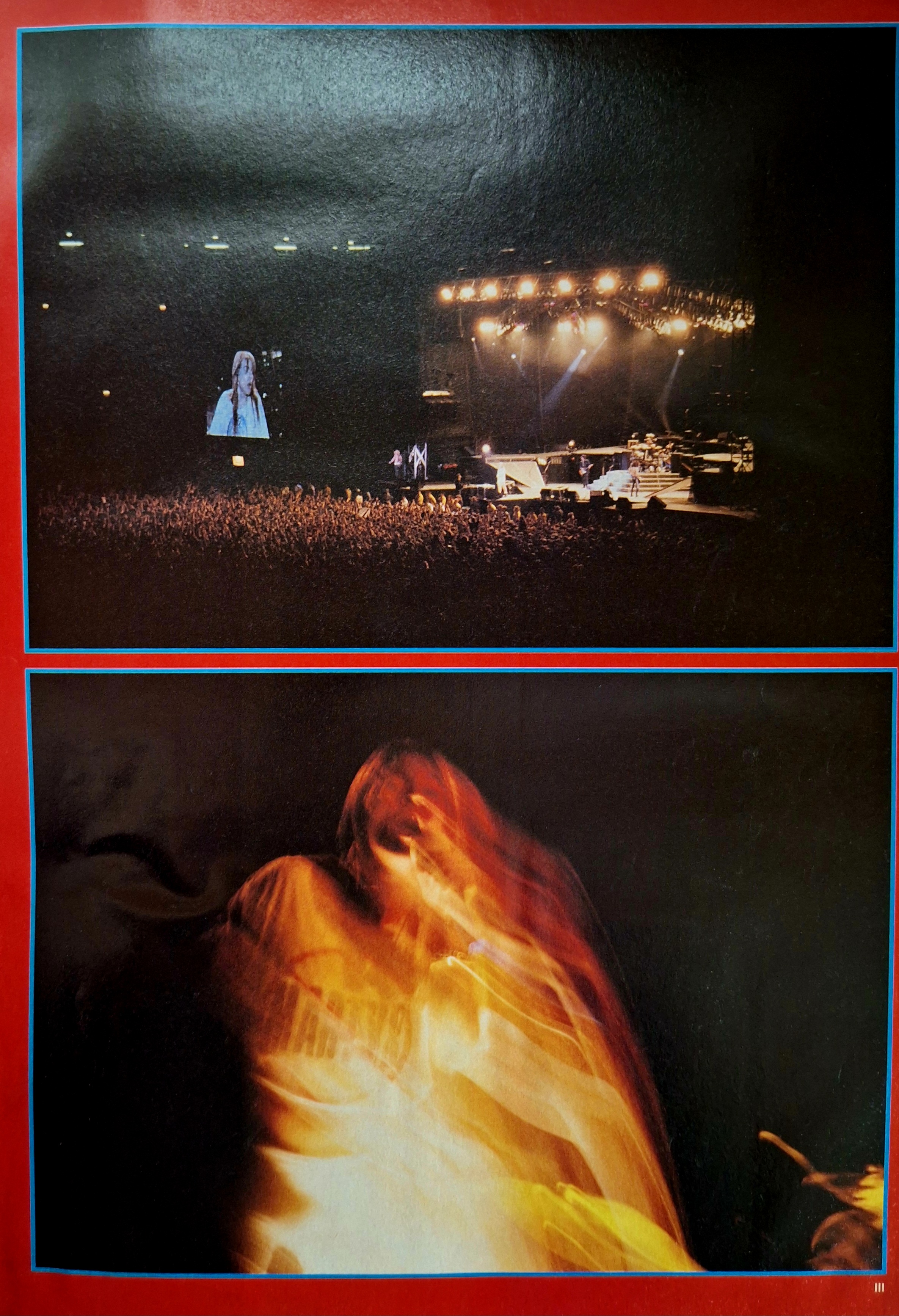
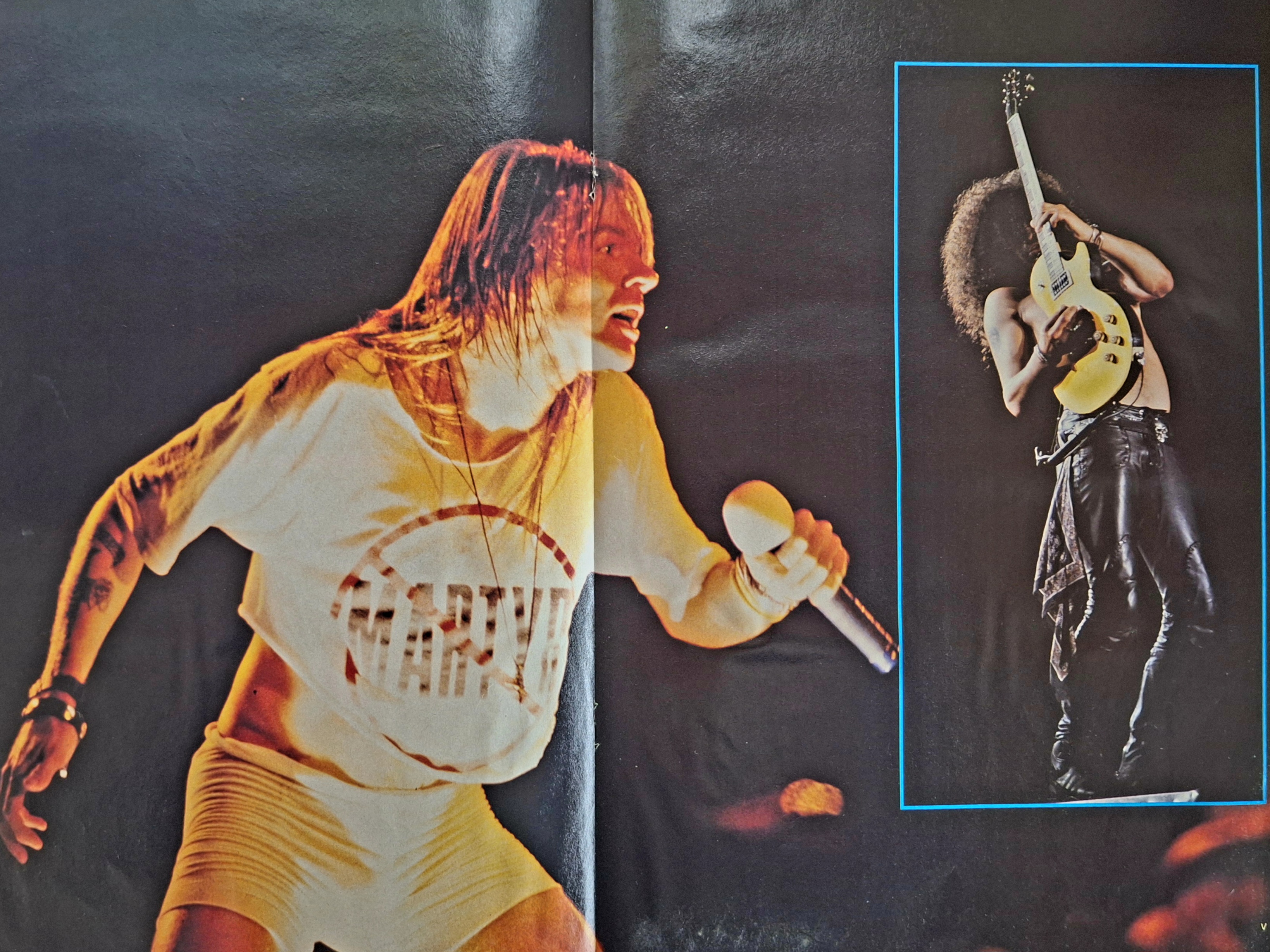
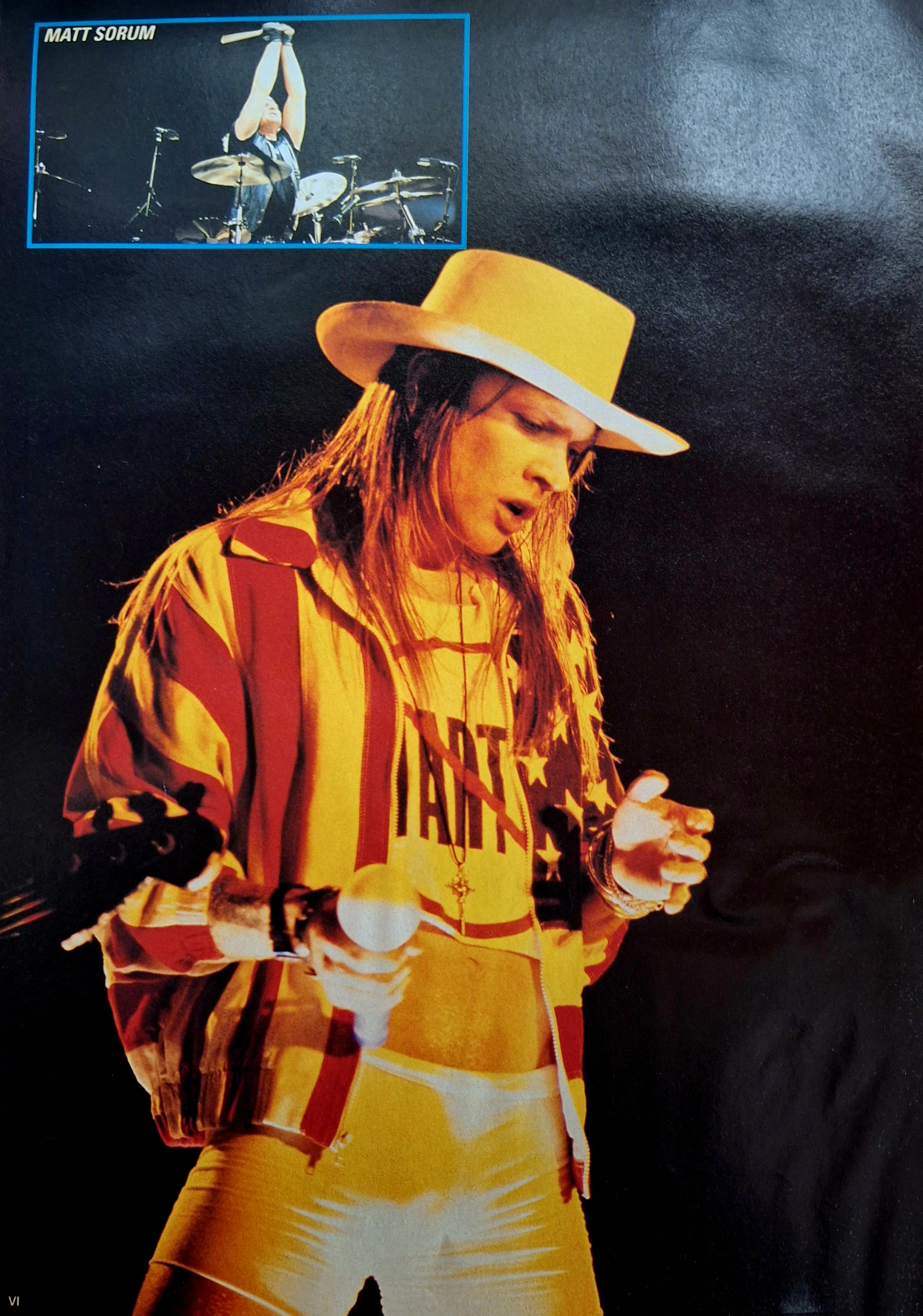
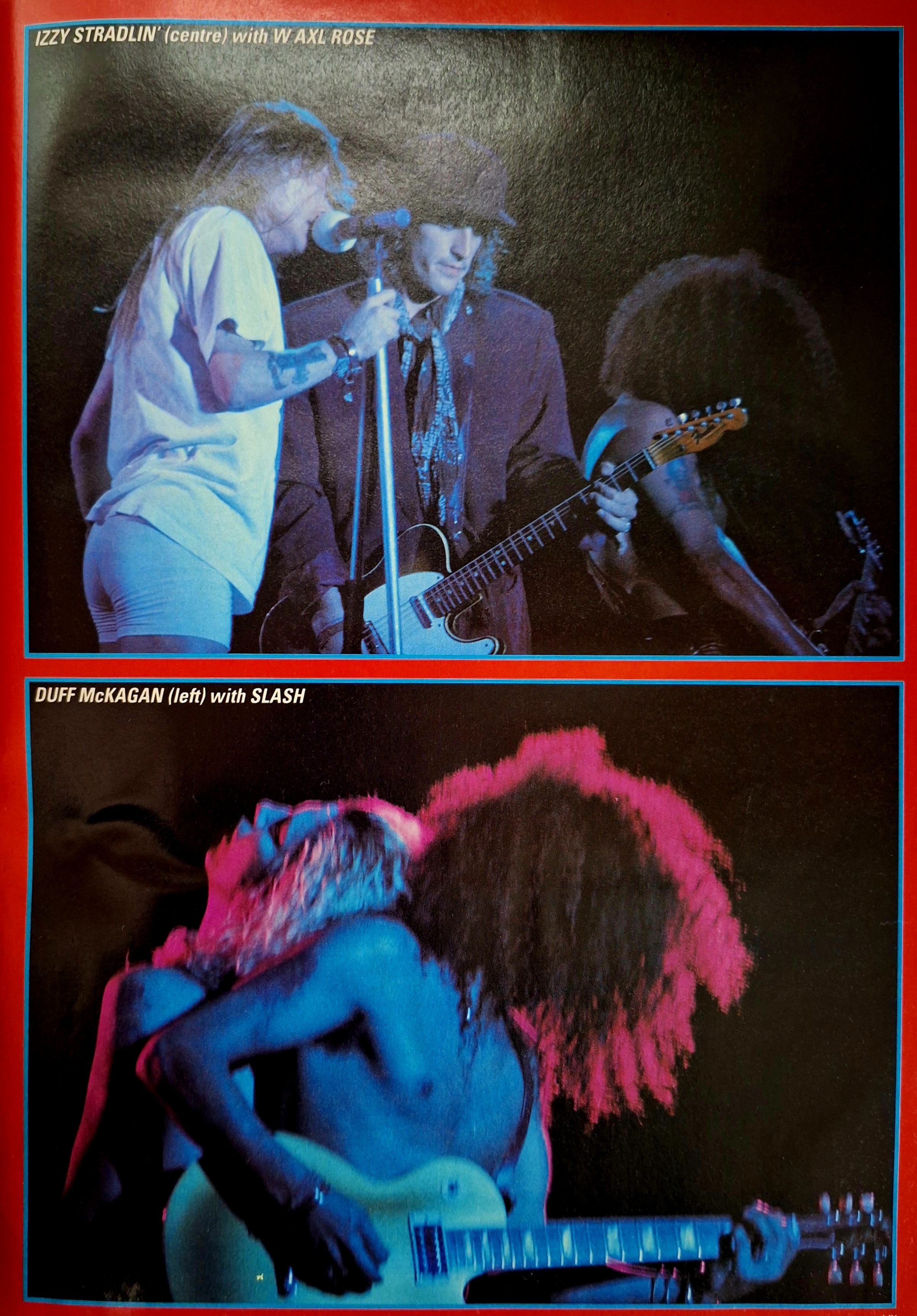
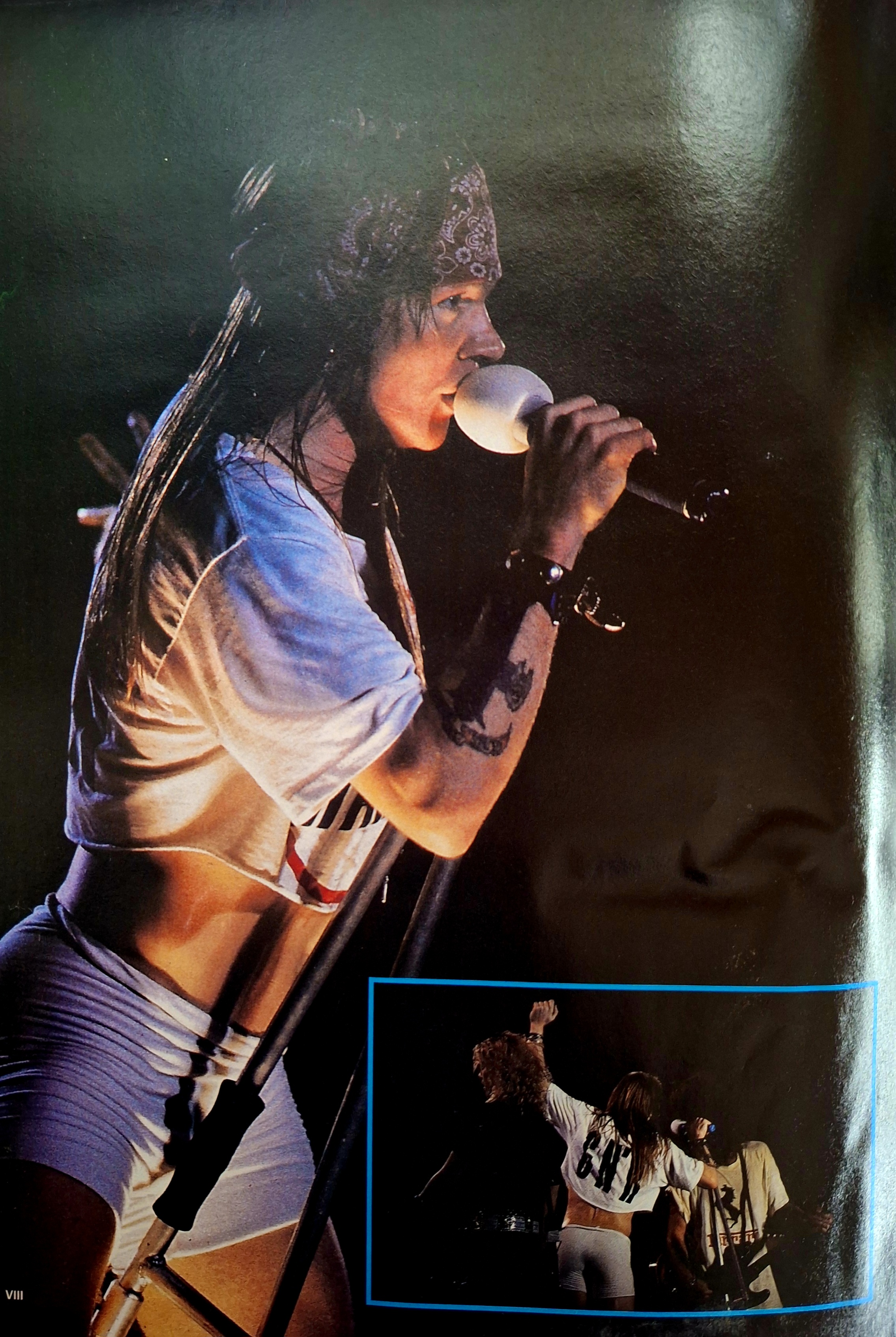
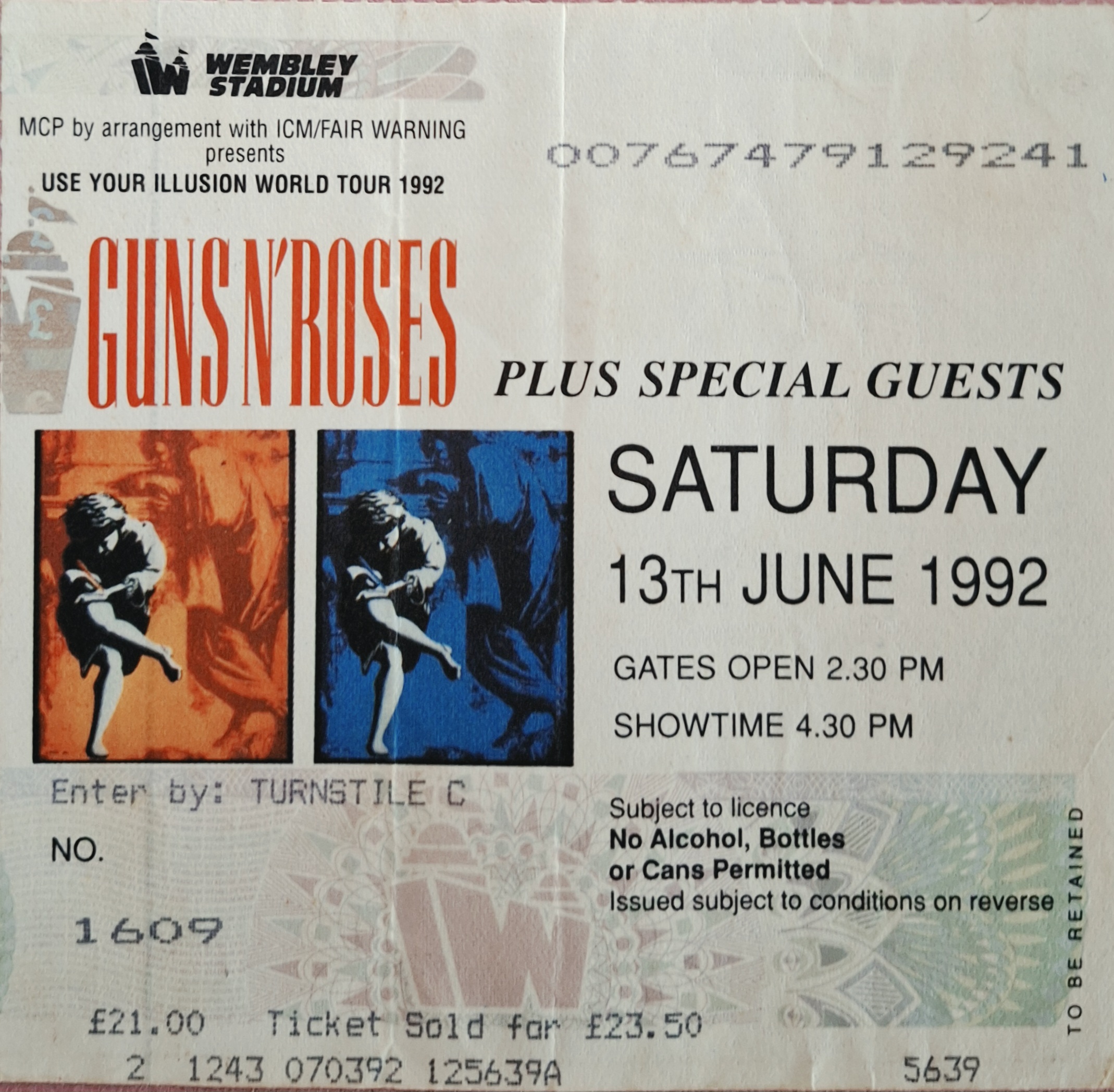
After a short break and the hiring of new guitarist Gilby Clarke, the Guns train kept on rolling for endless months of touring. Less than a year after the triumphant Wembley show, they were back for three more UK dates including another jam at the capital’s biggest stadium. My memory of the day is less positive as I remember there being a slightly nasty vibe as things got a bit heated near the front during Faith No More‘s cracking set, the usual, friendly mosh pit vibe absent in the heat.
Even so, despite certain band members not even remembering being in some of the cities on the tour, Guns were a pretty well-oiled machine by this time and Axl’s volatile brand of frontman fury was delivering the spectacle we all wanted. According to the Guardian: “Where the band used to be chaotic and unfocused, now they’ve learned to harness their strengths around Rose’s anarchic energy. Without him, they’d be an old-fashioned hard rock group, obsessed with Zeppelin, Hendrix and the Stones. But Rose is an alchemising presence, a suspect device, able to invest the dullest clichés with menace. Axl just doesn’t look right singing piano ballads like November Rain, but when the Gunners rock, Rose rattles your fillings.” Throw in a guest appearance from Brian May in the encores for Tie Your Mother Down and We Will Rock You and a good time was had by all. However, these were exciting times for the alternative rock scene and there was a lot more going on in the world besides Guns N’ Roses.
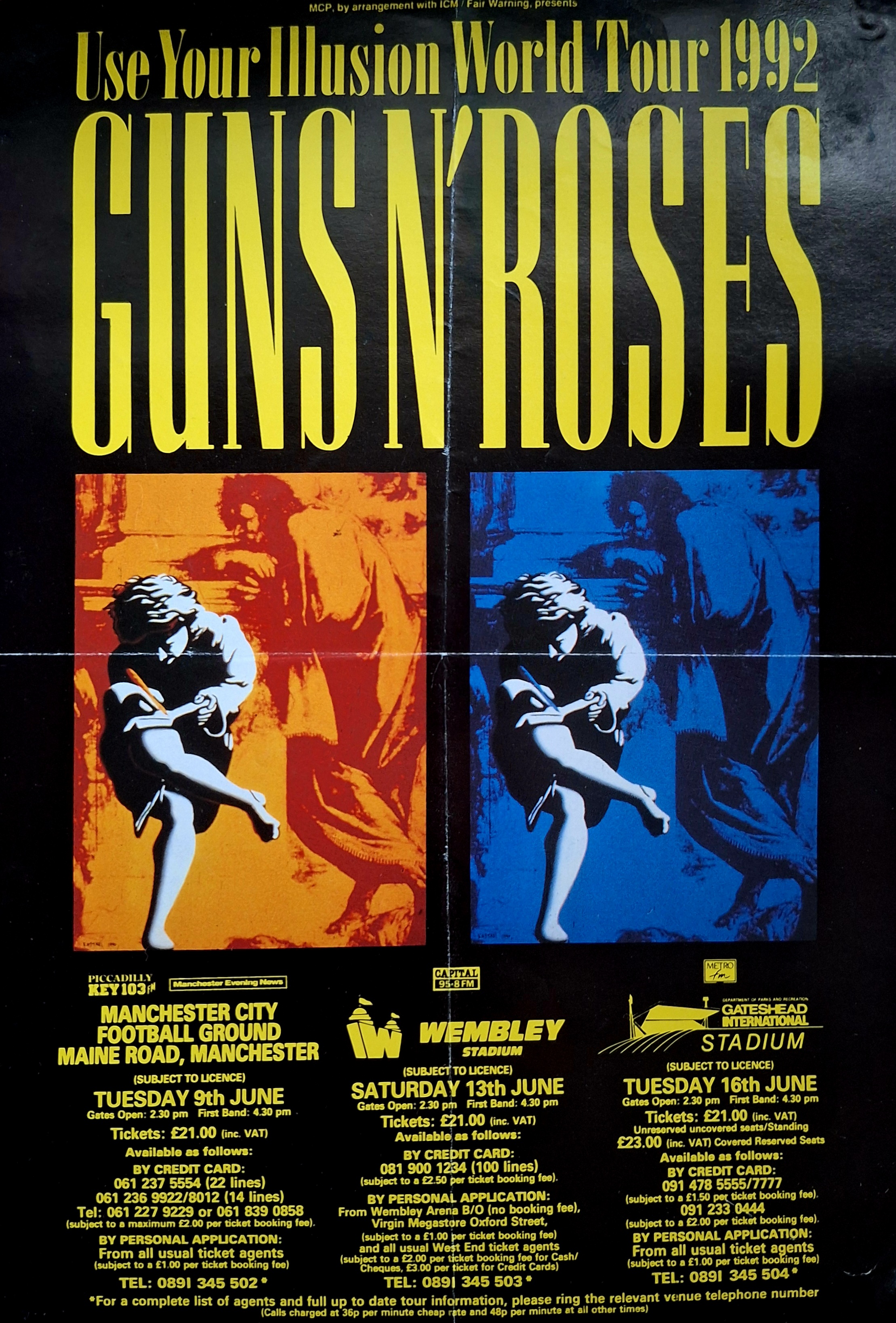
Precisely one week before the Guns gig at Wembley I had been to see The Cult at Finsbury Park for their one-day, UK version of their Gathering of the Tribes festival, which featured a diverse mix of alternative rock bands from Ned’s Atomic Dustbin and Mega City Four to L7 and Pearl Jam. A couple of months later I would see Nirvana, Mudhoney, L7 and the Beastie Boys at Reading. Then, in October, I went to see Suicidal Tendencies at the T&C in Kentish Town to be totally blown away by the support act, Rage Against the Machine, during their first ever UK performance. Things were changing on the music scene and in my life. Basically, I’d seen that there was more to life than the Hard Rock Heavy Metal scene and was slowly diversifying my tastes; Indie and Grunge bands were broadening my horizons and I was going to clubs like the Venue in New Cross to see bands like Swervedriver and Zodiac Mindwarp and get an early look at Pulp before they hit the big time. Jarvis threw Old Spice over the audience.
So, when Gn’R decided to come back to the UK for two nights at the Milton Keynes Bowl less than a year after the second Wembley gig, to be honest, I just wasn’t that excited by the idea. My mates were all going but I wasn’t really up for it, then The Cult were added to the bill and it was suddenly irresistible – Blind Melon, Soul Asylum, The Cult and Guns N’ Roses – a cracking day out was now on the cards. I’m so glad that I went; the planets aligned to make it an absolutely magnificent day and it ended up being one of the best gigs I have ever been to.
First up, MKB is a natural amphitheater that lends itself to big shows. Then there was my first experience of a VIP section, whereby the front area was separated from the main crowd, but instead of paying a premium, the wristbands were seemingly distributed at security’s discretion. The girl who was with us politely asked the dude at the entrance to the area to be let in, then asked if her 4 brothers could come in too! That was it…we were in!
And Guns did not disappoint. Despite the band being deep into a never-ending tour and their fraught dynamic getting ever more tense, they delivered in spades. The show was something of a stripped down affair, just the band, no backing singers, percussionists etc; it featured a half-hour acoustic set complete with sofas on stage; Ronnie Wood came out to play an encore of the Rolling Stones’ Honky Tonk Women along with Michael Monroe of Hanoi Rocks, who also sang on Knockin on Heaven’s Door; but best of all Izzy Stradlin was back, filling in for the injured Gilby Clarke. It would be Izzy’s final show but his mere presence took the band to another level. As Duff says: “In our case, Izzy was probably the most significant force—without his initial vision and his songwriting cues, there would have been no Guns N’ Roses.”
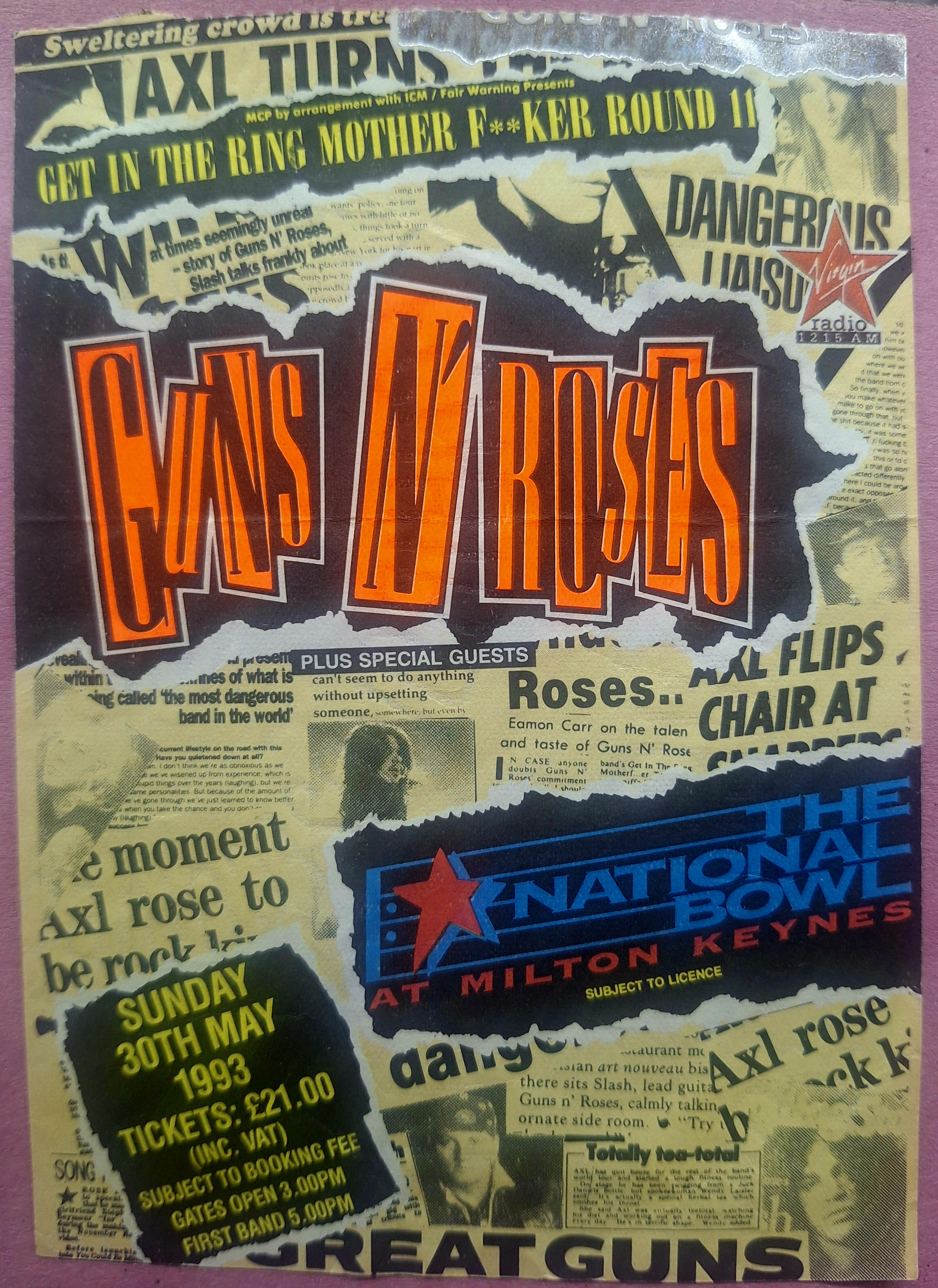
The Milton Keynes show ended up being a fitting farewell for me. I can vividly remember being arms outstretched and spinning round and round in a joyous state of abandon! It was a lovely last hurrah before I moved on. They released the Spaghetti Incident later that year, but it held little appeal. The cover of the Rolling Stones’ Sympathy for the Devil the following year was also far from a return to form. Despite the MKB shows reminding us how great they could be, it was short lived and the writing was clearly on the wall for the band with Izzy only back for a handful of dates and the never-ending tour grinding on and on.
Axl would then blindside the other members into signing over the rights to the Guns N’ Roses name, although he denies that it ever happened. But if there is any element of truth to it, Axl was shrewdly looking towards the future as what was left of the original band clearly had a limited lifespan—they were already doing everything separately on tour anyway. “Perhaps the simplest explanation for what was going on with Guns N’ Roses was that the band had stopped needing one another. […] we no longer needed one another to write ourselves out of poverty through our songs. Guns didn’t start out about money, but once we all had houses and cars, we just needed one another less. […] On the last European leg of the tour, we sometimes weren’t all together in the same city except for the performance itself. On a few occasions we weren’t even in the same country.“
And so it would prove. Slash left in October 1996, Matt Sorum would follow in April 1997 and Duff would be the final nail in the coffin in August of the same year. By this time, I was no longer abreast of the comings and goings, scandals and controversies. Essentially, I had grown up. I was listening to Nine Inch Nails, The Beastie Boys, Portishead and anything and everything else that was around back then – the nineties were vibrant times! If you look through my ample CD collection, the overwhelming majority of it is from the nineties and it goes way beyond Britpop and Grunge.
Guns N’ Roses had been the band of my teenage years. They were like a first love—an all consuming obsession that you can’t get enough of until some cracks start to show, the passion fades, and you eventually move on. Still, you always hold a soft spot and every now and then a bit of memory lane is a welcome reminder, especially as you get older. The timing of discovering Guns N’ Roses was essentially what made it so special for me. We make powerful memories and have strong connections to the music from our teens; we may move on, but the songs from that time will always have the power to move us like they did the first time.
“A global study of nearly 2,000 people across 84 countries found something remarkably consistent: the music that people remember as most personally meaningful was often released when they were around 17 years old. Psychologists call this the reminiscence bump. And it isn’t simply nostalgia playing tricks on you. Adolescence is a period when the brain is developing rapidly, social identity is taking shape, and emotional experiences can become deeply encoded in memory. Music happens to be there for all of it. That’s why a three-minute song can sometimes transport you decades into the past in just a few seconds.”
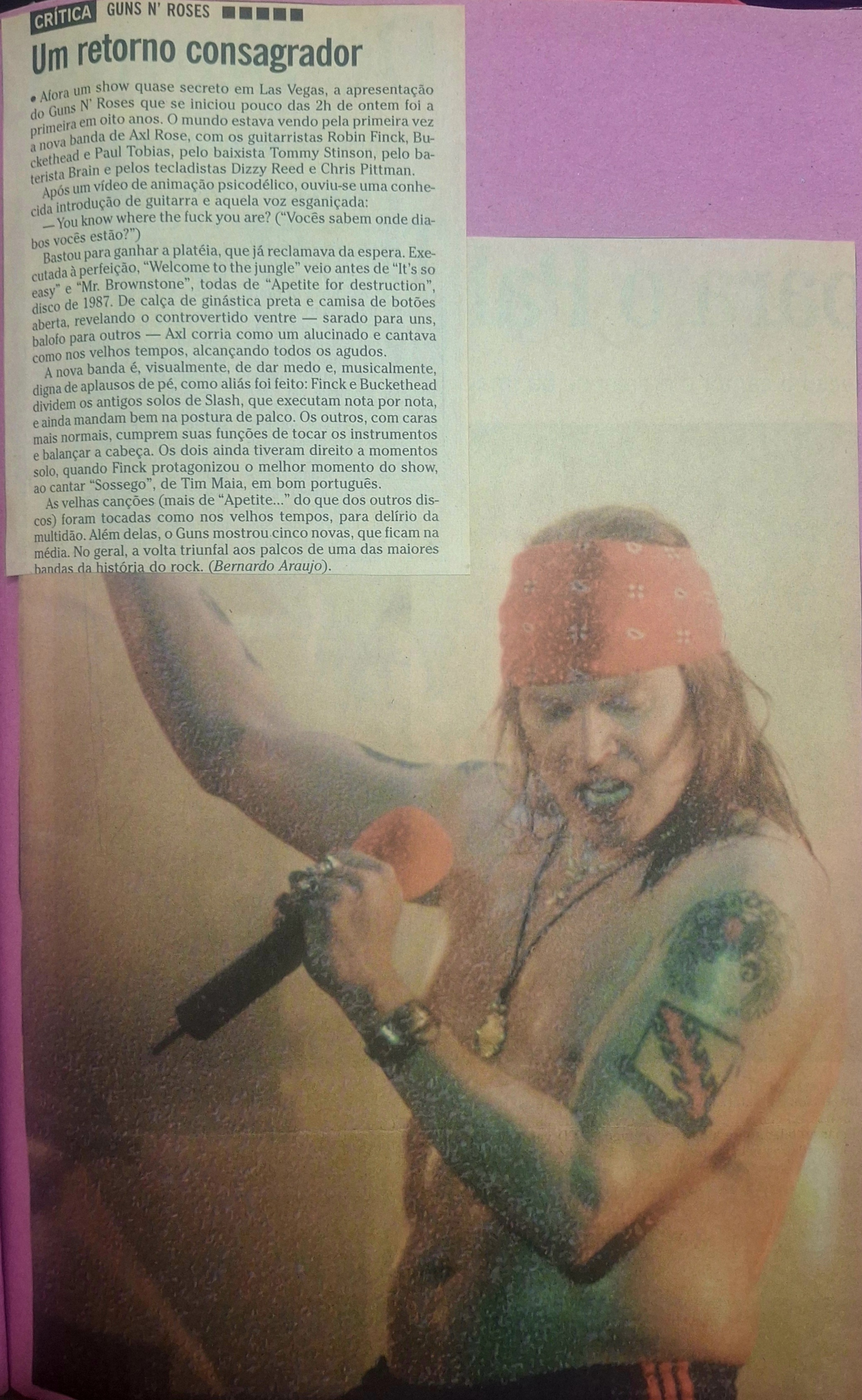
I would go on to see them again at Rock in Rio in 2001 as Axl Rose plus backing band, but it was not the greatest show I have ever seen. To be honest, I actually went that day to see Oasis, but having some memory lane thrown in was worth the ticket price. Subsequent television appearances and the eventual release of Chinese Democracy did little to reignite my teenage love for the band. It was like running into that first love years later and wondering what you had been thinking.
So, when the reunion with Duff and Slash was on the cards, I was not enthusiastic: “Looking back at what this band once was and what made them great just turns the whole circus surrounding this comeback all the more disappointing. Think I’ll stick with the memories.” But I did of course change my mind. I went to see them on the Not in This Lifetime tour in 2016 and again in 2022. I have to say that I may have been fully embracing the nostalgia of it all, but I thoroughly enjoyed myself on both occasions. In my review of the 2016 show I reflected: “Is it all just shameless nostalgia? Sure, of course, but when you are this good and the material still cuts it, then why the hell not?”
Moreover, in 2018, in a preview of the Download Festival for Already Heard I went on to say: “Since Slash and Duff McKagan returned to the Guns N’ Roses fold, Axl Rose has been somewhat rejuvenated; recovering a level of enthusiasm (and singing ability apparently) that had been largely missing for the previous twenty years since the original line-up imploded. Axl has been transformed from appearing to not really give a fuck into someone visibly enjoying his work again. Sure, a few of the higher notes are now out of reach and he doesn’t scamper about the stage with quite the same verve as the angry twenty something he once was, but GnR proved good value on their Not in This Lifetime nostalgia fest, regularly putting in performances pushing close to the three hour mark. And lets face it, when you have a bulging back catalogue of classics like theirs, they could play all damn night.”
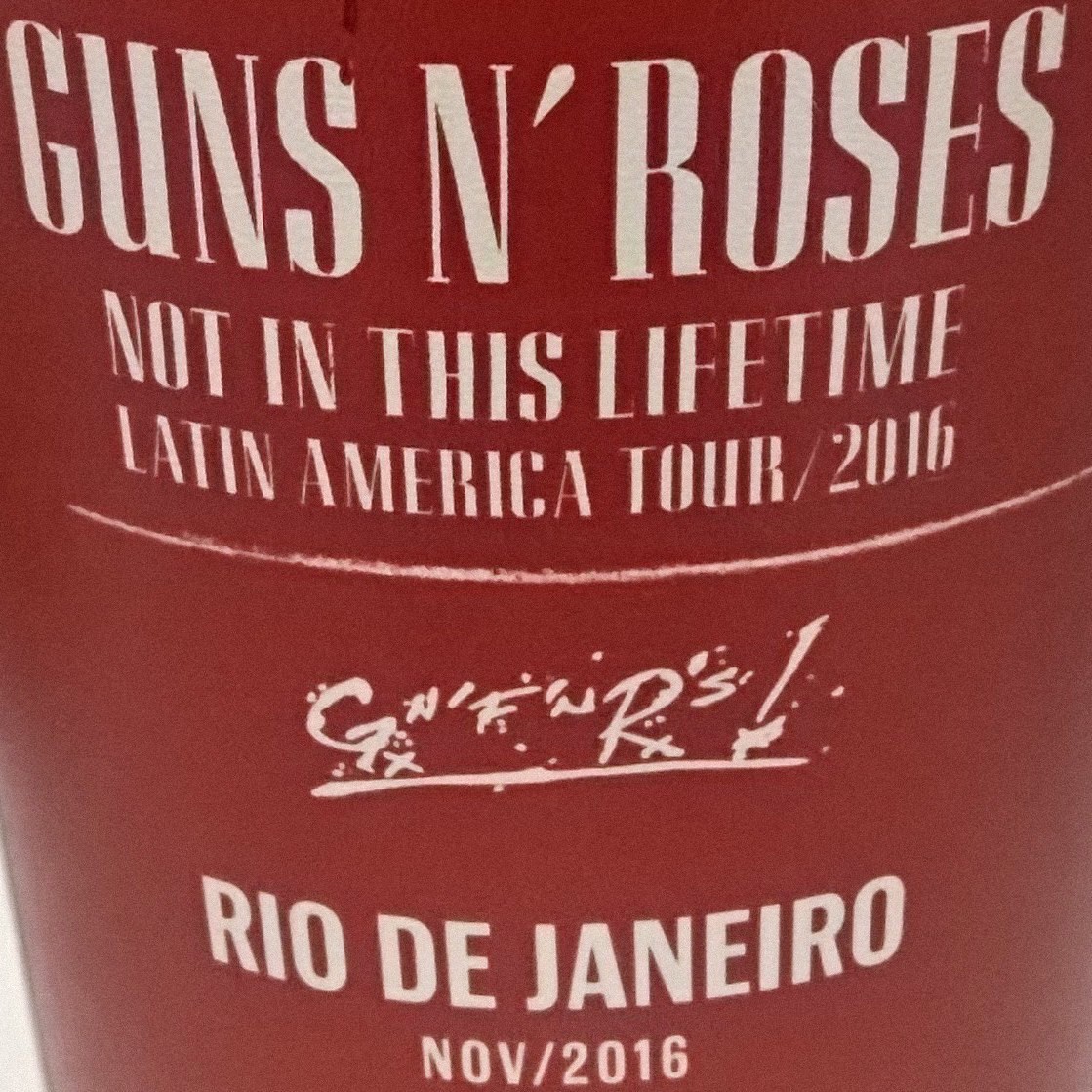


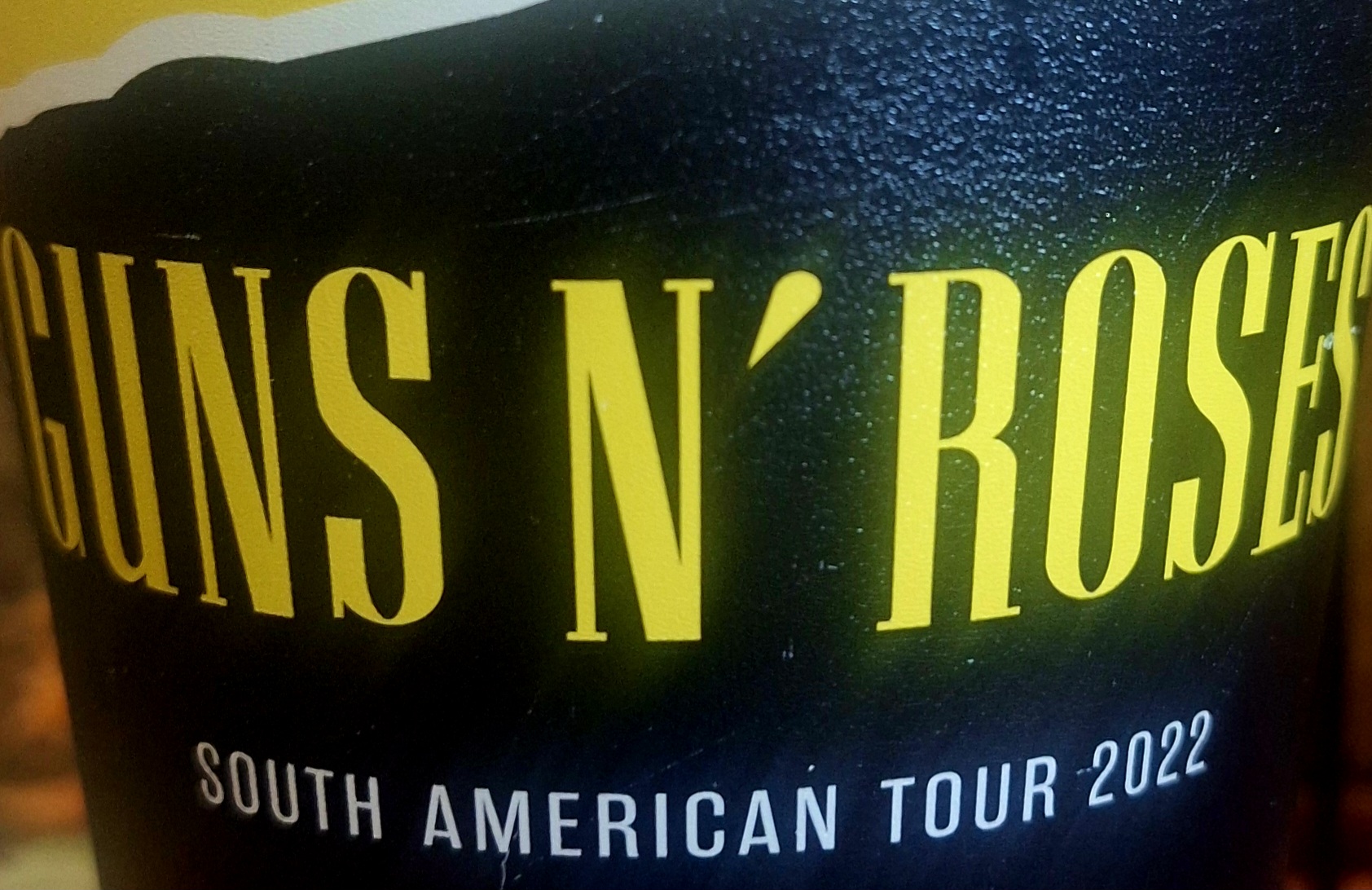
The Guns N’ Roses train is still rolling. They are still doing three-hour-a-night shows and, given the chance, I would go and see them again. I love listening to their songs again – the power of that teenage obsession is still a thing! However, I am under no illusions; I know they can never be what they once were. Effectively, they were never going to be the same after Steven Adler was fired and they lost his groove; or after Izzy called time on his presence in the band and they lost that swagger; or after the videos, the production and the image became as important as the music itself. In those early years, they were something else though; they were truly exciting and everything teenage me loved about heavy music. Appetite for Destruction remains one of the greatest rock records in history. Although I have had other favourite bands, I have been to other incredible shows, and there is plenty of other music that moves me, few bands or songs would have the impact of that Saturday morning back in 1988.
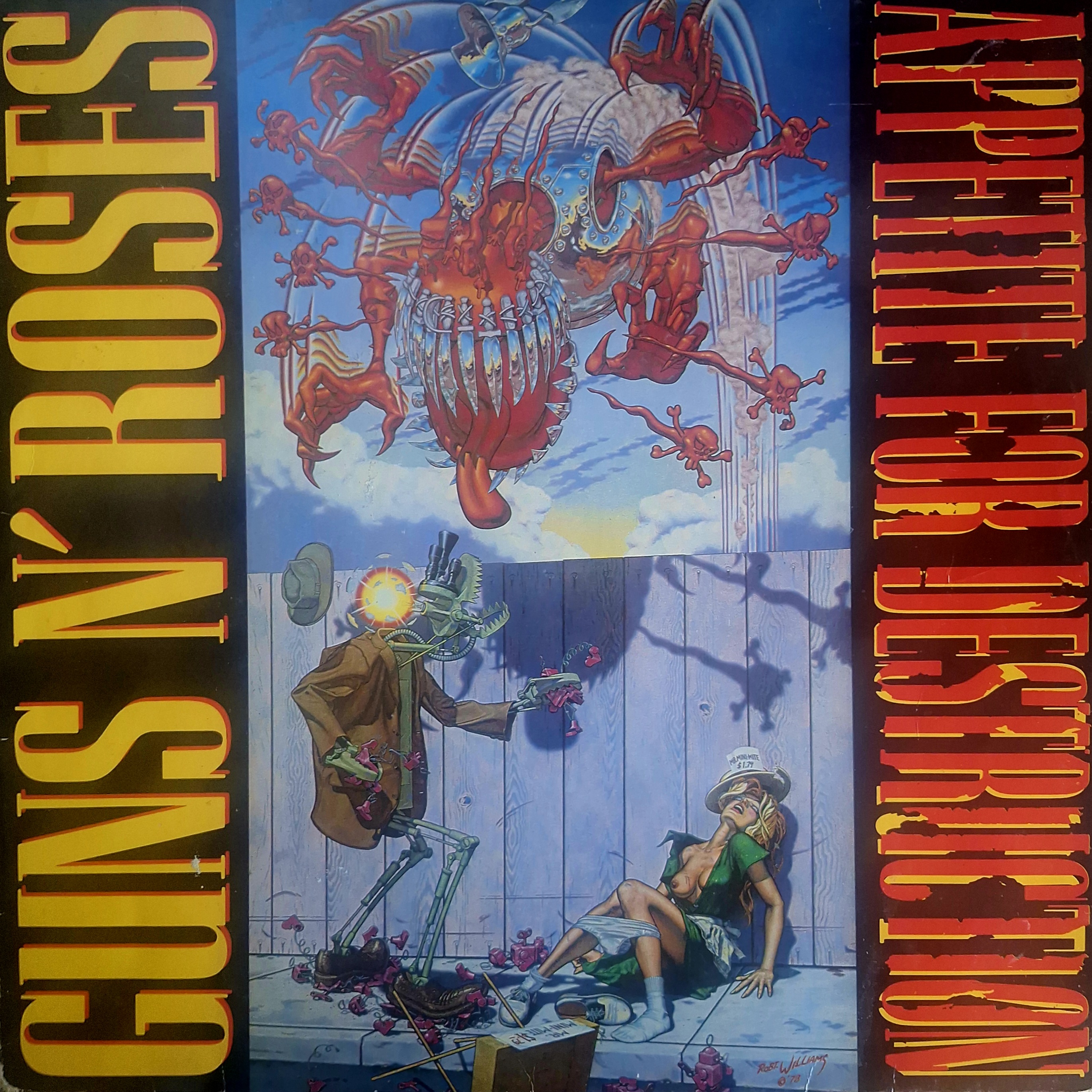
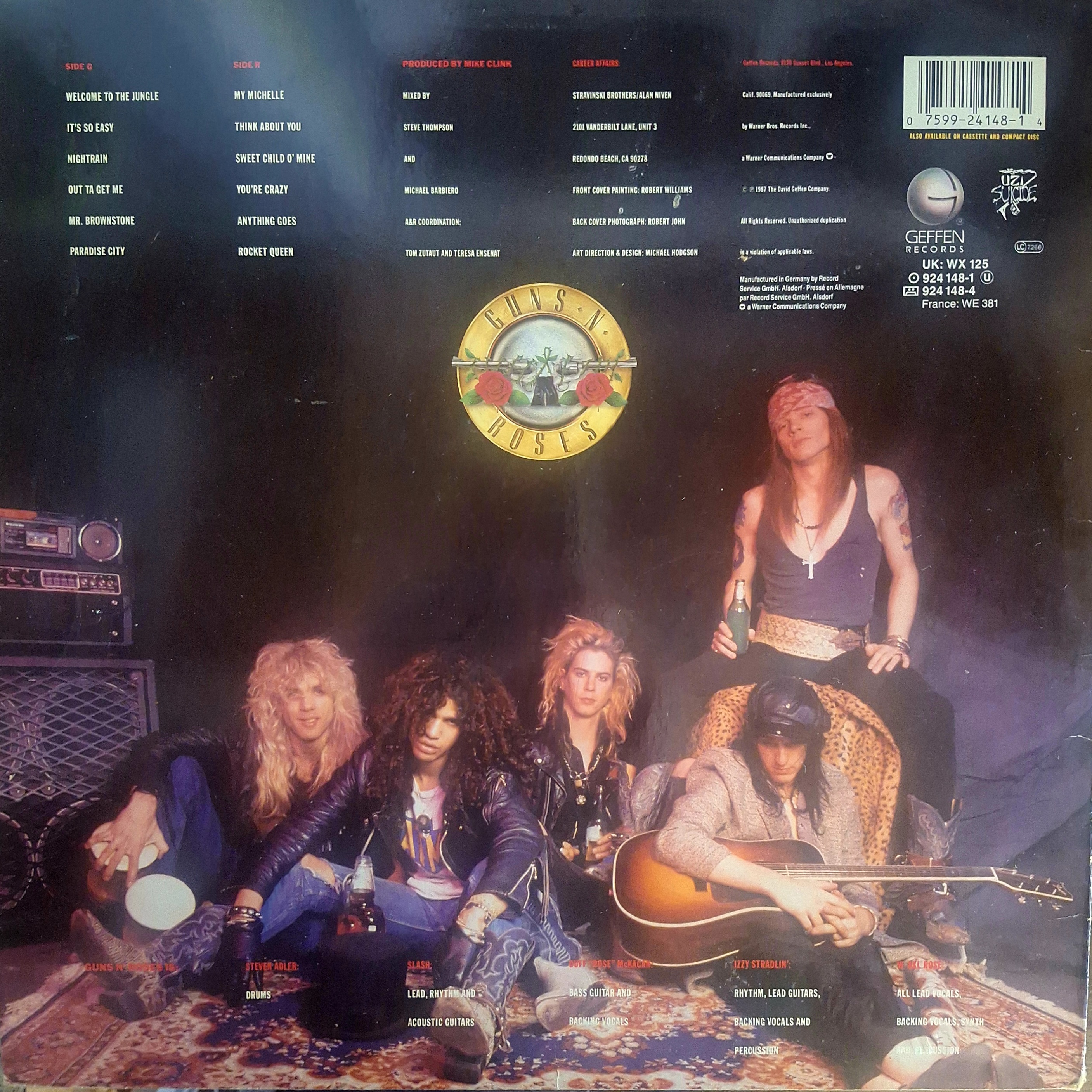
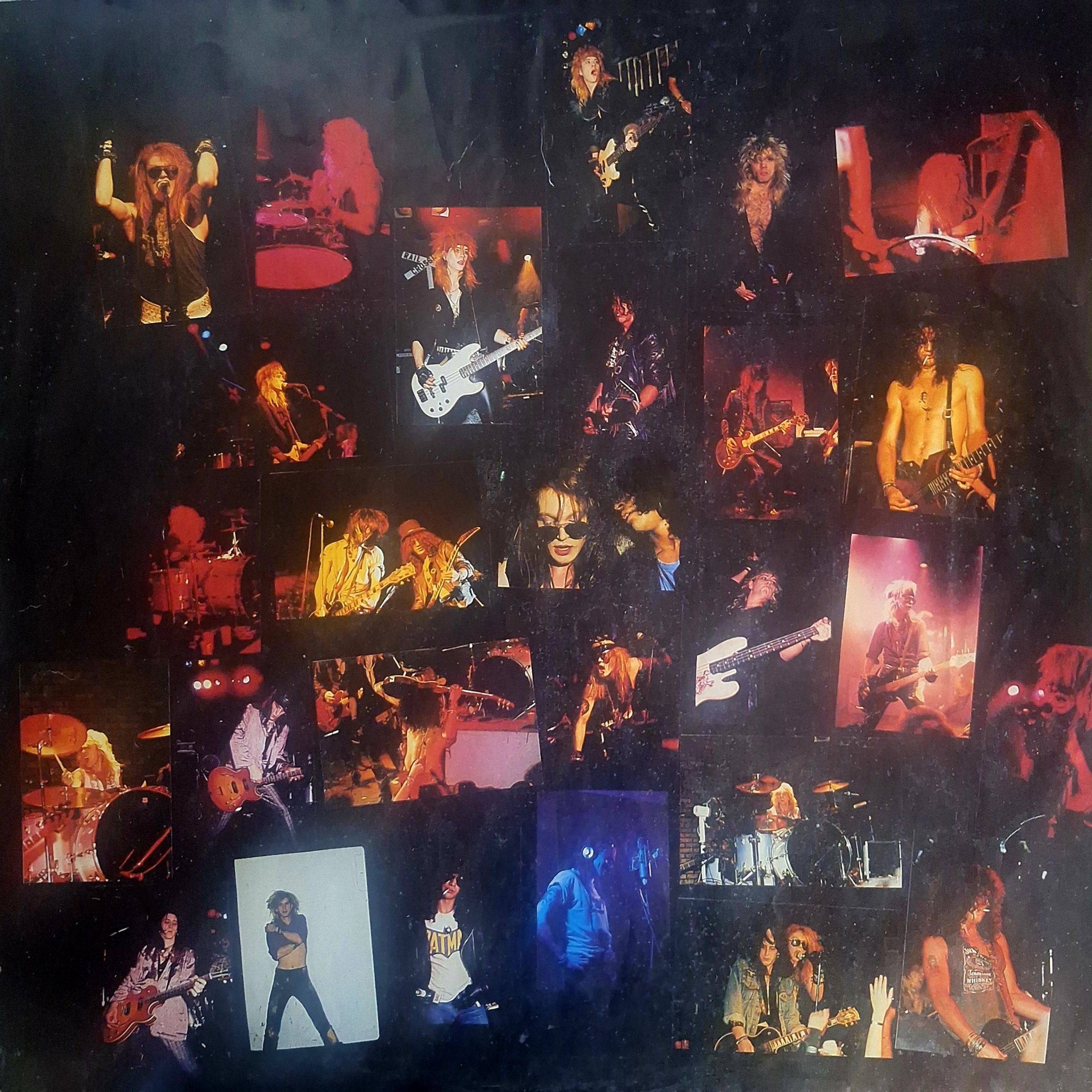
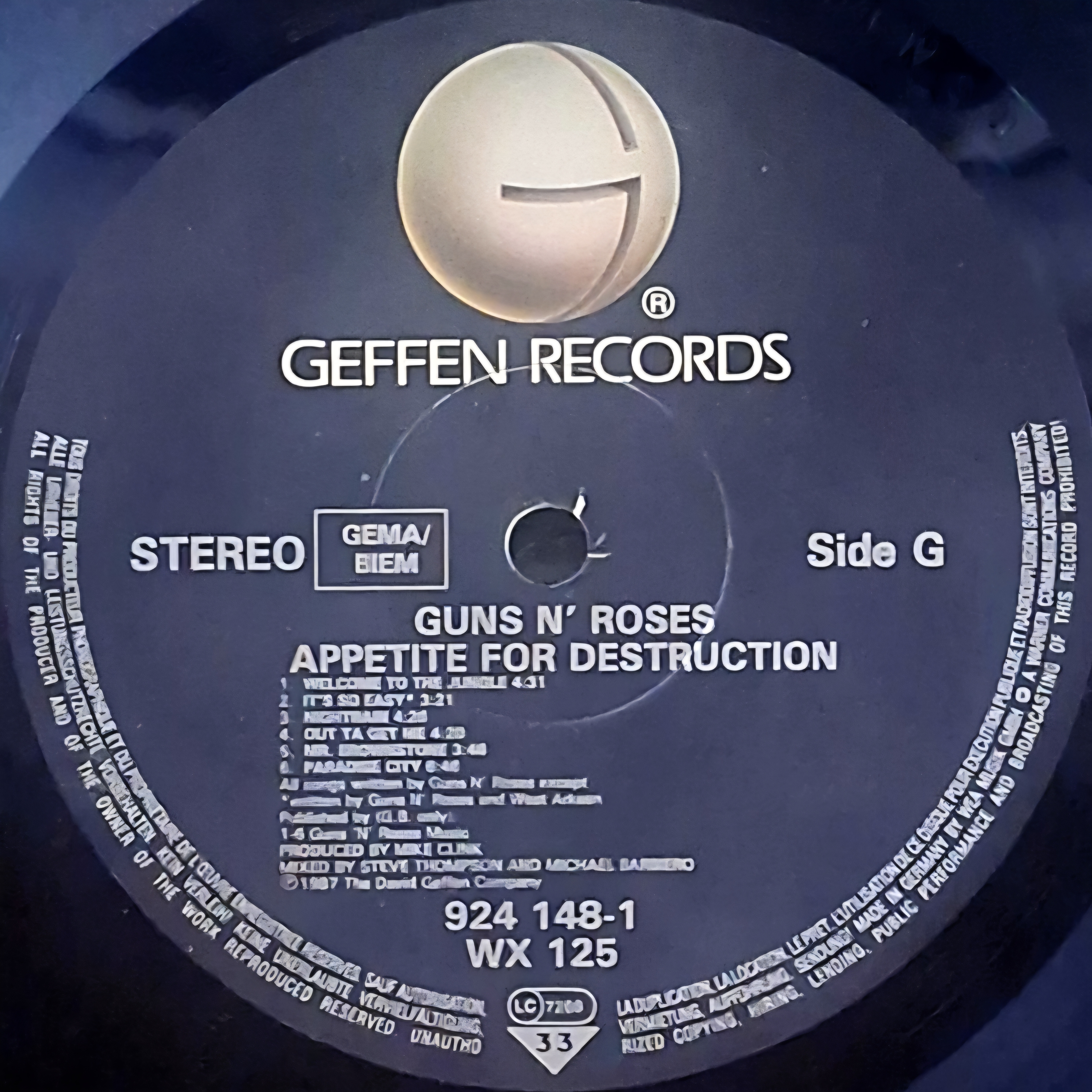
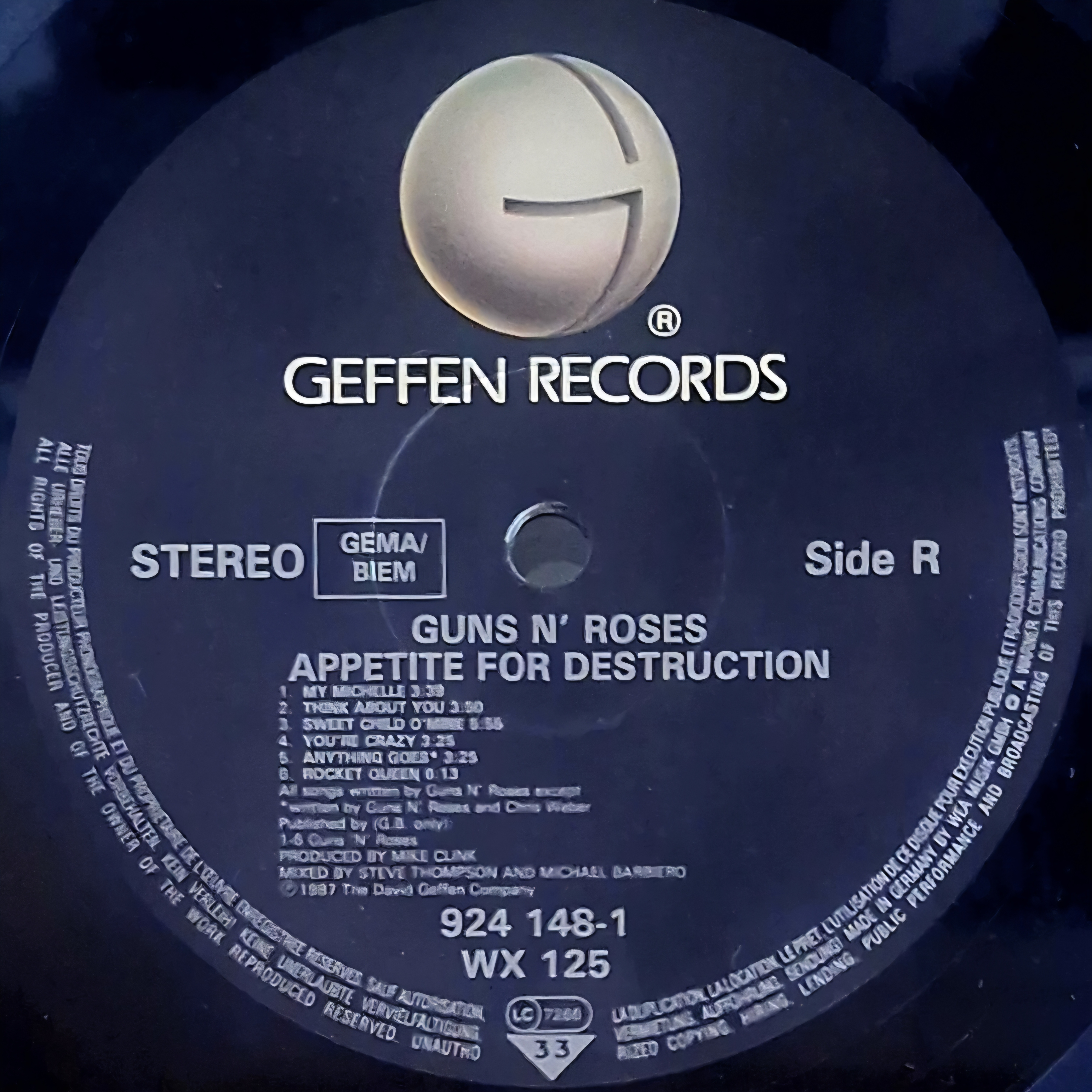
Author’s notes: This started out as a piece on the nostalgia aspect of the music industry I pitched to Sêan Reid, my editor at Already Heard, back in 2018. I couldn’t quite get my ideas together at the time, but that memory from ’88 kept nagging at me so I decided to pick it up again recently. It was meant to be a little walk down memory lane, but once I realised how much stuff I had and how important it had been to me, it took on epic proportions. The following is a list of references that I used in the article in addition to the photos of issues of Raw Magazine and Kerrang Magazine featured in the various galleries. All the galleries contain original photos of items that I actually own, be it the magazines, the CDs, the concert tickets or flyers.
https://www.officialcharts.com/artist/15737/guns-and-roses
https://bestsellingalbums.org/album/17763#google_vignette
30 Years Ago: Chaos Reigns as Guns N’ Roses Open for the Stones
https://www.theguardian.com/music/2016/jun/15/guns-n-roses-review-wembley-1992-archive
https://knowlegic.com/articles/why-the-music-from-your-teenage-years-never-really-leaves-you
Duff Mckagan It’s So Easy and Other Lies
https://alreadyheard.com/festival-preview-download-festival-2018
https://hardpressed.com.br/2016/11/19/guns-n-roses-live-in-rio-review/