Nöthin’ But a Good Time
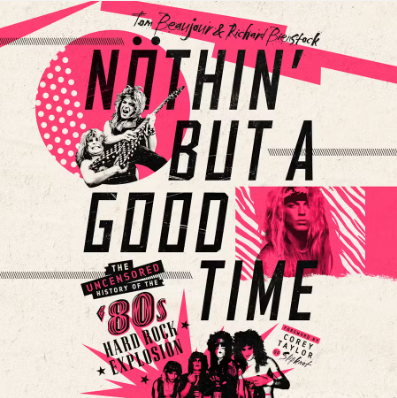
Tom Beaujour and Richard Bienstock’s Nothin’ But a Good Time tracks the decadent rise and fall of the much derided 80s hard rock / hair metal scene. It weaves a narrative from Van Halen and early incarnations of Quiet Riot, through the dizzying success of Mötley Crüe and Poison and the birth of Guns N’ Roses, to the scene’s implosion with all the look-alike sound alikes power ballading their way onto Dial MTV. 

After a revealing introduction from Slipknot’s Corey Taylor (!) professing his love for the 80s glam scene, music journalists Beaujour and Bienstock create an oral history through old and new interviews and quotes from a broad selection of players from L.A. and beyond. It’s the words of those involved that paint a vivid picture of the scene and its shenanigans, whether it’s A&R wizards like Tom Zutaut, producers like Tom Werner, the bands themselves, the publicists, stylists or even the odd groupie spilling the tea.  

It was clearly a wild time marked by rampant misogyny and unbridled excess, and the book takes us behind the scenes into the rivalries and ridiculousness to reveal the last hurrah of a tribal music scene before grunge changed the mood, the internet permanently altered life as we know it, and phones replaced lighters. Love it or hate it, there is no denying that it was hard rock’s most vibrant period, and, despite the scene eventually disappearing up it’s own backside and having its coffin nailed shut by the Seattle bands, it produced a lot of surprisingly enjoyable, good, old-fashioned rock n roll, as well as a bunch of stuff that’s probably best forgotten.

The book reveals all kinds of insights, from Slash’s audition for Poison to Sebastian Bach’s performance alongside Zakk Wylde at a wedding that led to him getting the Skid Row gig, via Jon Bon Jovi’s parents of course! There are all kinds of interesting backstories, but the one big shocker is that some of these bands worked really hard to achieve what they did, living in abject poverty and dedicating absolutely every waking hour to making it big. 

The book can come across as a little he-said-she-said gossipy at times, but that’s hardly surprising given the overriding High School Musical vibe of the scene. Still, for those who grew up with an HR/HM soundtrack, this book provides a delightful romp down memory lane in a no-holds-barred exposé of the misadventures of the time. It has also been distilled down into a three part docuseries on Paramount+ that is equally good fun, featuring said interviews from a number of the key players. 

Now that there is some distance from the time, it is clear that despite eventually becoming a parody of itself, a lot of great songs came out of the melee. So, check out the Spotify playlist that I’ve curated to more or less chronologically reflect the book’s narrative. 
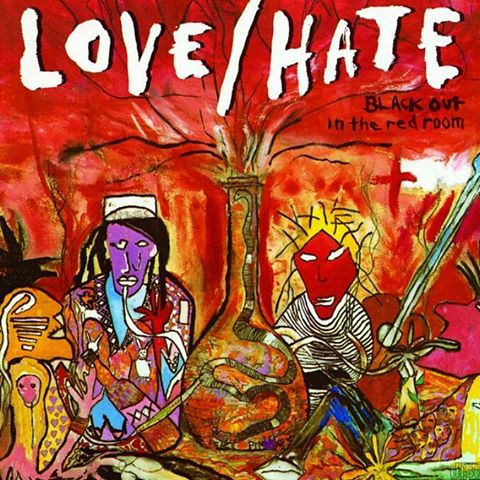
Love/Hate – Blackout In The Red Room

lovehateBack in the late eighties hard rock was fast disappearing up its own rectum; the proliferation of hair metal bands had reached epidemic proportions and each and every one of them was following the same formula of massive choruses, massive heels and at least one massive power ballad. Quality hard rock was hard to come by, except, of course, in the form of Guns n Roses, who totally dominated the HR/HM scene, and to a lesser extent Skid Row, who were somewhat unfairly lumped in with the sunset strip wannabes, when in fact they were substantially heavier and had a lot more going on in the songwriting department, especially on ‘Slave To The Grind’. Anyway, in the midst of all this a band that had been struggling to be heard and get a record deal finally got signed and delivered a quality slice of hard rocking, Jack soaked tunes with barely an eye liner in sight.

In simple terms ‘Blackout In The Red Room’ rocks, and hard. The refreshing thing about the album was that it wasn’t just copying GnR, it wasn’t just following the formula of all the hair bands and although there are a few clichés, it wasn’t all high hats, cow bells and radio friendly harmonies. Instead, what you get is a bunch of dirty sounding riffs, abrasive vocals and some coolly arranged tracks largely about getting wasted. Oh yeah, and no power ballad.

The title track sets the pace with a mid tempo swagger and some serious groove; it may be a true headbanger, but in rock clubs it was a surefire floor filler. ‘Rock Queen’ is a stylish second track featuring a stack of hooks and the wonderfully bizarre line of “Let me touch your cookies/Let me eat your cookies”!

The album continues in a flurry of hard riffs and well worked tunes, with highlights like ‘Fuel to Run’ and ‘Tumbleweed, which are good hard rockers and the frantic old school finale ‘Hell, Ca., Pop.4’. Although ‘She’s an Angel’ borrows heavily from the book of hard rock clichés for its more serious tone, it is as quality a slice of metal lite as you’re likely to hear.

Ok, so one track or another doesn’t exactly set the world on fire, i.e ‘Slutsy Tipsy’ and ‘Slave Girl’, but in general the standard is high. For example, the ode to weed that is ‘Mary Jane’ is a nicely arranged number with some cool twists to the tempo and more great guitar work. The standout track though, is the song which got heavy rotation on MTV, ‘Why Do You Think They Call It Dope, a killer tune with a great hook and some funky assed bass.

On the whole ‘Blackout…’ stands up as a damn good record that was a cut above a lot of what was coming out of sunset strip at the time. They may not have been PC or had the general appeal of a GnR or a Skid Row, but there was some serious talent in the band and some hard rocking bangers on this record. If dirty riffs, blazing solos and raspy vocals are your thing, it’s well worth revisiting.

8/10